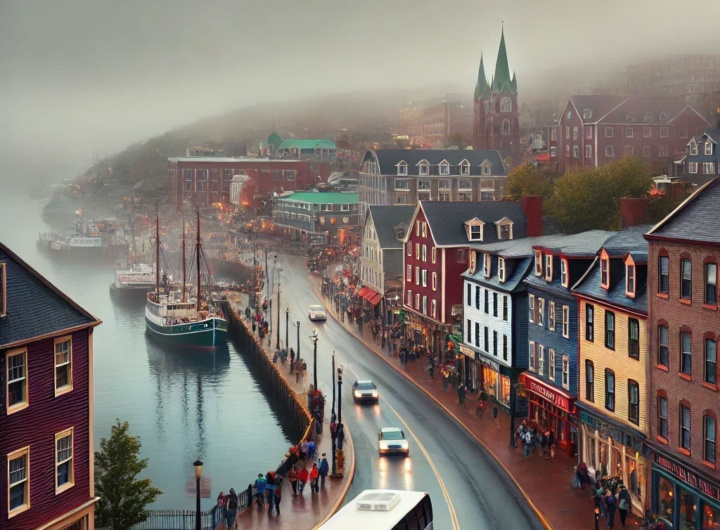
As the morning mist cloaked the Port of Sydney, Nova Scotia, we embarked on a shore excursion through the ancestral lands of the Mamaw people. They named this land Umangi, meaning the “foggy place,” and our 39 passengers, including a kilt-wearing guide hailing from a family of educators, could attest to its accuracy.
Leaving the Port of Sydney
45-hour drive
As we ventured through the landscape, we crossed over areas where Welsh, Cornish, Gaelic, and French were once spoken, each leaving their mark on the cultural heritage of the region. Among these languages, Gaelic is most highly regarded and widely studied today.
Christmas Island Main Post Office
Drive by | then 15-minutes more until Highland Village Museum
8499 Grand Narrows Hwy, Christmas Island, NS B1T 1B1, Canada
During our travels, we passed by the world-renowned Christmas Island Main Post Office, where locals and visitors alike flock to send their holiday greetings and earn the coveted Christmas postmark.
Highland Village Museum
1-hour inside/outside visit
4119 Highway 223, Iona, NS, B2C 1A3, Canada
Our journey led us to the Nova Scotia Highland Museum, situated at the heart of Cape Breton Island. This expansive 50-acre living history museum showcases the Canadian way of life depicted through a series of historic building modernizations.

The buildings in the museum represent different periods in the history of the Scottish Highlanders in Nova Scotia, and here is a general timeline of the buildings at Highland Village Museum. The museum features relocated and reconstructed buildings, each with its own set of costumed animators providing a first-person experience.
- 17th century: The earliest building at the museum is a replica of a Mi’kmaq wigwam, which reflects the indigenous culture of the region before the arrival of European settlers.
- 1770s: The Scottish Highlanders began to immigrate to Nova Scotia, and the museum’s 1770s Highland House, a wooden home with a thatched roof, represents the early years of their settlement.
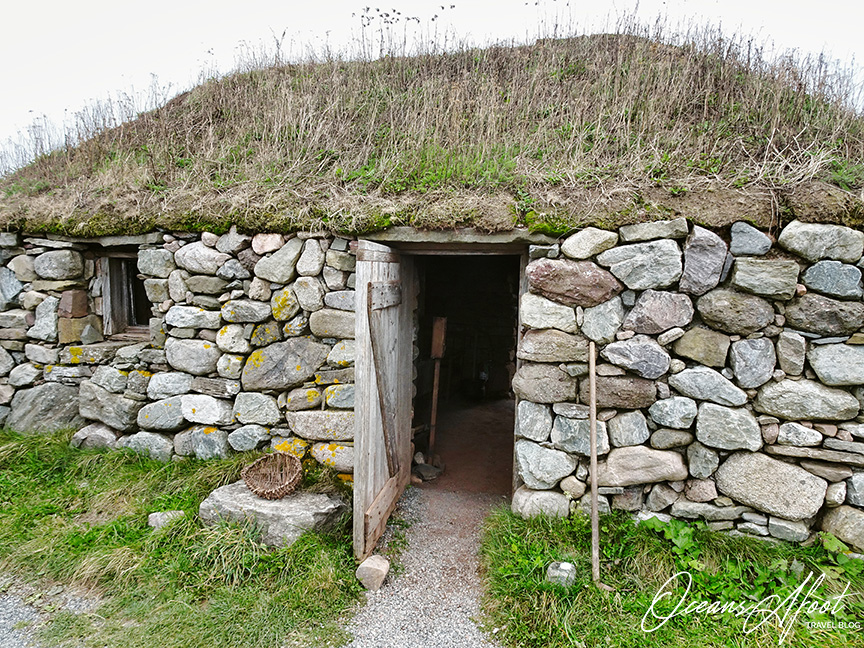
- 1820s: The museum’s next building is the Buchanan House, a timber-frame structure built in the 1820s. It represents a more prosperous period in the Highlanders’ history, as they began to establish larger farms and more permanent settlements.
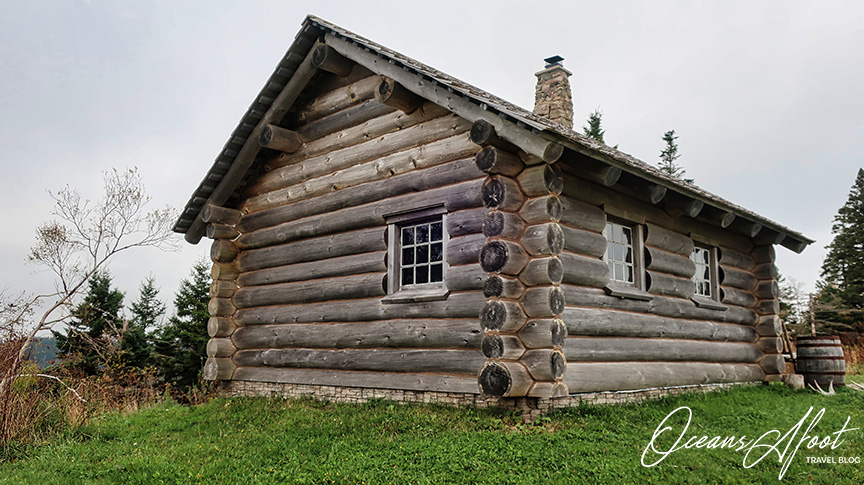
- 1850s: The museum’s church, St. Kieran’s, is a replica of a Roman Catholic church that was built in the 1850s to serve the Gaelic-speaking Catholic community in the area.

- 1860s: The museum’s next building is the Smith House, a two-story, wooden home built in the 1860s. It represents a later period of settlement, when the community had become more established and successful.
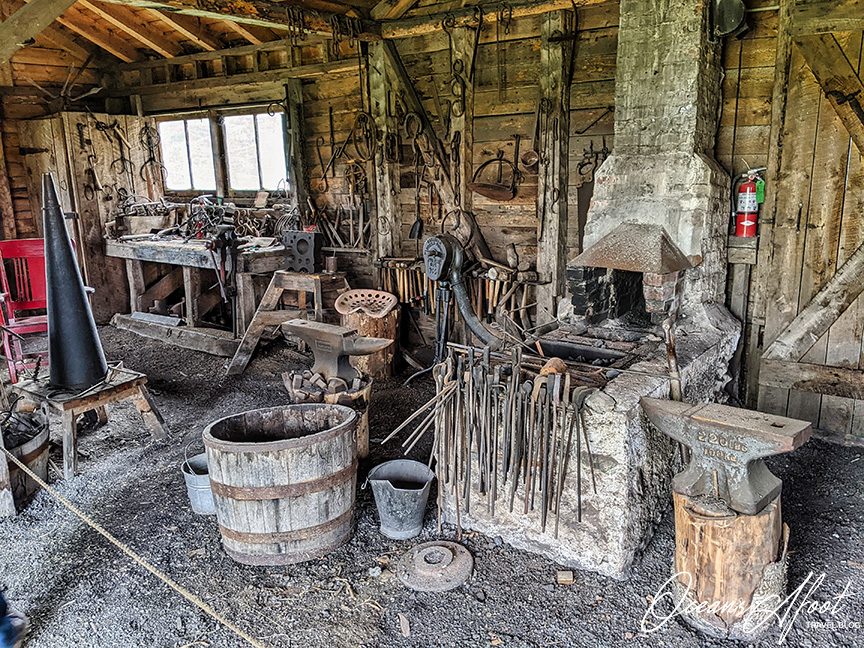
- 1870s: The McIntyre House is a two-story, wooden home built in the 1870s, representing a time when the Highlanders had become quite prosperous and were building larger and more elaborate homes.
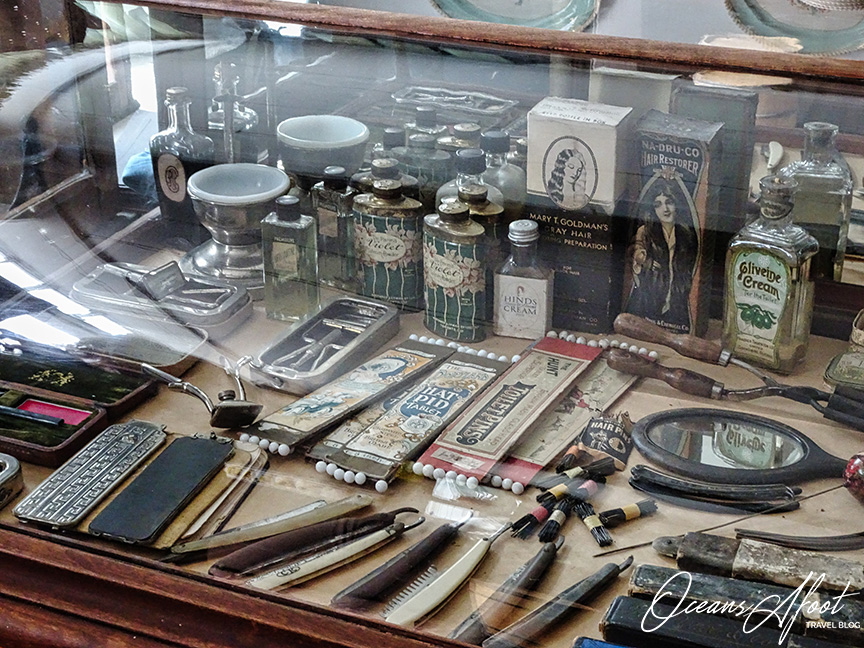
- 1920s: The museum’s final building is the MacLeod House, a modern-style home built in the 1920s. It represents a more recent period of Highland settlement in Nova Scotia and shows how the culture of the Highlanders has continued to evolve and adapt over time.
At first, the concept may have been difficult to grasp, but as we moved from building to building, it became a fascinating and well-executed journey through time. Overall, the buildings at Highland Village Museum provide visitors with a glimpse into the lives and culture of the Scottish Highlanders who settled in Nova Scotia over the past few centuries.
The Little Narrows
2-minute cable ferry crossing
299 Hwy 223, Little Narrows, NS B0E 1T0, Canada
Leaving behind the Highland Village Museum, we headed northwest and soon arrived at the Little Narrows village where we boarded the diesel-powered cable ferry. This ferry can easily carry 15 cars or a handful of buses and runs on a 24-hour on-demand schedule. The crossing over the shallow Narrows takes just 2 minutes, allowing us to cut down our journey by 15 miles.

Inverary Resort
1-hour, 15 minutes for lunch and sight-seeing
368 Shore Rd, Baddeck, NS B0E 1B0, Canada
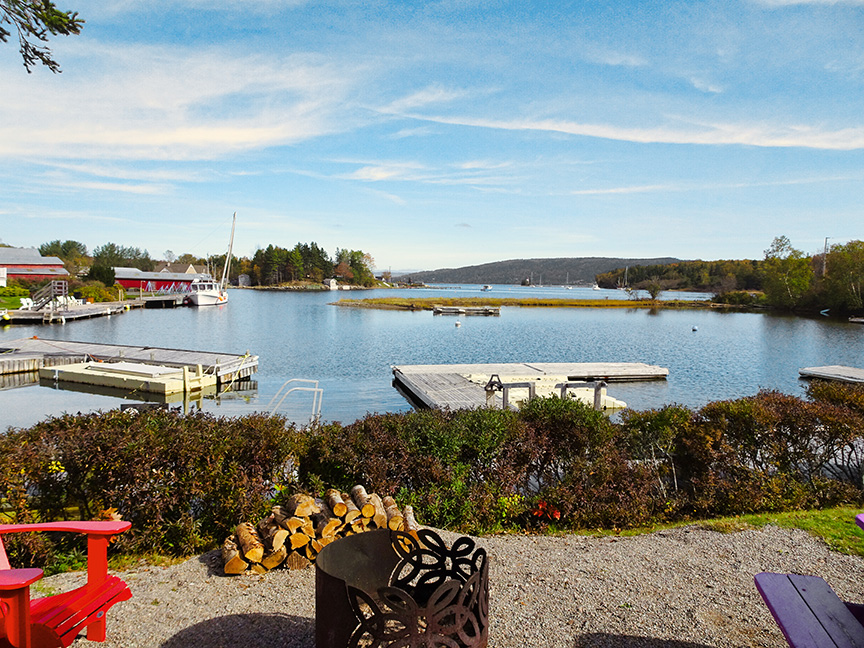
We reached the charming Inverary Resort, which is nestled on the shores of Baddeck Bay, adjacent to the Bras d’Or Lake.

The Bras d’Or Lake, a vast inland body of water situated at the heart of Cape Breton Island, is encircled by undulating hills and towering mountains, and is celebrated for its awe-inspiring vistas, crystalline waters, and a profusion of wildlife that includes bald eagles, loons, and ospreys.
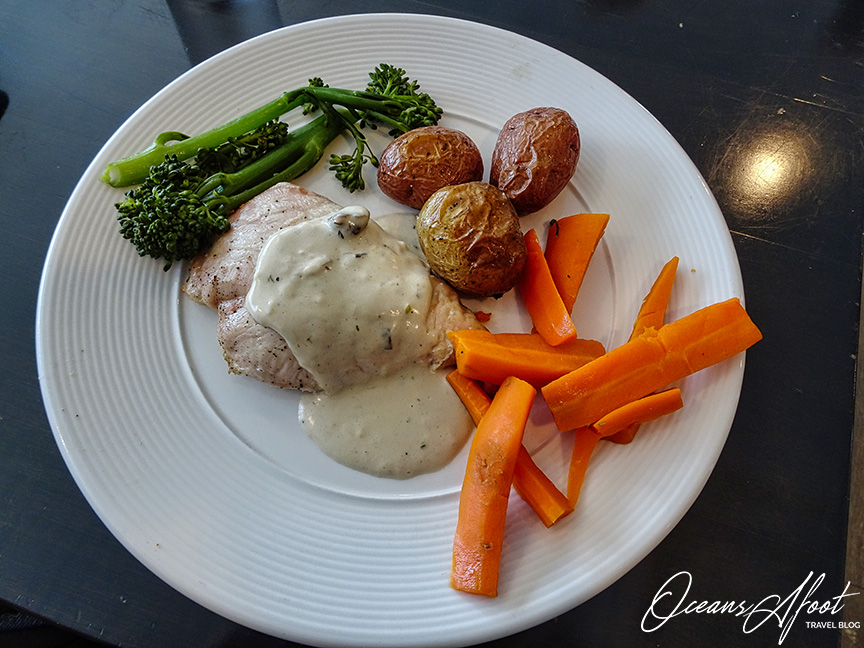
Our trip kicked off with a delectable lunch at the Lakeside Restaurant, where we had a dish of chicken with mushroom sauce, accompanied by fresh new potatoes, carrots, and broccoli. We culminated our meal with a luscious chocolate peanut butter tort for dessert.
After lunch, we were given some free time to explore the lake area near the Inverary Resort, which is a serene and picturesque location that offers ample opportunities to unwind, soak in the scenic vistas, and appreciate the natural splendor of the surroundings.
Guests staying at the Inverary Resort can partake in various lake activities, such as swimming, renting kayaks or canoes to explore the lake, or simply unwinding on the beach or the resort’s sprawling waterfront deck.
Village of Baddeck
Quick drive-thru
Cape Breton Island
Our journey led us through the charming village of Baddeck, where we caught a glimpse of the iconic old stone Post Office before making our way to the Alexander Graham Bell National Historic Site. Established in 1956, this landmark is a testament to the life and legacy of one of Cape Breton’s most celebrated residents, the inventor of the telephone, Alexander Graham Bell.
Alexander Graham Bell National Historic Site
5-minute presentation | 1-hour, 15-minute inside visit/free time
559 Chebucto St, Baddeck NS B0E 1B0, Canada
Upon our arrival at the Alexander Graham Bell National Historic Site, we were warmly welcomed by an official museum guide who gave us a captivating presentation on the life and accomplishments of this renowned inventor.

We were fascinated to learn that Bell is considered Cape Breton’s most famous resident, and that he made history by making the first telephone call in 1876. After the informative presentation, we were given time to explore the museum exhibits and the scenic beauty outside at our leisure.

As we navigated the museum, we couldn’t help but notice that Bell had a unique perspective on his inventions. He tended to lose interest once an invention reached the commercial stage, and his passion was always in the initial discovery phase. It was a fascinating insight into the mind of this great inventor.
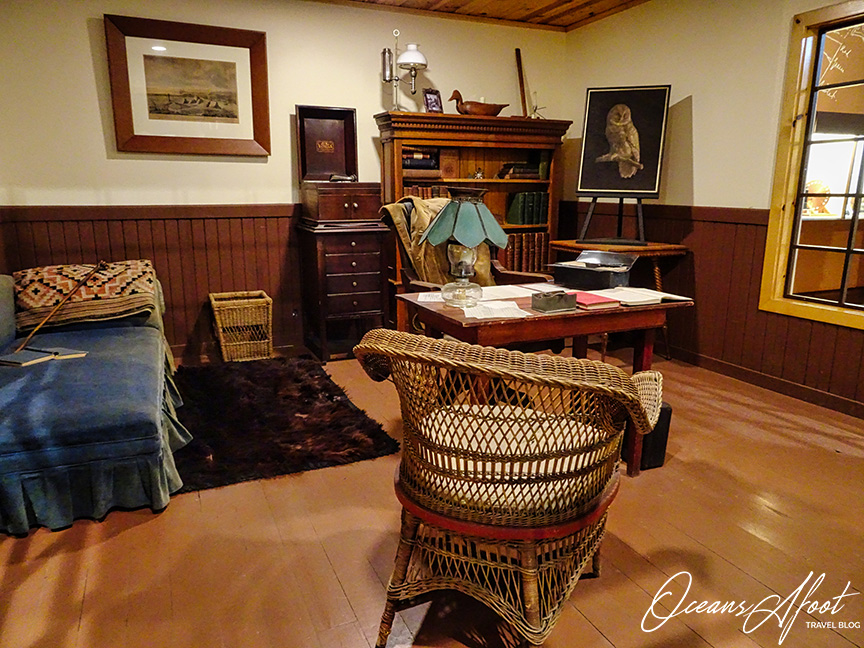
It’s worth noting that Alexander Graham Bell continued to live and work in the Cape Breton area until his death in 1922, leaving behind a legacy that continues to inspire generations.
From the grounds of the National Historic Site, you get a stunning view of the Bras d’Or Lake and the Kidston Island Lighthouse, which stands on a small island in the middle of the lake. The lighthouse was built in 1912, sports a red top and white square building and is still in operation. There is a captivating contrast of the lighthouse against the serene blue-green waters of the lake, offering an ideal spot for snapping striking photographs.

Return to Port of Sydney
1-hour drive
90 Esplanade, Sydney, NS B1P 1A1, Canada
Carrying with us a richer understanding of the area, our shore adventure drew to a close as we retraced our steps back to the Port of Sydney and embarked on our eagerly awaiting ship. Along the way, our onboard educator continued to enlighten us on our day’s discoveries, especially Alexander Graham Bell’s story.
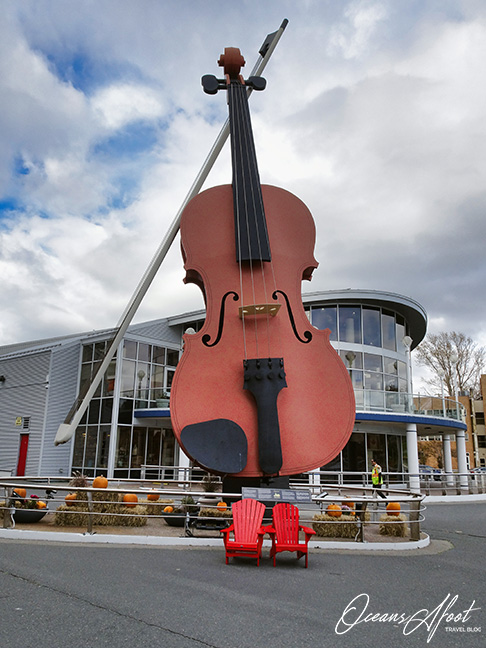
Before returning to the ship, we made a point to visit the stunning Last Fiddle sculpture located near the cruise ship pavilion on the waterfront. This intricately detailed bronze fiddle, standing over four meters tall, features finely carved strings and scrollwork, making it a striking sight to behold.
Unveiled in 2015, the sculpture’s title refers to the significance of Cape Breton’s traditional Celtic music, which is believed to be fading away with the older generation. As a popular attraction in the port, it is often photographed and shared on social media, making it a must-see landmark during your visit.
Cruise Port: Sydney, Nova Scotia, Canada
Shore Excursion: Bra’s d’Or Lakes: Heart of the Island
Cruise Line/Ship: Holland America Nieuw Statendam
Tour Operator: Ambassatours Gray Line
© OceansAfoot