Stories from the Heart of the Gulf of St. Lawrence
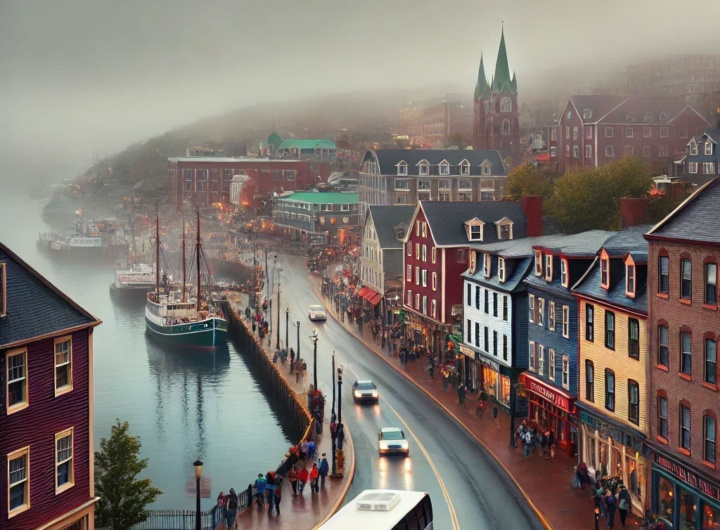
In the heart of the Gulf of St. Lawrence, away from the regular tourist trails, stands the tranquil harbor of Havre-Saint-Pierre. It whispers tales of maritime heritage, of indigenous tribes, and of the echoing calls of the Sea Parrot, a small vessel that carries curious travelers into the world of Petite Ile au Marteau.
Petite Ile au Marteau
Address: 50.214° N, 63.562° W, Havre-Saint-Pierre, Quebec, Canada
Time Spent: 1.75-hours
Upon our arrival at Petite Île au Marteau, we were warmly greeted by Julian, our knowledgeable Parks Canada interpreter. His deep understanding of the island’s history and passion for storytelling set the tone for a memorable exploration.
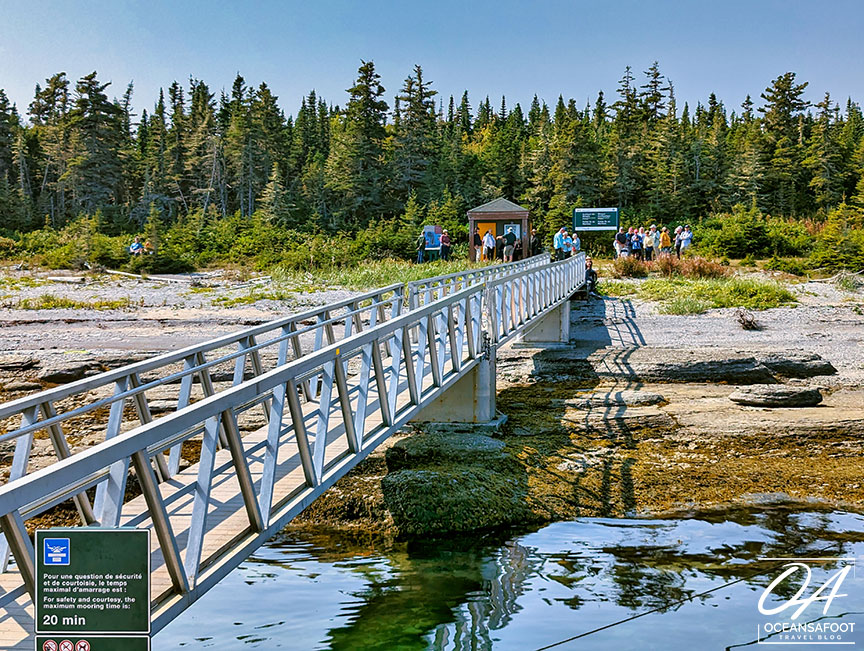
Also known as Little Hammer Island, it harks back to a distant past when blacksmiths were believed to have worked here, shaping tools and lives. However, its earlier name, Walrus Island, tells a more profound story, reflecting the historical significance of the indigenous Innu tribes who once thrived along its shores.
Footprints of the Innu
Over a century ago, the Innu tribes roamed these lands, living in harmony with the natural world. Petite Ile au Marteau was a prime hunting ground for walruses, which the Innu revered as both a source of sustenance and materials for daily life. The walrus provided not only food but also hides for making warm pelts and moccasin boots. The Innu, known for their rich cultural traditions, celebrated their connection to the land through stories, songs, and dances that honored the balance between humanity and nature. These echoes of the past still linger on the island, reminding visitors of a time when survival depended on a deep respect for the natural world.
Walking the Island’s Pathway
Time Spent: 1.5-hours walking/free time
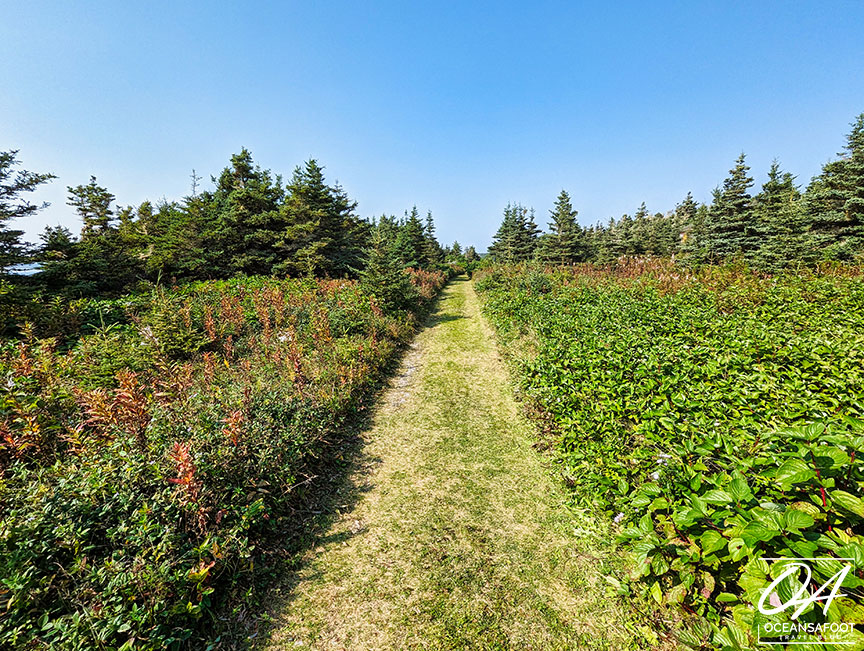
As we set out on a winding path of soft sand and gravel, it soon transitioned into wooden planks reminiscent of a boardwalk. The island’s natural beauty gradually unfolded around us, accompanied by the sounds of seabirds and the gentle lapping of waves against the shore, creating an atmosphere of peaceful solitude.
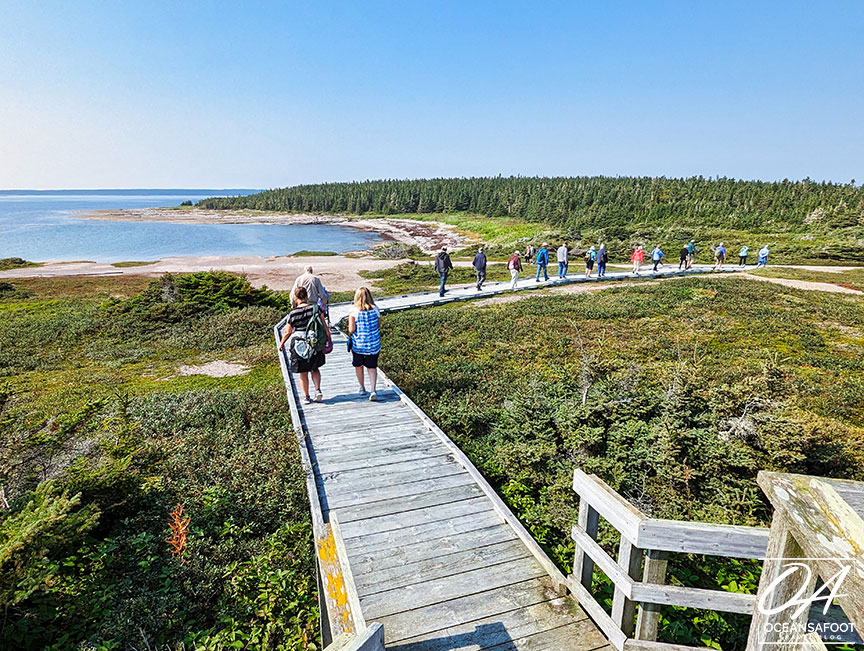
Julian led us on a 45-minute trek through the island’s varied terrain, pausing occasionally to point out coastal flora, petite limestone escarpments, and the occasional driftwood-strewn beach.
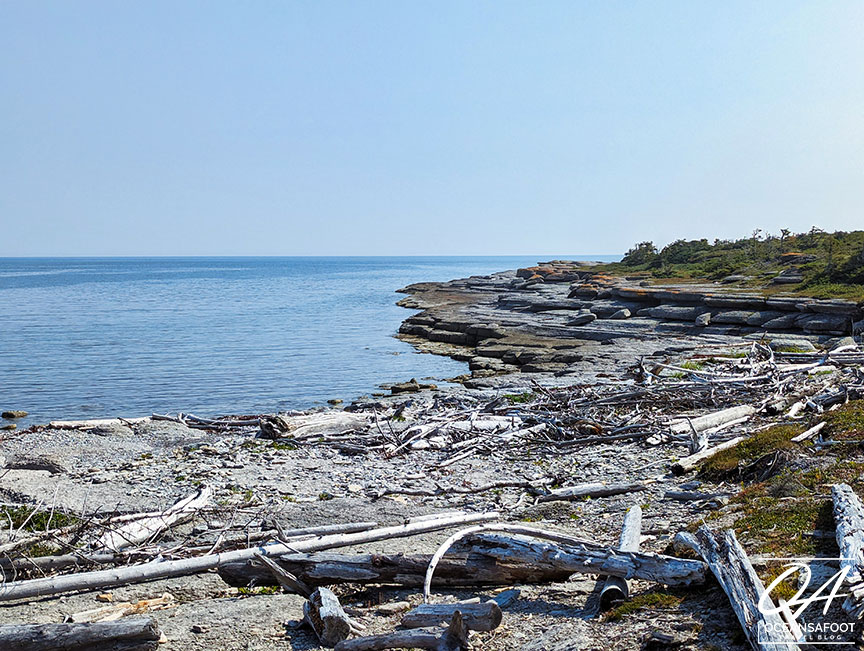
At the halfway point of our hike, we reached a wooden platform, offering a panoramic view of the island’s coastline. Here, the contrast between the vibrant greenery and the stark limestone cliffs was striking, creating a landscape that felt both ancient and alive.
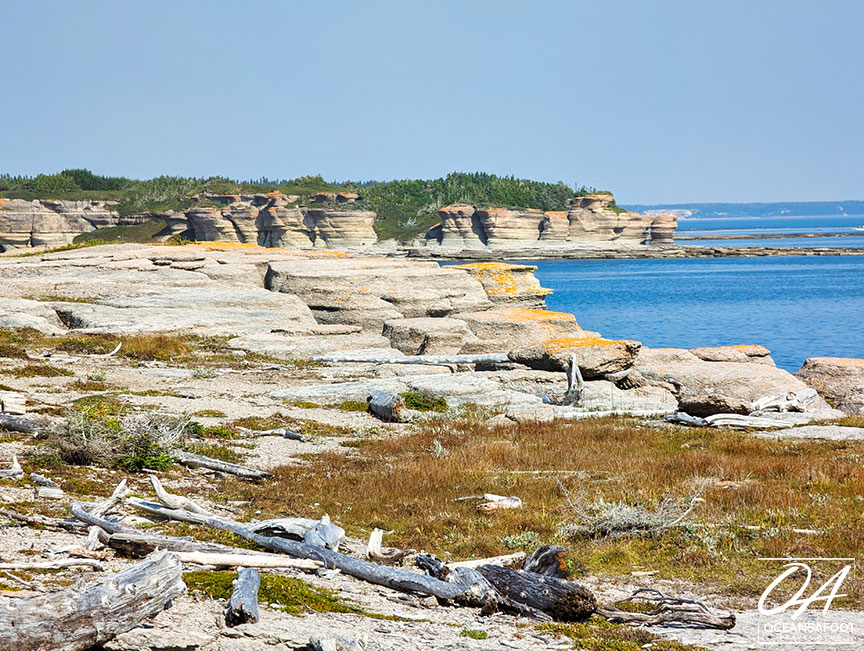
The Sentinel of the Sea
After walking another 25 minutes, we reached the end of our path and arrived at one of the island’s most iconic landmarks: the Phare lighthouse.
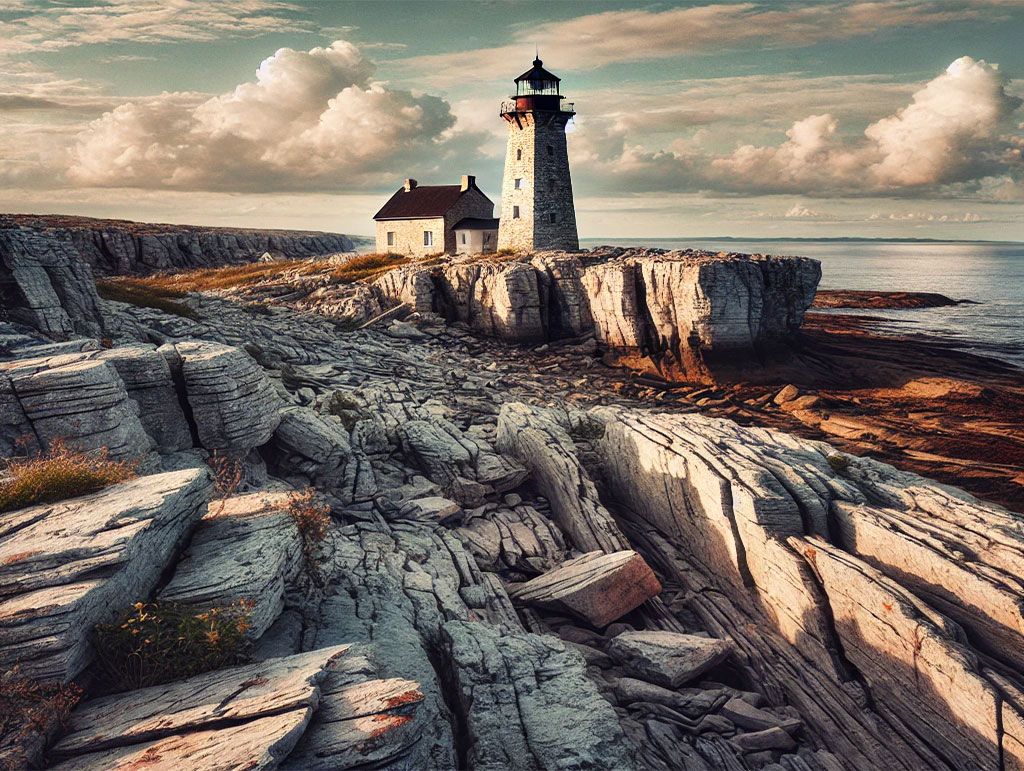
This neoclassical structure, constructed in 1915, rises majestically over the island’s rugged terrain. For more than a century, it has stood as a beacon of safety, guiding sailors through the challenging and often treacherous waters of the Gulf of St. Lawrence.
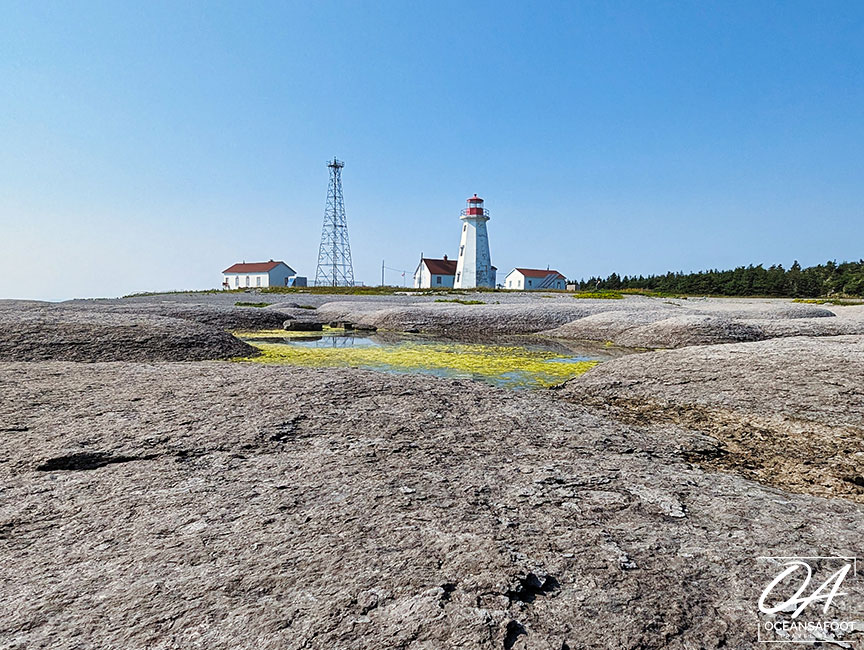
Standing in front of this historic lighthouse, I couldn’t help but imagine the lighthouse keepers of the past, gazing out at the vast expanse of water, ever vigilant for ships in distress. Their lives were marked by isolation and responsibility, relying on the flickering light of the beacon to protect countless lives from the perils of the sea. It was easy to picture them staring across the horizon, scanning the waters for signs of danger, as waves crashed against the island’s rocky shores.
Despite its significance, the Phare lighthouse today bears the marks of time. The once-pristine whitewashed exterior now shows signs of weathering, with cracks running along the walls and clear evidence of neglect. Its grandeur is marred by the lack of ongoing conservation efforts. The door to the Lantern Room, left ajar and exposed to the elements, stands as a reminder of how vulnerable even the most steadfast structures can be.
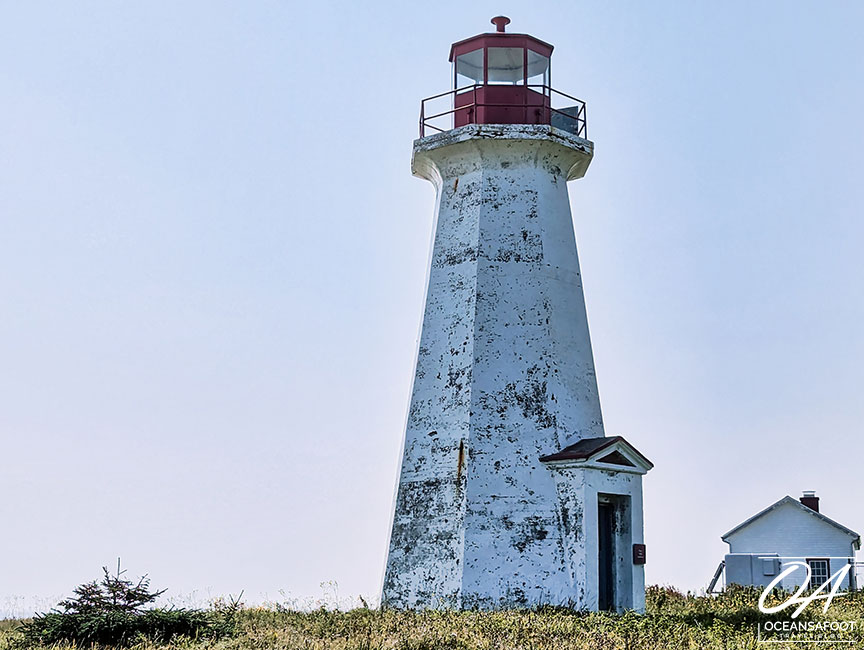
The lighthouse’s current state is a melancholy reflection of the passage of time, its decline made more poignant by the role it once played in preserving human life. The realization that it was now unsafe to enter further emphasized its fragile existence, and as I stood there, I couldn’t help but feel a deep sense of loss for this once-mighty sentinel of the sea.
The Island’s Beauty
The scenery around us exuded a profound sense of tranquility. The Gulf of St. Lawrence stretched endlessly before us, its vast waters gently lapping against the jagged shoreline, accentuating the rugged beauty of the rocky landscape. The expansive terrain of weathered limestone stood in sharp contrast to the smooth, infinite horizon of the gulf.
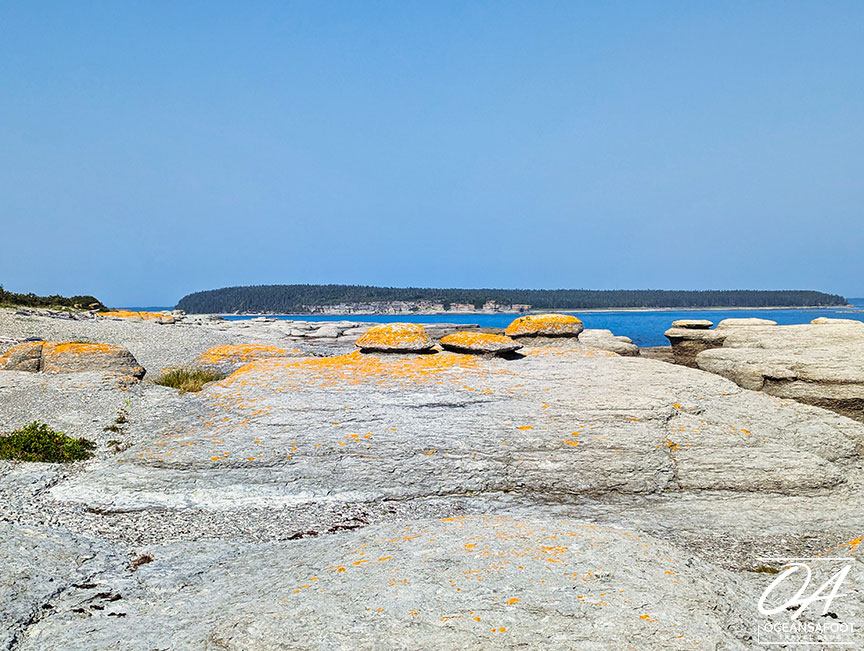
As we made our way across the rocks, we discovered pockets of still water, remnants from earlier waves that had swept over the stone. In these serene pools, we were able to capture some good partial reflections of the lighthouse, mirrored in the calm escaped waters.
After spending a full sixty minutes exploring here, it was time to begin our journey back to the harbor. For those unable to make the return trip on foot, an electric wagon offered a convenient and comfortable option. However, we opted to walk, retracing our steps along the familiar path.
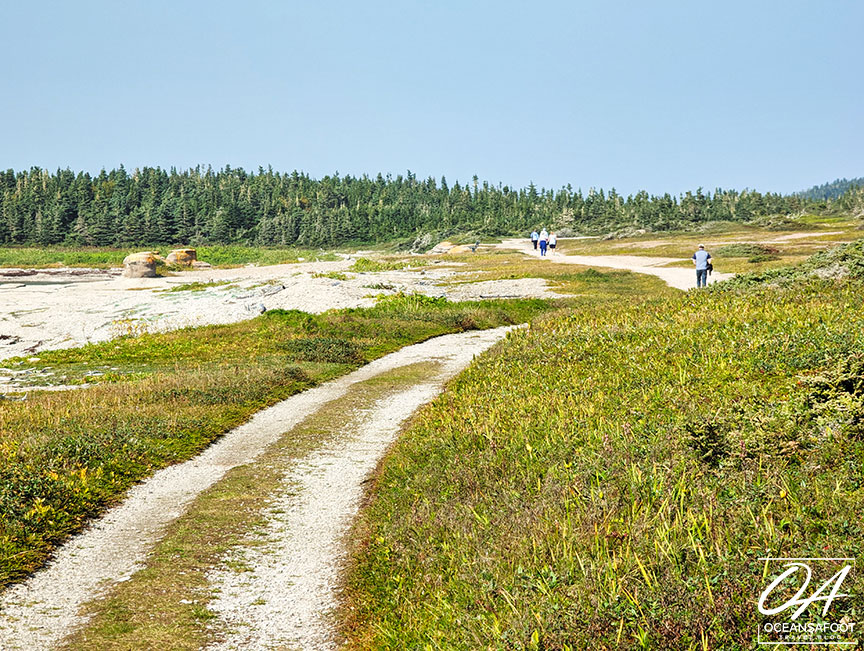
The return journey felt quicker, perhaps because we had already been captivated by the island’s beauty and its stories.
Farewell to Petite Île au Marteau
Once back at our starting point, a brief pause of fifteen minutes saw the Sea Parrot docking, ready to ferry us back to the pier and the Zaandam eagerly awaiting our return.
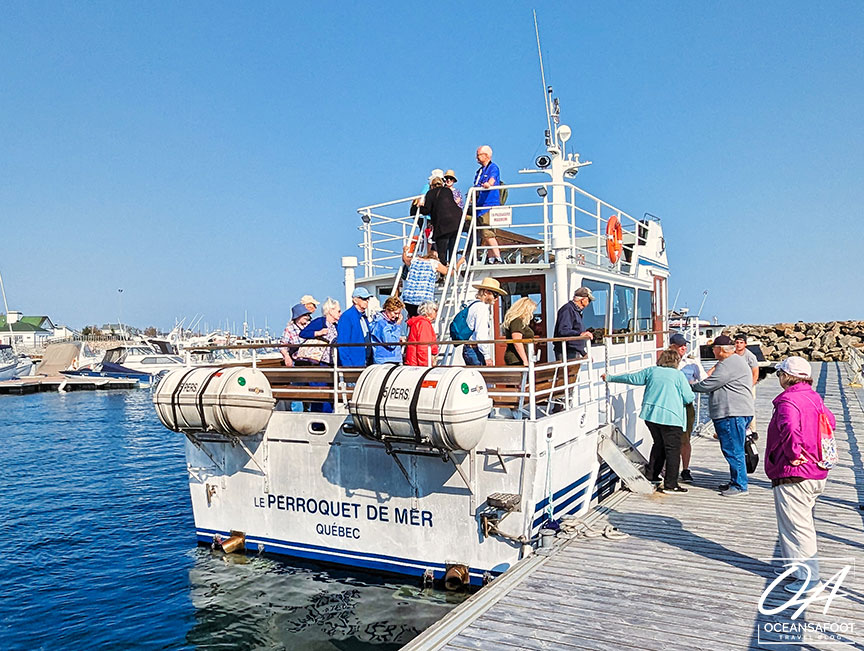
The day had been nothing short of magical, filled with the natural splendors and captivating landscapes of Petite Île au Marteau.
Tour Name: Petite Ile au Marteau
Cruise Line/Ship: Holland America Lines Zaandam
Tour Operator: Parks Canada
Duration: Approx. 2.75 hours
© OceansAfoot