✘ Arrecife, Lanzarote, Canary Islands • December 25, 2025
⌖ Art, Architecture, and Volcanic Landscapes Shaped by One Vision
Tour Route: Arrecife → Mirador del Río — Los Helechos closed → Jameos del Agua → Jardín del Cactus (Guatiza) → Teguise Old Town (added stop) → Arrecife (return to ship)
We boarded our coach in Arrecife in the mid-morning and set out north across Lanzarote, leaving the port behind and climbing quickly into the island’s interior. With Christmas Day keeping traffic light and several sites closed, the island felt unusually quiet—an atmosphere that suited a route shaped as much by landscape as by architecture.
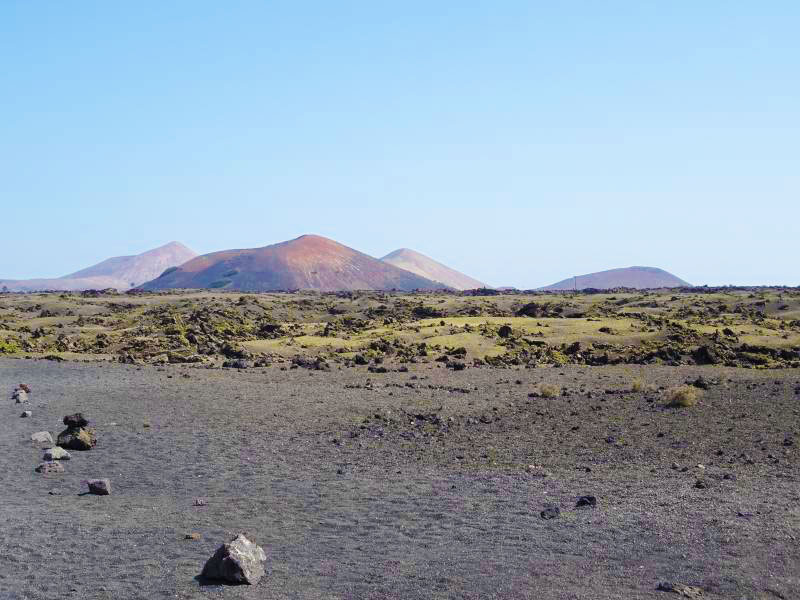
The terrain announced itself almost immediately. Lava fields stretched outward in dark, uneven bands, interrupted by low stone walls and compact villages painted white against the volcanic ground. Nothing here felt accidental. Farming, settlement, and even road placement appeared as responses to wind, heat, and limited water rather than attempts to overcome them.
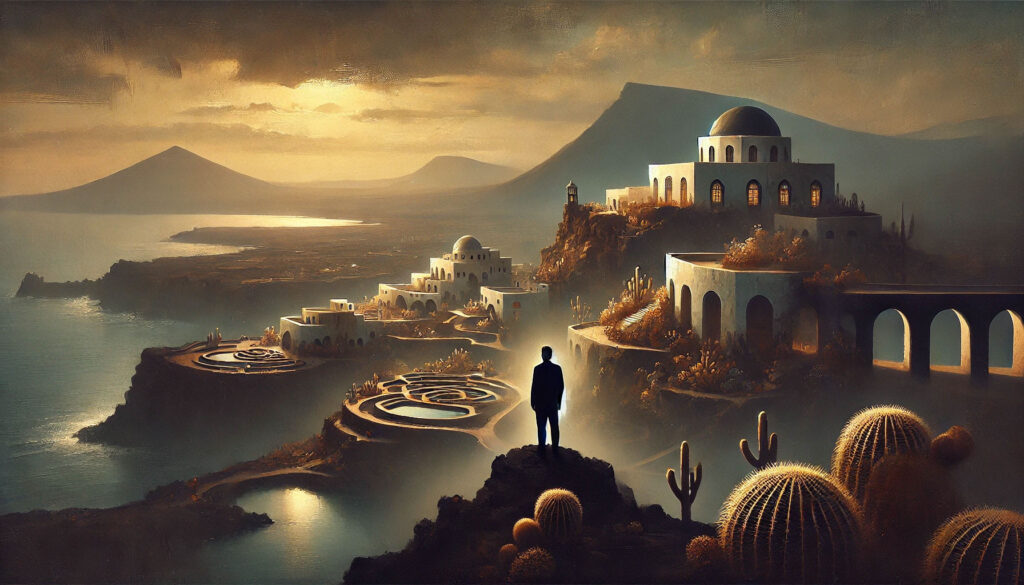
As the drive unfolded, our guide framed the day through the work of César Manrique (1919–1992), the artist and architect whose influence still governs how Lanzarote presents itself to visitors. Rather than resisting tourism, Manrique sought to control it—arguing that development should remain subordinate to the island’s volcanic forms, not imposed upon them.
① Mirador del Río (Northern Clifftop Viewpoint)
⚲ Mirador del Río, near Yé, Lanzarote, Canary Islands
⧗ ~30 minutes
With the planned stop at Mirador de Los Helechos closed for Christmas Day, the route adjusted early and continued north to Mirador del Río. The change proved fitting. This clifftop viewpoint offered a direct introduction to how César Manrique worked with Lanzarote’s geography rather than attempting to reshape it.
As we arrived, Mirador del Río revealed itself high above the northeastern coast, overlooking the narrow channel separating Lanzarote from La Graciosa. The guide explained that the name “Río” refers not to a river—which the island lacks—but to this strip of sea, long treated as a natural boundary and historically monitored for navigation and defense.
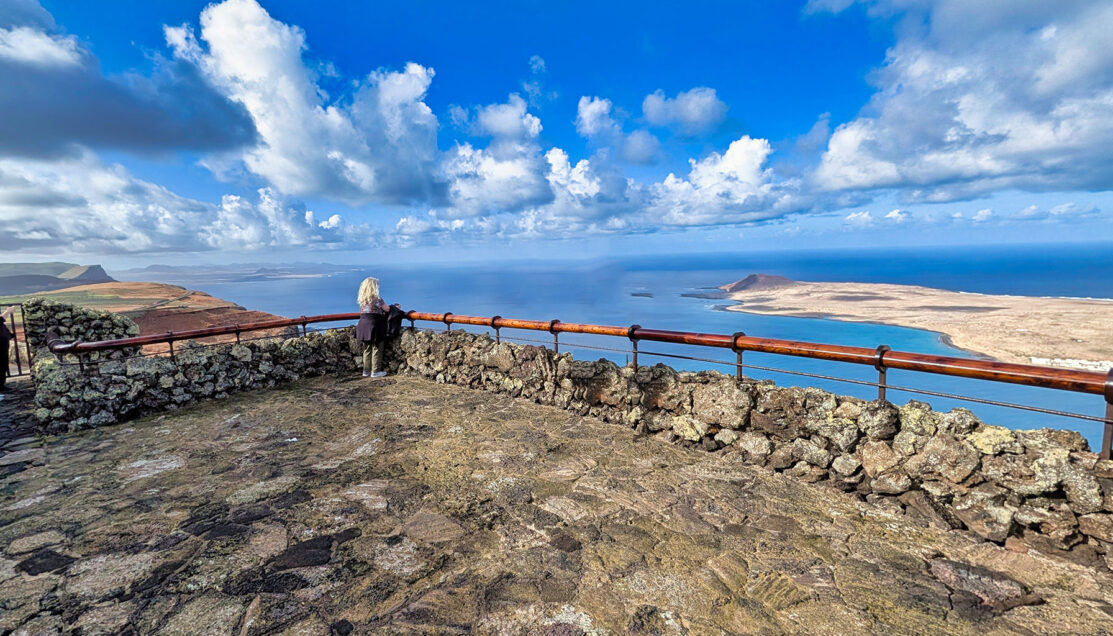
The site had once served as a military battery guarding the channel below. Manrique’s intervention did not replace that function so much as reinterpret it. Instead of building upward, he carved inward, embedding the structure into the cliff face and covering it with stone and soil. From above, the viewpoint was nearly invisible, allowing the landscape to remain visually uninterrupted.
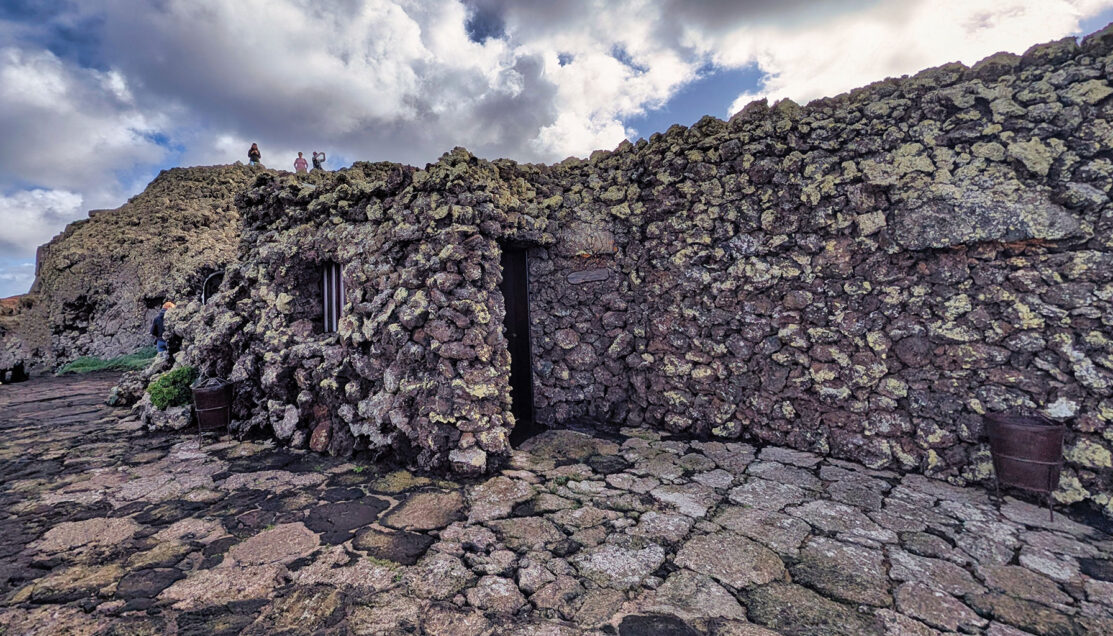
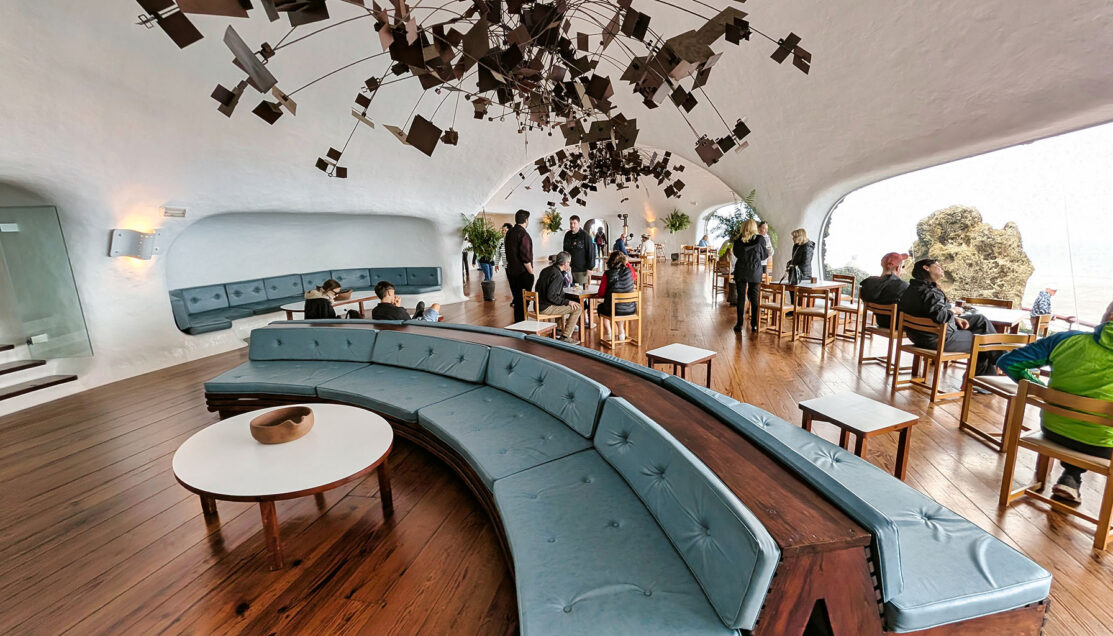
Inside, movement was tightly controlled. Low ceilings and curved white walls compressed the space as we moved through, before releasing us toward wide panoramic windows. The transition was deliberate—enclosure first, then exposure. When the view finally opened, La Graciosa appeared fully framed, with the Atlantic stretching beyond and the volcanic contours of northern Lanzarote falling away beneath the glass.
Outside, stone terraces traced the edge of the cliff, offering unobstructed views back toward the coast. Nearby rose La Corona, the volcano responsible for the lava tube system that shapes the next stop on the itinerary. From this height, the relationship between geology and settlement became easier to read.
Many in the group paused briefly in the café, where the guide suggested trying a barraquito—a layered local coffee served in a clear glass. The interior details were understated: wood, metal, and recycled materials used quietly, never competing with the view beyond the windows.
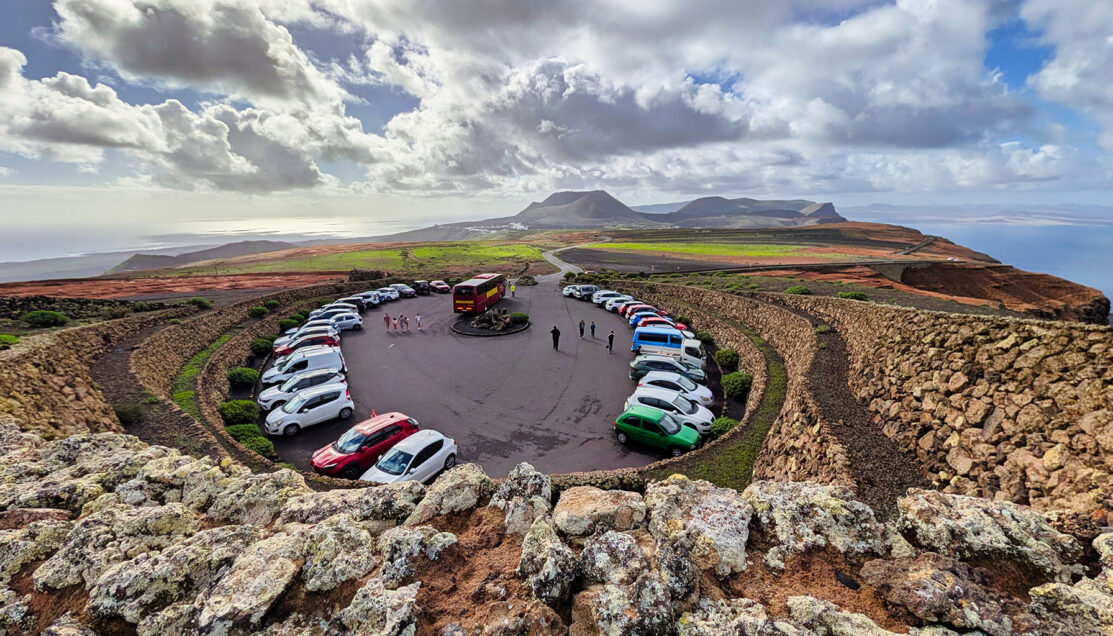
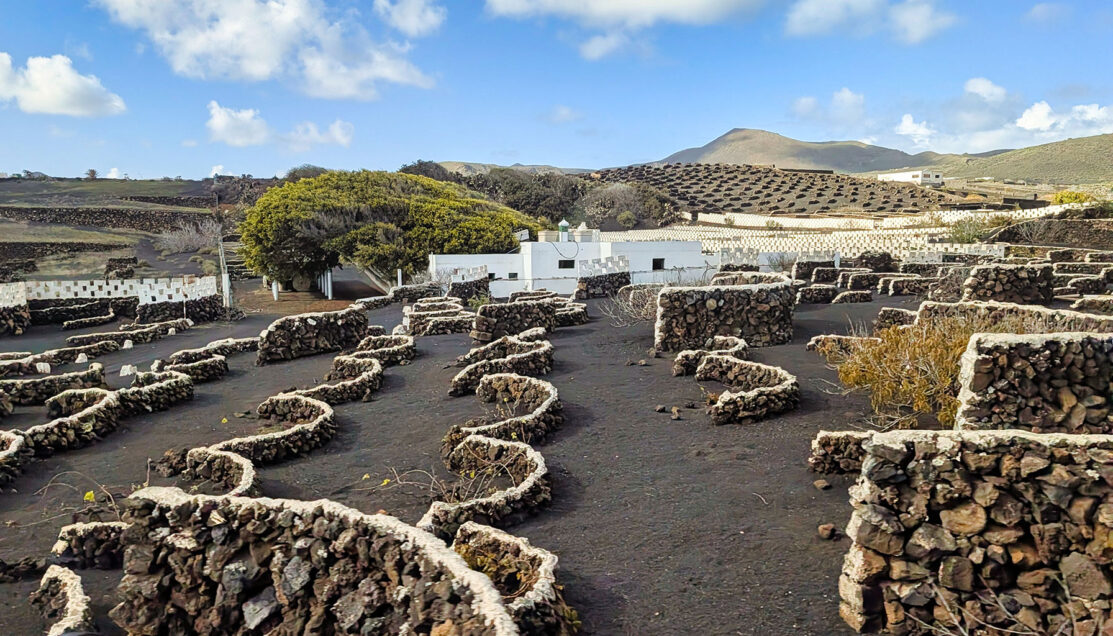
After roughly 30 minutes, we returned to the coach and began the descent toward the coast. The road passed through agricultural zones defined by low stone walls and black volcanic gravel—practical systems designed to shelter crops from wind and conserve moisture, reinforcing Lanzarote’s long-standing habit of working within its limits rather than trying to overcome them.
② Jameos del Agua (Lava Tube, Lagoon & Auditorium)
⚲ Jameos del Agua, Carretera Arrieta–Órzola, Lanzarote
⧗ ~50 minutes
By late morning, the coach descended from the northern cliffs toward the coast and pulled into Jameos del Agua. This was the first place where César Manrique’s ideas were fully realized in built form, and our guide framed it as the project that set the template for how Lanzarote would later approach tourism—carefully balancing access, preservation, and design.
The site occupies part of a lava tube formed during eruptions of Volcán La Corona. As we were introduced to the space, the guide explained that a jameo forms when the roof of a lava tunnel collapses, opening the volcanic interior to daylight. Manrique treated this geology as fixed architecture, adapting pathways, light, and movement to what already existed rather than reshaping the cave itself.
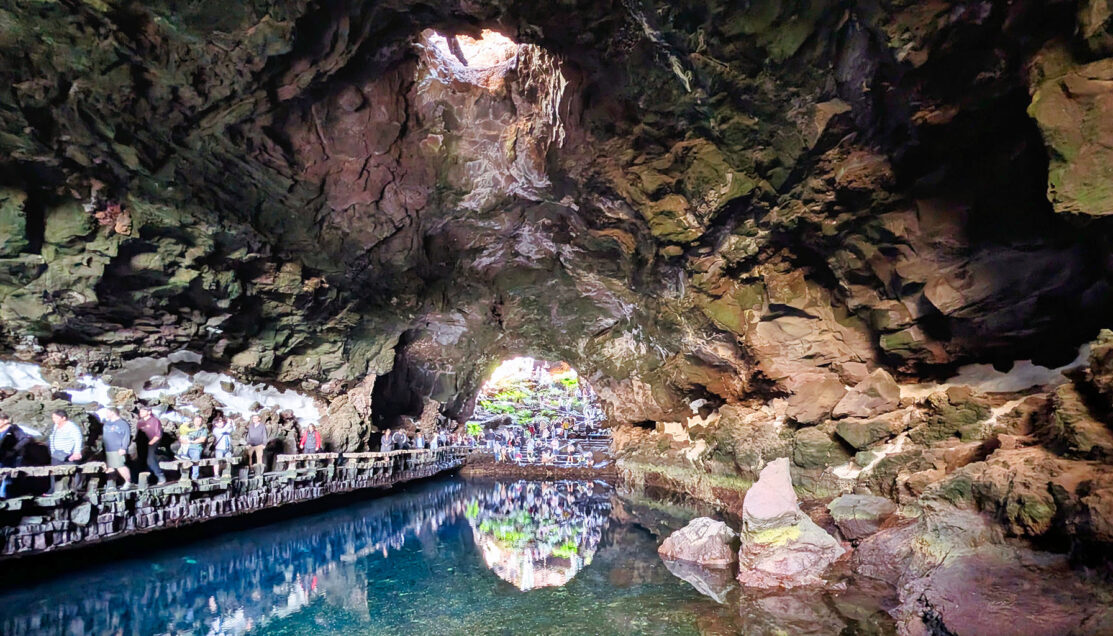
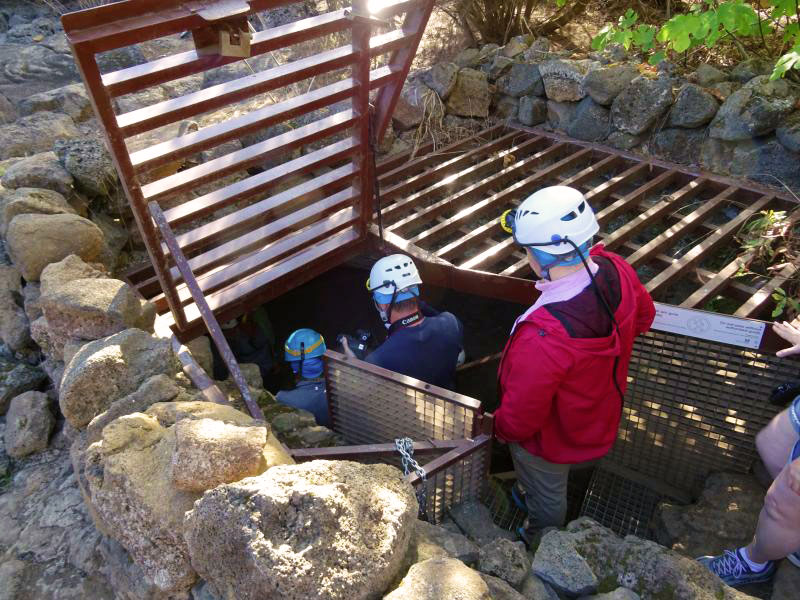
Entry began through a narrow opening, where stone steps led us down into the tunnel. The walls and floor were left raw—dark, uneven, and unmistakably volcanic. The footing naturally slowed our pace, and as daylight faded into shadow, the enclosed space sharpened our awareness of sound, texture, and scale.
At the center of the tunnel, we reached a still saltwater lagoon, quietly fed by the nearby ocean through unseen fissures in the rock. In the clear water below, tiny blind albino crabs moved just beneath the surface—an endemic species found almost nowhere else. We were allowed close, but not to touch, reinforcing how access here is deliberately controlled rather than unrestricted.
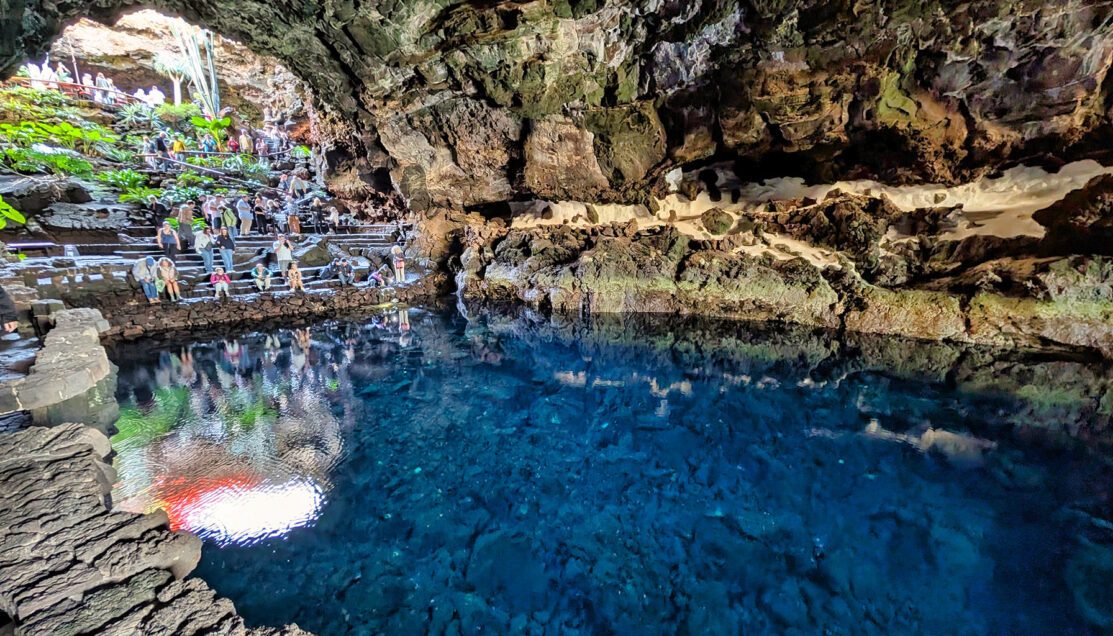
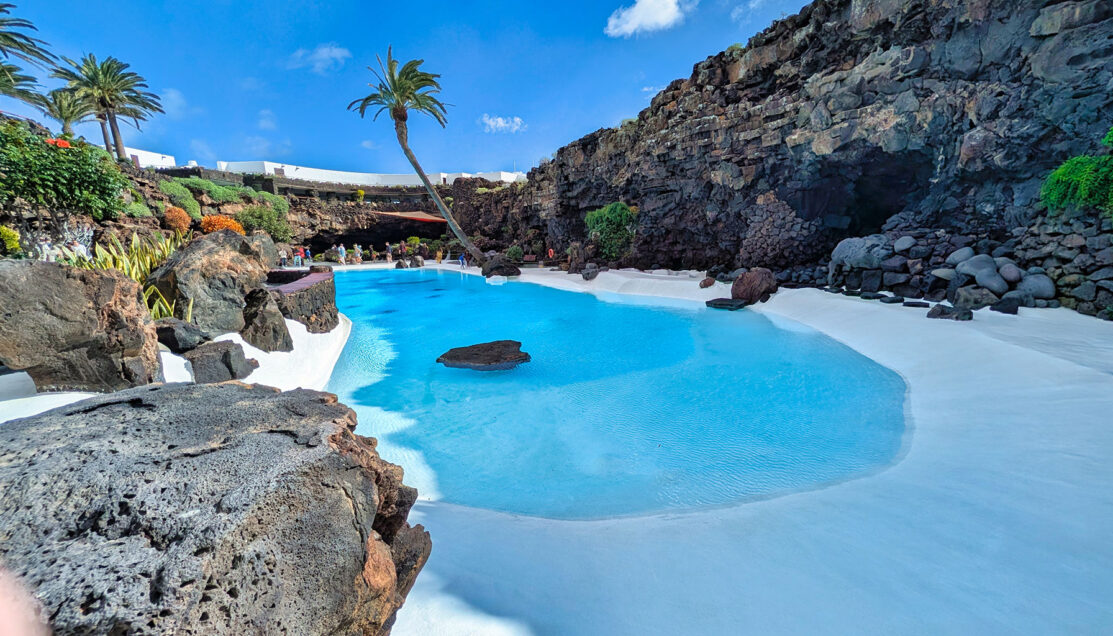
Moving onward, the tunnel opened suddenly into the larger jameo. Here, Manrique’s intervention became visible without overpowering the setting. White walls, palm trees, and a turquoise pool appeared against the black lava, arranged as a carefully composed visual space. The pool itself was decorative only, intended to be seen rather than used.
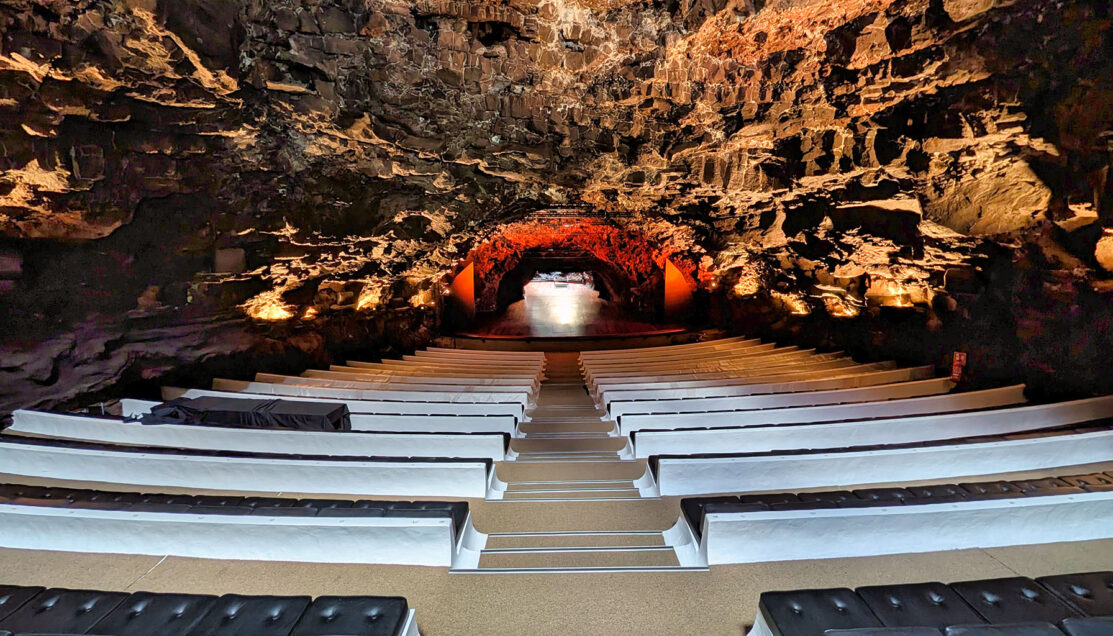
Just beyond, almost hidden from view, we entered one of the site’s most unexpected spaces: an underground auditorium carved directly into the lava. Seating was simple, lighting subdued, and the acoustics shaped entirely by the stone. Performances are still held here, allowing the cave to function as a concert venue without altering its natural structure.
As we moved through the site, shifts in sound and light marked each transition—from enclosed tunnel to open jameo, from echo to quiet absorption. These changes guided movement and attention without the need for signs or instruction.
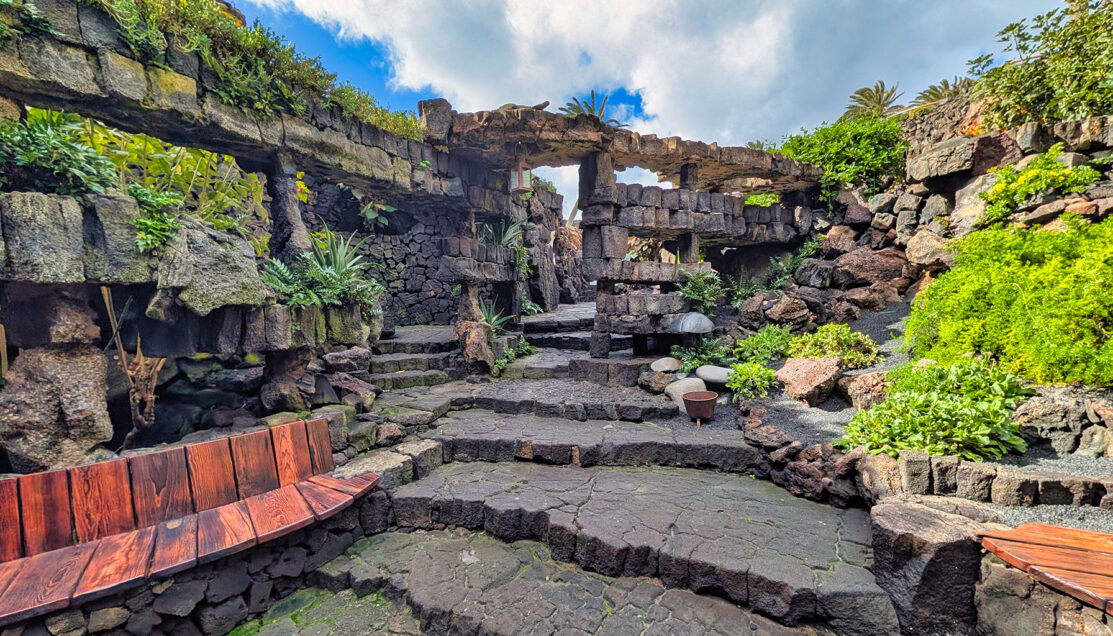
The exit passed a small café-bar and shop before returning us outdoors and back to the coach.
③ Jardín del Cactus (Terraced Volcanic Garden)
⚲ Jardín de Cactus, Guatiza, Lanzarote
⧗ ~30 minutes
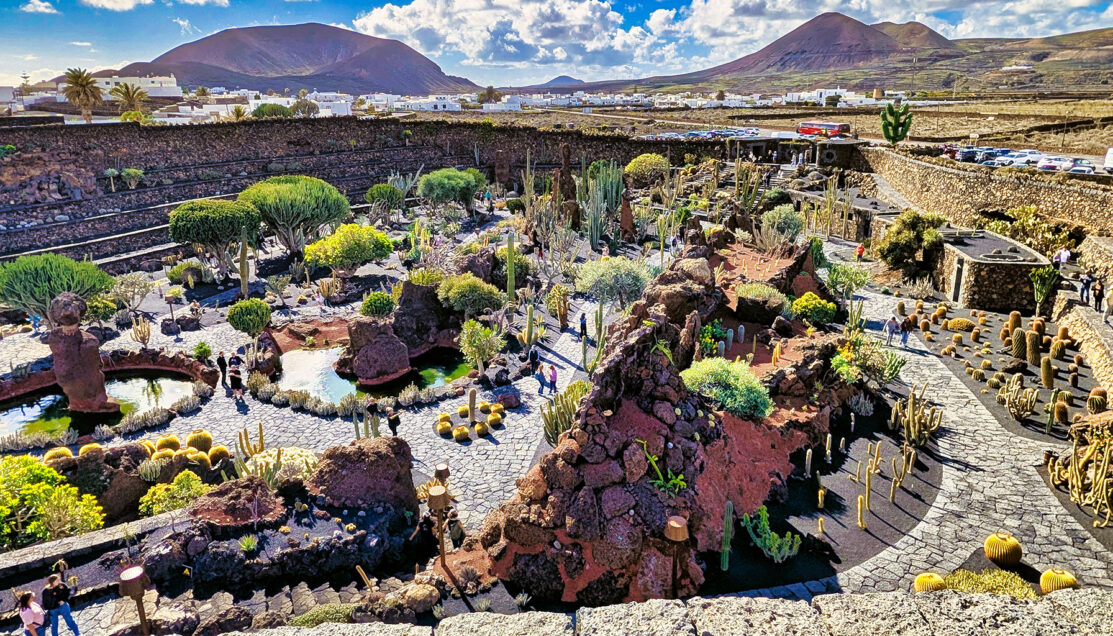
Just after midday, the coach pulled into Guatiza for a visit to Jardín del Cactus. Our guide introduced it as César Manrique’s final completed project on Lanzarote and one of his most precisely composed works. The garden occupies the bowl of a former quarry—an excavation site left by stone extraction and deliberately reused rather than erased.
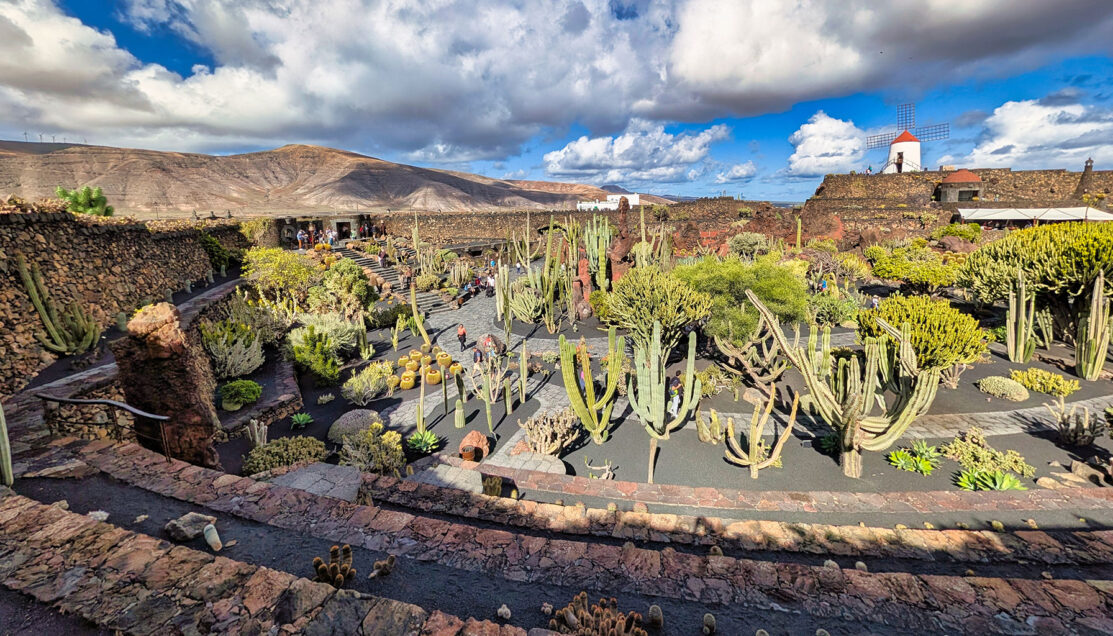
Instead of leveling the terrain, Manrique reshaped it into a series of concentric stone terraces that mirror the form of a volcanic crater. From the rim, much of the garden was visible at once. As we descended along the paths and stairways, the scale shifted gradually, drawing us deeper into the space and changing perspective with each level.
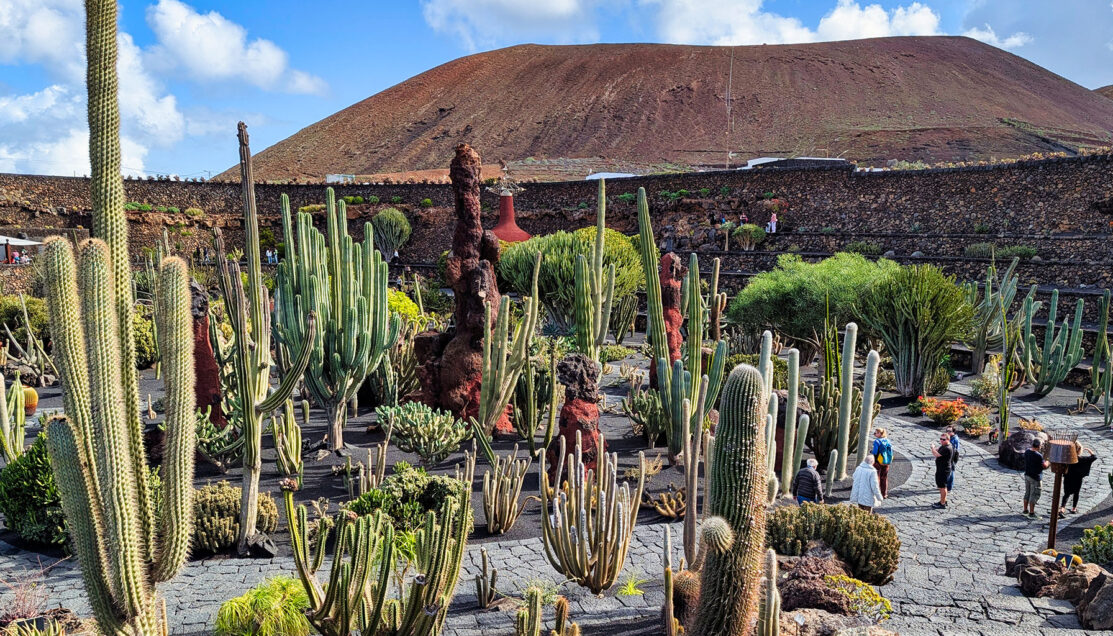
Thousands of cacti filled the terraces, representing species from the Canary Islands, the Americas, Africa, and Madagascar. Tall columnar forms rose sharply from the gravel, while barrel and paddle-shaped varieties clustered tightly below. Set against black volcanic stone, the plants felt less like a botanical collection and more like sculptural elements arranged in direct dialogue with the terrain.
At the highest point stood a restored traditional windmill, preserved and integrated into the design. Its presence anchored the garden in Lanzarote’s agricultural past, providing a visual counterpoint to the organic forms spread across the quarry floor.
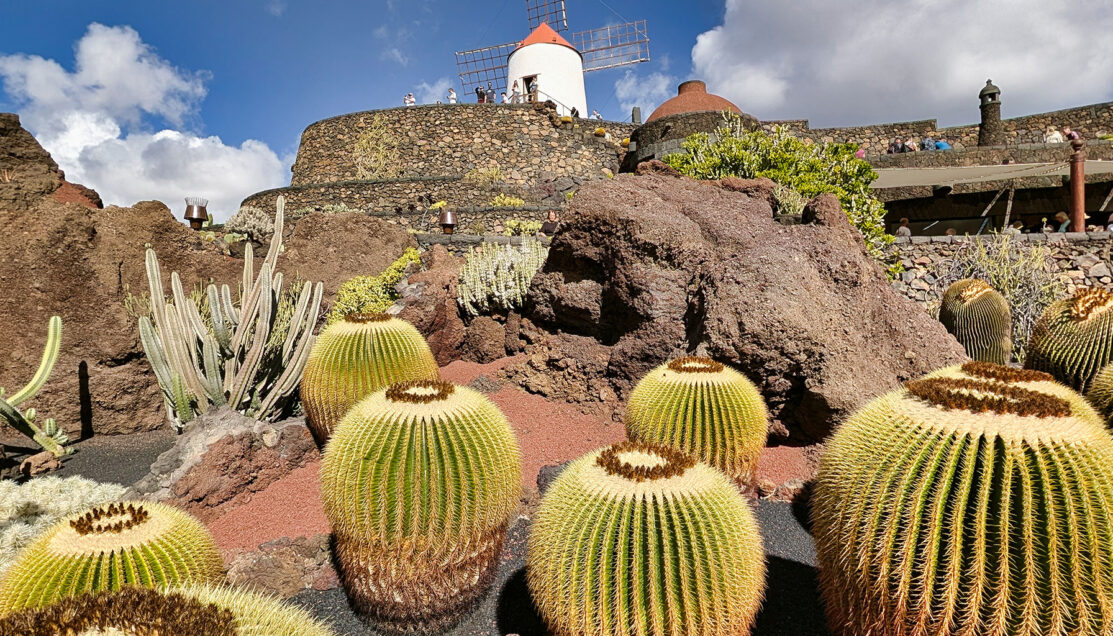
The location carried additional meaning. Guatiza and nearby villages once relied heavily on prickly pear cultivation for cochineal dye, an insect-based red pigment that brought considerable wealth to the island in the 18th and 19th centuries. That history was acknowledged quietly here, without displays or explanation—cacti presented as form rather than commodity.
We were free to wander the terraces at our own pace, stopping often for photographs. Above the garden, a café-bar offered shade and elevated views back into the crater-like interior. Despite the visual density of the site, the allotted half hour passed quickly.
Reboarding the coach, we continued westward across the island. As we pulled away, the guide confirmed that the schedule included an additional unscheduled stop, added to balance the route after the morning viewpoint closure.
④ Teguise Old Town (Former Capital of Lanzarote)
⚲ Teguise, Lanzarote, Canary Islands
⧗ ~25 minutes
With the scheduled morning viewpoint closed for Christmas Day, the route adjusted to include an unscheduled stop in Teguise—shifting the day’s focus from designed landscapes to Lanzarote’s historic core.
Founded in the mid-15th century, Teguise served as the island’s capital for centuries before administrative life moved to Arrecife in the 1800s. Set inland and away from the coast, the town developed as a compact settlement shaped by isolation, limited resources, and repeated pirate attacks along Lanzarote’s exposed shores.
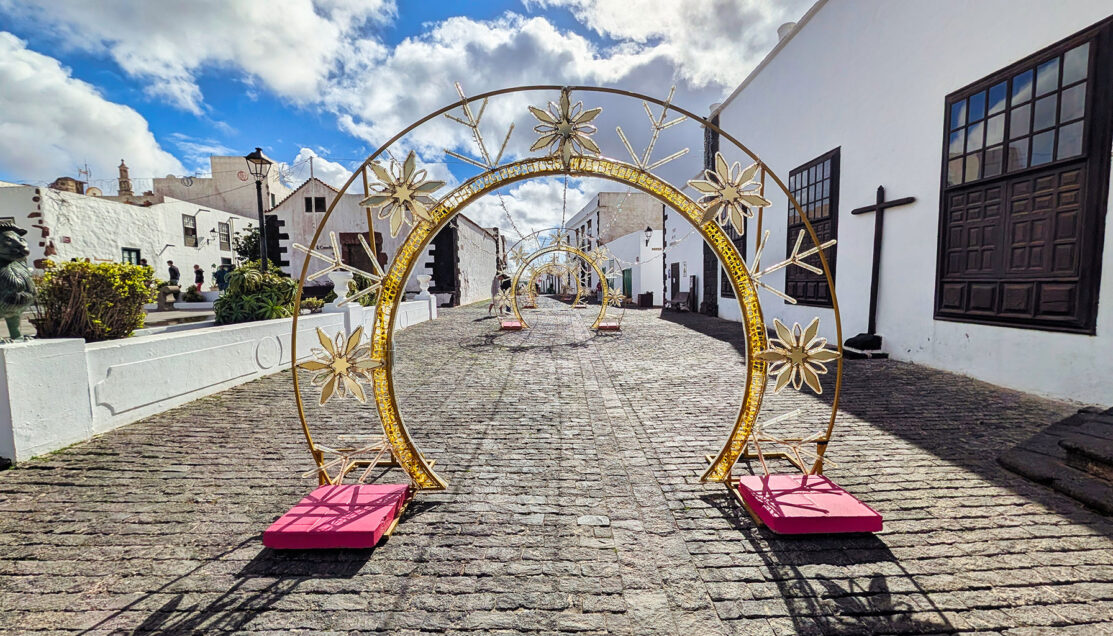
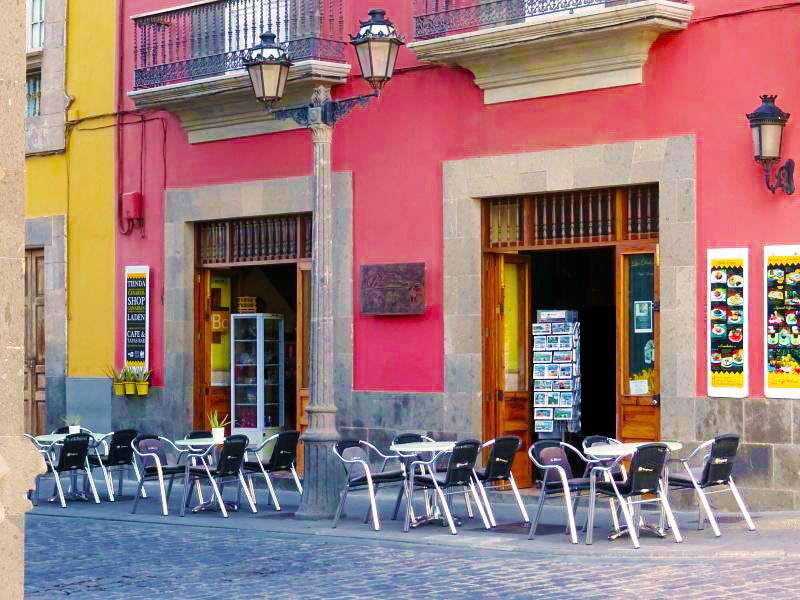
The coach dropped us near the central square, where holiday decorations—lighted arches and seasonal displays—framed the approach toward the church. Despite the Christmas touches, the town felt quiet and unhurried, with many shops closed and little traffic moving through the narrow streets. A bronze lion sculpture anchored the plaza, lending a sense of permanence to the open space.
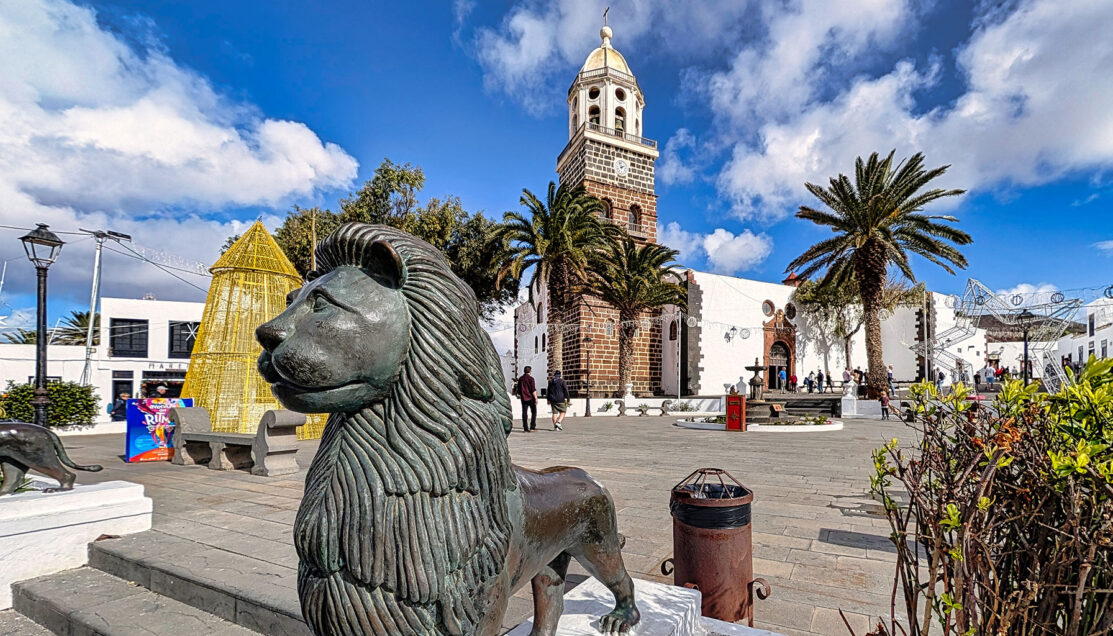
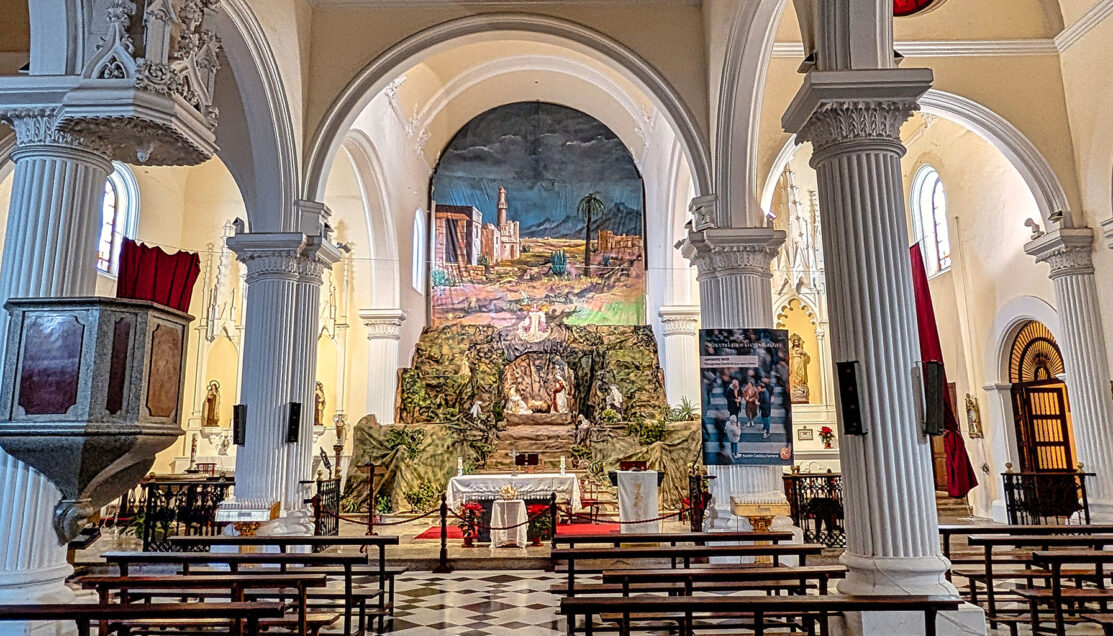
At the center stood the Church of Our Lady of Guadalupe (Nuestra Señora de Guadalupe), its whitewashed walls and volcanic stone detailing typical of traditional Lanzarote architecture. Inside, the church was arranged for the season, with a large Nativity scene set before the altar. The interior was modest and functional, clearly serving an active local parish rather than a curated tourist site.
Nearby, signage identified the Cilla de Diezmos y Primicias—the former tithe barn where agricultural contributions were once collected. Its preserved exterior, restored under César Manrique’s artistic guidance, quietly linked the town’s historic fabric to the design philosophy encountered earlier in the day.
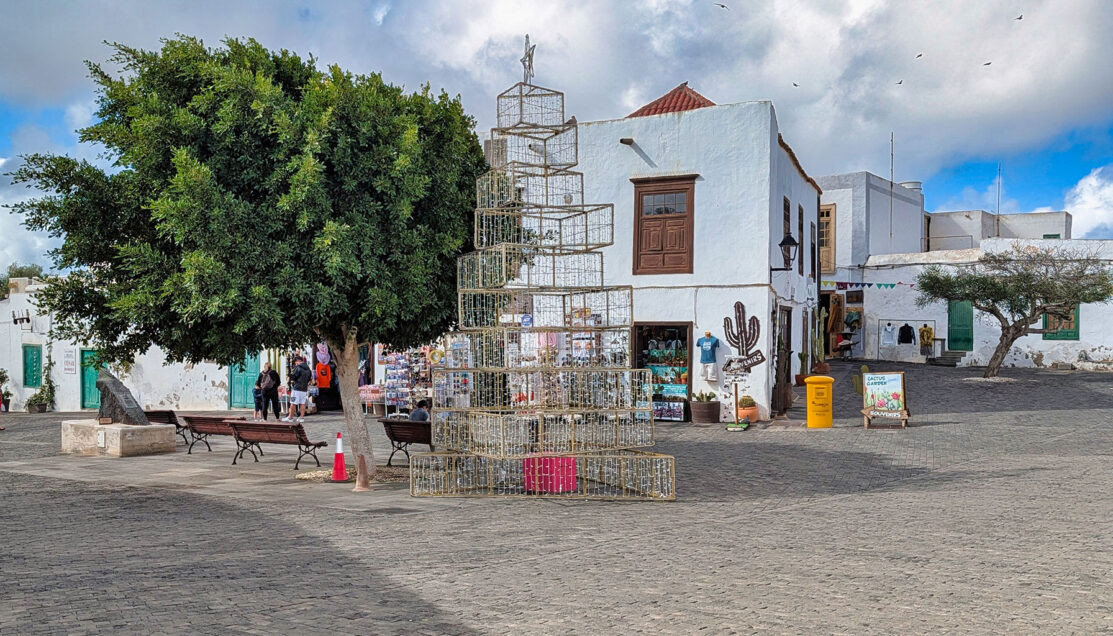
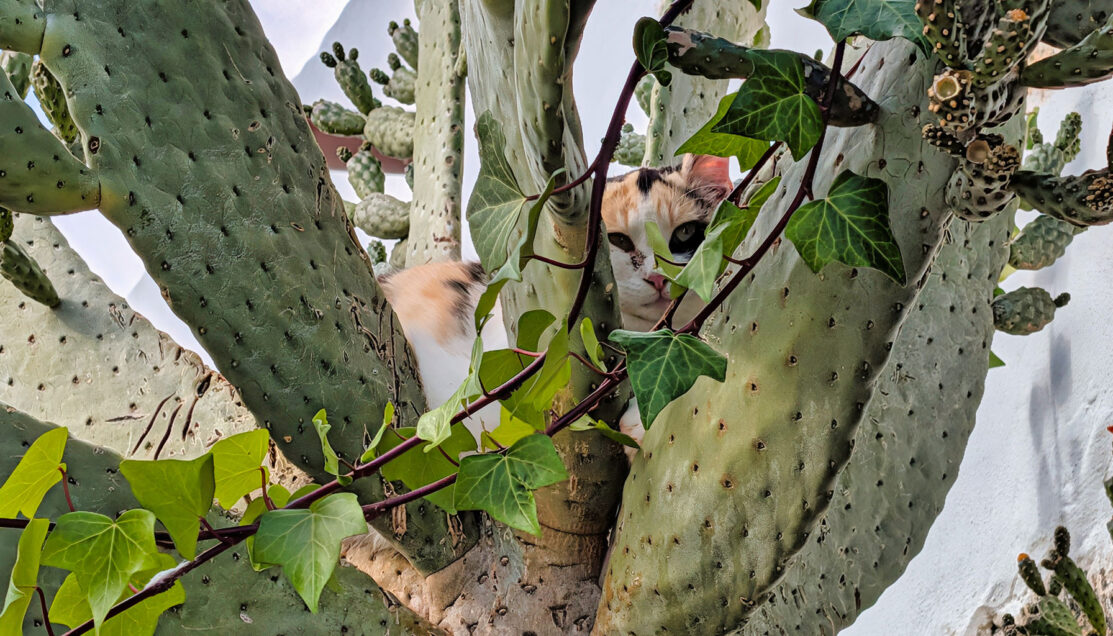
A short walk through adjacent streets revealed narrow lanes, inward-facing façades, and reinforced stone corners—architectural responses to both climate and defense. One small, unscripted moment lingered on departure: a cat asleep among the arms of a large cactus, an image that felt entirely at home in Lanzarote’s volcanic setting.
After roughly 25 minutes, we regrouped and returned to the coach, beginning the drive back toward Arrecife. The stop offered a human counterpoint to the morning’s curated sites—less designed, more lived-in, and firmly rooted in the island’s long history.
Return to Arrecife
The coach carried us back toward Arrecife along familiar roads, passing lava fields, stone-lined plots, and clusters of whitewashed buildings that now felt more legible after a day spent inside the island’s terrain. What had seemed stark and abstract in the morning registered differently by afternoon—as a working landscape shaped by necessity and choice.
As the ship came back into view, César Manrique’s influence felt less tied to individual stops and more embedded in Lanzarote itself. His work did not compete with the landscape; it taught the island how to reveal itself.
☑ Who Is This Tour Best For?
- Architecture & design enthusiasts — Manrique’s work is explored as lived architecture, not museum theory, from cliffside viewpoints to lava-tube interiors.
- Cultural landscape travelers — those interested in how development, regulation, and environment intersect on a fragile volcanic island.
- Volcanic geology & natural-history fans — lava tubes, collapsed jameos, crater-like gardens, and landscapes shaped by eruptions are central throughout the day.
- Photographers — dramatic contrasts between black volcanic stone, white architecture, turquoise water, and Atlantic horizons offer strong visual opportunities.
- Cruisers seeking context over spectacle — this tour prioritizes understanding how Lanzarote works as a place, rather than checking off attractions.
- Travelers comfortable with walking and uneven surfaces — the experience rewards those willing to move carefully through natural and adapted environments.
⊞ Tour Summary
- Tour Name: Destination Highlight: César Manrique’s Legacy
- Offered By: Celebrity Cruises (operated locally by Marmedsa DMC SL)
- Total Duration: ~6 hours
- Main Stops: Mirador del Río (Los Helechos closed) → Jameos del Agua → Jardín del Cactus → Teguise Old Town (added stop)
- Drive-By Highlights: Northern lava fields, La Corona volcano, traditional agricultural zones with stone windbreaks, villages of northern Lanzarote, coastal views toward La Graciosa

▣ Activity Summary
- Walking Distance: 1.5–2 miles total across the day, spread across multiple stops
- Terrain: Uneven volcanic stone, stairways, ramps, gravel paths, and polished surfaces; low lighting inside lava tubes; outdoor exposure to wind at viewpoints
- Accessibility: Moderate to challenging — not suitable for guests with limited mobility, wheelchairs, or scooters; careful footing required at Jameos del Agua
- Meals Included: No — café-bar options available at Mirador del Río, Jameos del Agua, and Jardín del Cactus
- Facilities: Restrooms available at major stops; souvenir shops at Manrique sites
Related Northern Europe & Atlantic Islands Travel: Explore more cruise ports and shore excursions across Northern Europe and the Atlantic Islands in our complete regional guide.
→ Northern Europe & Atlantic Islands Cruises & Shore Excursions Guide
© OceansAfoot