✘ Tangier, Morocco • December 30, 2025
⌖ From Imperial Port to Atlantic Hinterland
Tour Route: Tangier (port) → Atlantic coastal drive → Asilah (pass-through) → Rohuna (Umberto Pasti’s Garden) → Asilah medina walk → Lunch at Hotel El Khaima → Tangier (port)
We met in the Celebrity Infinity Theatre early in the morning and exited through port controls into a small van group—eight passengers, our guide Aser, and our driver Muhammad. Once clear of the terminal, the vehicle climbed past Tangier’s working harbor, hillside housing, and fortified walls before merging onto the Atlantic coastal road.
The distance to Rohuna—located inland beyond Asilah—covered roughly 25 miles along Morocco’s northern coastline, with total transit approaching an hour and fifteen minutes once traffic, rural roads, and intermediate stops were factored in. Early on, Aser outlined the day’s structure: a brief coastal pause, a longer visit to a private garden estate known as Rohuna, time inside Asilah’s fortified medina, and a scheduled group lunch in Tangier before returning to the ship.
Rohuna is the private garden estate of Italian writer and horticulturist Umberto Pasti, developed as a long-term conservation landscape focused on rare and endangered Mediterranean and North African plant species. The excursion description centers this garden as the primary destination of the day.
① Sidi Kacem Coastal Camel Stop
⚲ Sidi Kacem Atlantic Coast, near Asilah, Morocco
⧗ ~15 minutes
Not long after leaving Tangier’s outskirts, our driver slowed and turned off the coastal road onto a wide dirt pull-off overlooking the Atlantic. We stepped out onto compacted earth and gravel and gathered first near an open clearing beside the road, where a small group of camels had been assembled for shoreline rides.
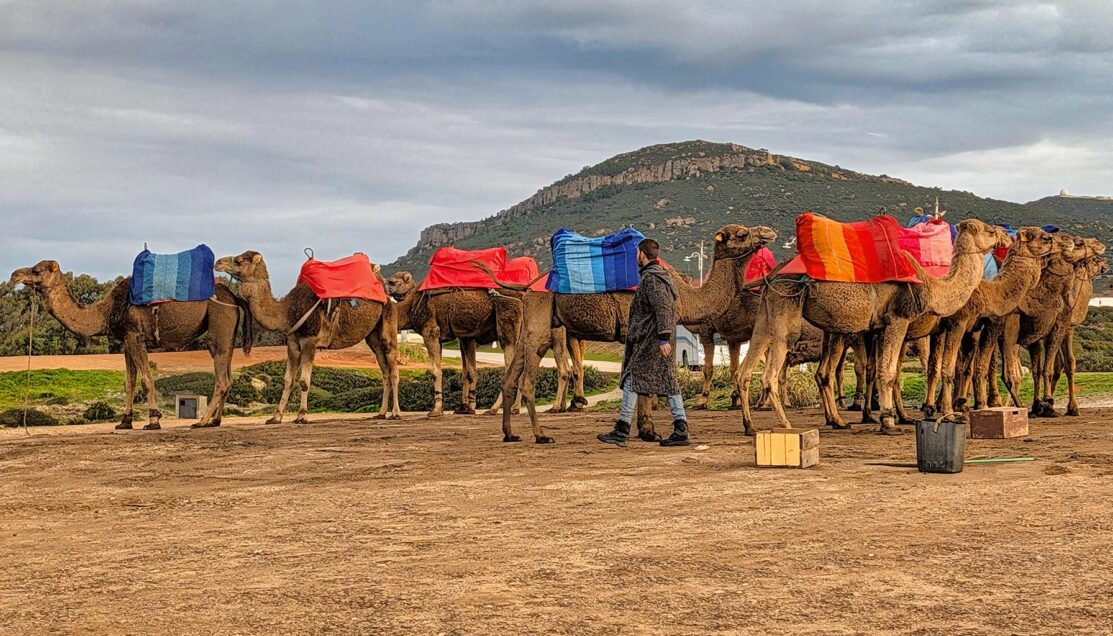
The bright blankets and simple gear mark this as a pay-per-ride operation that assembles right beside the road, with no fixed platform—just handlers, animals, and open ground.
The animals stood proudly, fitted with brightly colored saddle blankets in red, blue, and orange. Canvas coverings and metal handholds were secured in place while a handler moved among them, adjusting straps and preparing for short trips along the beach. There were no permanent platforms, ticket booths, or defined boundaries—just portable equipment arranged on open ground.
Aser explained that the operation runs on a small, independent basis, depending on weather and visitor traffic, with local handlers managing their own setup. Some camels remained motionless in the ocean breeze, while others shifted and vocalized softly as they were repositioned.
After circulating among the animals and observing the preparations, we walked a short distance—only a few yards—toward the edge of the overlook. From this elevated vantage point, the landscape opened outward. Below us lay the seaside village of Sidi Kacem, its low buildings and beach structures arranged along a narrow strip between the cliffs and the water.
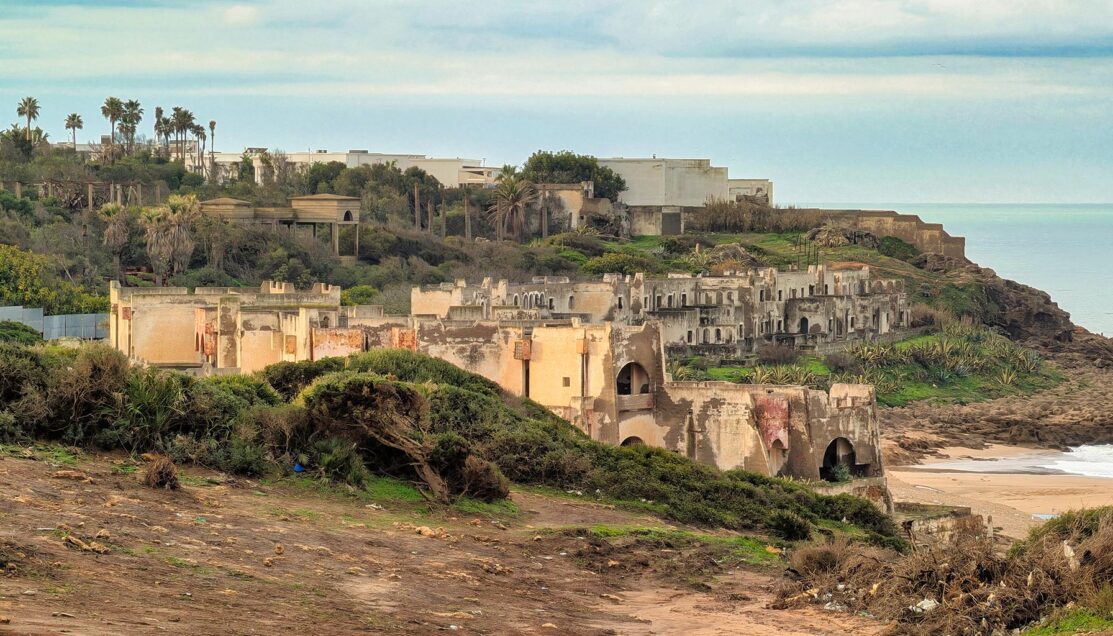
From the elevated pull-off, the broad Atlantic shoreline and low beachfront structures below appear quiet and exposed, reinforcing how seasonal and weather-dependent this stretch of coast can feel.
A broad sandy beach curved along the shoreline, backed by shallow dunes and scattered vegetation. Near the water’s edge, simple wooden enclosures and cage-like frames appeared to serve as holding areas for camels when they were not working. Rocky headlands framed the horizon, reinforcing how exposed and open this stretch of coastline remains.
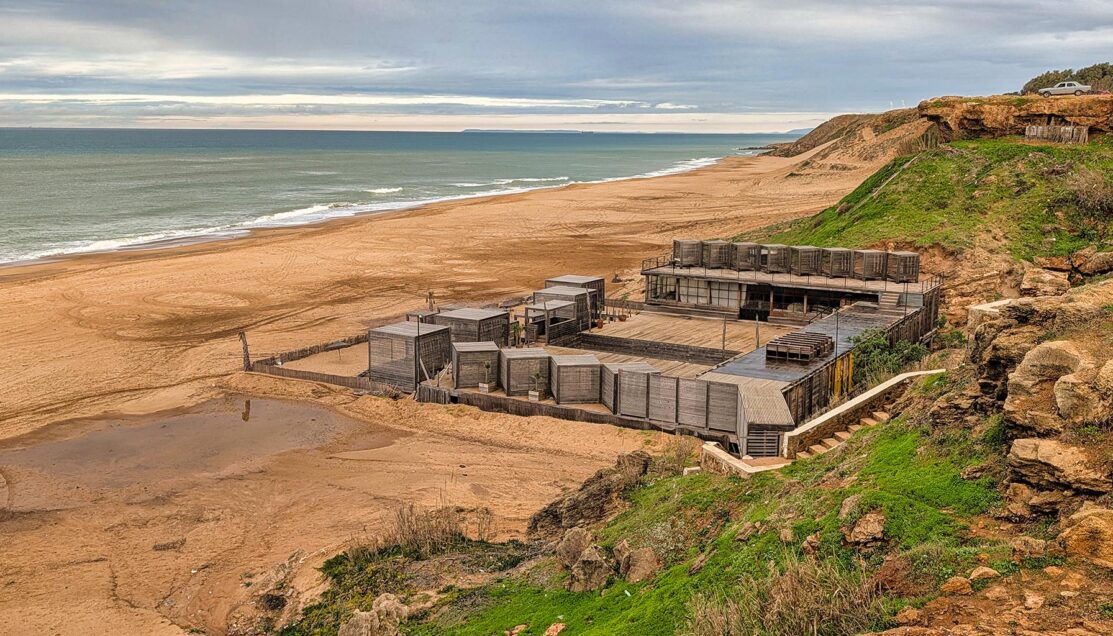
These wood-framed enclosures below the bluff show where the camels are kept and staged between rides, turning an empty stretch of beach into a temporary working setup.
The stop was brief and loosely structured, allowing passengers to circulate freely between the camels and the overlook for photographs and observation. Although some guests chose to ride, we primarily used the time to document the setting. It was not listed in the official excursion outline, but it provided an immediate introduction to the working coastal economy where small-scale tourism and village life intersect.
Within minutes, the handlers regrouped the camels, and we returned to the van, continuing south toward our next destination.
② Rohuna — Umberto Pasti’s Garden
⚲ Rohuna (Umberto Pasti’s Garden), near Asilah, Morocco
⧗ ~1.5 hours
After leaving the coastal plain, our van turned onto a narrow rural road that climbed gradually through farmland and scattered olive groves. Patchwork fields gave way to low hills, with intermittent openings revealing distant views of the Atlantic and the river valley stretching toward the dunes.
We slowed at an unmarked turnoff along the rural road, one that would have been easy to miss without local knowledge. Aser remarked that few drivers knew the location, and that he relied on experience rather than signage to find the entrance. Only after turning onto the final dirt track did a small roadside sign reading “Jardin — Garden of Rohuna” appear, confirming that we were on the correct approach.
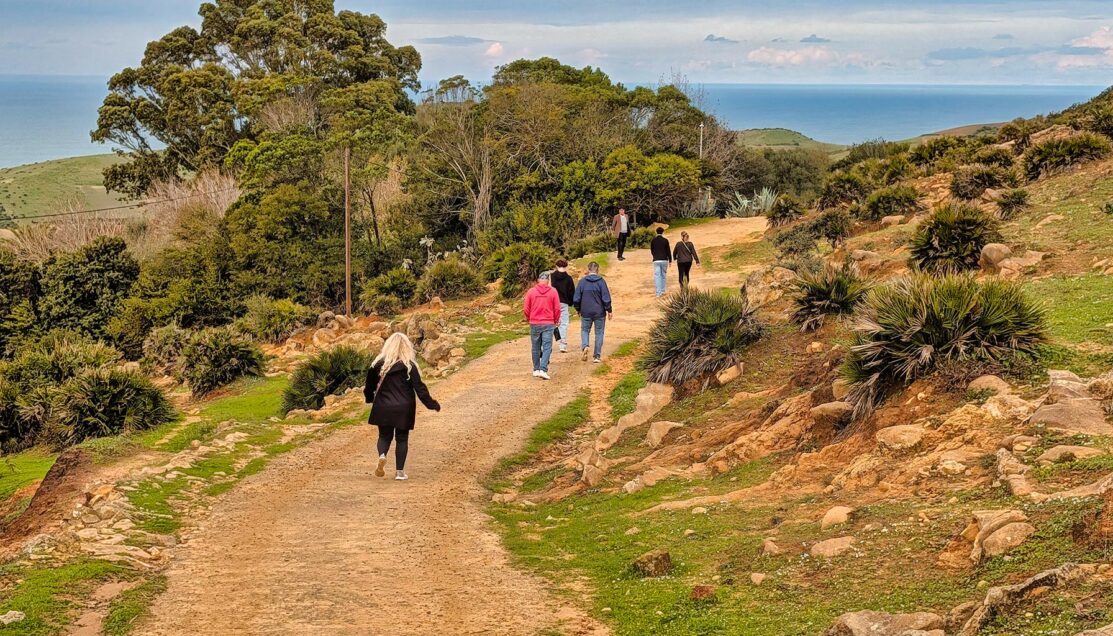
With the vehicle stopped short by mud, visitors complete the final approach on foot, the Atlantic visible beyond the ridge as the rural track narrows toward the hidden garden below.
Recent rain had softened the ground, and because the access track was muddy, the driver stopped short of the gate. We continued on foot, following the dirt road for roughly one-third of a mile as it climbed gently, leveled briefly, and then descended toward the garden.
At the base of the slope, a rustic entrance came into view. Corrugated metal gates were mounted on rough wooden posts and framed by vegetation and a low stone wall capped with patterned tiles. Beyond them, an unpaved drive led inward beneath dense tree cover, marking a clear transition from open countryside to enclosed landscape.
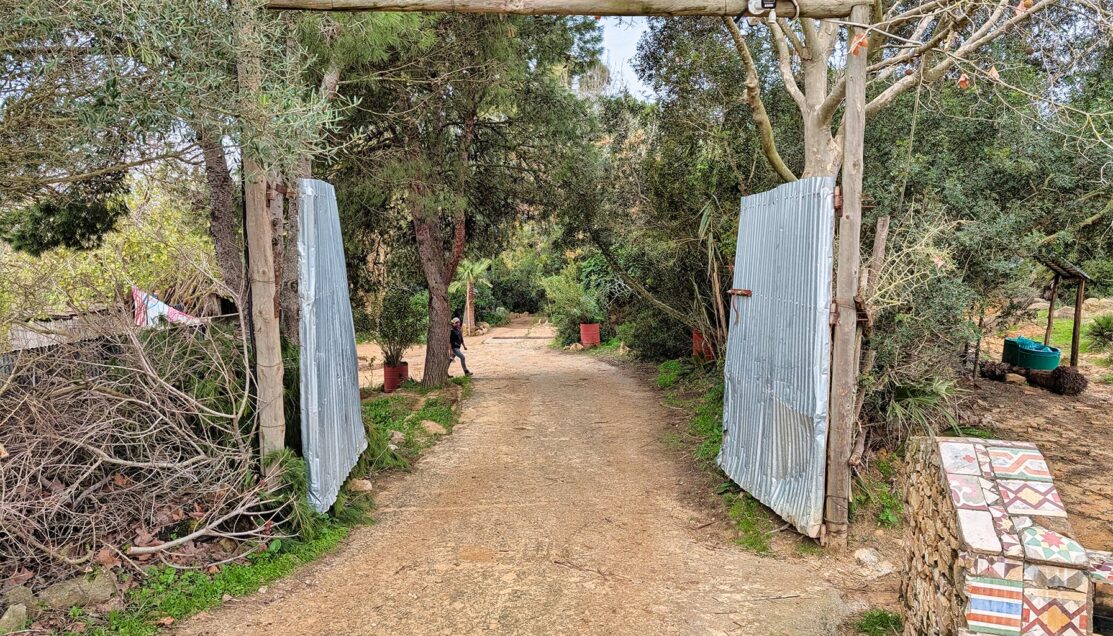
The improvised metal gates and tile-capped stonework mark a deliberate threshold, separating open farmland from the enclosed conservation landscape cultivated within.
Access appears tightly controlled, with visits limited to small, pre-arranged groups rather than open public admission—a structure that reflects the garden’s private conservation focus.
Inside the gate, the atmosphere shifted immediately. The air felt cooler and more still beneath layered canopies. Curving paths branched in multiple directions, edged with stones and low borders but lacking formal signage. Plantings were dense and varied, emphasizing texture and structure over broad floral displays.
Near a central clearing, we were welcomed and offered tea and coffee beneath a large olive tree. Seating was arranged around a circular stone enclosure, and the unhurried hospitality reinforced the sense of the garden as a private, lived-in environment rather than a conventional tourist attraction.
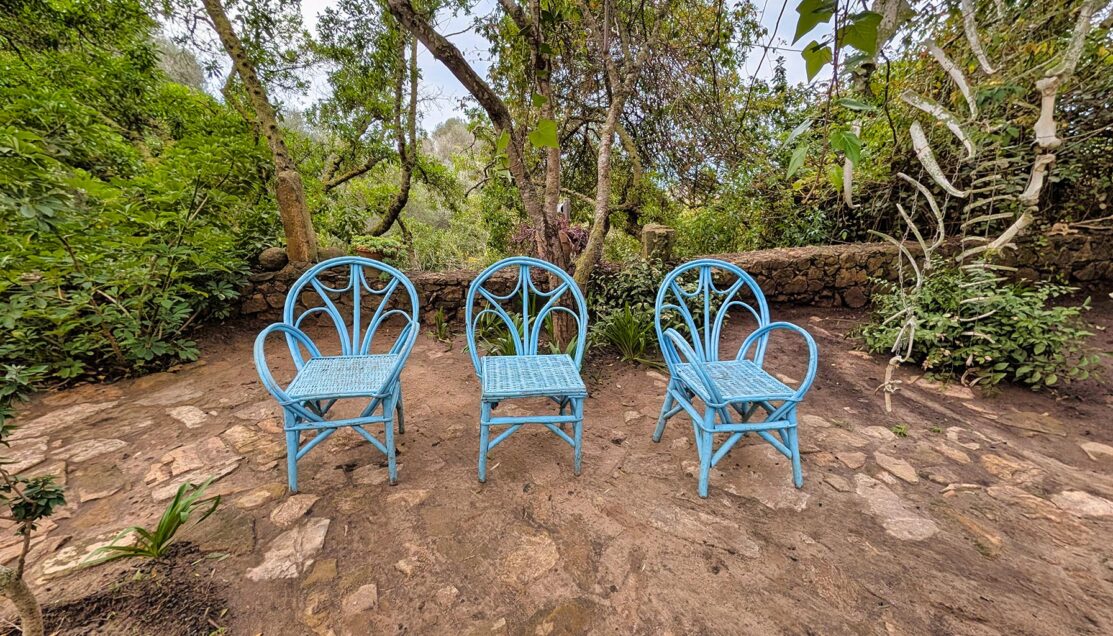
Guests gathered beneath a mature olive tree in Rohuna’s central clearing, where tea and coffee were served in an informal arrangement that reinforced the garden’s private, lived-in character.
A staff member then led us on a roughly 45-minute walk through the garden’s interior paths. The route wound through narrow corridors formed by succulents, aloes, and thick-leaved shrubs. Seasonal color appeared intermittently in red canna lilies, pale narcissus clusters, and flowering stalks rising above groundcover. Dark-bloomed arum lilies and tall green spires dotted with yellow flowers added further visual interest.
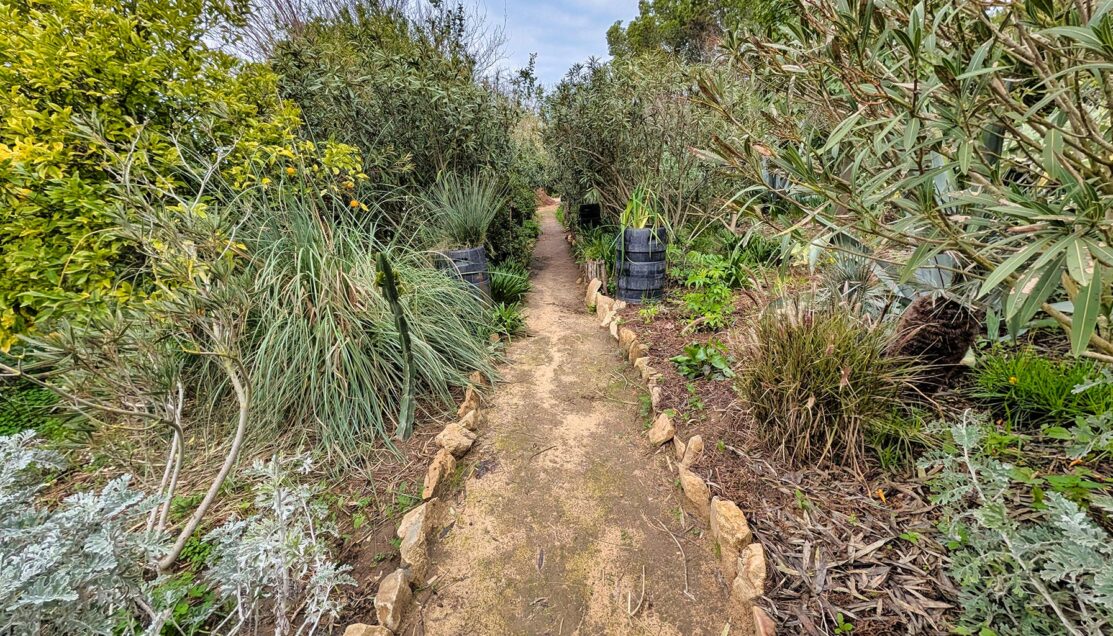
A winding interior path edged with succulents and dense foliage illustrates how Rohuna relies on layered texture and enclosure rather than open floral displays to define movement through the landscape.
Much of the garden’s character lay in its layering. Leaves overlapped, branches intertwined, and stonework emerged and disappeared beneath creeping vegetation. Fruiting plants and seed pods hinted at seasonal cycles beyond what winter could fully display.
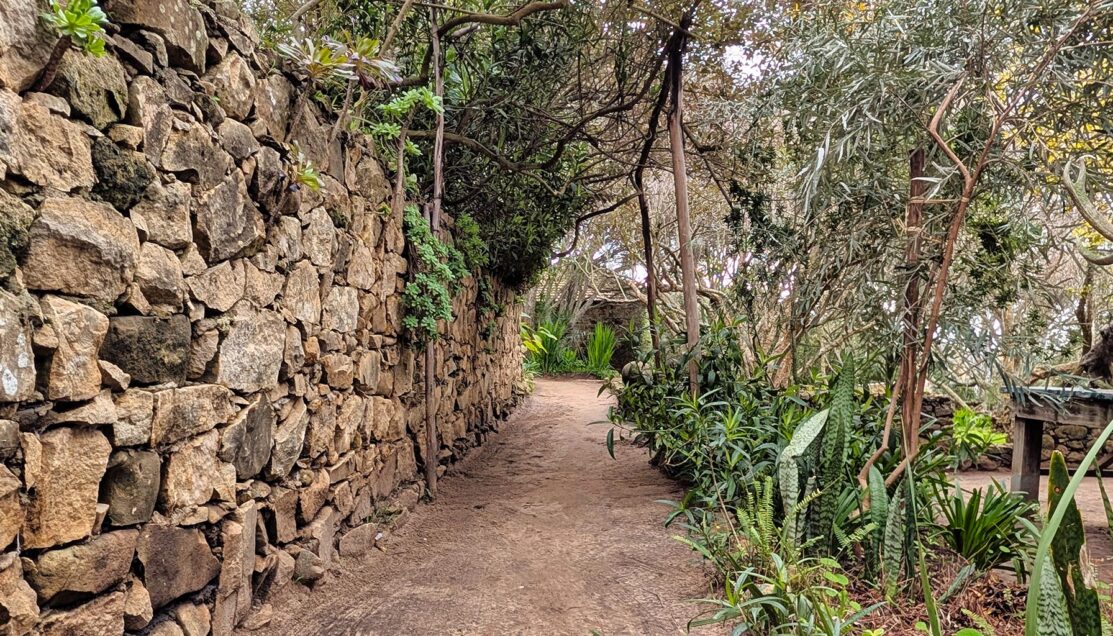
Rough stone walls and overhanging branches compress the walking route into intimate corridors, emphasizing structure and shadow over ornamental spectacle.
Interpretation, however, remained limited. The walk proceeded quietly, with little explanation of planting philosophy, ecological context, or design intent. Distinctions between sections relied largely on personal observation rather than guided understanding.
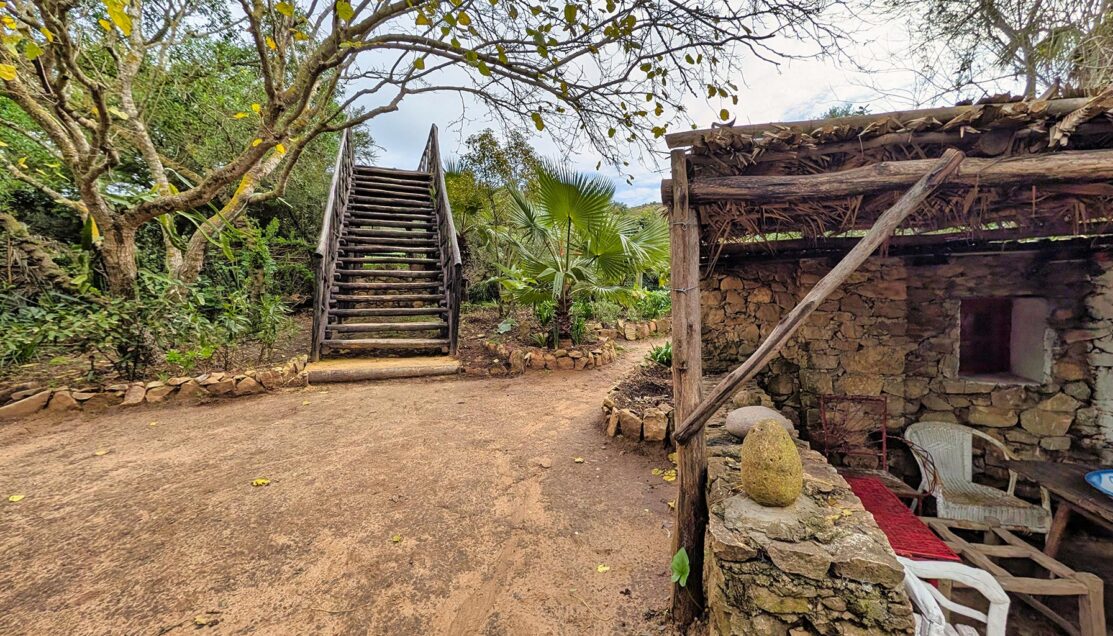
A simple timber stair rises quietly among the plantings, suggesting vertical intention without formal interpretation or signage to explain its purpose.
Seasonal timing also shaped the experience. In December, many areas appeared restrained rather than lush. While the structure and careful maintenance were evident, the dramatic visual impact suggested in promotional descriptions was muted.
After circulating through interconnected paths, we returned to the olive tree clearing, where tea service continued and guests gathered informally. The pace remained relaxed, encouraging quiet observation rather than structured engagement.
Eventually, we regrouped and exited through the metal gates, retracing the dirt path uphill and back across the ridge. As we emerged into open countryside, the coastal plain reappeared below, with fields, river channels, and dunes stretching toward the Atlantic.
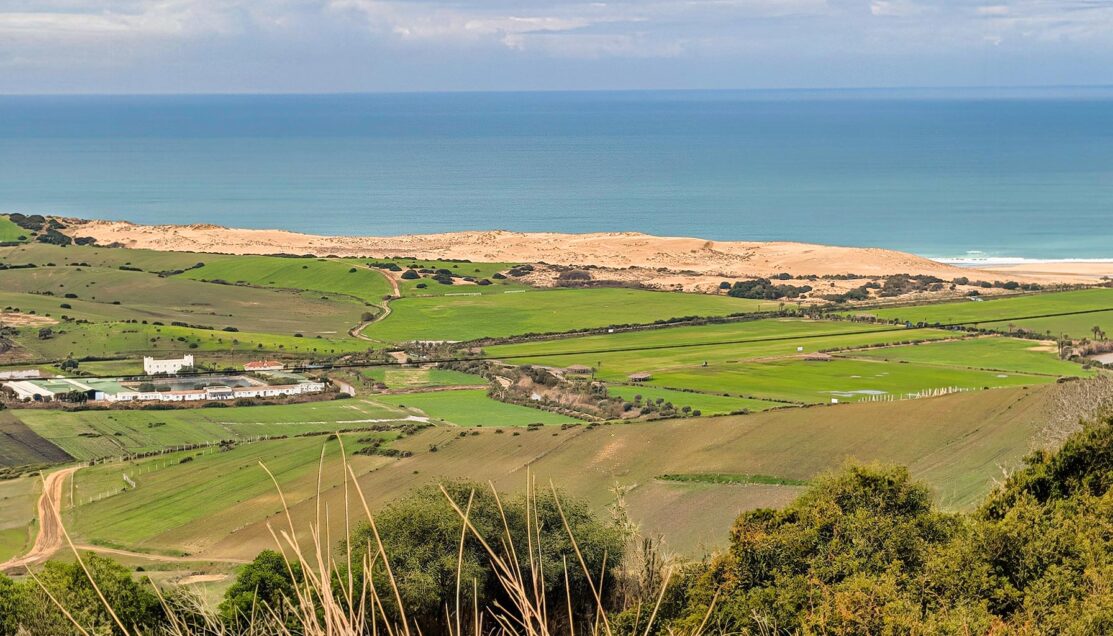
From the ridge above Rohuna, the landscape opens to cultivated fields, pale dunes, and the Atlantic horizon, reintroducing scale and exposure after the garden’s enclosed pathways.
Once back in the van, the enclosed garden environment gave way quickly to wide skies and layered farmland as we resumed the route toward Asilah.
③ Asilah Medina — Fortifications, Art, and Street Commerce
⚲ Asilah Medina & Ramparts, Asilah, Morocco
⧗ ~1 hour
Our visit to Asilah began at the edge of the old town, where the coach dropped us near thick stone ramparts and a fortified gateway marking the transition from modern streets into the historic core. Whitewashed walls and square-topped towers framed a broad paved approach, creating a controlled threshold rather than an open plaza.
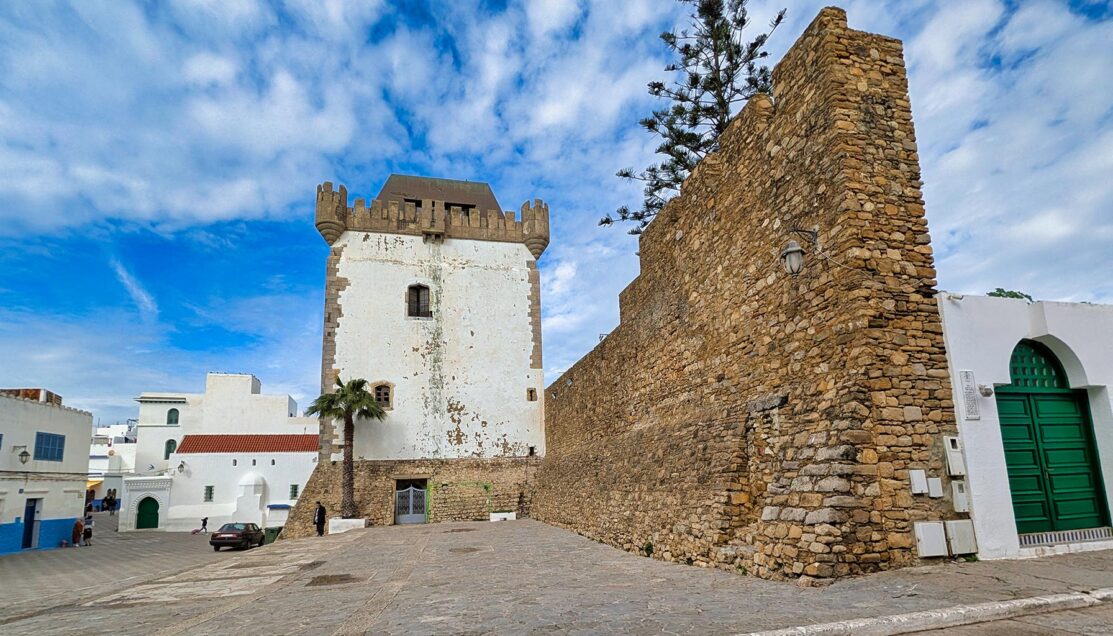
The Portuguese-era stone gateway and crenellated tower form one of the principal entrances to Asilah’s medina, where thick defensive walls once controlled access.
Beyond the entrance, the route narrowed quickly. The wide entry space gave way to slender residential lanes surfaced in worn stone and concrete. Walls were washed in layered shades of white, pale blue, and turquoise, while doors and window grilles were painted in deep greens and blues. Overhead cables traced informal lines between buildings, and patches of cracked plaster, exposed brick, and climbing vines revealed the constant maintenance required to sustain the medina’s fabric.
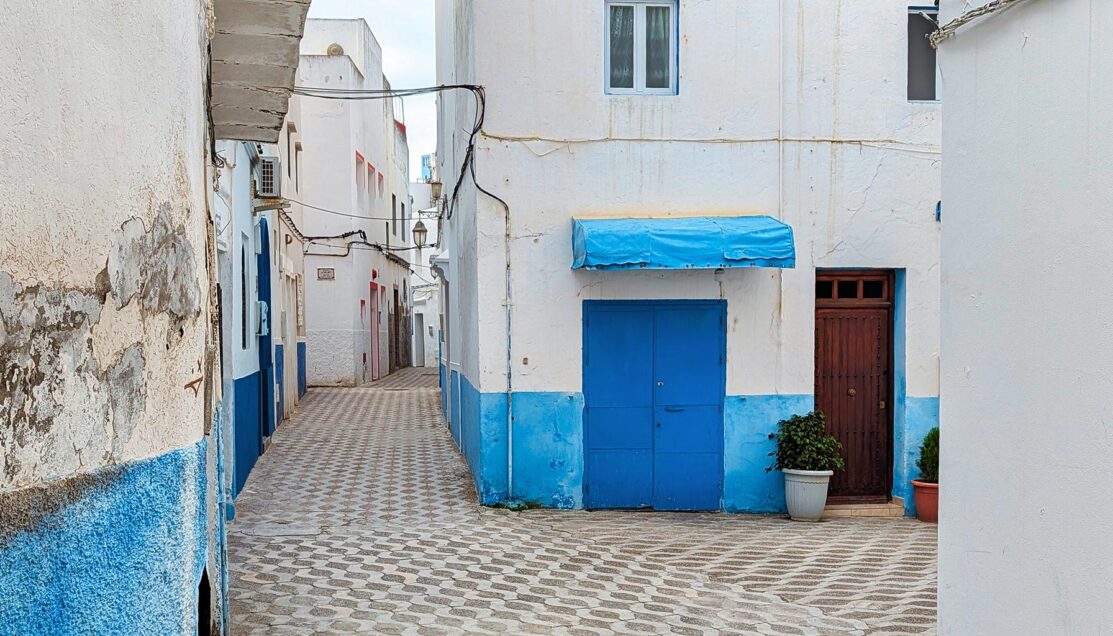
The blue-washed base and patterned paving reflect Asilah’s tradition of seasonal repainting, where residents actively maintain the medina’s distinctive identity.
As we moved inward, the walk emphasized everyday neighborhood life rather than commerce. These early passages were primarily residential, with small doorways, enclosed courtyards, and quiet side lanes that highlighted the town’s domestic scale and rhythm.
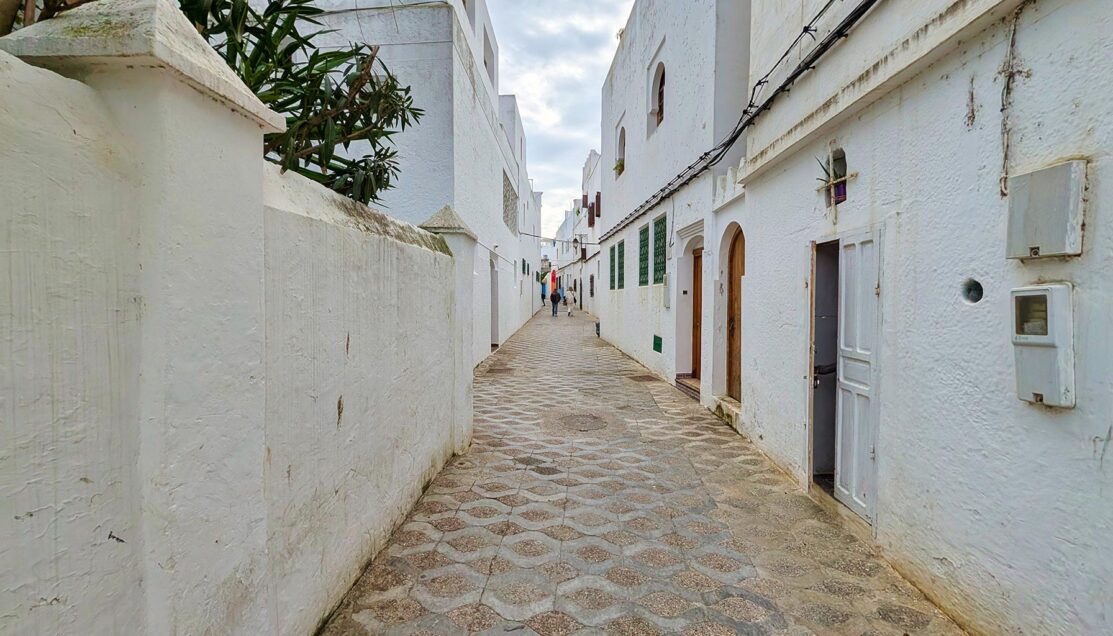
This narrow lane, edged by simple doorways and patterned paving, reflects the medina’s lived-in rhythm where daily life unfolds behind unmarked walls rather than storefronts.
Midway through the walk, Aser stopped beside a street vendor who had spread hand-painted images on thin sheepskin sheets across the pavement. One by one, the vendor lifted and flexed the surfaces, demonstrating how traditional scenes and calligraphic motifs were rendered on natural parchment. Aser translated questions and explained the materials and techniques, allowing time for observation and discussion.
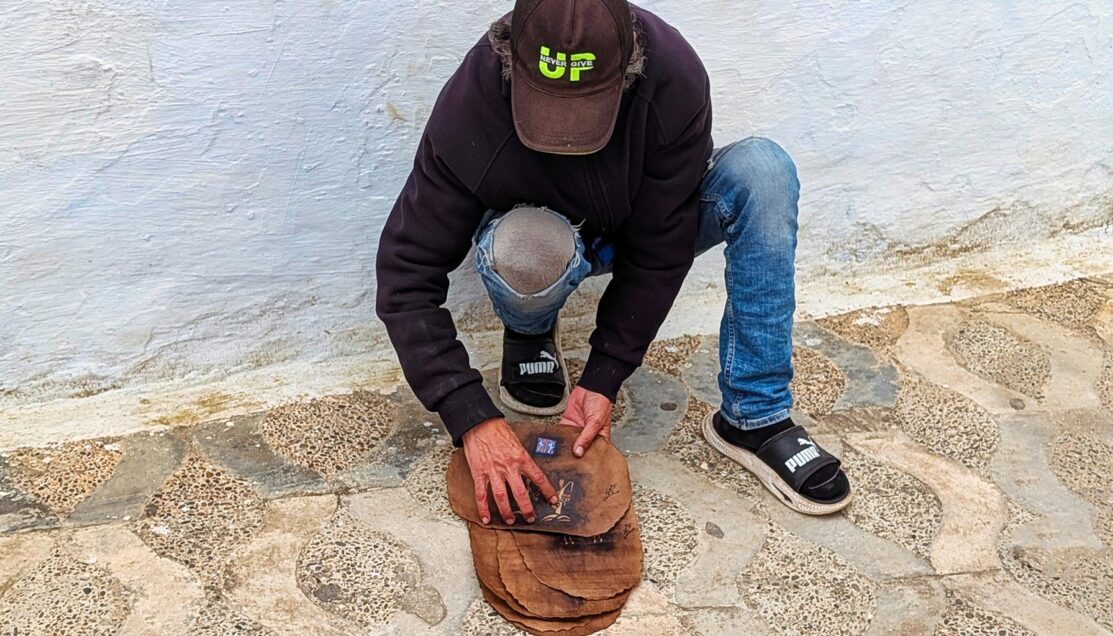
A street vendor demonstrates hand-painted scenes on cured sheepskin parchment, flexing the surface to show its durability and the traditional technique used to prepare and preserve the material.
We then paused at the Palais de Raisuli (Centre Hassan II), a compact cultural and exhibition space featuring black-and-white photographs, bilingual panels, and a short video introducing figures associated with Asilah’s artistic revival. Patterned tile columns and a black-and-white stone floor reinforced the formal tone before we returned to the surrounding lanes.
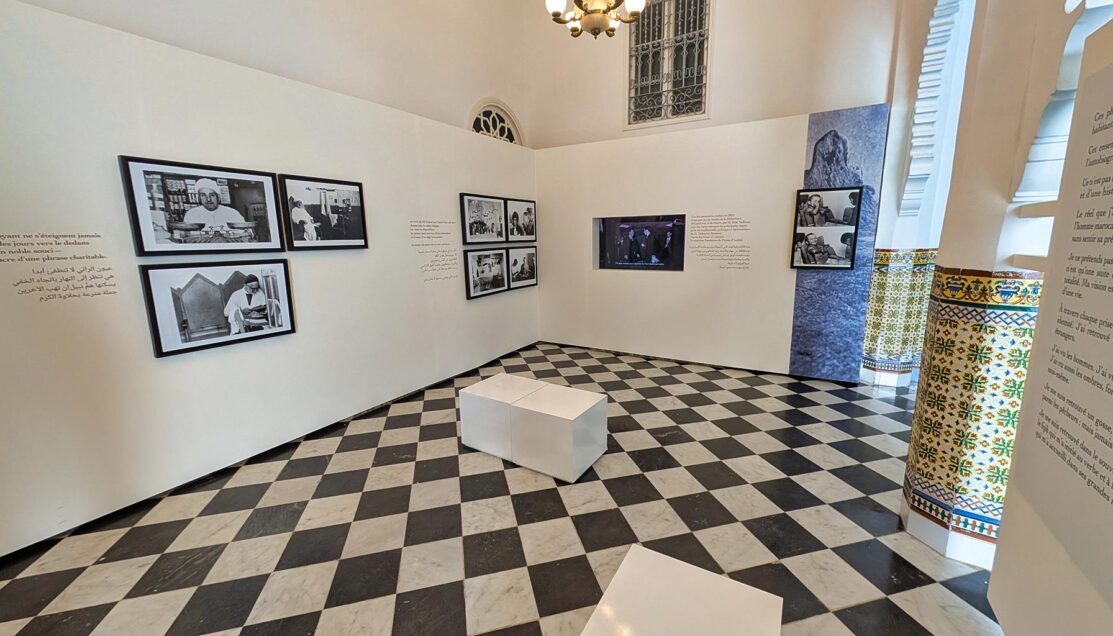
Black-and-white archival photographs and bilingual interpretive panels line the gallery walls of the Centre Hassan II, documenting figures central to Asilah’s modern cultural revival and annual arts festival.
From there, the route shifted into a concentrated commercial zone. Clothing racks, leather goods, and textile displays extended into the walkway, narrowing the already tight passages. We stopped in this area to browse at the shop run by Aser’s daughter, along with several nearby vendors clustered along the same stretch of lane, making this the primary shopping segment of the visit.
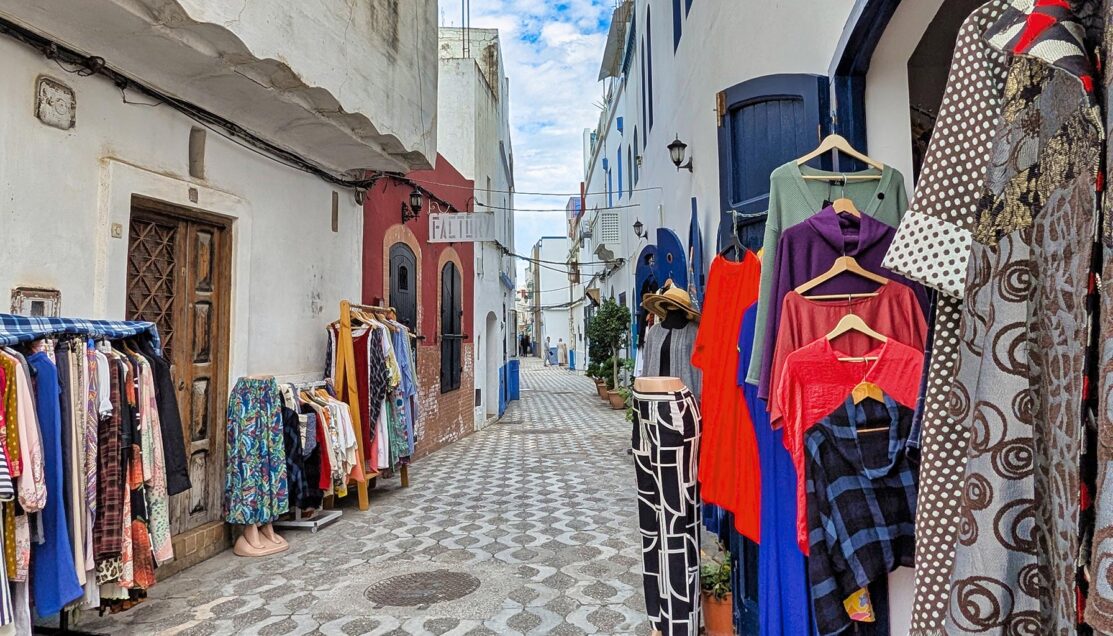
Clothing racks extend into the walkway along this medina lane, illustrating how retail activity in Asilah often spills beyond shop interiors and temporarily reshapes pedestrian flow.
Despite the density of merchandise, the atmosphere remained notably relaxed. There was little aggressive solicitation, and movement stayed fluid as visitors and residents shared the narrow routes — a contrast to the more insistent sales environments found in some larger Moroccan medinas.
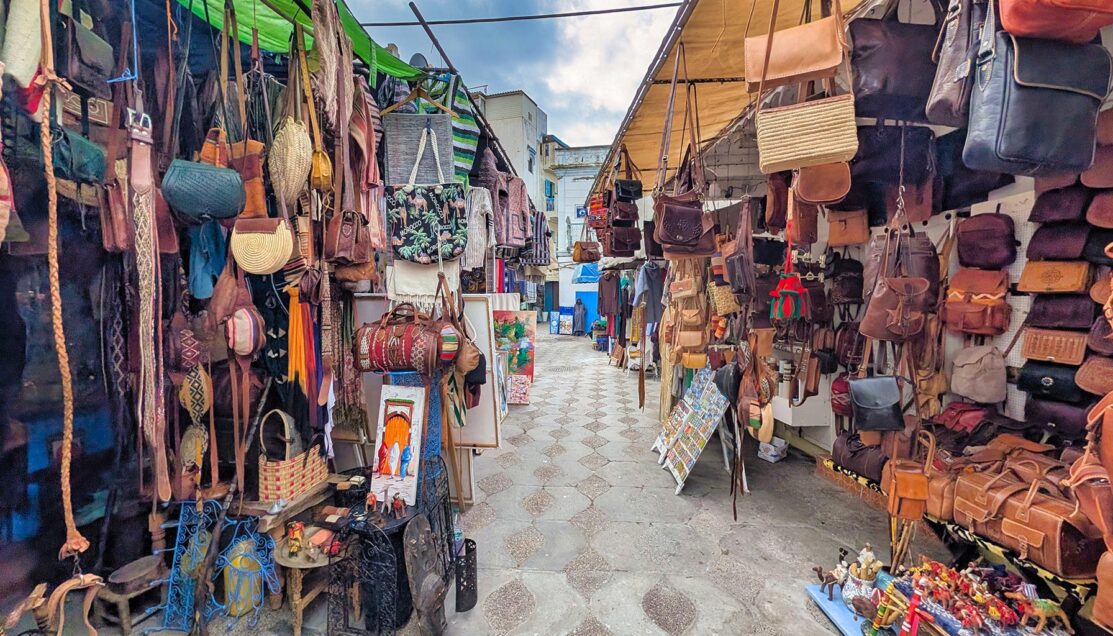
Handcrafted leather bags and woven textiles hang densely along both sides, yet the open central corridor preserves movement and reflects the medina’s comparatively relaxed commercial atmosphere.
Beyond this cluster, commerce gave way again to quieter residential streets. Art remained a visible presence, with murals, painted panels, and small gallery-style storefronts reflecting the influence of Asilah’s long-running cultural and arts festival.
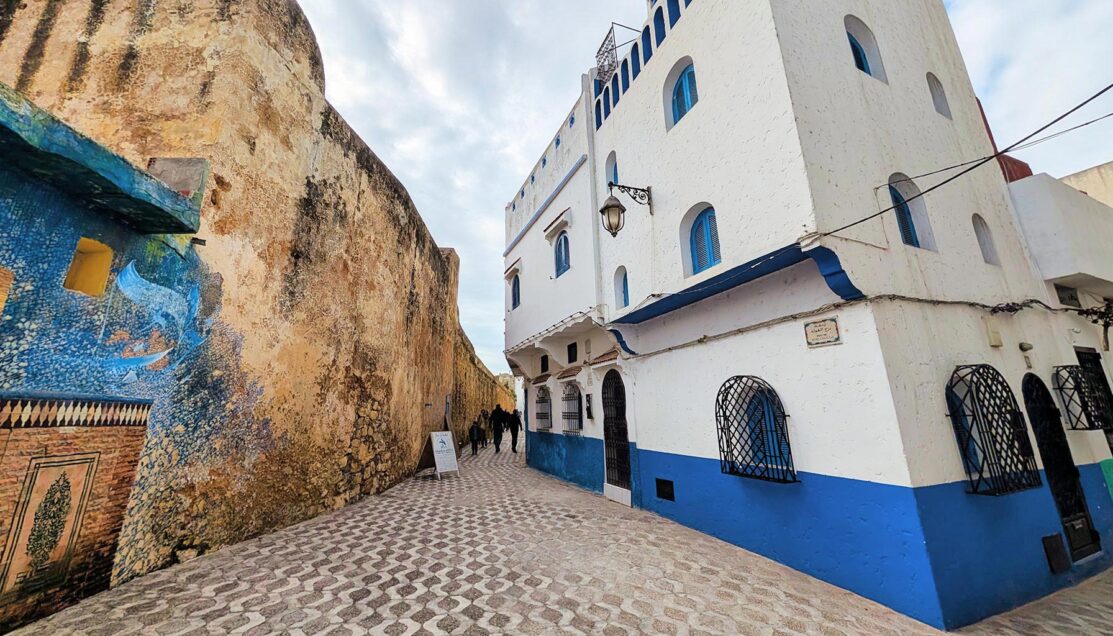
A weathered stone rampart stands beside a painted mural and blue-trimmed residence, demonstrating how Asilah’s historic fortifications now serve as a backdrop for its contemporary arts identity.
We exited through another stone gateway, where thick masonry and sloped defensive walls framed the final transition out of the medina. After regrouping briefly outside the walls, we boarded the coach and continued toward lunch.
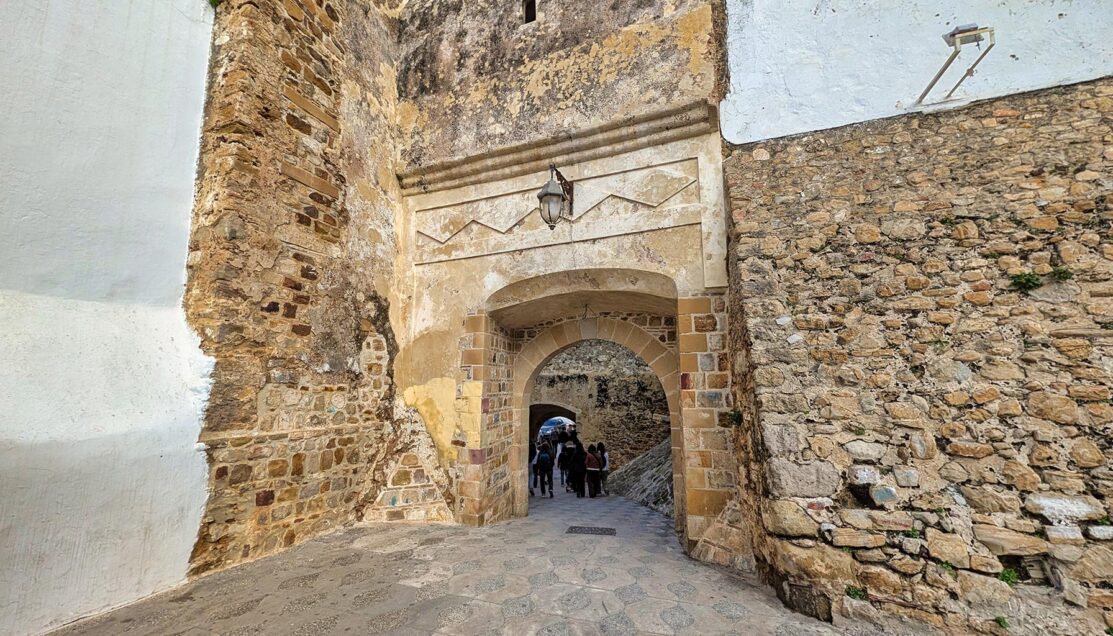
This secondary arched gateway, reinforced with thick masonry and angled defensive walls, marks one of the historic exit points from the enclosed medina back to the surrounding town.
④ Hotel El Khaima – Lunch (Tangier)
⚲ Hotel El Khaima, Tangier, Morocco
⧗ ~1 hour, 30 minutes
Our van pulled directly into the hotel’s entrance drive, where a large banner promoting the upcoming Africa Cup of Nations reflected Morocco’s broader national preparations. We entered through reception, crossed by a courtyard pool terrace, and proceeded into a large dining room already arranged for tour groups.
Inside, long rows of tables were set with glassware and folded linens. Large windows along one wall looked toward the gardens and pool, softening the otherwise formal layout. Staff directed our small group to assigned tables and began service promptly.
⌖ The Meal
Lunch opened with a shared platter of cold starters placed at the center of each table. Marinated carrots, diced potatoes, beet salad, chopped tomato and cucumber, lentils, and lightly spiced vegetables were arranged symmetrically over lettuce leaves, with hard-boiled eggs and olives interspersed throughout. Warm Moroccan bread was served alongside, used both as accompaniment and utensil.
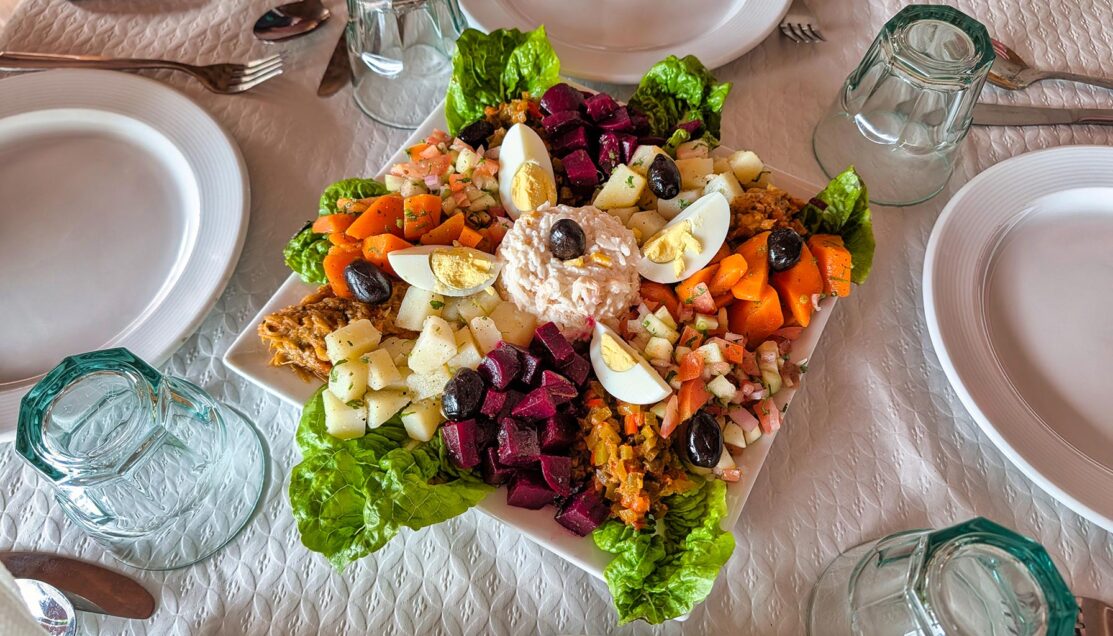
A composed Moroccan starter platter at Hotel El Khaima features marinated vegetables, lentils, eggs, and olives arranged for communal service.
Bottled water and soft drinks were available, and several guests ordered local Flag Spéciale beer or white wine, consistent with the hotel’s licensed, international clientele.
Main courses followed family-style.
Chicken with Preserved Lemon and Olives
Braised chicken pieces were served in a golden, herb-infused sauce accented with preserved lemon and green olives. The citrus brightness balanced the richness of the broth and reflected one of Morocco’s most recognizable flavor combinations.
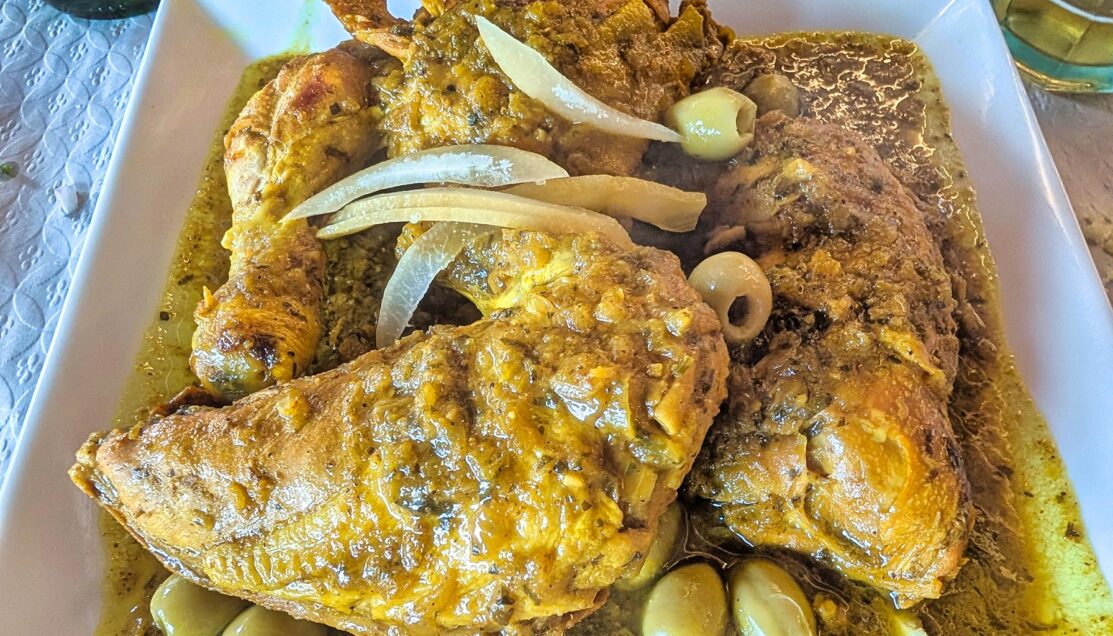
Braised chicken with preserved lemon and green olives is served family-style at Hotel El Khaima in a golden herb-infused sauce.
Vegetable Couscous
Large platters of couscous were topped with carrots, zucchini, squash, and potatoes simmered in aromatic stock. The grains absorbed the surrounding juices, creating a softer, savory counterpoint to the chicken.
Portions were generous, and the communal service encouraged an unhurried pace. Dessert consisted of a triangular almond pastry drizzled with honey and topped with chopped nuts, followed by coffee and mint tea.
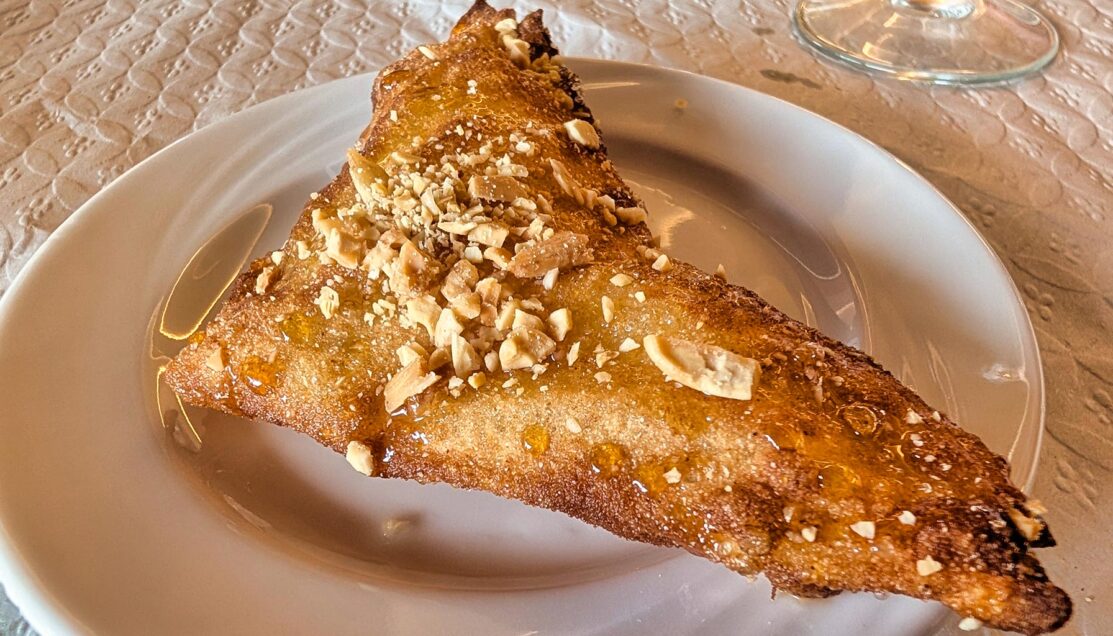
A triangular almond pastry drizzled with honey and topped with chopped nuts concludes the lunch at Hotel El Khaima.
As plates were cleared, conversation and photography gradually replaced eating. After roughly forty-five minutes of service, we regrouped near the coach and prepared for the return drive to the port, concluding the final structured stop of the excursion.
Return to Port — Atlantic Boulevards and Tangier Reemerges
The return drive to the port took roughly an hour and a half, carrying us back along Tangier’s coastal corridors and through its expanding western districts. After the enclosed rhythm of the medina and the structured setting of lunch, the city unfolded again in broader strokes, with wide palm-lined avenues, low-rise hotels, and apartment blocks tracing the shoreline. The Atlantic appeared intermittently between buildings and roundabouts before slipping behind walls and landscaped medians.
Traffic thickened gradually as we approached the central port zone. Commercial storefronts became denser, signage more frequent, and pedestrian movement more pronounced. As the coach descended toward the harbor, cranes and cargo areas came into view, followed by the familiar profile of Celebrity Infinity alongside the quay. Within minutes, we were back inside the port gates, concluding a day shaped as much by transitions as by destinations.
☑ Who Is This Tour Best For?
- First-time visitors to northern Morocco — travelers who want a broad introduction to coastal landscapes, medina life, and rural settings within a single day.
- Small-group cruisers — guests who prefer traveling in a limited-size van group rather than on a full-size motorcoach, with more flexible pacing and closer interaction with the guide.
- Garden and landscape enthusiasts — especially those interested in private, cultivated environments like Rohuna, where atmosphere and craftsmanship matter more than spectacle.
- Walkers comfortable with uneven terrain — the dirt approach paths, garden walkways, and medina streets require steady footing and sustained time on foot.
- Travelers who value transitions and setting — this tour works best if you enjoy seeing how coastline, countryside, historic towns, and modern districts connect over the course of a day.
- Anyone comfortable with extended driving — the itinerary includes long coastal segments and a return journey of roughly an hour and a half to the port.
⊞ Tour Summary
- Tour Name: Umberto Pasti’s Garden and Asilah (Small Group)
- Ship: Celebrity Infinity
- Port of Call: Tangier, Morocco
- Total Duration: ~9 hours
- Main Stops: Sidi Kacem Coastal Camel Stop → Rohuna (Umberto Pasti’s Garden) → Asilah Medina Walk → Hotel El Khaima (Lunch)
- Drive-By Highlights: Atlantic coastal road, rural farmland and river valleys, Tangier western districts, port approach

▣ Activity Summary
- Terrain: Dirt access paths, compacted earth and loose stone garden walkways, uneven medina streets, paved hotel and port areas
- Garden Paths: Narrow dirt paths, small footbridge
- Walking Distance: ~2–2.5 miles total
- Accessibility: Moderate — sustained walking, uneven surfaces, and rural paths without handrails
- Group Size: Small group (van transport)
- Meals Included: Yes — lunch at Hotel El Khaima
- Facilities: Restrooms at lunch stop; limited facilities at garden and roadside locations
- Return Drive to Port Area: ~1.5 hours
Related Mediterranean Travel: Explore more Mediterranean cruise ports and shore excursions in our complete regional guide.
→ Mediterranean Cruises & Shore Excursions Guide
© OceansAfoot