Transition to Independent Exploration
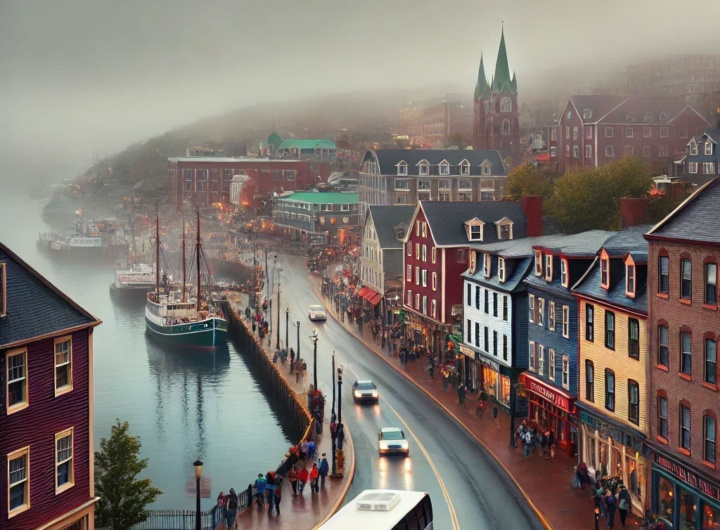
After our formal tour concluded, we set out on our own to explore more of St. John’s, starting with the famous Jellybean Row. Initially, we tried to catch a taxi, but when that didn’t pan out, we decided to make the uphill walk through this colorful and well-known neighborhood.
Therefore, the section which follows, marks the start of our personal adventure through the city, and is separate from the structured tour.
The Colorful Streets of Jellybean Row
Address: Gower Street, Duckworth Street. Prescott Street, St. John’s, Newfoundland, Canada
Time Spent: Drive-by
The climb was steep, but the effort was well worth it as we made our way past the rows of brightly painted houses that give the area its name. The vivid colors, which range from bold reds to deep blues and bright yellows, have become one of the most recognizable aspects of St. John’s. These Victorian-era homes, each restored with a unique color palette, reflect both the city’s maritime history and its modern-day vibrancy.
Delving into – The Rooms
Address: 9 Bonaventure Ave, St. John’s, Newfoundland, Canada
Time Spent: Drive-by
Situated at the top of our climb, we arrived at “The Rooms,” a cultural and historical hub in St. John’s. This institution is more than just a museum—it’s a comprehensive representation of Newfoundland and Labrador’s history, art, and culture. The building itself combines modern architecture with the city’s historical narrative, offering visitors a deep dive into the region’s past and present.
Level 2: Beaumont-Hamel and the Trail of the Caribou
On the second level, we explored a deeply moving exhibit dedicated to World War I. This gallery focuses on the Battle of Beaumont-Hamel, a pivotal and tragic event for the Newfoundland Regiment. The exhibit honors the soldiers who fought and died, and it underscores the profound impact the war had on Newfoundland, both emotionally and historically. The stories and artifacts highlight the scars the war left on the region, illustrating the human cost of the conflict.
Level 3: Connections: This Place and Its Early Peoples
Level 3 takes visitors through the early history of Newfoundland and Labrador, focusing on the indigenous peoples who first inhabited the land. Artifacts and displays provide insights into the cultures and traditions of these early communities, emphasizing their deep connection to the natural landscapes. The exhibit showcases how these indigenous groups adapted to the region’s challenging environment and how their heritage continues to influence the culture of Newfoundland today.
Level 3/4: Double Vision—Artistic Perspectives
This unique exhibit bridges levels 3 and 4, offering a visual journey through the works of artists Jessie Oonark, Janet Kigusiuq, Victoria Mamnguqsualuk, and Jerry Evans. The pieces reflect a blend of contemporary and historical influences, showing how art in Newfoundland has evolved over time. The exhibit contrasts indigenous artistic traditions with modern interpretations, illustrating the lasting influence of the region’s natural beauty, challenges, and stories on its artistic output.
Level 4: Here, We Made a Home
On the top level, we found an exhibit that explores the social, cultural, and economic history of Newfoundland and Labrador. “Here, We Made a Home” details the region’s development, from the arrival of European settlers to the formation of the modern communities that thrive today. The exhibit touches on the environmental factors that shaped settlement patterns and how the people of Newfoundland adapted to the rugged landscape, creating a unique identity and way of life.
Churches – Symbols of Faith and Artistry
These are key landmarks reflecting the religious and architectural heritage of St. John’s.
Basilica of St. John the Baptist
Address: 200 Military Rd, St. John’s, Newfoundland, Canada
Time Spent: 20-minutes
After our enriching visit to “The Rooms,” we crossed the street to the Basilica of St. John the Baptist. This grand cathedral is a stunning example of neo-Gothic architecture, with its towering spires and expansive vaulted ceilings. Inside, the artistry of the stained-glass windows immediately captured our attention, casting colorful light across the space. The quiet reverence that filled the air, alongside the echo of centuries-old prayers, gave the basilica an atmosphere of profound spirituality.
Gower Street United Church
Address: 99 Queens Rd, St. John’s, Newfoundland, Canada
Time Spent: 20-minutes
From the basilica, we walked a few blocks downhill to Gower Street United Church. The church’s striking exterior, blending Victorian and Gothic architectural styles, made a powerful first impression. Inside, we were greeted warmly and invited to explore the space at our own pace. The interior showcased a beautifully detailed wooden beam ceiling, a hallmark of craftsmanship from a bygone era. Notably, we noticed several small stacks of stained-glass windows positioned along the sides of the seating area, hinting at an upcoming restoration or installation project.
Anglican Cathedral of St. John the Baptist
Address: 16 Church Hill, St. John’s, Newfoundland, Canada
Time Spent: Walk-by
Our final stop was the Anglican Cathedral of St. John the Baptist. Although we couldn’t explore the interior due to its doors being closed, we took time to admire the exterior. The cathedral’s imposing grey stone walls and towering spires stood as a powerful symbol of the Anglican community’s long-standing presence in Newfoundland. The structure’s enduring presence speaks to its historical and spiritual significance, anchoring the city’s skyline for generations.
End of Day Reflection
As the shadows lengthened and the end of day began to settle in, we found ourselves retracing our steps. Nearing the ship, we could already hear the hum of conversations — fellow travelers exchanging tales of their own adventures.
Tour Name: St Johns Discovery
Cruise Line/Ship: Holland America Lines Zaandam
Tour Operator: Self-Guided
Duration: Approx. 3 hours
© OceansAfoot