Departing from the lively docks of Quebec City, our journey into the heart of Canada’s abundant history and natural wonder began with great anticipation. Under the astute guidance of Odette from Destinations North America, our day was filled with gripping tales, profound spiritual moments, and the majesty of nature’s creations.
Quebec City: Where the River Narrows
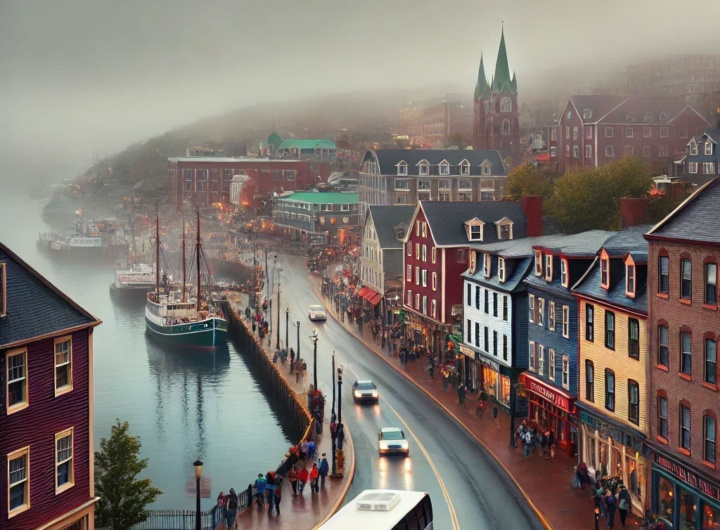
The profound history of Quebec City warmly welcomed us as Odette’s enlightening narration revealed that “Quebec” means “where the River narrows.” This name refers to the expansive St. Lawrence River, which, during the colder months, transforms into a mesmerizing frosty expanse. Imagining such a sight was truly mind-boggling and set the tone for the historical and natural wonders that lay ahead.
En Route to Basilica of Sainte-Anne-de-Beaupré
30-minute coach ride
Our journey to Ste-Anne-de-Beaupré was punctuated by fleeting glimpses of Montmorency Falls, a silhouette of cascading waters promising the splendor that awaited us. The anticipation built as we approached our first major destination.
Basilica of Sainte-Anne-de-Beaupré
Address: 10018 Avenue Royale, Sainte-Anne-de-Beaupré, QC G0A 3C0, Canada
Time Spent: 1-hour narrated inside visit
By the time the afternoon had painted the sky, we arrived at the renowned Basilica of Sainte-Anne-de-Beaupré, a sanctuary nestled approximately 20 miles east of Quebec City.
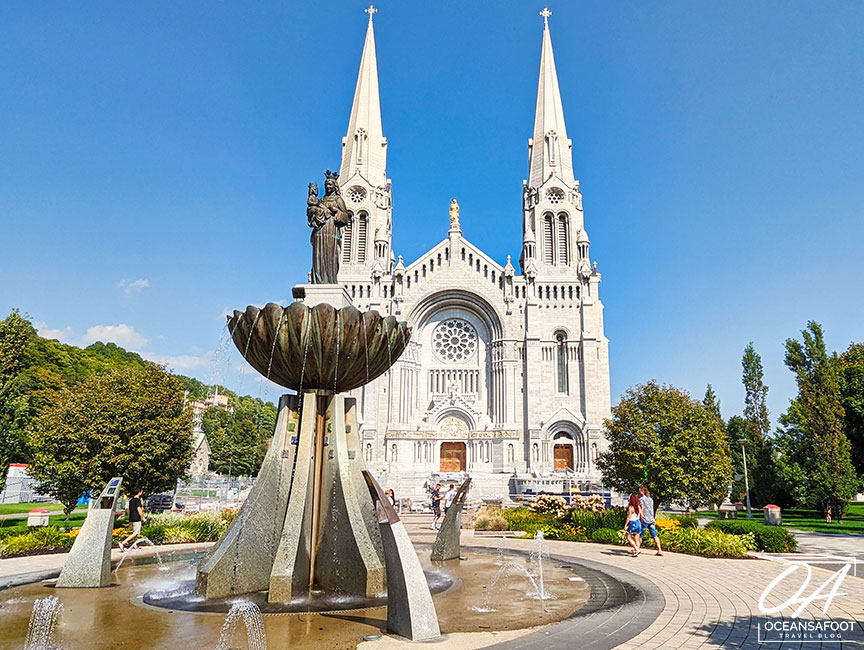
This revered site is renowned for its stunning architecture and for being a place where many people report experiencing miraculous healings.
Origins and Evolution
The story of the Basilica of Sainte-Anne-de-Beaupré began in 1658 with the construction of a small chapel dedicated to Saint Anne, the mother of the Virgin Mary. Over the centuries, this humble chapel grew into the grand basilica it is today, showcasing a combination of Romanesque and Gothic architectural styles. The basilica is celebrated for its detailed stained-glass windows, elaborate sculptures, and intricate mosaics that depict scenes from the life of Saint Anne and other biblical narratives.
The Basilica’s Grandeur
The basilica’s central feature is its grand structure, marked by towering spires and a majestic façade. Inside, visitors are greeted by vaulted ceilings, intricate carvings, and numerous chapels dedicated to various saints, all contributing to its magnificent interior.
The Immaculate Conception Chapel
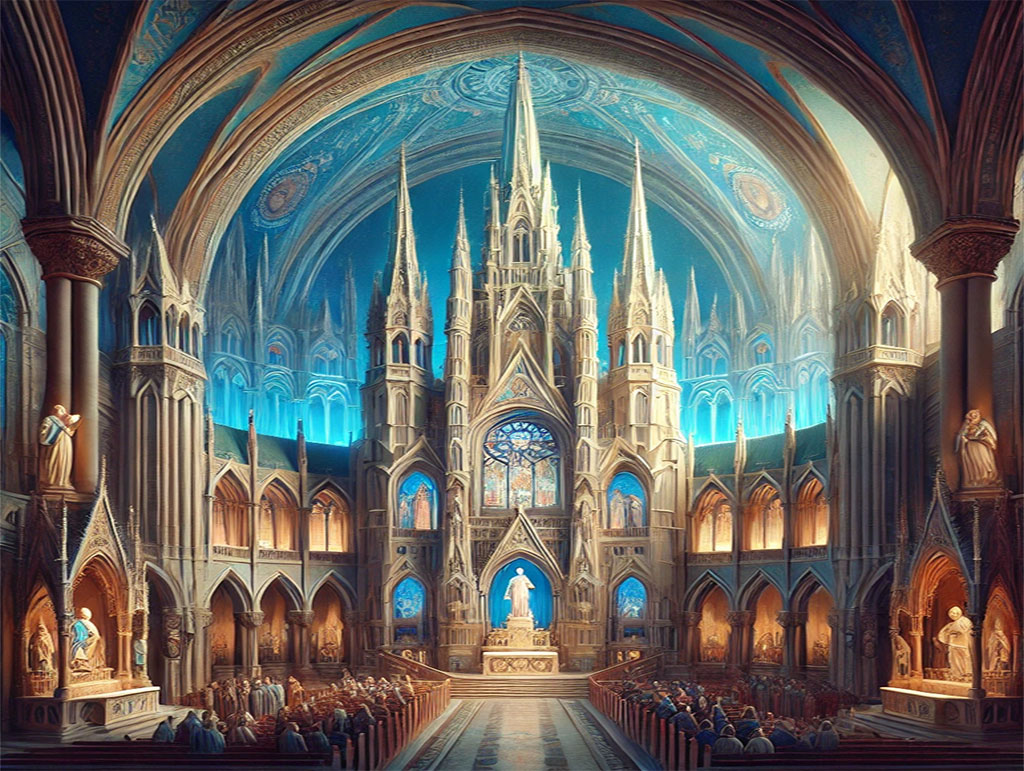
After entering through a side door due to ongoing construction, our exploration began at the Immaculate Conception Chapel. Bathed in shades of blue, this tranquil space created an atmosphere of peace and reflection.

Dedicated to the Virgin Mary, the chapel housed a beautiful statue of Our Lady of Lourdes. The calming blue tones enhanced the serene ambiance, making it an ideal place for prayer and contemplation. The chapel was adorned with paintings by artists such as Frédéric Doyon and Marius Dubois, along with 176 small mosaics depicting birds, flowers, and butterflies, symbolizing nature’s beauty and divine creation.
Blessed Sacrament Chapel
We then proceeded to the adjacent Blessed Sacrament Chapel, a space filled with reverence and devotion. Serving as the spiritual heart of the basilica, the chapel was dedicated to the Eucharist. Its decor featured imagery of the Mystical Lamb and abundant harvest, symbolizing spiritual nourishment.
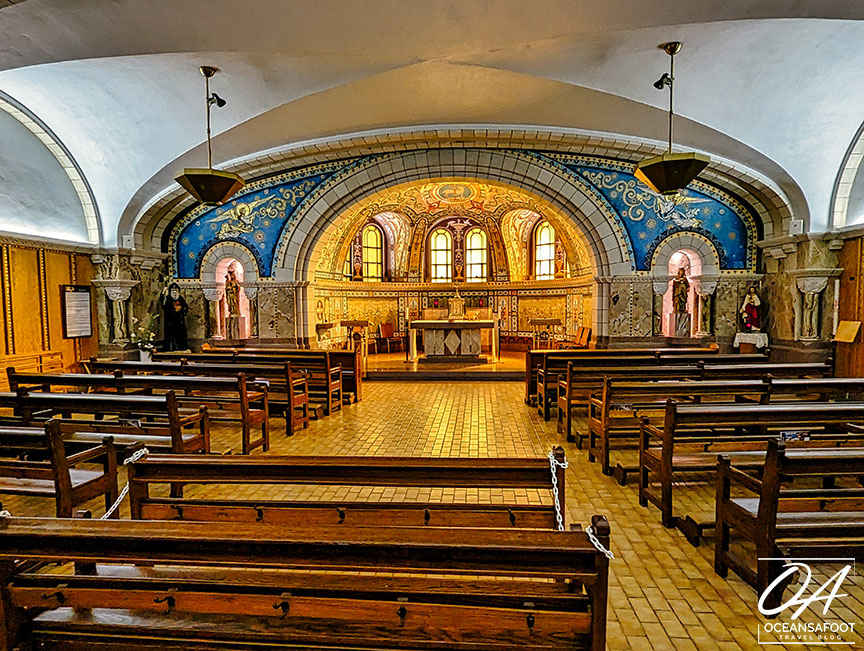
The chapel remains a crucial part of the basilica, where daily masses are celebrated and broadcast to the greater Quebec City area.
The Tomb of Father Alfred Pampalon
Continuing our journey, we visited the Tomb of Father Alfred Pampalon, a revered figure known for his piety and dedication to the sick and suffering. Our guide provided a brief overview of his life and work, highlighting how his tomb had become a pilgrimage site where visitors sought his intercession for various ailments and personal intentions.
The Pieta
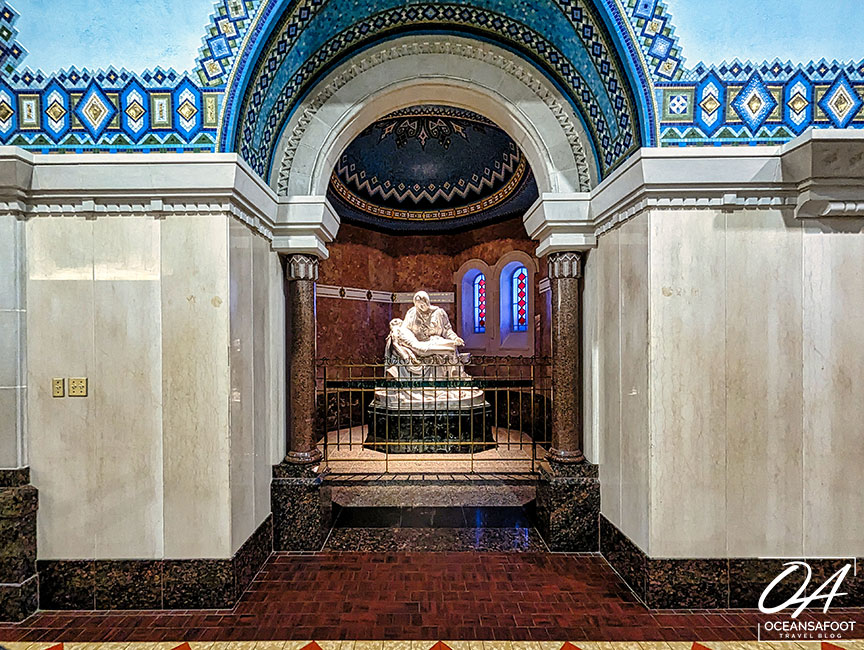
Adjacent to the tomb was The Pieta, a poignant sculpture depicting the Virgin Mary cradling the body of Jesus after his crucifixion. This masterpiece was a testament to the shrine’s rich artistic and spiritual heritage, that evoke deep emotions and reflections on themes of sacrifice and maternal love.
The Memorial Chapel
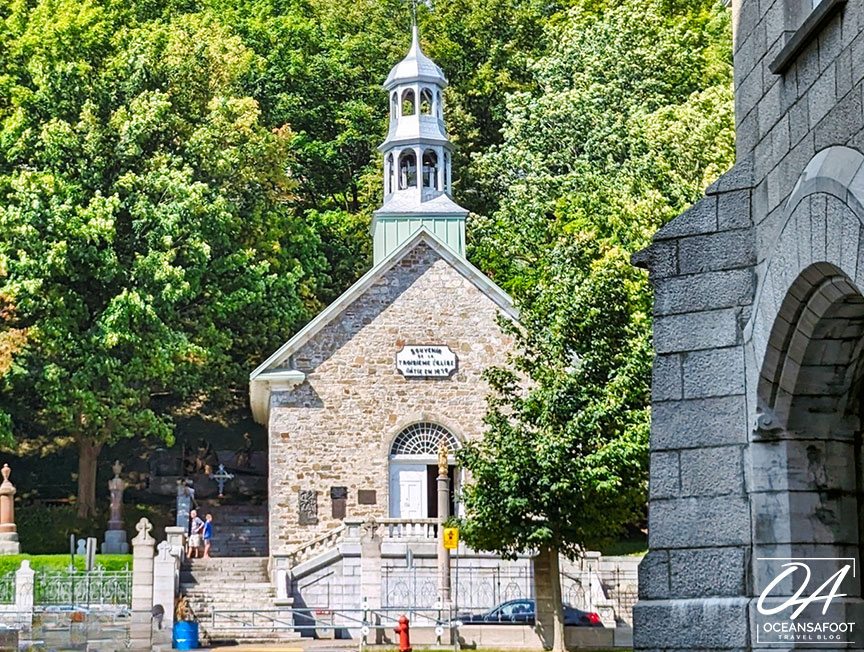
Peering out the rear doors of the basilica, we could see the Memorial Chapel. Although we did not visit the Memorial Chapel on this tour, we learned that it is a tribute to the third church built on this site, which served pilgrims from 1676 to 1876. This third church was one in a succession of churches constructed to accommodate the increasing number of pilgrims visiting the holy site over the centuries.
Approaching the Imposing Entrance Doors
Ascending from the stairs below, we were struck by the grandeur of the Nave and Sanctuary. We then moved towards the grand entrance, featuring imposing copper relief doors. These intricately designed doors, created by artist Albert Gilles, depicted scenes from the life of Jesus. Initially installed at St. Joseph Church in Quebec City, they were transferred to the Basilica of Sainte-Anne-de-Beaupré in 2003.
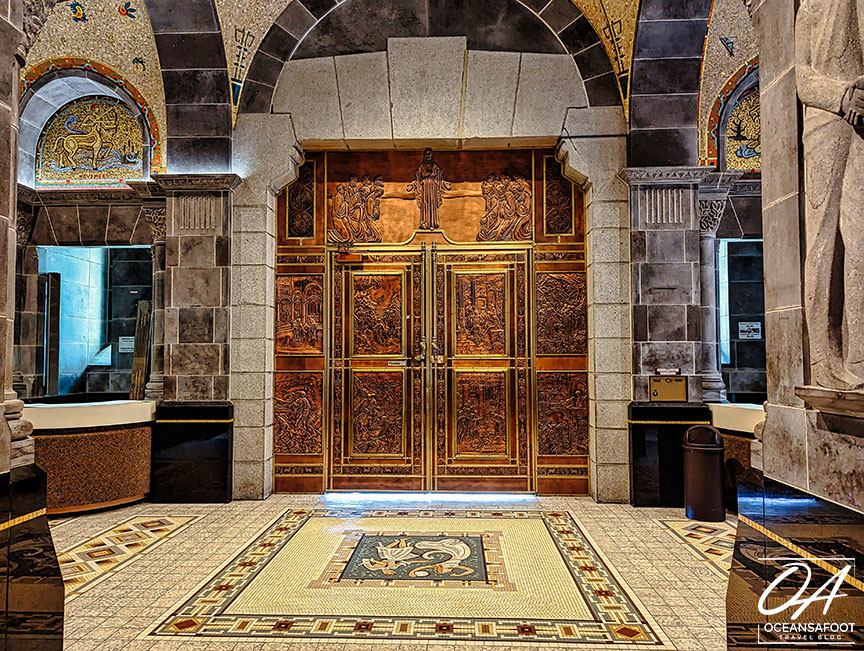
Witnessing the Crutch Display
Next to these impressive doors, we saw a large display of crutches and other medical aids mounted on a column. This display symbolized the numerous miraculous healings attributed to the intercession of Saint Anne. Pilgrims from around the world visited Sainte-Anne-de-Beaupré seeking healing, often leaving behind their crutches, canes, braces, and other devices as symbols of the miracles they believed they had experienced.
The Nave
We then turned our attention to the Nave, a vast open space designed to draw the eyes upward towards the heavens. The Nave featured soaring vaulted ceilings, intricate carvings, and frescoes depicting scenes from the life of Saint Anne and other biblical events. Light streaming through magnificent stained-glass windows created a kaleidoscope of colors, adding to the divine ambiance that enhanced the spiritual experience.
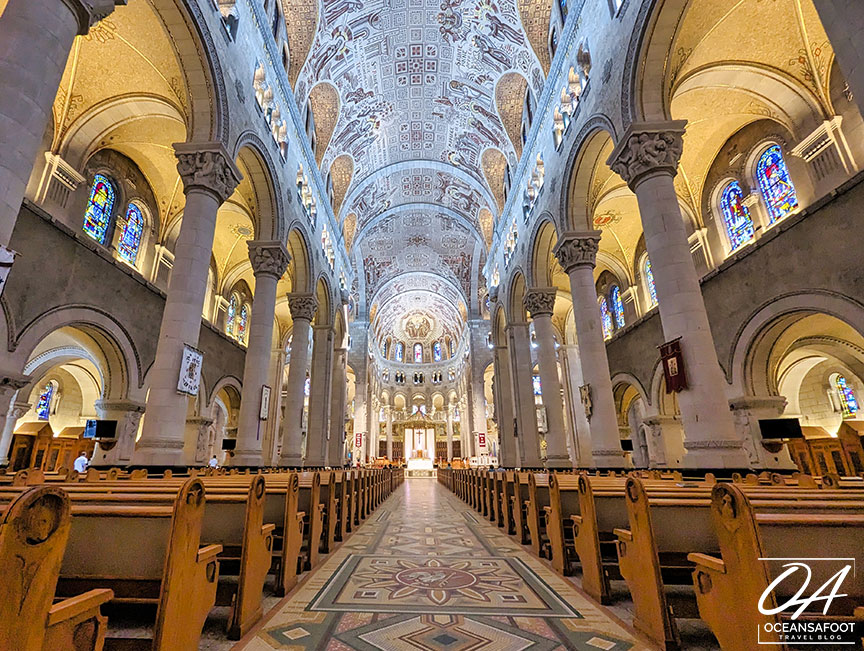
The Nave Floor
Looking down, the floor of the Nave revealed a stunning mosaic trail, composed of countless small, intricately designed tiles forming a flowing pattern adorned with symbolic motifs. Among these were representations of a turtle and an owl, which likely symbolized longevity, stability, and wisdom. These motifs reflected the basilica’s harmonious integration of nature and spirituality.
The Sanctuary and Altar
At the far end of the Nave, we approached the Sanctuary, the most sacred part of the basilica where the main altar was located. This masterpiece of religious art, crafted from fine marble and adorned with gold leaf, served as a focal point for worship and the celebration of the Eucharist. Behind the altar, the apse was embellished with stunning mosaics illustrating heavenly glory and the intercession of the saints.
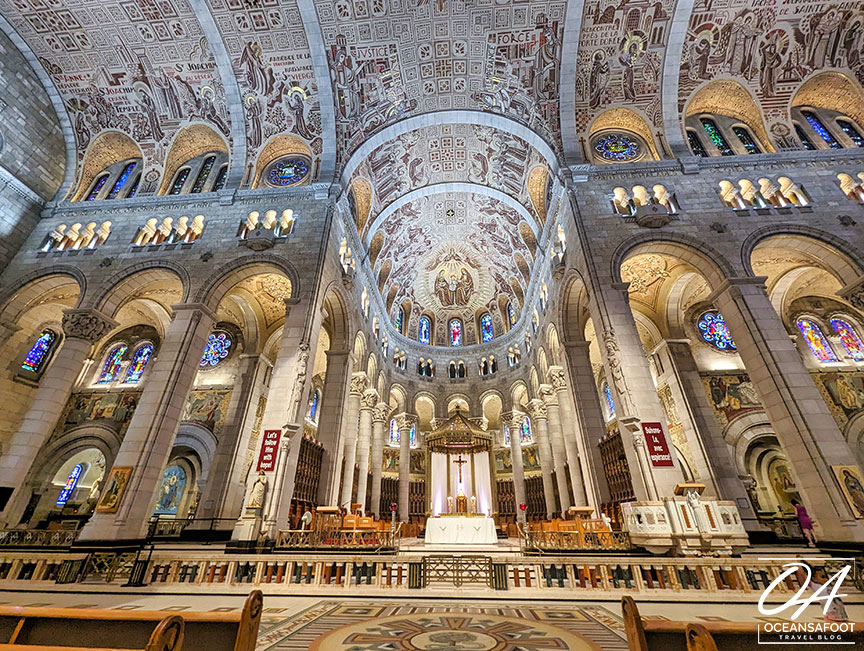
The Baldachin and Reliquary
Above the main altar, a grand baldachin, or canopy, supported by marble columns, enhanced the sense of sacredness and majesty. Richly decorated, this structure featured elaborate designs and symbolic motifs. In front of the altar, a reliquary containing precious relics of Saint Anne attracted pilgrims seeking her intercession and blessings.
Side Chapels and Devotional Spaces
Surrounding the Nave were several side chapels, each dedicated to different saints and aspects of faith. These chapels provided intimate spaces for prayer and contemplation. Notable among them was the Chapel of the Immaculate Conception, featuring a stunning statue of the Virgin Mary surrounded by intricate mosaics and candles lit by the faithful.
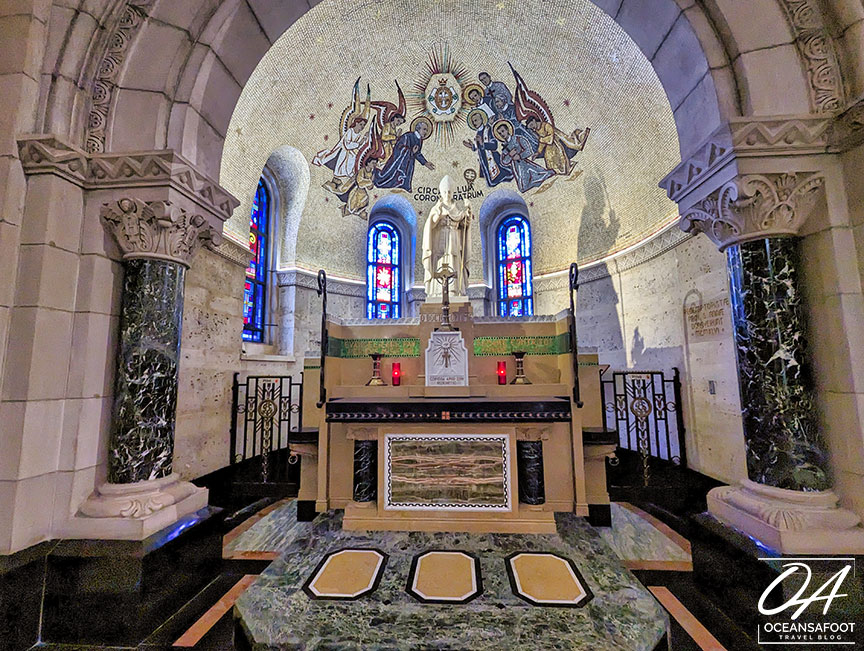
Departing the Chapel
As we exited the chapel, we paused to photograph the basilica’s stunning exterior. Despite the ongoing construction, we carefully framed our shots to best avoid the surrounding equipment and fencing. The front of the basilica, with its towering spires and intricate stonework, served as a breathtaking backdrop, allowing us to appreciate its grandeur from a different angle. With memories captured, we boarded the bus and headed to our next stop.
Montmorency Falls
Address: 5300 Boulevard Sainte-Anne, Québec, QC G1C 0M3, Canada
Time Spent: 45-minute visit | free-time
The Falls and Surrounding Park
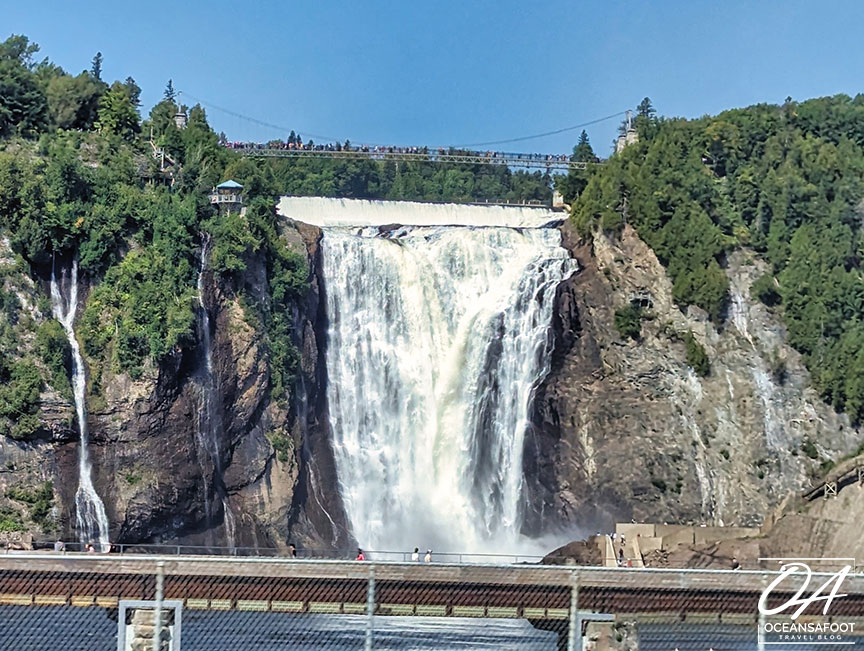
As the day moved into its latter half, we returned to Montmorency Falls, a breathtaking sight we had glimpsed earlier in the day. Nestled within the sprawling 1,500-acre Montmorency Falls Park, the area boasts extensive walking paths, inviting picnic spots, and numerous historical landmarks. The falls themselves, standing at a staggering 83 meters, are over 30 meters taller than Niagara Falls, presenting a truly majestic spectacle.
Accessing the Upper Lot Area
Given the heavy traffic, our guide decided to take us through the less crowded rear entrance, leading us to the upper parking lot. This strategic decision not only saved us time but also allowed us to explore a quieter part of the park. The upper lot, far from being just a parking area, serves as a gateway to several attractions and activities.
Montmorency Manor
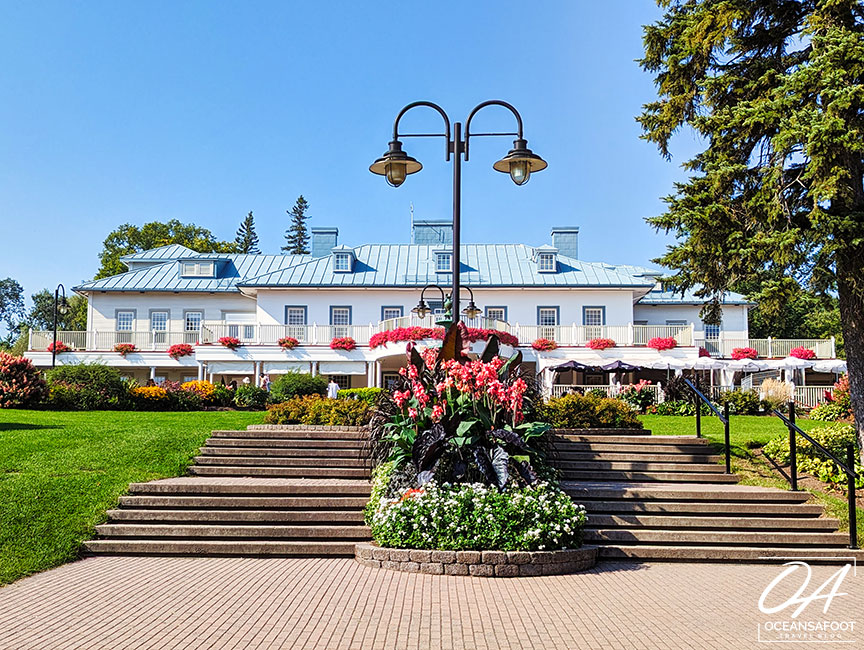
Our first stop was the historic Montmorency Manor, located at the upper lot. This charming building, housing both a restaurant and an interpretation center, offered us a perfect blend of relaxation and education. We learned about the Battle of Montmorency, which took place here during the Seven Years’ War in 1759, adding a layer of historical depth to our visit.
Suspended Bridge and Scenic Views
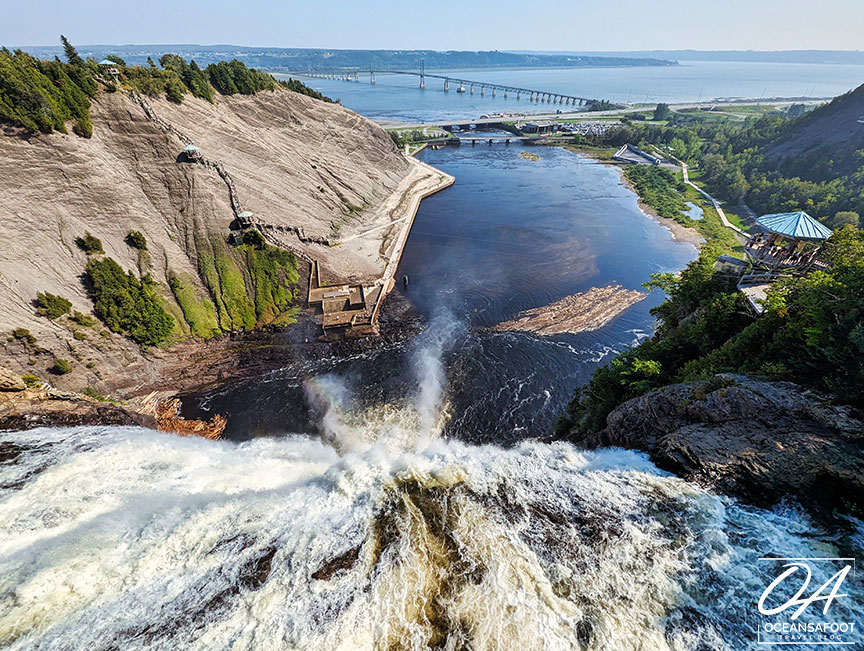
From Montmorency Manor, we embarked on a short, uphill walk of about 5 to 10 minutes to reach the Suspended Bridge. This marvel of engineering provided us with unobstructed views of the roaring falls and the expansive landscape beyond. Standing on the bridge, we were mesmerized by the powerful cascade of water plunging into the St. Lawrence River below. The panoramic scenery and the thunderous roar of the falls were both awe-inspiring and unforgettable.
Zipline Adventure
Continuing our adventure, we headed to the zipline area for a unique perspective of the falls. The zipline provides an exhilarating ride, offering a unique perspective of the falls and the surrounding landscape.
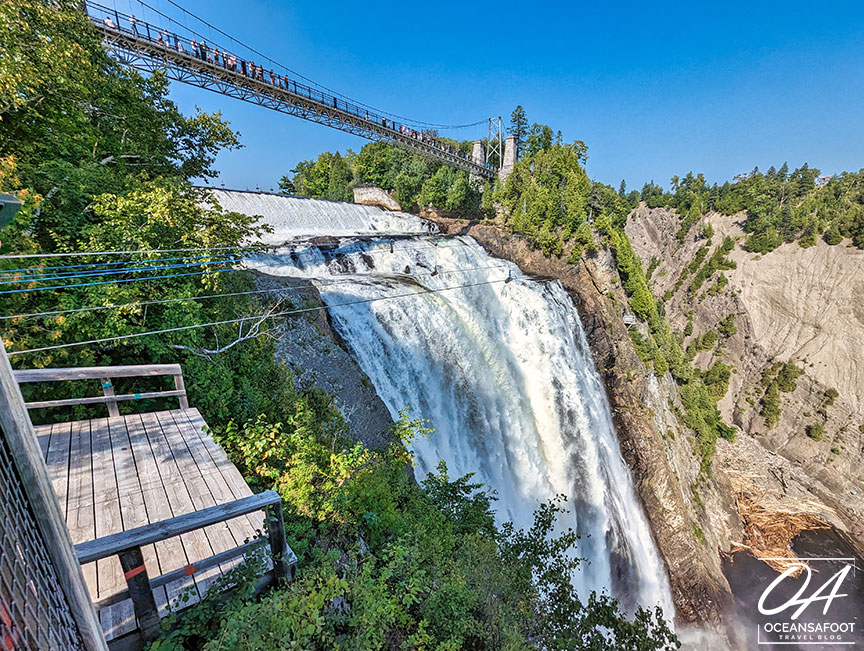
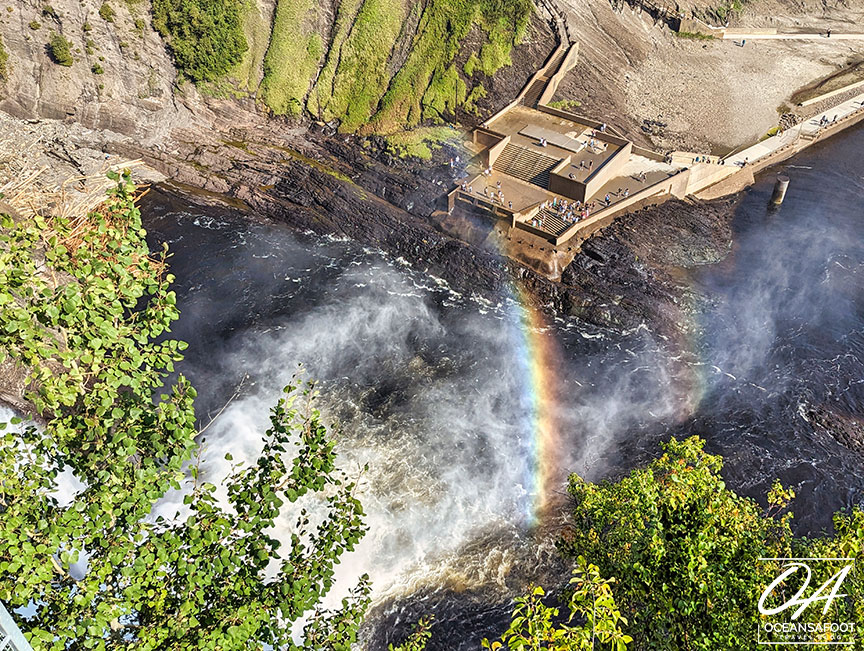
Through the mist of the falls, we caught sight of a rainbow playing hide and seek amidst the lower falls, leaving us with lasting memories of this unexpected spectacle.
Panoramic Staircase
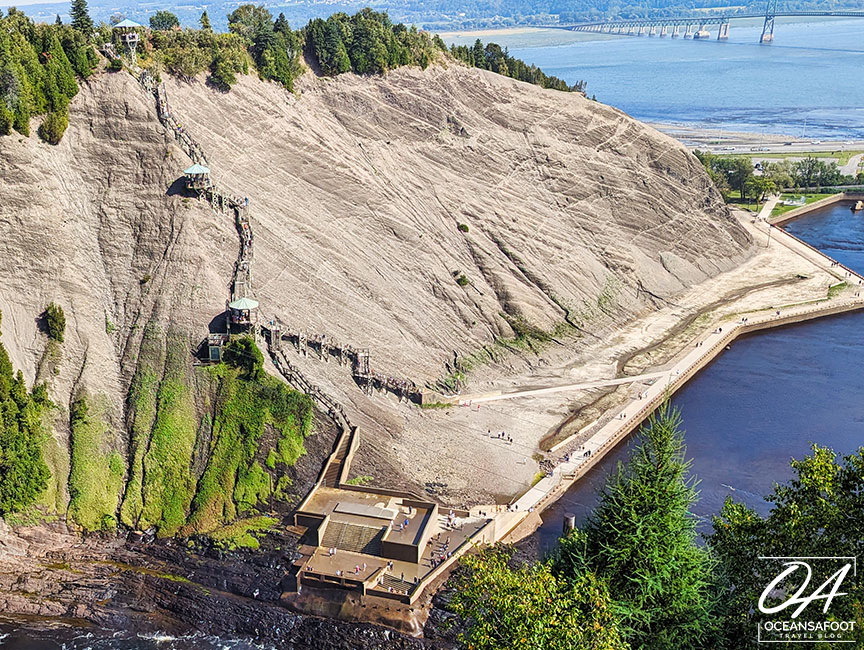
Regrettably, time constraints prevented us from exploring the panoramic staircase. With its 487 steps, the staircase allows visitors to get up close to the falls, feeling the sheer power of the cascading water. It was clear that this feature deserved more time than our tour allowed, and we made a mental note to return and fully experience it on a future visit.
Winter Wonderland
On our way back to Montmorency Manor, we passed the area that transforms into a Winter Wonderland during the colder months. In winter, Montmorency Falls becomes a frozen paradise, with the “sugarloaf” ice formation at the base of the falls attracting ice-climbing enthusiasts. The frozen cascades and snow-covered trails create a picturesque and serene environment, making Montmorency Falls a year-round destination.
Conclusion: A Day of Enrichment and Awe
15-minute return by Coach
Our visit to Montmorency Falls was a wonderful experience, enriched by the natural beauty and historical significance of the site. From the diverse perspectives offered by the suspended bridge, and zipline viewing area to the trails of the upper lot area, Montmorency Falls provides a multifaceted experience that continues to captivate all who visit.
Tour Name: Ste-Anne-de-Beaupré and Montmorency Falls
Cruise Line/Ship: Holland America Lines Zaandam
Tour Operator: Destinations North America
Duration: Approx. 3 hours
© OceansAfoot