Barcelona, Spain • May 13, 2016
A Vertical and Historical Ascent Through Barcelona
After a 7.5-hour transatlantic flight, we arrived at Barcelona–El Prat Airport shortly after 9:00 AM. Ground transportation had been arranged in advance through Royal Caribbean, allowing for a streamlined transfer to Hotel Regina, a centrally located accommodation just north of Plaça de Catalunya, one of the city’s major transportation and pedestrian hubs. We reached the hotel around 11:00 AM and checked into Room 320, located on the upper floors of this historic, early 20th-century property.
Upon entering the room, we encountered a feature typical of European hotels: the use of a keycard-activated slot to control the room’s electrical power. This energy-saving system requires guests to insert their room key into a panel near the entrance in order to operate lights, outlets, and air conditioning. A member of the hotel’s staff was quick to assist and explain how the system functioned.
Our scheduled activities for the day began with a 1:15 PM timed entry at the Basilica i Temple Expiatori de la Sagrada Família, the world-renowned basilica designed by architect Antoni Gaudí and under construction since 1882. To reach the site, we walked five minutes to a nearby entrance of the Barcelona Metro, an extensive and efficient underground rail network serving the metropolitan area.
To facilitate our travel over the coming days, we purchased two Hola Barcelona Travel Cards for €28. These cards offered unlimited access to metro, bus, and tram services for a multi-day period, making them particularly cost-effective for visitors planning multiple transfers.
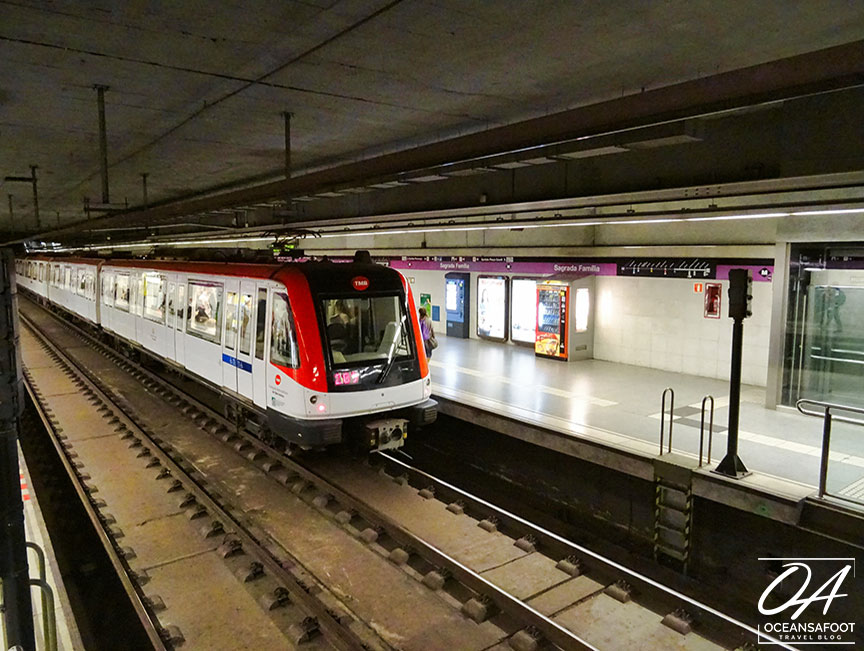
Boarding Line L2, we traveled several stops before disembarking at Sagrada Família station, which provides direct access to the basilica’s main entrance. Upon exiting, the monumental spires of Gaudí’s unfinished masterpiece immediately came into view, rising above the surrounding residential blocks.
With a few minutes to spare before our entry time, we stopped nearby for a light lunch. Although we had purchased our admission tickets in advance, a technical issue with a missing QR code temporarily delayed our access. Staff were eventually able to resolve the problem, and we proceeded inside, bypassing the long standby queue thanks to our reserved timeslot.
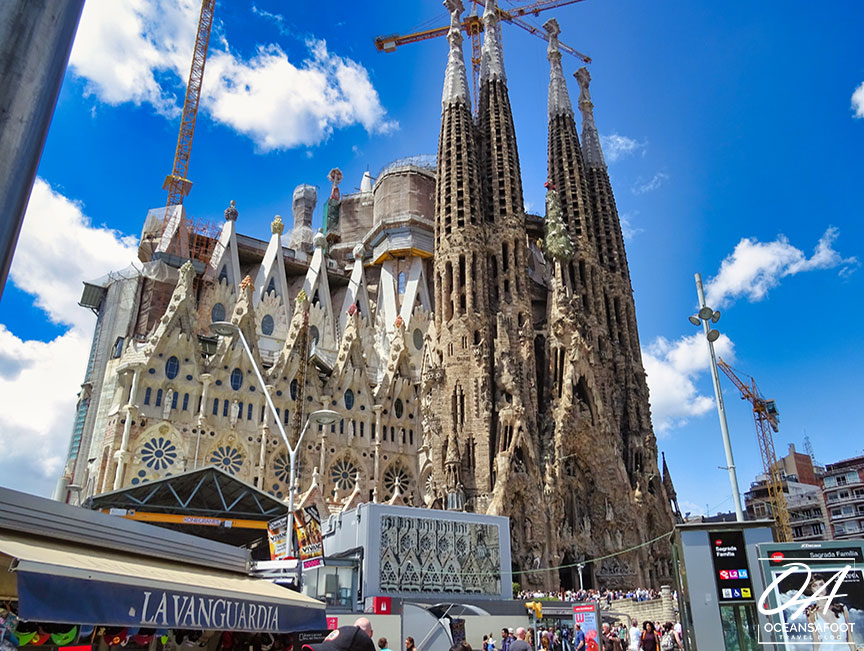
Stop 1: La Sagrada Família and Museum Visit
Location: Basilica i Temple Expiatori de la Sagrada Família, Carrer de Mallorca, Barcelona, Spain
Time Spent: Approximately 1 hour
Upon entering the Basilica i Temple Expiatori de la Sagrada Família, the interior’s architectural complexity and color immediately rivaled the grandeur of its famed exterior. Designed by Antoni Gaudí, the space embodies his vision of a “cathedral of light,” where the structure and illumination reflect divine harmony.
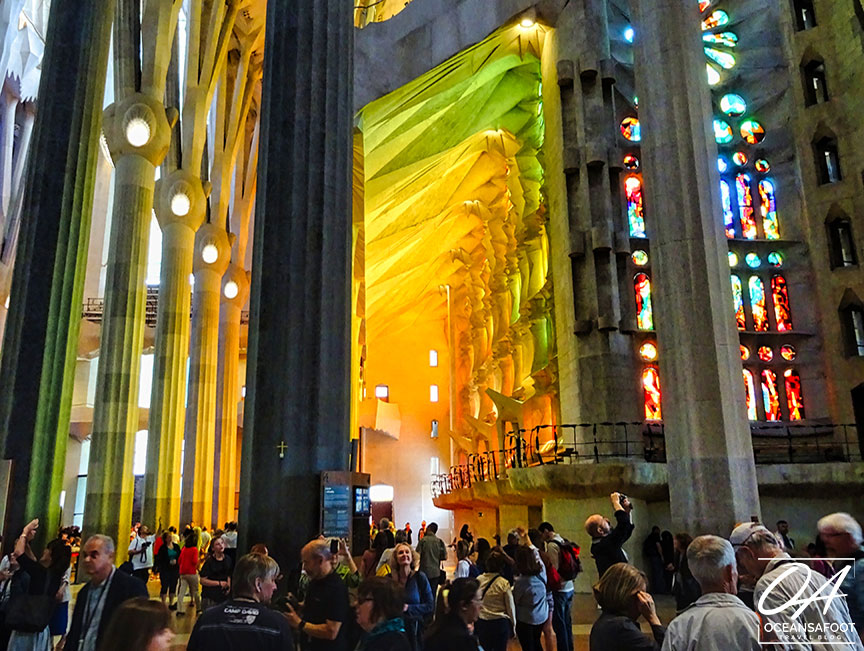
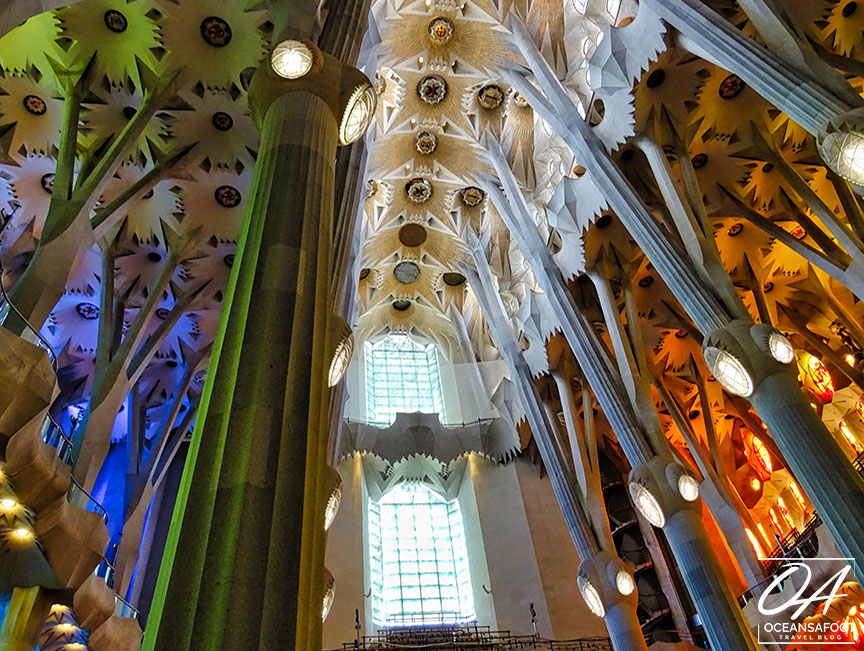
We began with a self-guided tour through the main nave, where tall, tree-like columns support an elaborate ceiling structure meant to evoke a forest canopy.
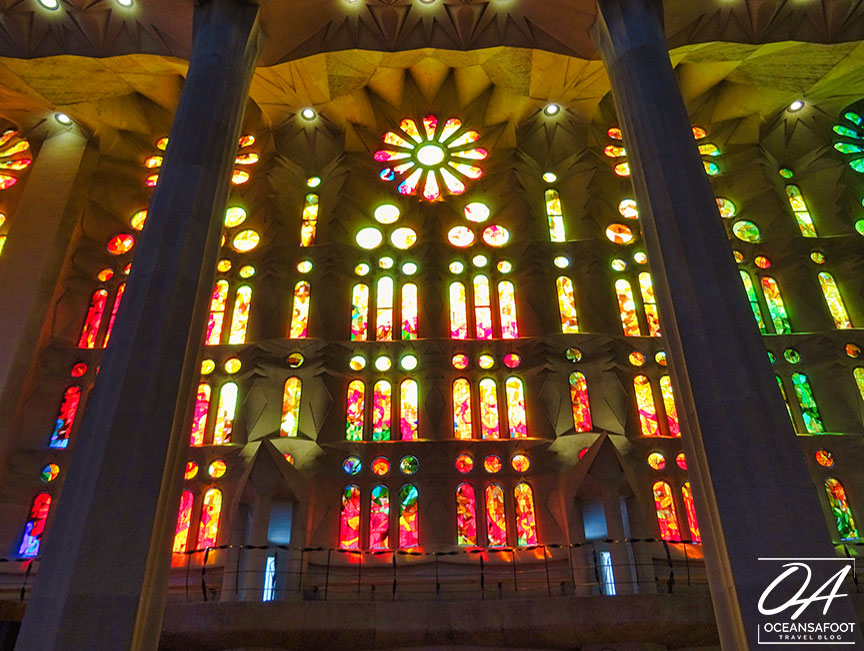
The stained-glass windows, strategically arranged by color and orientation, bathed the interior in vivid hues—warm tones on the east side for morning light, and cooler shades on the west to reflect the evening sun.
Beneath the main sanctuary, we visited the Sagrada Família Museum, which offers a deeper look into the basilica’s ongoing construction. Exhibits include scale models, architectural sketches, photographs, and original tools used by craftsmen over the decades.
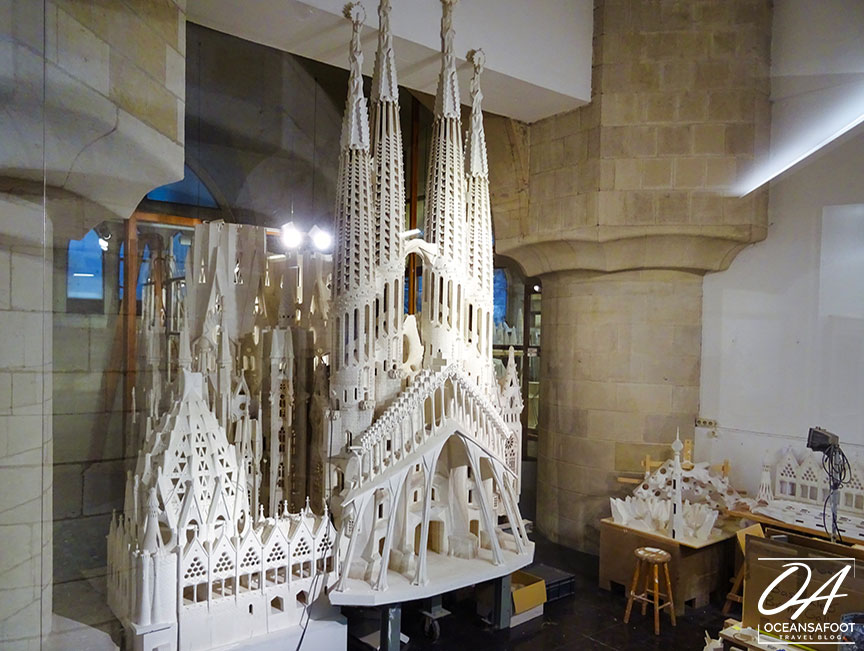
The museum also explores Gaudí’s innovative design methods, including his use of gravity-based hanging models to conceptualize complex geometries long before computer-aided design.
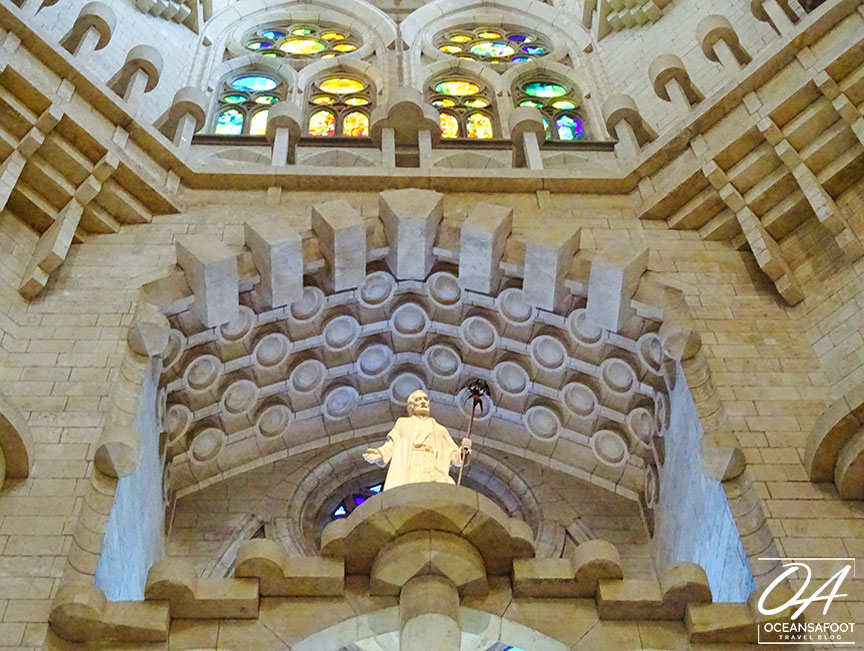
The combined visit to the basilica and museum took approximately one hour and offered valuable historical and technical context that enhanced our appreciation of this still-unfinished landmark.
Stop 2: Nativity Facade Tower Climb
Location: Sagrada Família, Nativity Entrance, Barcelona, Spain
Time Spent: Approximately 1 hour
At 2:30 PM, we arrived for our timed entry to ascend the Nativity Facade Tower, one of two towers currently open to the public. This facade—symbolizing the birth of Jesus—is the most ornamented of the three main entrances, adorned with sculptures of flora, fauna, and biblical figures in a lush, almost jungle-like relief. Unfortunately, a ticketing issue with a missing QR code once again caused a minor delay, which staff resolved with help from a supervisor at the gate.
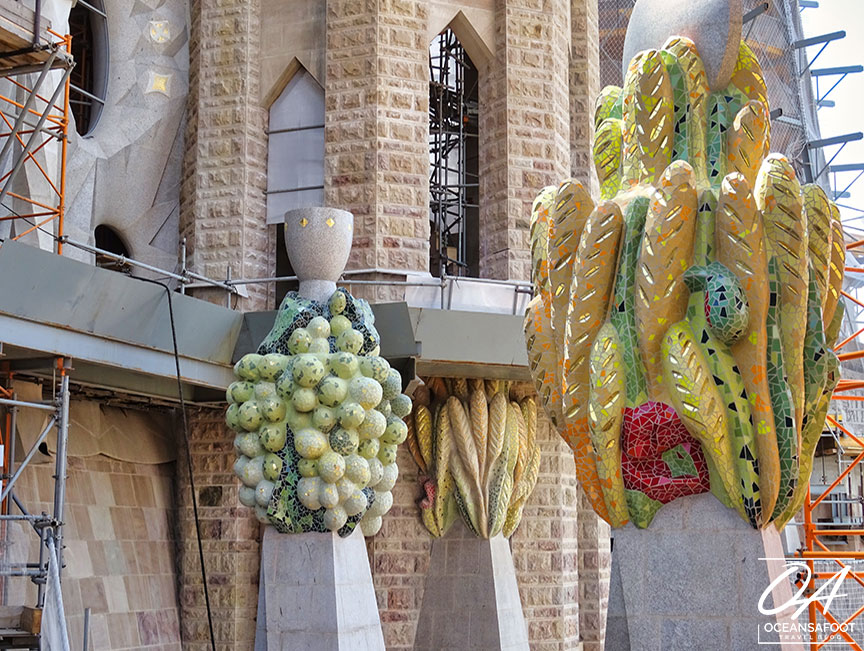
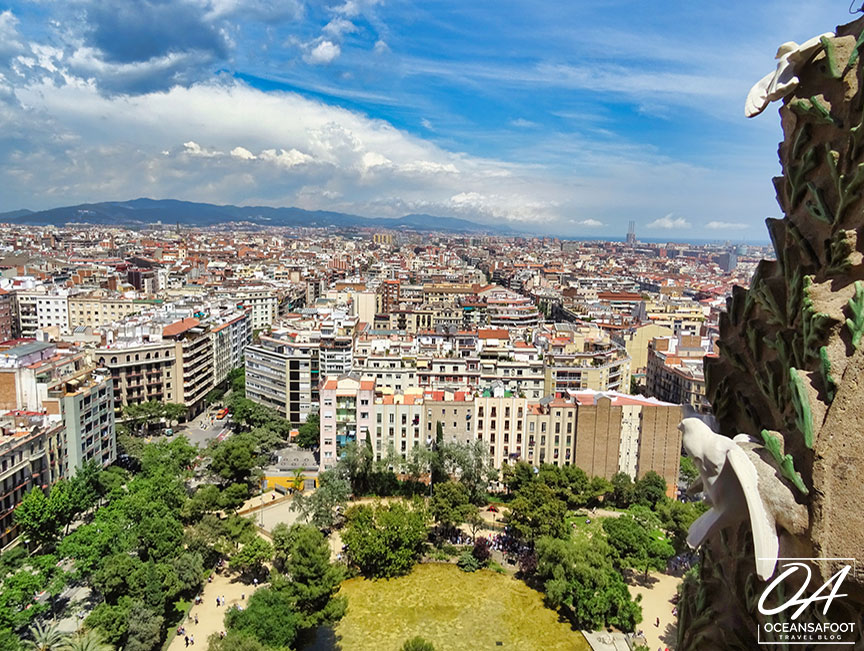
Once cleared, we entered a compact, high-speed elevator that carried us to an upper viewing area nestled between the twin spires of the Nativity facade. From this vantage point, we were immediately greeted by panoramic views of Barcelona: the gridded streets of the Eixample district, the linear rows of rooftops, and the faint outline of the Mediterranean Sea in the distance.
To descend, we followed a winding internal staircase carved into the stone structure of the tower. The spiral staircases, intentionally narrow and unidirectional, followed a series of tight coils—first rotating to the right, then reversing direction halfway down. This alternating motion is part of Gaudí’s architectural logic, balancing weight distribution while symbolizing life’s journey.
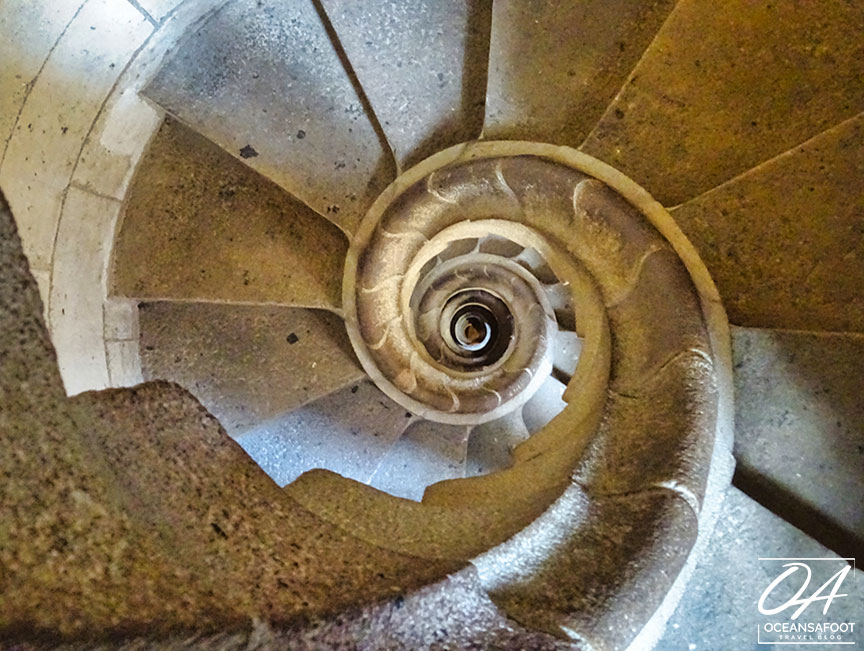
As we made our way downward, we encountered several balcony alcoves integrated into the tower’s outer walls. These served both structural and aesthetic purposes, offering additional lookout points where we paused to take photographs and admire the basilica’s elaborate sculptural details up close.
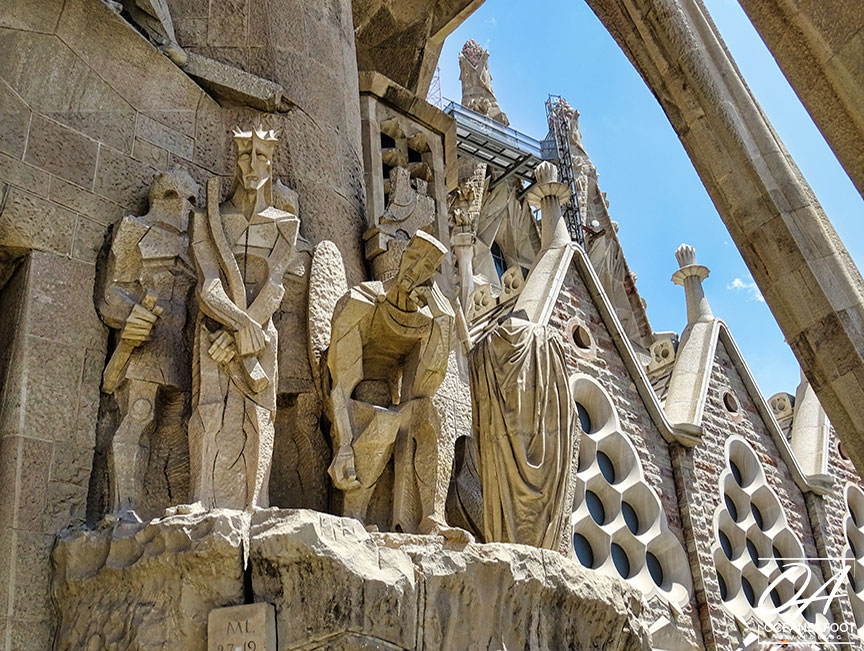
The climb and descent were moderately strenuous due to the steep stairs and tight quarters, but the immersive architectural experience and bird’s-eye city views made it a highlight of our visit.
Stop 3: Market Detour and Cultural Crossroads
Location: Mercat de Sant Josep de la Boqueria, La Rambla, Barcelona, Spain
Time Spent: Approximately 20 minutes
After a short rest near the basilica, we resumed our route via the Barcelona Metro, transferring to Line L3 (Green Line) and heading southbound to Liceu station. This stop is located along La Rambla, Barcelona’s famous pedestrian boulevard that stretches from Plaça de Catalunya to the waterfront.
Upon exiting the metro, we temporarily lost our directional bearings, which led us—somewhat unintentionally—to the entrance of Mercat de Sant Josep de la Boqueria. Although not part of our original schedule, the chance encounter proved worthwhile. Commonly referred to as La Boqueria, this bustling indoor market has served Barcelona’s citizens and visitors for centuries, evolving from an open-air trading hub into a modern gastronomic destination.
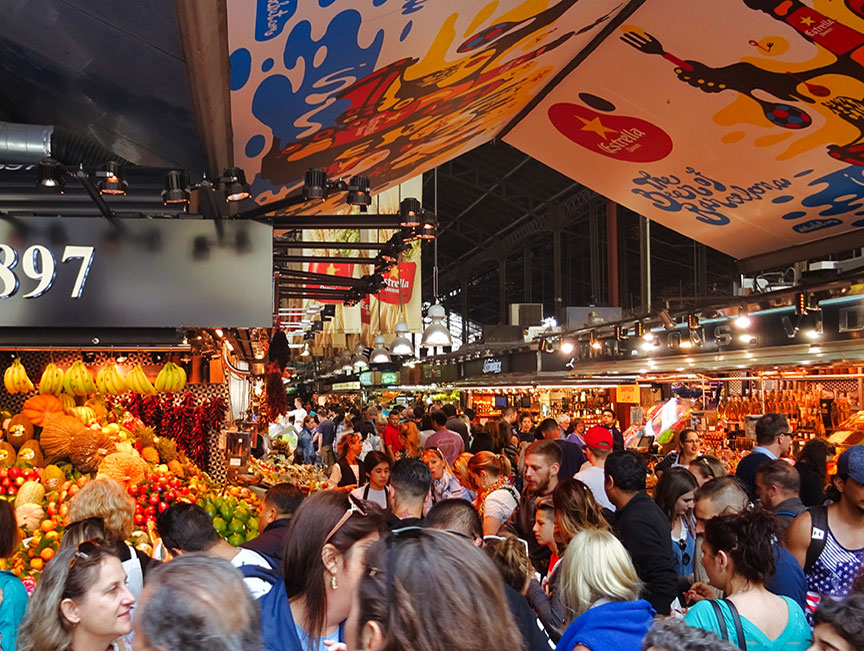
We entered through the cast-iron entrance arch and found ourselves surrounded by a colorful array of vendor stalls. Counters displayed fresh seafood, cured meats, tropical fruits, fresh juices, artisan cheeses, and Catalan specialties, all arranged with precision and visual appeal. The interior was crowded but well-organized, with clearly marked aisles and a central walkway that allowed us to move easily between sections.
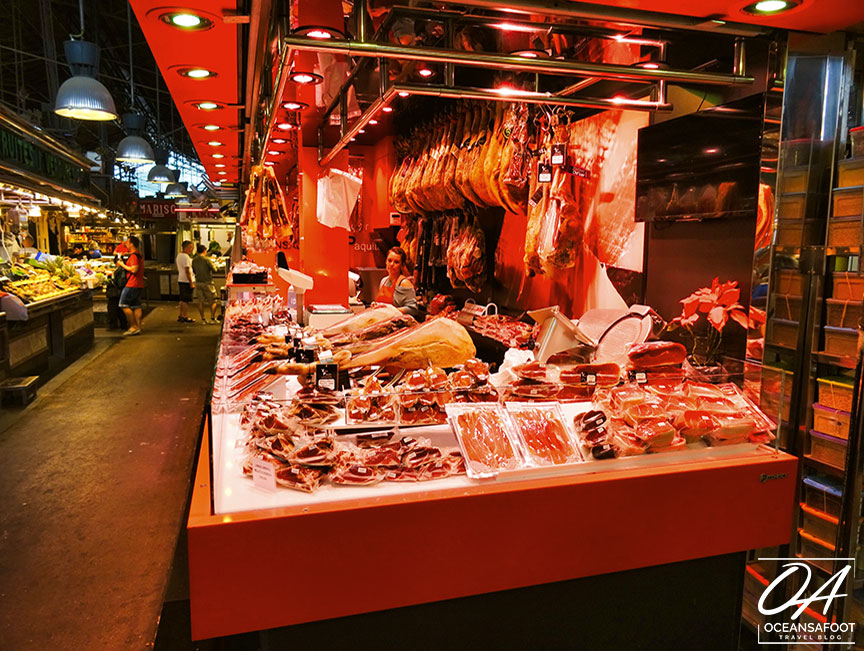
Though pressed for time, we lingered long enough to appreciate the vibrancy of the setting and examine a few locally produced goods. After consulting a vendor for directions, we exited the market through its rear corridor and continued on foot toward our next stop: Plaça Reial, located just a few blocks southwest of the market.
Stop 4: Gothic Quarter Walking Tour
Location: Plaça Reial (meeting point), Barri Gòtic, Barcelona, Spain
Time Spent: Approximately 2.5 hours
We arrived at Plaça Reial, a neoclassical square just off La Rambla, in time for our scheduled walking tour with Runner Bean Tours. The group was easy to locate—guides stood clearly visible beneath a large green umbrella at the center of the plaza. Although we had reserved spots in advance for the Old City Walking Tour, several travelers without prior bookings were also accommodated. Due to high turnout, participants were divided into three separate groups to ensure a manageable and informative experience.
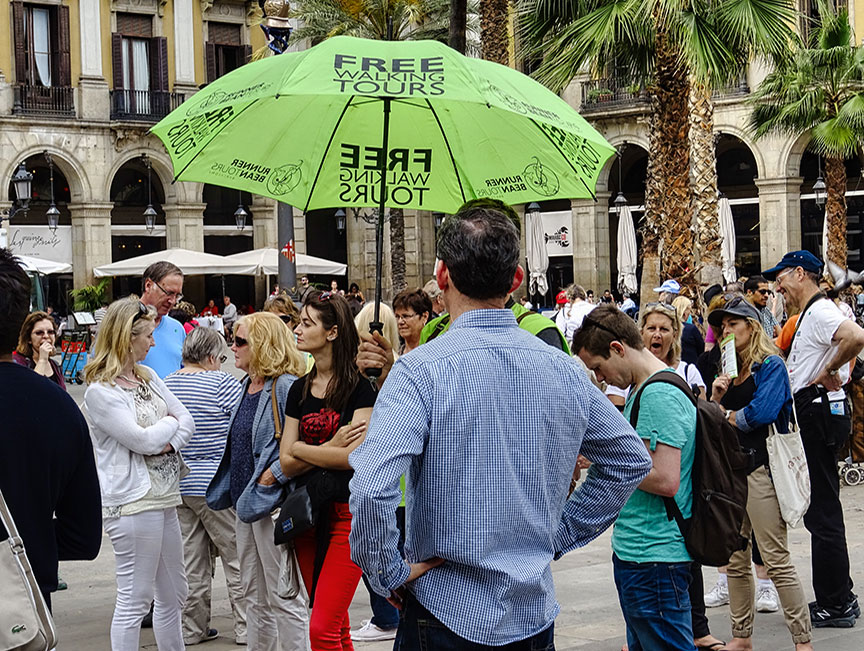
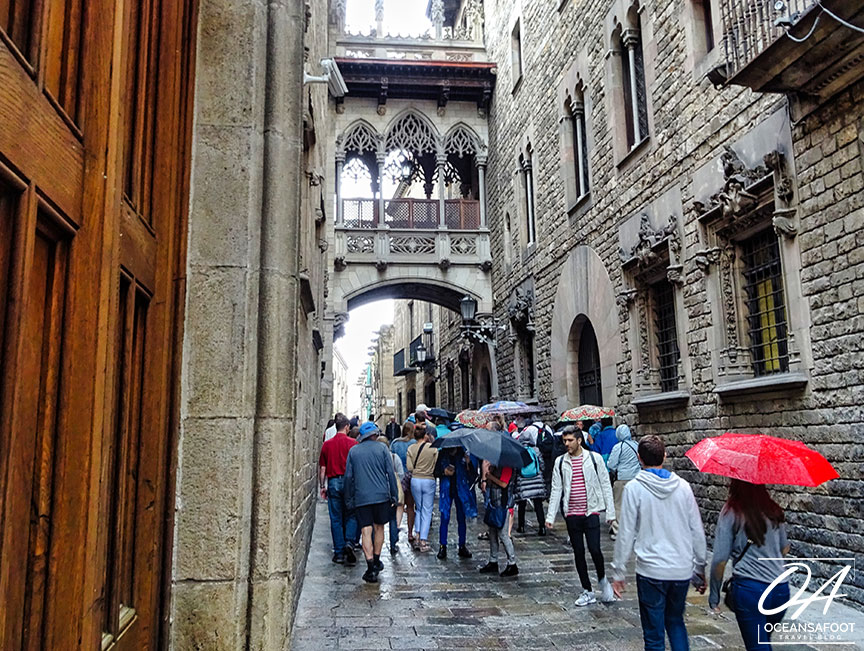
Our group consisted of twelve people and was led by Marc, a knowledgeable and engaging guide with expertise in Barcelona’s layered urban history. The route focused on the Barri Gòtic, or Gothic Quarter, a dense network of narrow streets, stone buildings, and public squares that spans more than two millennia of continuous urban development.
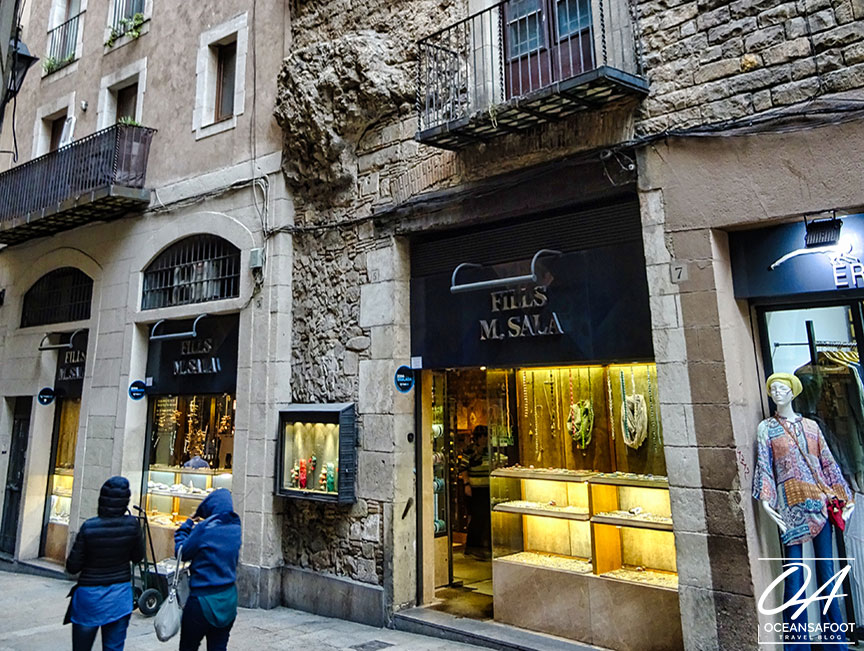
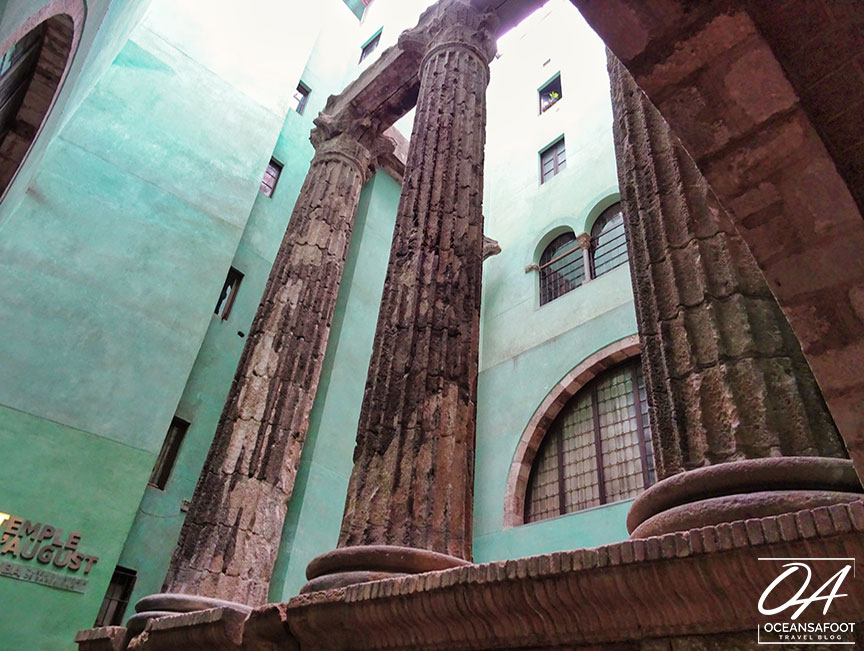
Marc began the tour by leading us to the surviving Roman-era walls and the site of the Temple of Augustus, where four ancient columns—once part of a Roman forum—remain embedded in a residential courtyard. From there, we walked through the Medieval Jewish Quarter (El Call), characterized by tight alleys, modest façades, and hidden courtyards. This area once housed one of the most significant Jewish communities in medieval Catalonia until its expulsion in the late 14th century.
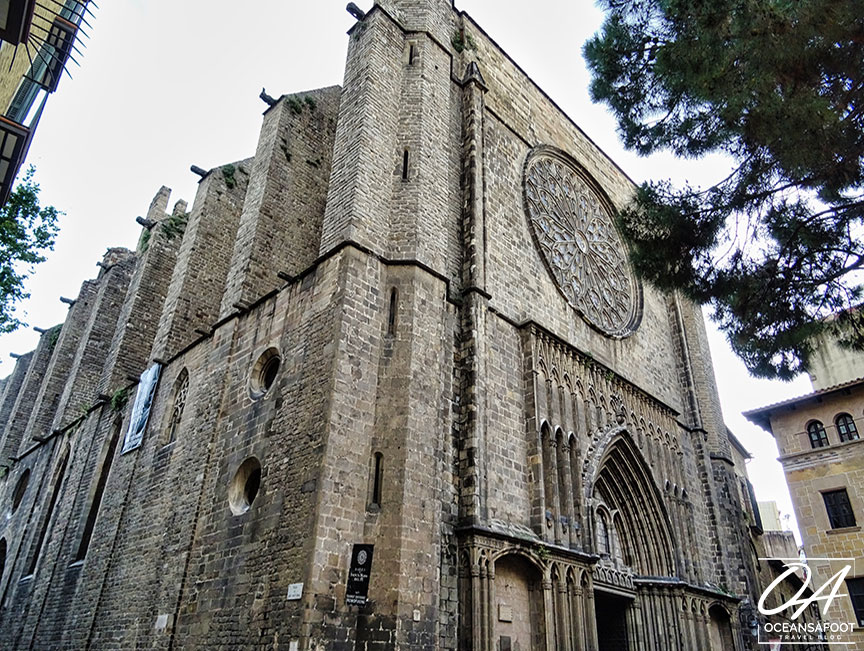
The tour continued with visits to several prominent examples of Catalan Gothic architecture, including Santa Maria del Pi, known for its large rose window and buttressed nave, and Plaça del Rei, the medieval royal square where monarchs of the Crown of Aragon once resided. Marc highlighted architectural elements such as pointed arches, ribbed vaults, and civic heraldry etched into the façades of former palaces and guild halls.
We also stopped at Barcelona Cathedral and observed its mix of Gothic and neo-Gothic features, learning how portions of the façade were completed centuries after the original construction. Throughout the walk, Marc provided context on how the Gothic Quarter reflects Barcelona’s growth from a Roman outpost to a medieval mercantile power and later a modern city preserving its historical core.
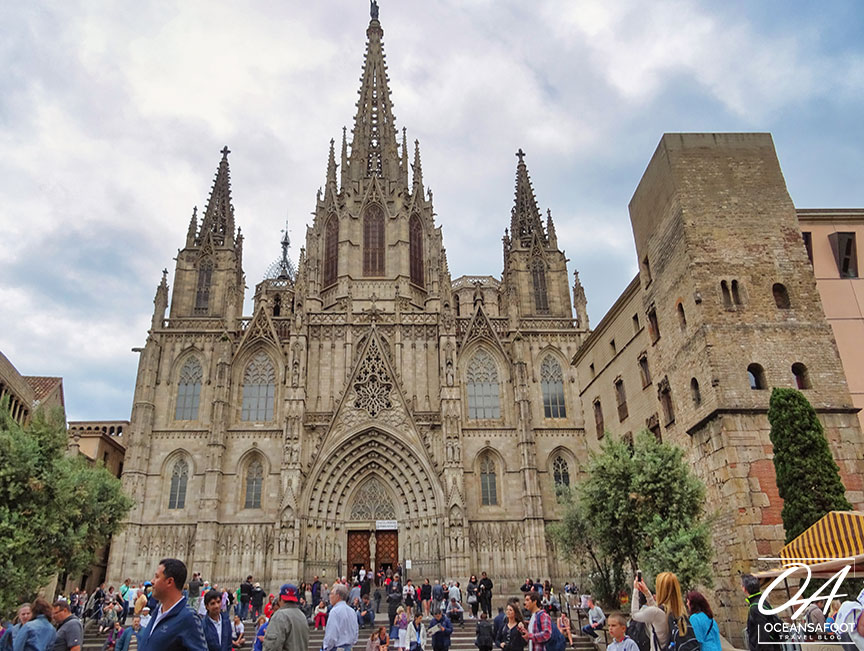
By the end of the 2.5-hour tour, we had explored a wide cross-section of the old city on foot, covering substantial ground while gaining insight into its architectural evolution, cultural shifts, and layered geography.
Dining Experience
Location: Old Town Pastry Shop, Barri Gòtic, Barcelona, Spain
Time Spent: Approximately 15 minutes
After concluding the walking tour in the Gothic Quarter, we made a short detour to a nearby pastry shop, taking advantage of the neighborhood’s rich culinary offerings. Located just a few blocks from Plaça Reial, the establishment featured a compact but well-stocked counter offering a variety of traditional Catalan and Balearic sweets.
We selected two regional favorites: the ensaïmada, a coiled pastry with a light, flaky texture traditionally made using pork lard, and the xuixo, a sugar-dusted pastry filled with custard and fried to a golden crisp. Both items are popular across northeastern Spain and reflect the area’s mix of Mediterranean and island-influenced baking traditions.
From there, we returned on foot to the Liceu Metro station and traveled via Line L3 back to Hotel Regina. We arrived just before sunset and retired early, bringing a full day of architectural exploration, historic walking, and culinary discovery to a close.
Who Is This Tour Best For?
- First-time visitors
- Architecture and design enthusiasts
- Public transit users
- History lovers
- Cultural immersion travelers
Tour Summary
- Tour Name: La Sagrada Família Visit with Tower Access
- Offered By: Viator (independent booking)
- Total Duration: Approximately 2 hours
- Main Stops: Basilica interior, Sagrada Família Museum, Nativity Facade Tower
- Drive-By Highlights: None
–––
- Tour Name: Old City Walking Tour
- Offered By: Runner Bean Tours
- Total Duration: 2.5 hours
- Main Stops: Gothic Quarter, Temple of Augustus, Plaça del Rei, Santa Maria del Pi
- Drive-By Highlights: La Boqueria, La Rambla, Plaça de Catalunya

Excursion Disclaimer: Descriptions of shore excursions on OceansAfoot reflect individual travel experiences and are not official representations of the cruise lines or tour providers mentioned. All information is based on personal participation, publicly available facts, or traveler observation.
© OceansAfoot