Iberostar Hotel
Address: Passeig de Gràcia, 29-31, 08007 Barcelona, Spain
Time Spent: Departure point
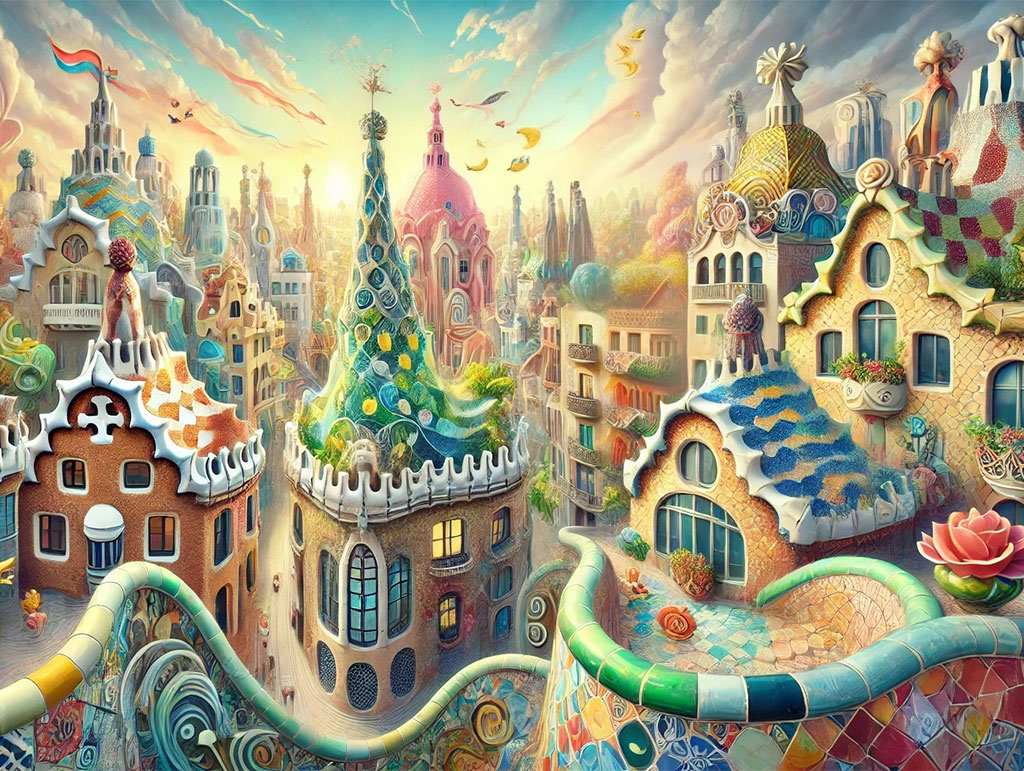
Shortly after noon, we departed from the Iberostar Hotel, located in the heart of Passeig de Gràcia, eager to begin our journey into the imaginative world of Antoni Gaudí. Known for his whimsical and unique style, Gaudí has transformed Barcelona into a living artwork, his creations defining the city’s essence. In Gaudi’s architectural utopia, buildings are more than structures; they are vibrant, breathing canvases. Now as we stepped out under the afternoon sun, mere footsteps from our hotel, Gaudí’s creations awaited, ready to captivate us.
Casa Batlló
Address: Passeig de Gràcia, 43, 08007 Barcelona, Spain
Time Spent: 1 hour, 15 minutes
A brief 15-minute walk from our hotel brought us to the iconic Casa Batlló, one of Antoni Gaudí’s most celebrated works and a pinnacle of his creativity. This architectural masterpiece is a harmonious fusion of artistic brilliance and marine-inspired design, exemplifying Gaudí’s ability to seamlessly merge nature with structure. Entering with our timed tickets, we were immediately transported into a world where the ordinary gave way to the extraordinary.
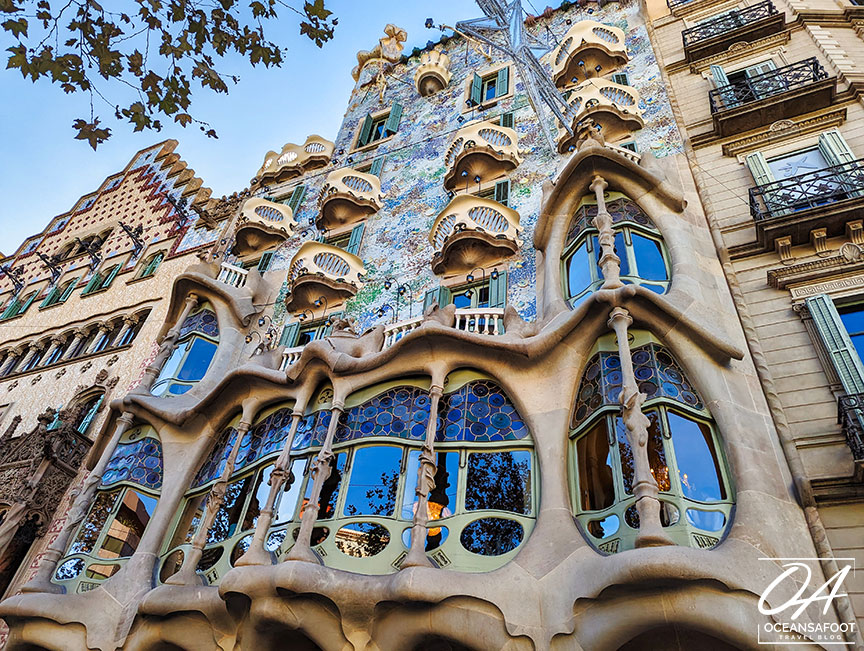
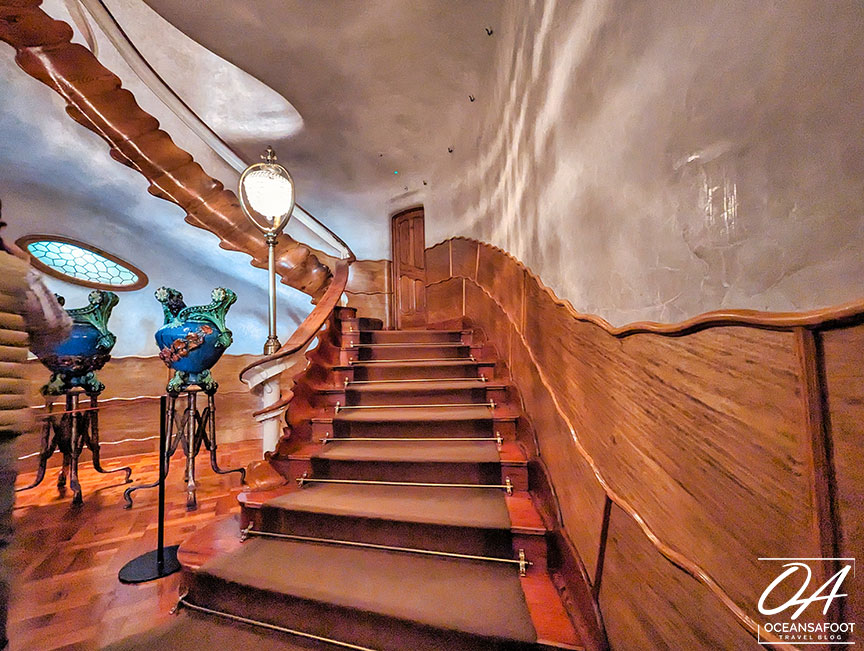
Nicknamed the “House of Bones” for its skeletal-inspired design, Casa Batlló exudes an otherworldly charm. The undulating façade, with its rounded windows and vibrant mosaics, evokes the fluidity of the sea, while inside, the marine theme flows through every detail. The staircase, with its organic curves, and the wave-like ceilings create a cohesive, dreamlike environment. From intricate glasswork to imaginative surfaces, each element reflects Gaudí’s meticulous craftsmanship and his ability to bring fantasy to life.
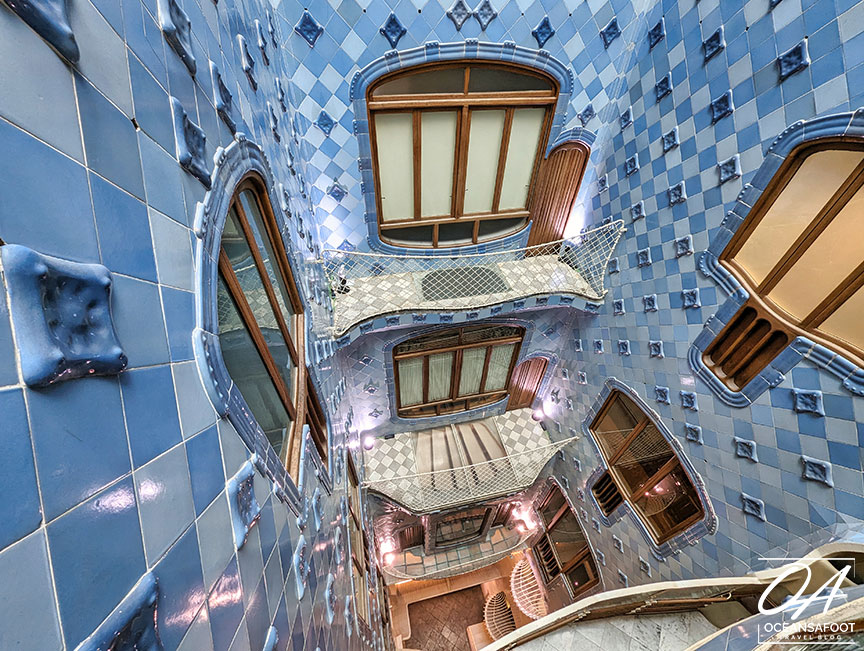
A central interior corridor runs vertically through the building, exemplifying Gaudí’s genius for combining functionality and artistry. Designed to facilitate light and air flow, the corridor is adorned with shimmering blue tiles arranged in a gradient to mimic the changing intensity of light from rooftop to ground floor. Skylights above and strategically placed windows enhance illumination, creating a sense of openness and harmony throughout the space. This clever manipulation of light and space creates a harmonious balance, making the corridor feel open and inviting despite its vertical nature.
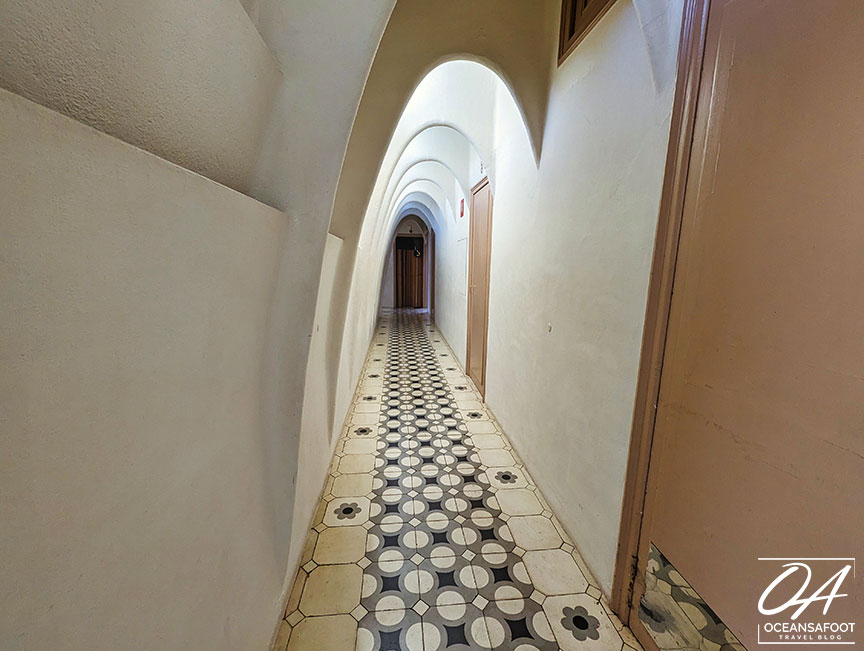
Our upward journey took us through hallways with flowing, organic curves, embodying Gaudí’s artistic vision. The walls, smooth and dynamic, evoked an underwater world—a recurring theme in Casa Batlló’s design. These features, paired with the vibrant colors and textures, created an immersive experience, as if the hallway itself were alive and in motion. This hallway continued our upward ascent eventually leading to the rooftop, a true masterpiece of Antoni Gaudí’s creativity.
The rooftop brought Gaudí’s creativity to its peak. Dominated by the iconic dragon-back structure, believed to symbolize the scales of the mythical beast in the legend of Saint George, the rooftop also featured chimneys adorned with intricate mosaic tiles. These functional elements were transformed into vibrant sculptures, blending form and purpose in true Gaudí style.
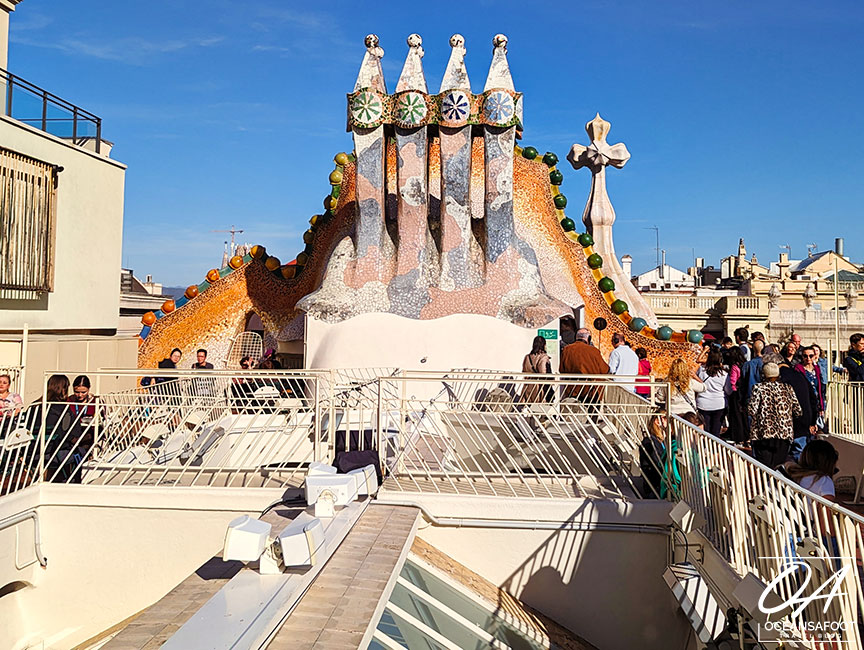
From this elevated vantage point, we were rewarded with expansive views of Barcelona’s cityscape, a stunning blend of historic and modern architecture that reflected the city’s evolving identity. Casa Batlló’s rooftop not only crowned the building’s imaginative design but also provided a fitting culmination to our exploration of this architectural marvel.
A Journey Through Gaudí’s Sensory Wonderland
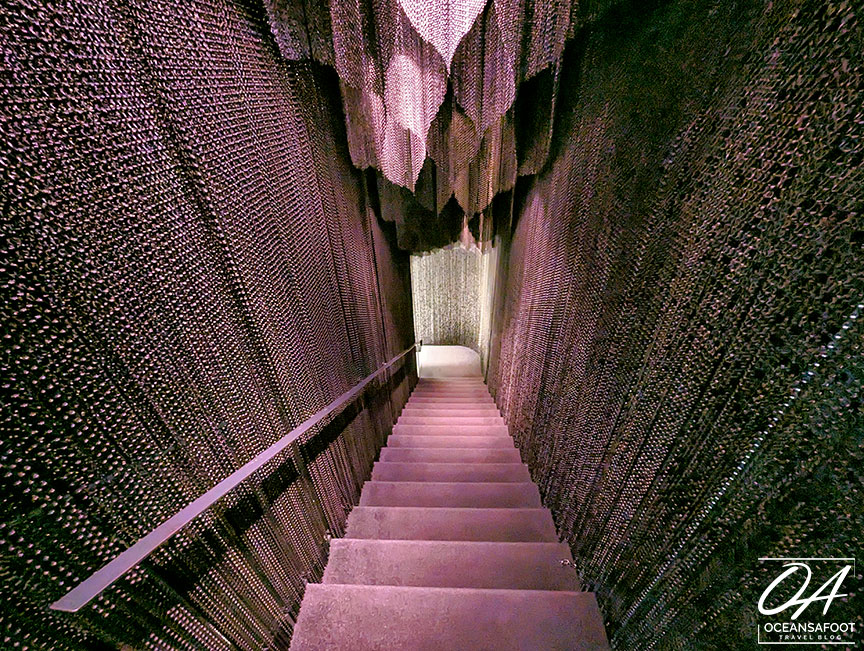
Descending from Casa Batlló’s rooftop, we entered a modern artistic installation that added a contemporary layer to Gaudí’s masterpiece. Part of the Casa Batlló 10D Experience, this display of cascading aluminum chain curtains blended seamlessly with Gaudí’s iconic flowing, organic design. Unveiled during the building’s post-pandemic reopening, the feature served as a striking reinterpretation of his artistic vision, bridging the past with the present.
On the lower level, we discovered another innovative addition: The Magic of Gaudí. This immersive audiovisual exhibition used advanced projection technology to transform the space into a dynamic celebration of his genius. Gaudí’s iconic designs came to life as vibrant patterns flowed across walls, floors, and ceilings, enveloping visitors in an experience that blurred the lines between art and space.
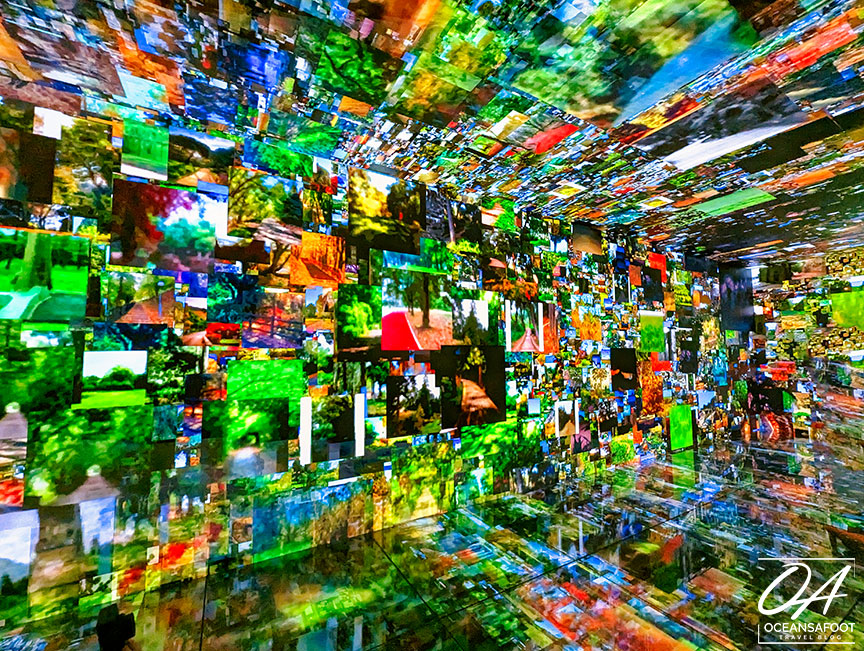
At first, the swirling visuals and fluid transitions were almost disorienting, creating a surreal sense of vertigo. However, as we adjusted, the display fully captivated us. Patterns reminiscent of Gaudí’s mosaics and natural forms cascaded around us, showcasing his architectural language in an entirely new way. It was as though the boundaries between art and space had dissolved, allowing us to step directly into his imagination.
La Pedrera (Casa Milà)
Address: Passeig de Gràcia, 92, 08008 Barcelona, Spain
Time Spent: 1 hour, 30 minutes
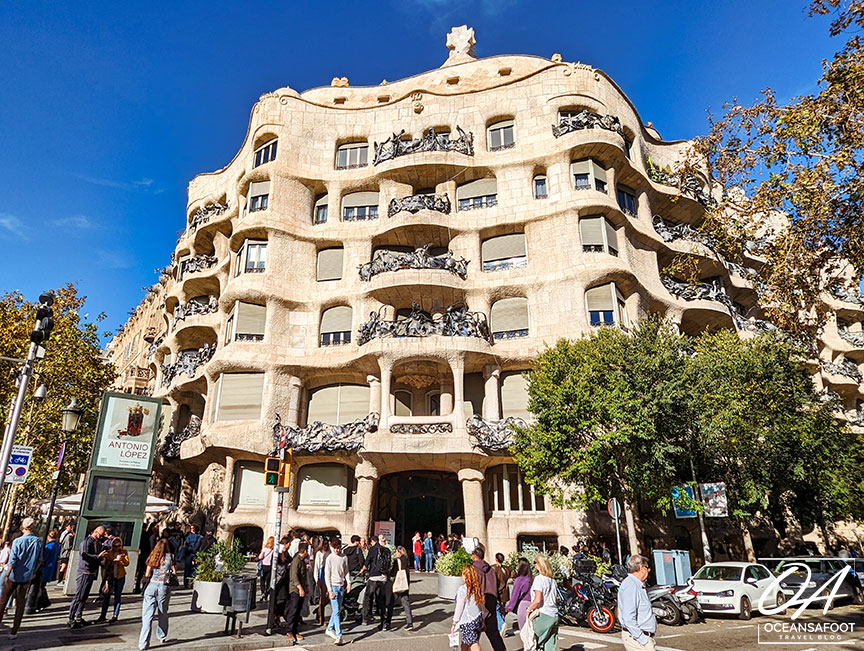
After immersing ourselves in the wonders of Casa Batlló, we took a leisurely 10-minute walk through Barcelona’s vibrant streets to our next destination: La Pedrera, also known as Casa Milà. This monumental structure, Gaudí’s final private residential project, stands in stark contrast to the aquatic inspiration of Casa Batlló. With its undulating stone façade and sculptural chimneys, La Pedrera evokes the airy fluidity of clouds, as if the building itself is a piece of the sky brought to earth.
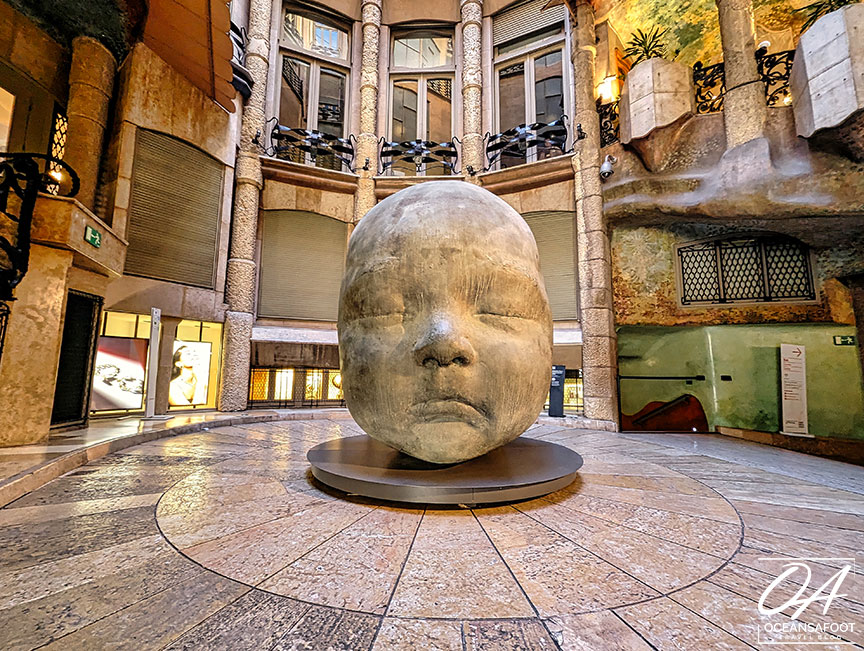
Upon entering Casa Milà, we were welcomed by a spacious open-air courtyard that immediately captured Gaudí’s innovative genius. Dominating the space was a striking chimney, sculpted to resemble a child’s head, reflecting his deep connection to Catalan culture and his bold approach to reimagining traditional forms.
Opting to bypass the wait for the elevator, we embarked on the multi-story climb via the staircase, a choice we briefly reconsidered as the ascent proved more strenuous than expected. Still, each step felt like a journey deeper into Gaudí’s vision, and reaching the top made the effort worthwhile.
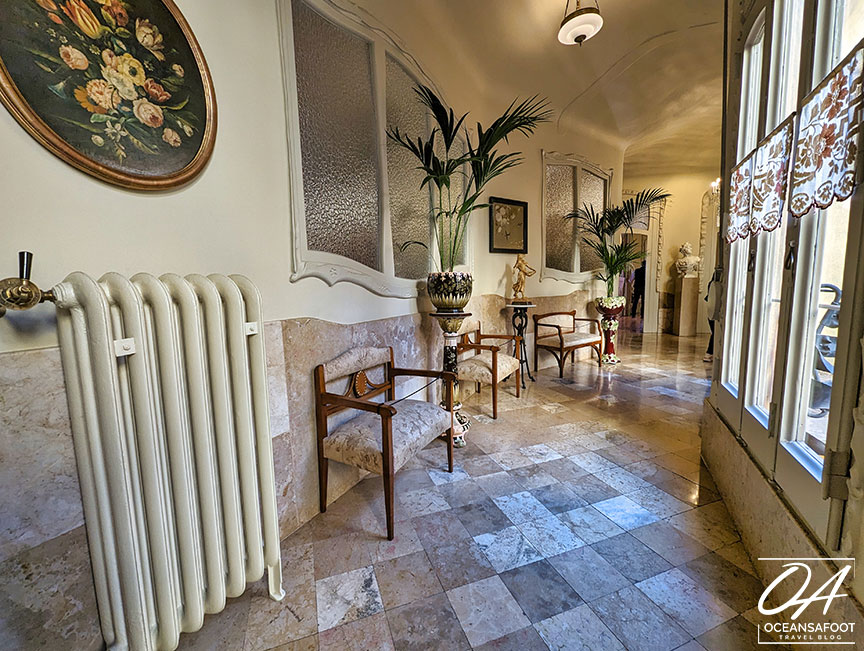
Our first destination was a faithfully restored apartment, meticulously curated to transport visitors back to the early 20th century. This space provided a window into the daily life of Barcelona’s bourgeoisie during that era. The furnishings, décor, and intricate detailing of the apartment captured the elegance and social aspirations of the time, from the finely crafted wooden furniture to the delicate textiles and carefully chosen decorative elements.
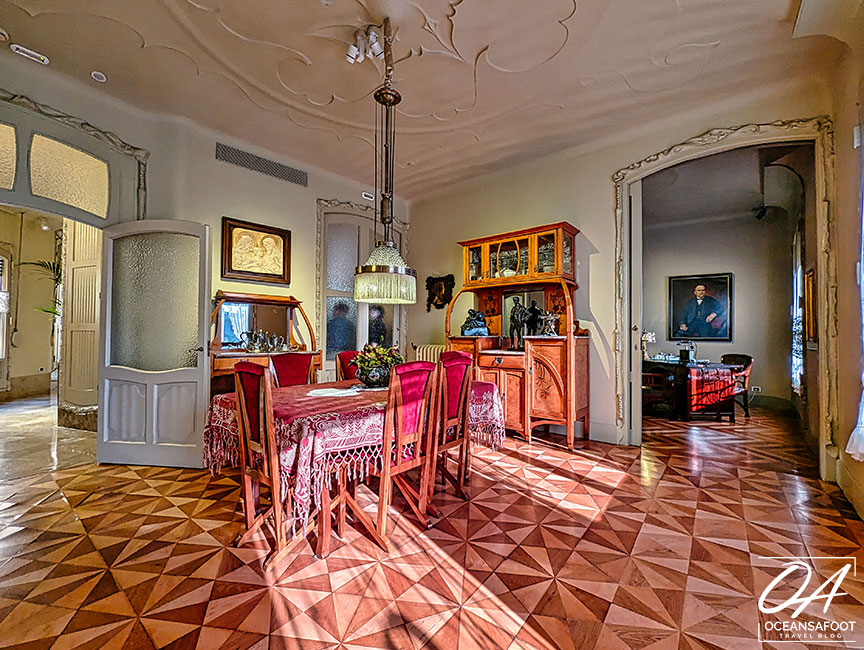
Gaudí’s influence was evident not only in the apartment’s aesthetic but also in its practical design. The layout prioritized livability, with spaces that encouraged natural light and ventilation—a hallmark of Gaudí’s architectural philosophy. Details such as built-in storage, ergonomic furniture placement, and the seamless integration of artistic elements into functional items underscored his commitment to creating a harmonious living environment.
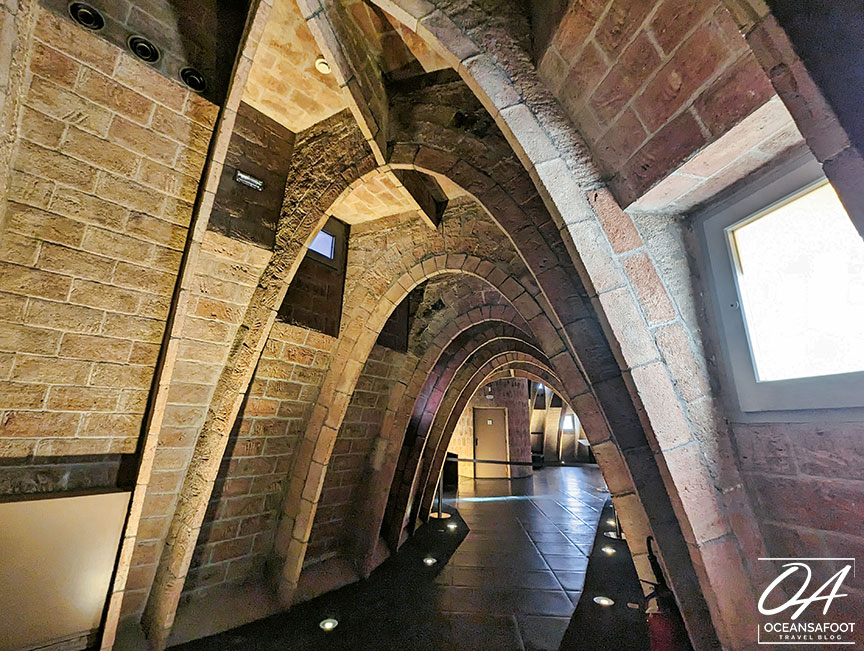
Continuing our exploration, we ascended another set of stairs, which led us to an arched interior space beneath La Pedrera’s rooftop. This area, known as the Whale Attic, revealed an entirely new layer of Gaudí’s ingenuity. The structure was framed by a series of catenary arches, their curvature both aesthetically pleasing and structurally efficient, designed to support the rooftop above.
Within this unique setting, an exhibit provided deeper insights into the building’s design and construction. A scale model of La Pedrera was prominently displayed, offering a detailed representation of the very building we were standing in. Notably, the model intricately depicted the rooftop, showcasing the sculptural chimneys and architectural elements we were about to explore.
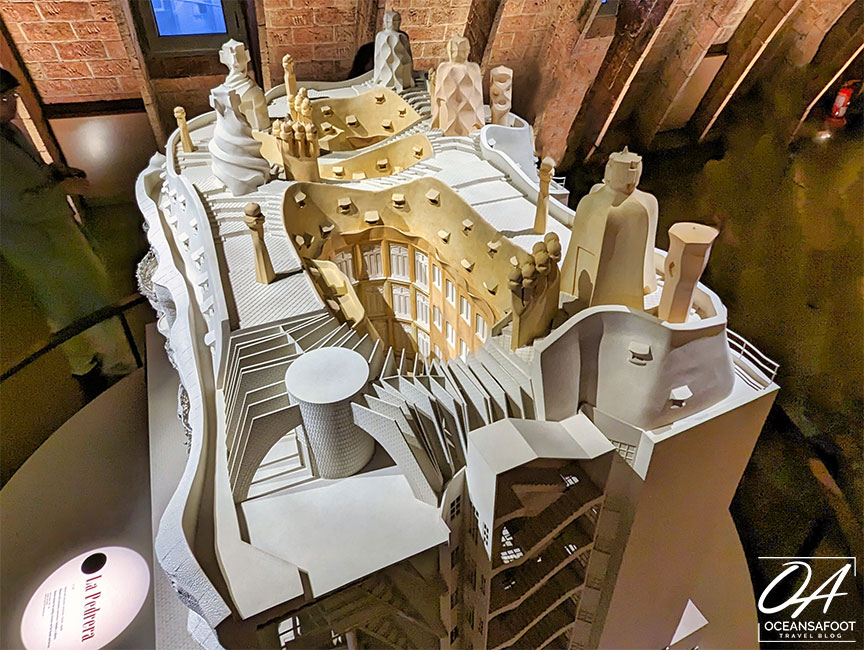
Alongside the model, other informative displays highlighted Gaudí’s innovative techniques, such as his use of natural forms and structural ingenuity, deepening our understanding of his extraordinary vision.
Now we ascended the final short flight of stairs and stepped onto the rooftop, which was a masterpiece of art and design. Sculptural chimneys and ventilation towers were scattered across the area, each decorated with intricate floral patterns, geometric shapes, and colorful mosaics, elevating utilitarian structures into captivating works of sculpture. These striking features stood boldly against the backdrop of the Barcelona skyline, creating a surreal and otherworldly ambiance.
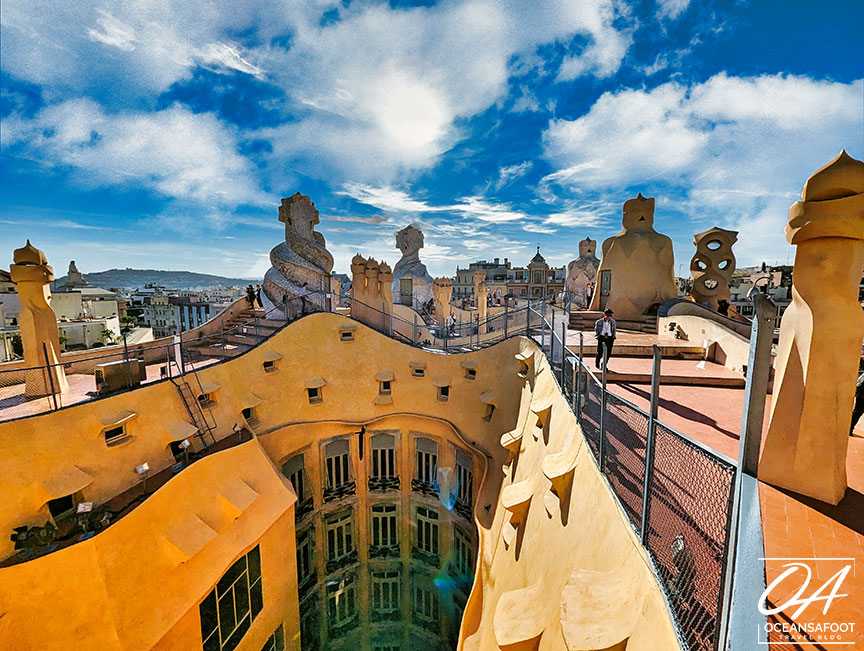
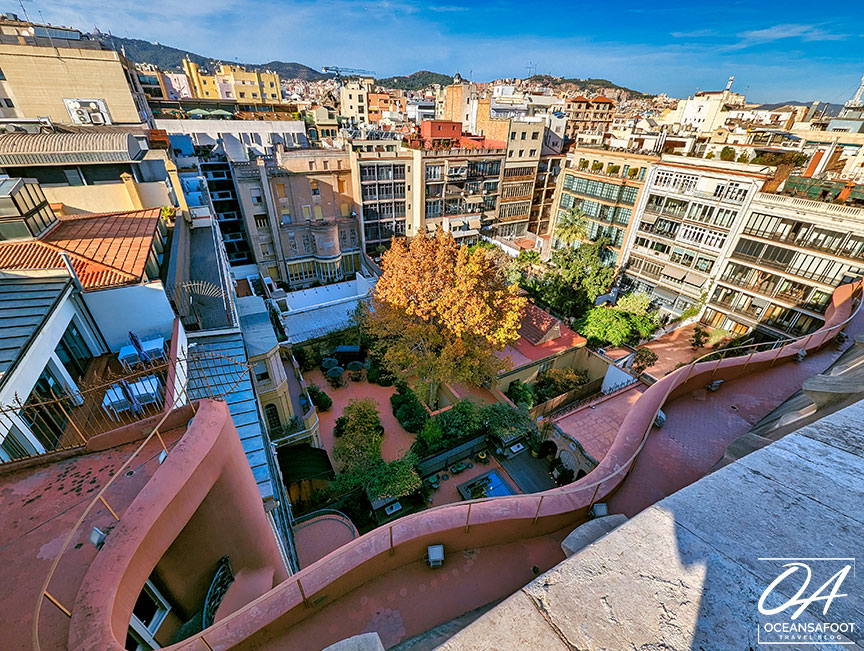
From this elevated vantage point, the surrounding buildings came into clear view, each contributing to the city’s rich and dynamic character. Now we could see Gaudí’s vision, with La Pedrera perfectly integrated into the traditional urban landscape as a brilliant fusion of architecture and artistry.
Casa Vicens
Address: Carrer de les Carolines, 20-26, 08012 Barcelona, Spain
Time Spent: 1 hour
After a short refreshment break at a nearby café, we resumed our exploration of Gaudí’s Barcelona. A relaxed stroll brought us to the Fontana Metro Station, where we boarded the L3 line. Although a minor navigational error led to a brief detour, it added a touch of spontaneity to our journey. Eventually, we reached Casa Vicens, Gaudí’s first major architectural commission and a bold departure from the conventional styles of the time.
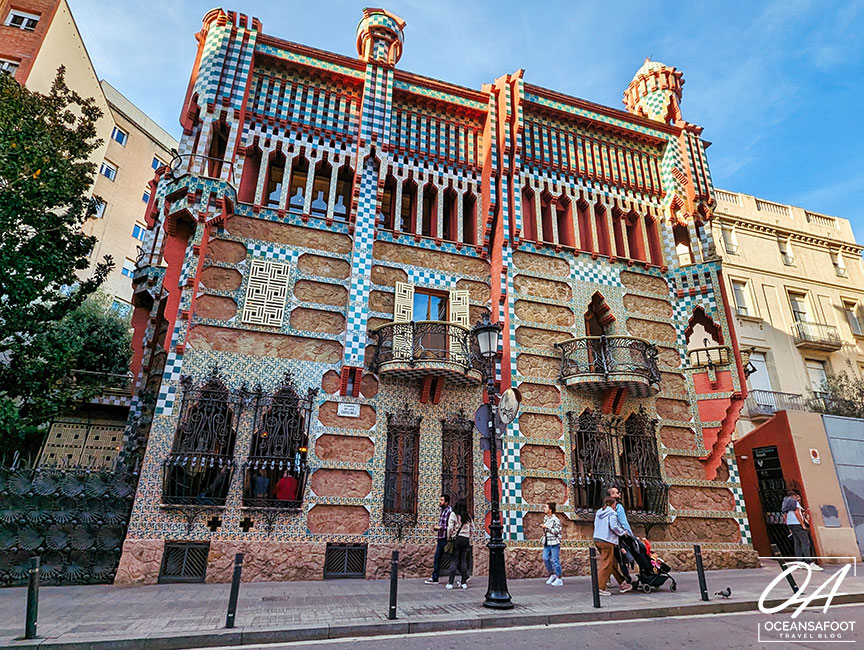
Constructed in the mid-19th century as a summer retreat for a wealthy Barcelona family, Casa Vicens marked a pivotal moment in Gaudí’s career, laying the foundation for the innovative designs that would define his legacy. Its vibrant façade, adorned with intricate tilework and colorful motifs, reflects a harmonious blend of Moorish, Spanish, and Orientalist influences, showcasing the individuality that set Gaudí apart from his contemporaries. The lush gardens surrounding the house enhance its tranquil charm and further emphasize the integration of nature into his design philosophy.
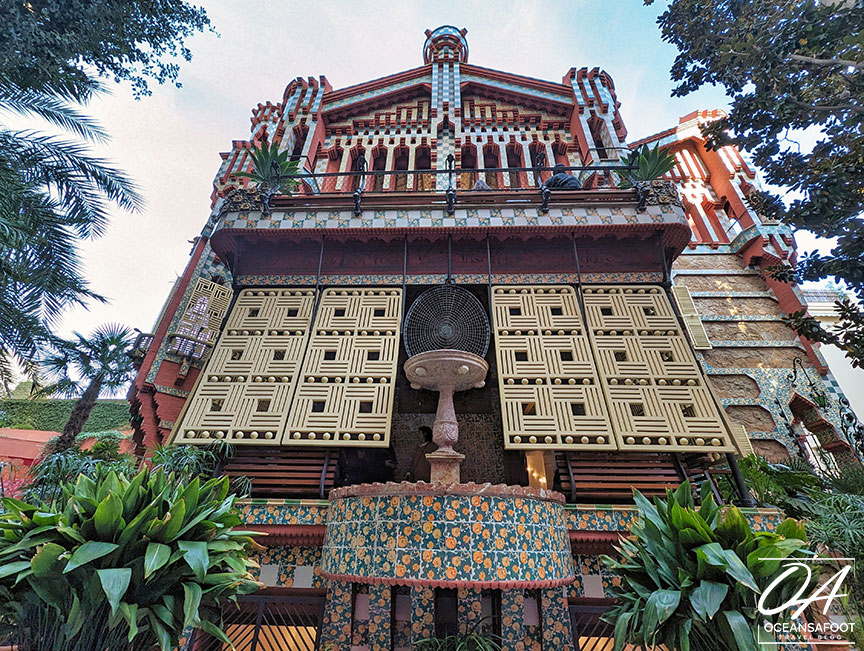
Inside, Casa Vicens continues this seamless interplay between architecture and nature. The interiors are a vivid expression of Gaudí’s early vision, featuring organic motifs, intricate woodwork, and vibrant colors that echo the gardens outside.
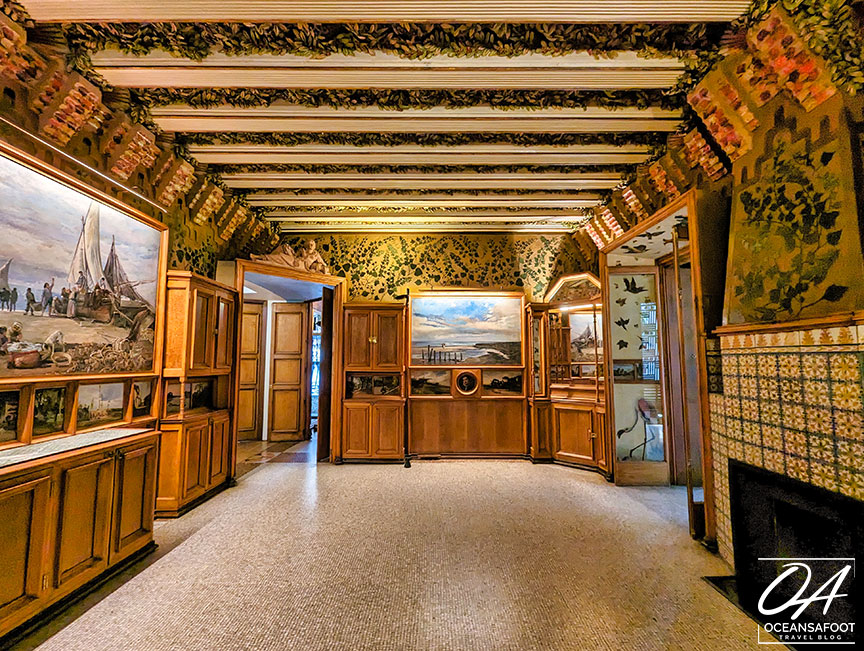
The ceilings, adorned with painted leaves, vines, and geometric patterns, transform functional spaces into works of art. Wooden beams, intricately painted and structured, add depth and rhythm, while alternating patterns create a dynamic visual experience that reflects Gaudí’s attention to detail and his philosophy of connecting every element to its surroundings.
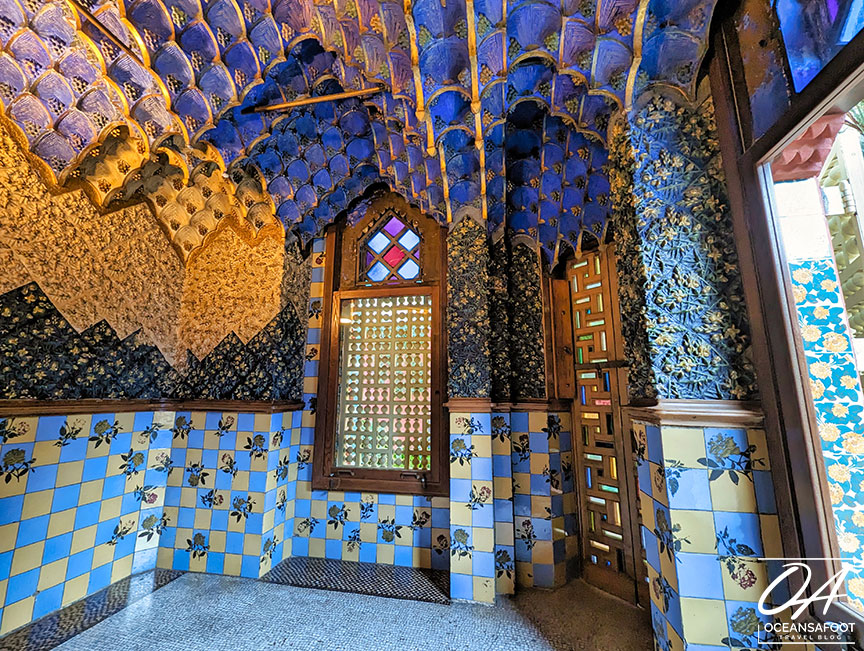
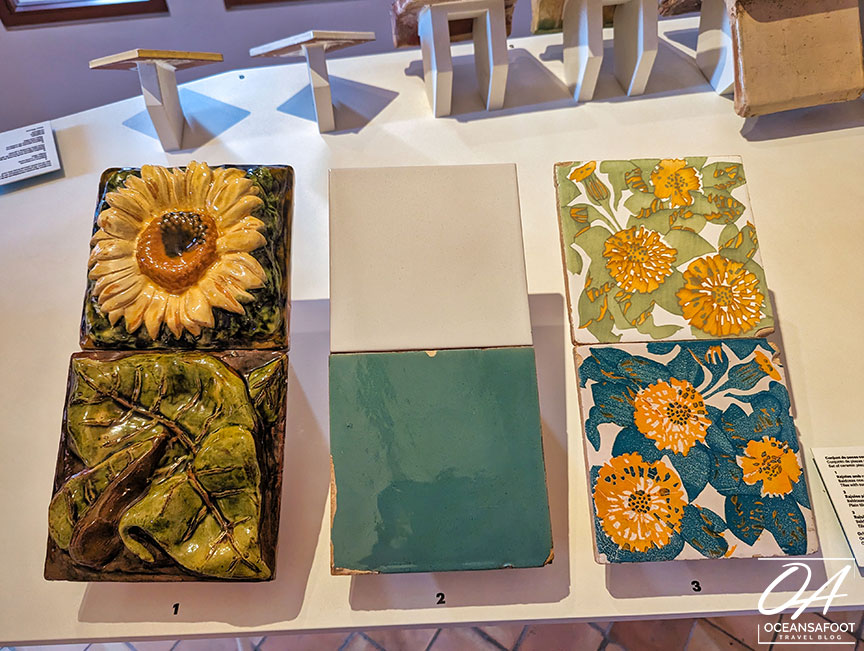
Tiles throughout Casa Vicens are another standout feature, highlighting Gaudí’s mastery of color and texture. These vibrant ceramic pieces, decorated with floral and geometric designs, contribute both beauty and functionality, ensuring durability while enhancing the aesthetic harmony of the interiors.
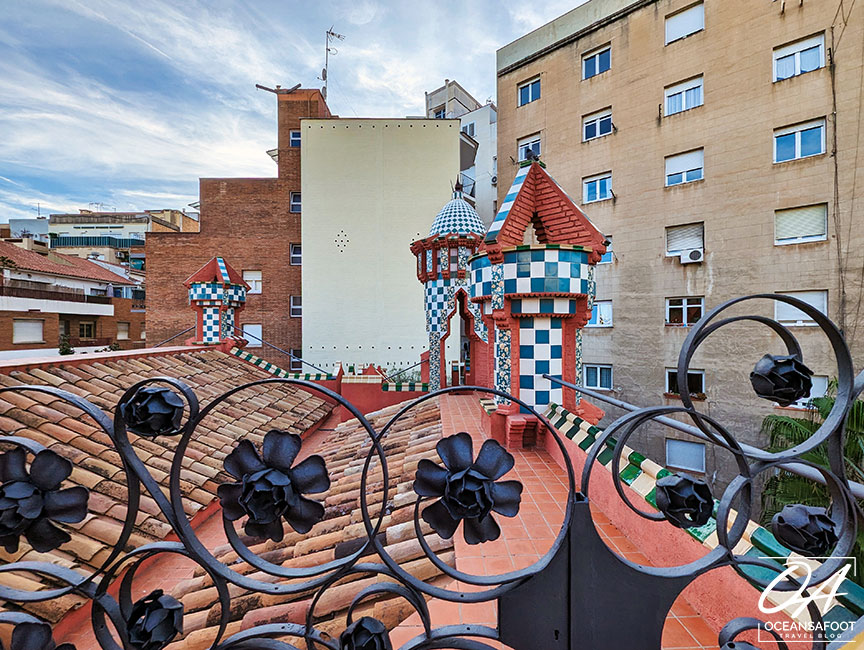
Meanwhile the roof terrace of Casa Vicens is another remarkable highlight, offering a tranquil escape above the vibrant city streets. The terracotta tiles, laid in a rhythmic pattern, blend traditional craftsmanship with Gaudí’s innovative approach. Decorative chimneys and colorful accents punctuate the space, tying the rooftop design to the house’s overall theme.
Savoring the Barcelona Experience
Our day concluded with a visit to the Hofmann Café, located within the Casa Vicens property. Despite its simplicity, the café provided a delightful and relaxing conclusion to our visit, perfectly complementing the thoughtful and welcoming atmosphere of Gaudí’s Casa Vicens.
We opted for a ham and cheese panini, a simple yet satisfying staple of Spanish comfort food. Its flavors paired perfectly with the relaxed ambiance of late afternoon, offering a peaceful counterbalance to the vibrant energy of the day. As we enjoyed our meal, we reflected on the remarkable experiences and visual wonders that had shaped our exploration of Gaudí’s Barcelona—a city transformed by his boundless imagination.
Cruise Port: Barcelona, Spain
Tour Name: Afternoon with Gaudí in Barcelona’s Architectural Wonderland
Cruise Line/Ship: Self-Guided
Duration: 4 hours
© OceansAfoot