The Ancient City of Murcia
Murcia’s story is a testament to its resilience and adaptability through the ages. Established during the time of the Moors in the 9th century, the city thrived under Islamic rule, with intricate irrigation systems transforming the arid landscape into fertile lands. These innovations laid the foundation for Murcia’s reputation as the “Huerta de Europa” (Orchard of Europe). By the 13th century, the city entered a new chapter under Christian rule following the Reconquista, a pivotal period that shaped much of its architectural and cultural identity.
Our journey commenced with a scenic hour-long drive through the rolling Sierra Carrascoy foothills, a natural gateway that gently introduced us to the ancient city of Murcia. As we approached, it became clear that this city was a treasure trove for history lovers, with its origins reaching back over three millennia.
Monastery of the Virgin of Fuensanta
Address: Camino del Monte, 30157 Algezares, Murcia, Spain
Time Spent: 30 minutes
Our first stop was the Monastery of the Virgin of Fuensanta, a serene sanctuary nestled among rolling hills and lush orchards. This historic site offered a peaceful introduction to the region’s cultural and spiritual heritage. Originally constructed on the grounds of a medieval hermitage, the monastery was completed in the late 17th century and remains a significant symbol of faith and artistry.
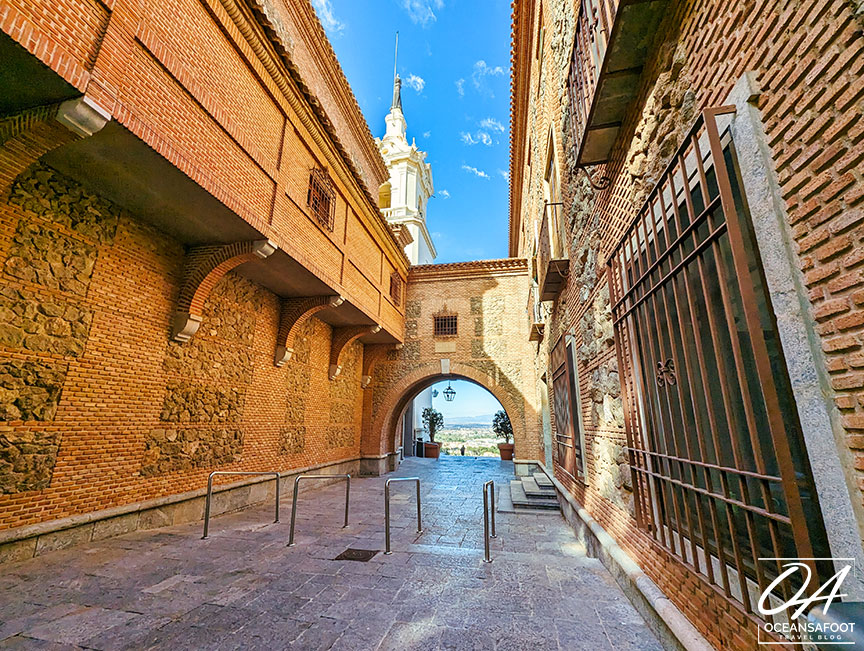
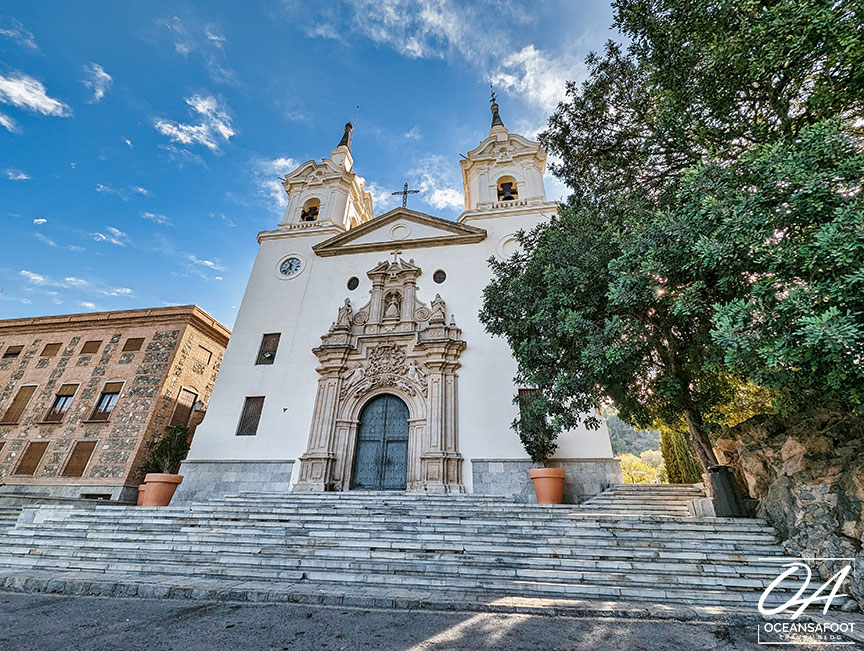
Arriving at the site, parking is located behind the church, requiring a short walk around to the front to fully appreciate its striking Baroque façade. Designed by Toribio Martínez de la Vega and completed in 1705, the façade features twin towers and a central stone doorway adorned with intricate carvings. Among the most striking details are two angels holding a coat of arms, a feature that captures the essence of the monastery’s devotion and elegance.
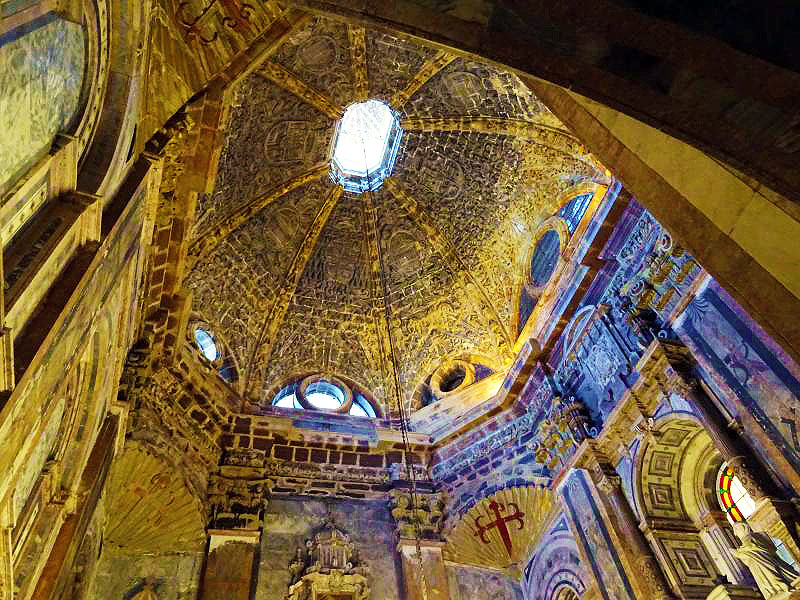
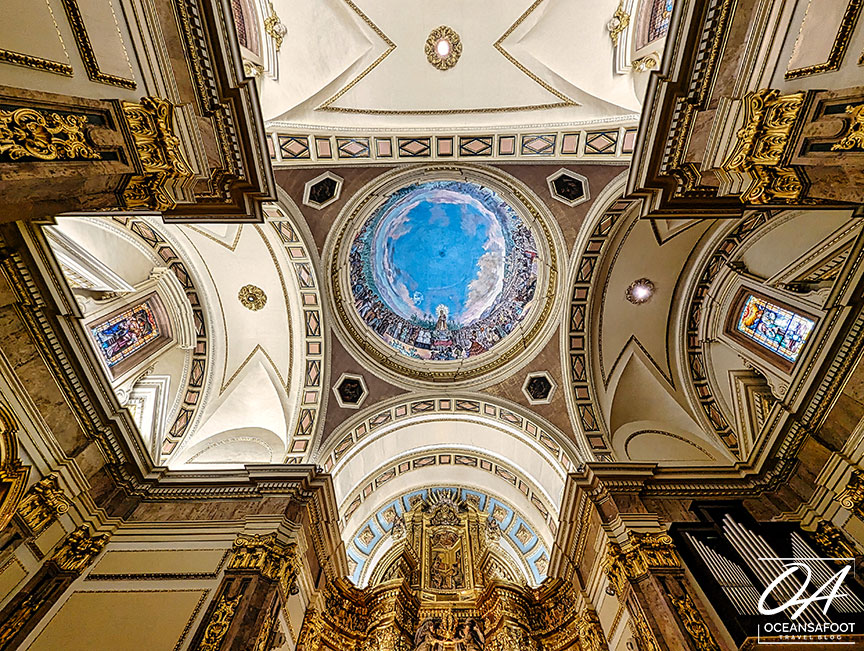
Stepping inside, the focus immediately shifts to the magnificent altar, a masterpiece of Baroque design dedicated to the Virgin of Fuensanta. Richly adorned with gilded carvings and an intricate altarpiece depicting the Virgin holding the Child Jesus, the altar exudes both grandeur and reverence.
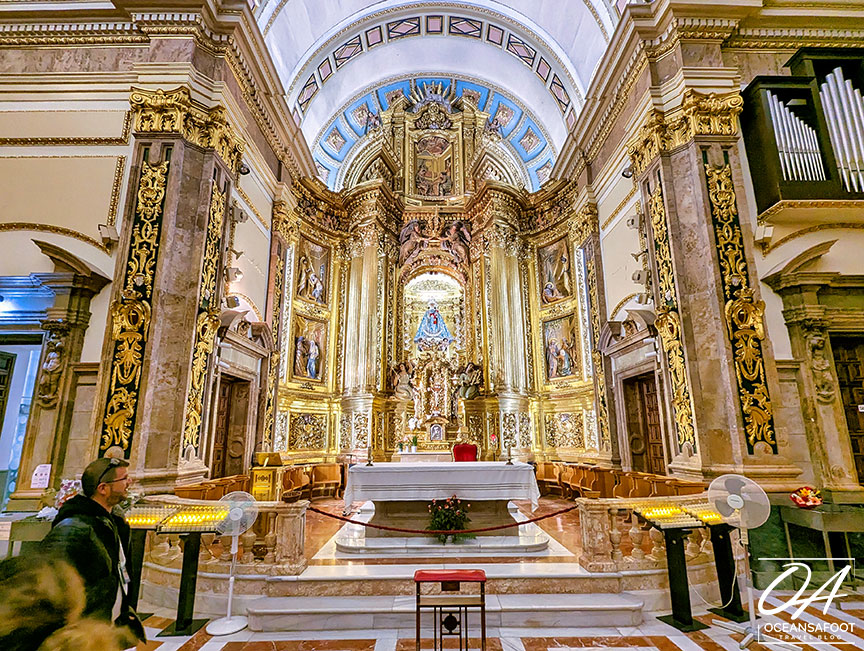
Pedro, our guide, shared the history of the monastery, weaving in tales of miraculous events attributed to the Virgin of Fuensanta. These included her role as a protector of Murcia during times of crisis, these stories having been cherished by the community for generations.
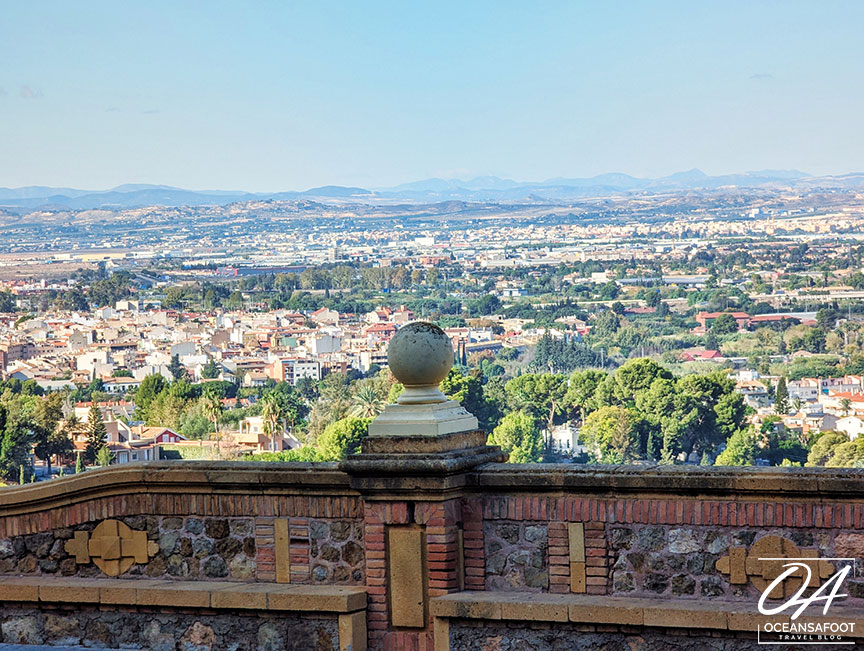
As we explored, the beauty of the surrounding landscape further enriched the experience. The panoramic views of the lush countryside and distant cityscape perfectly complemented the monastery’s architectural and spiritual significance, making this stop a memorable blend of history, art, and nature.
A Walking Tour in the City
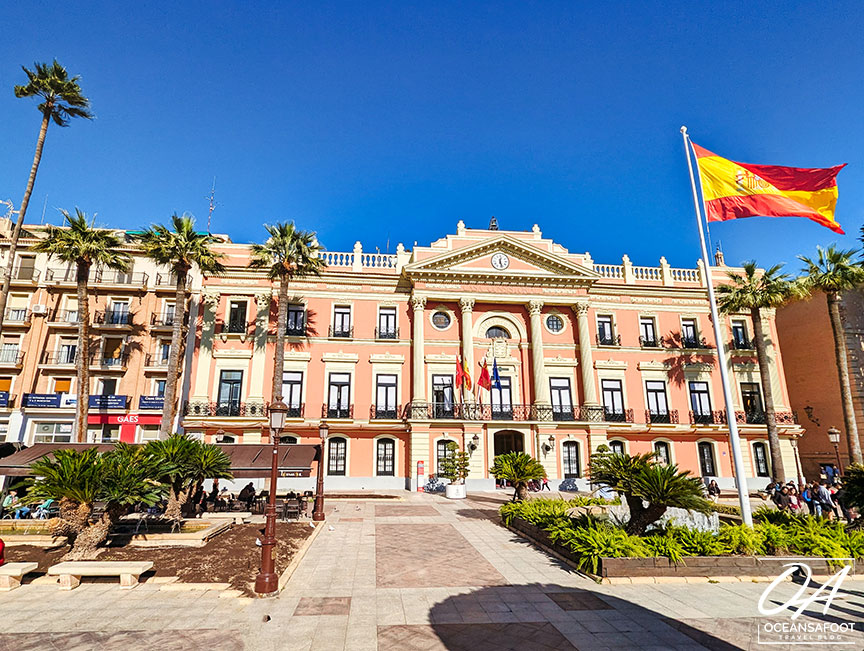
Next, we headed to the city center, where history and modernity coexist in harmonious balance. Stepping off the bus, we found ourselves facing the stately grandeur of Murcia’s Town Hall, a beacon of civic pride and architectural elegance. From here, we set out on a walking tour led by Pedro, whose depth of knowledge brought the city’s history to life.
The first stop on our exploration was Plaza del Cardenal Belluga, a picturesque square that seamlessly blends historical and contemporary architecture. Dominating one side of the square was the striking Episcopal Palace (Palacio Episcopal), an elegant 18th-century Baroque building that once served as the residence for the bishop of the Diocese of Cartagena. Its pink façade, adorned with intricate decorative elements and tall windows, added vibrance to the square’s aesthetic charm.
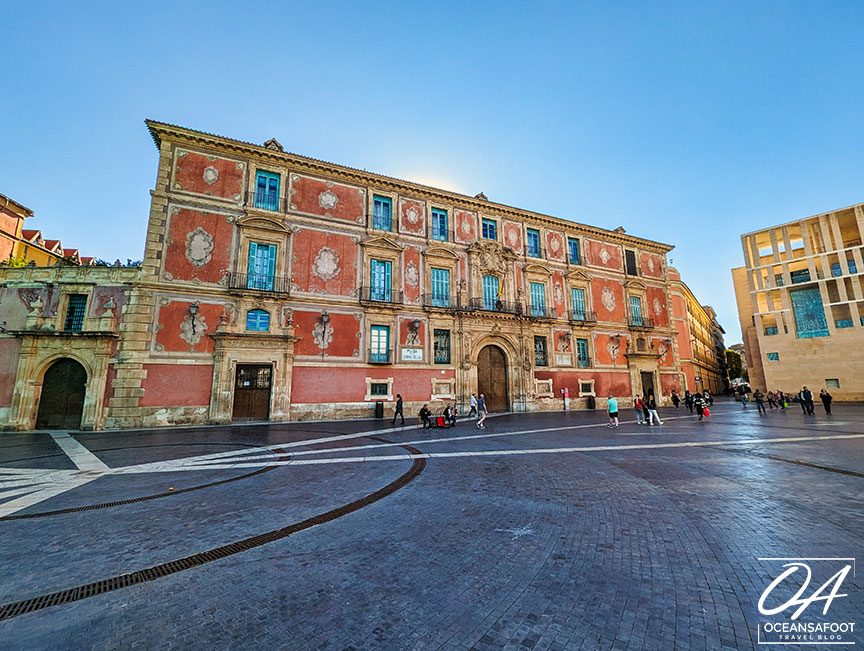
The central archway of the palace invited the curious gaze of passersby, hinting at the grandeur within. Together, the cathedral and the Episcopal Palace anchored the square with a sense of history and grandeur.
Cathedral of Murcia
Address: Plaza del Cardenal Belluga, 30001 Murcia, Spain
Time Spent: 30 minutes
Adjacent to the palace, we marveled at the magnificent Cathedral of Murcia, a testament to the city’s religious devotion and artistic legacy. The intricate façade, known as Los Secretos de la Fachada, was a masterpiece of Baroque craftsmanship, adorned with sculptures and motifs that narrated centuries of faith and resilience.
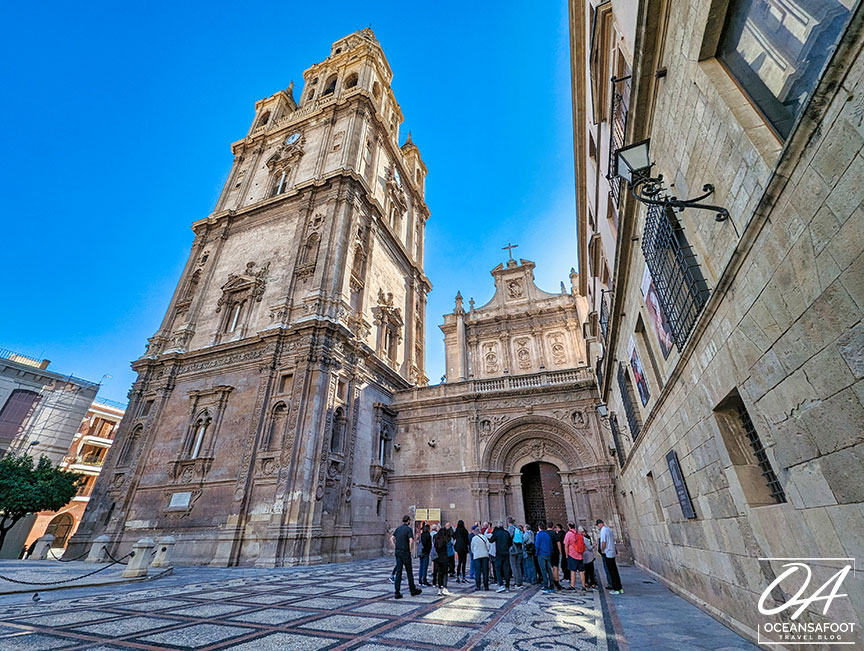
We stepped inside the Cathedral of Murcia and found it akin to walking through centuries of devotion and masterful artistic expression. The interior, with its awe-inspiring combination of Gothic, Renaissance, and Baroque elements, immediately grabbed our attention. Over the course of half an hour, Pedro guided us through its many treasures, illuminating its spiritual and historical significance with each detail.
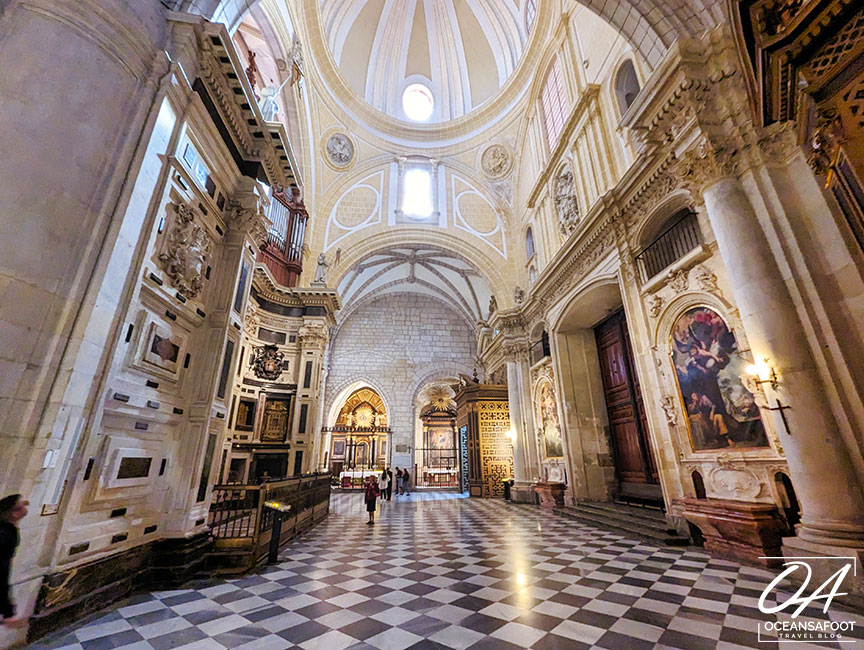
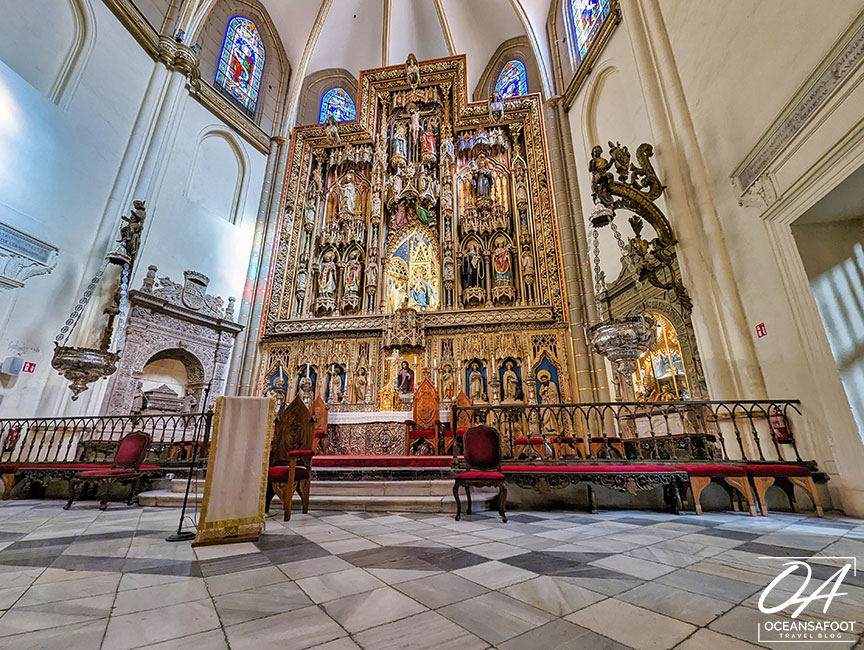
Moving into the nave, we were met with the intricate beauty of the main altar. The gilded details, coupled with vivid depictions of religious iconography, created a focal point that encapsulated the cathedral’s sacred purpose. The vaulted ceilings above, adorned with elegant stonework, carried our gaze upward, and enhanced the grandeur of the space.
Then capturing our gaze was the extraordinary organ, a marvel of engineering and artistry that dominated the choir area. Crafted in the Netherlands during the Gothic period for use in Germany, this magnificent instrument was gifted to Murcia by the Queen of Spain. Renowned for its advanced design and ability to replicate over 70 unique sounds, it replaced the original organ lost to a devastating fire.
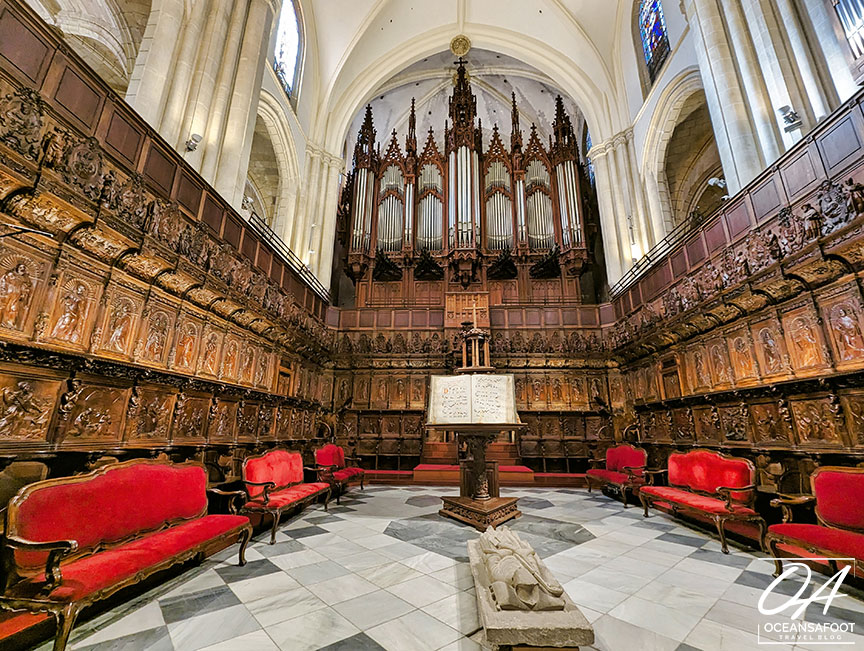
Positioned above the exquisitely carved wooden stalls of the choir, the organ pipes stood in harmonious contrast to the rich, dark woodwork. Each stall told its own story, with intricately detailed figures and motifs etched into the wood, adding to the sense of reverence and artistry.
As we progressed, the side chapels offered an intimate glimpse into the cathedral’s devotional practices. Each chapel, with its unique altar and artwork, reflected the personal stories and traditions of Murcia’s faithful.
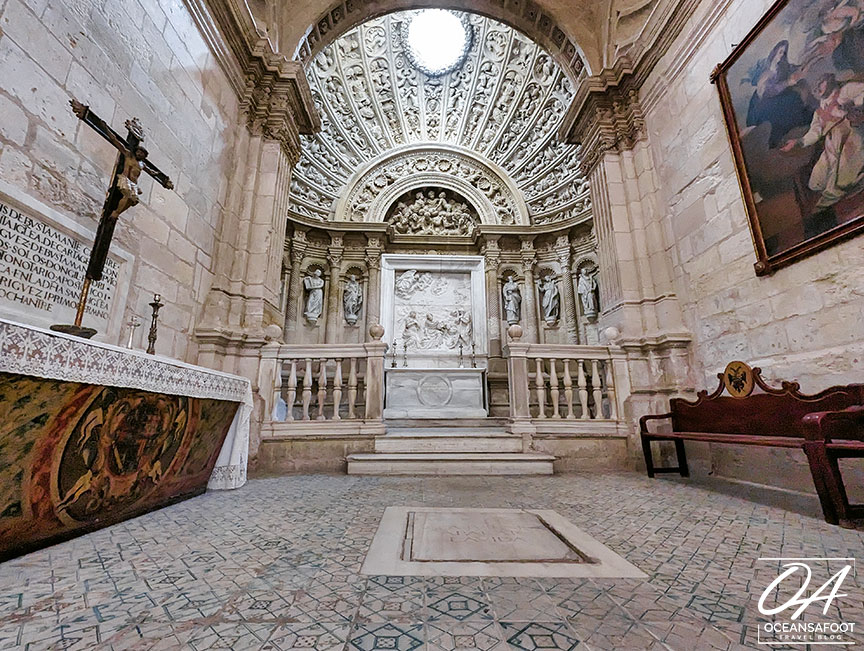
Among them, the Vélez Chapel stood out, a masterpiece of Flamboyant Gothic architecture adorned with intricate carvings and crowned by a breathtaking ten-point star-shaped vaulted ceiling. Its elaborate stonework and legendary carved stone chain made it one of the cathedral’s most treasured artistic wonders.
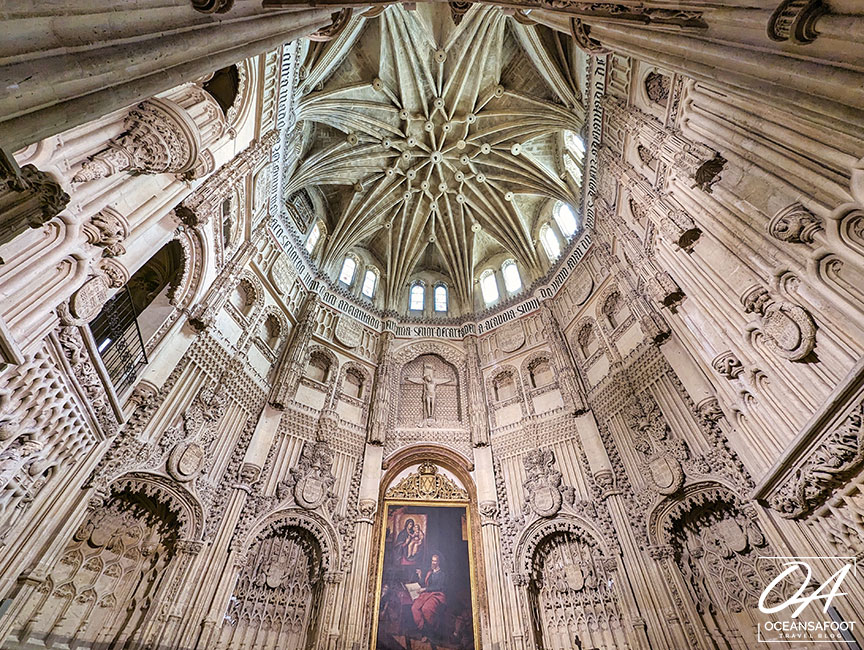
Yet, every chapel held its own quiet magnificence, each space steeped in centuries of prayer and devotion. We exited, surrounded by the stillness and reverence of these sacred places, where faith had been carved into stone and painted onto canvas for the benefit of generations to come.
The Royal Casino of Murcia
Address: Calle Trapería, 18, 30001 Murcia, Spain
Time Spent: 30 minutes
Continuing on with the walking tour, we arrived at the Royal Casino of Murcia, an exquisite landmark in the city’s historical center. Unlike the gambling venues commonly associated with the word Casino in the United States, this building is a private social club steeped in history, elegance, and cultural significance. Constructed in 1847, it served as a meeting place for Murcia’s upper class, blending elements of exclusivity and architectural splendor.
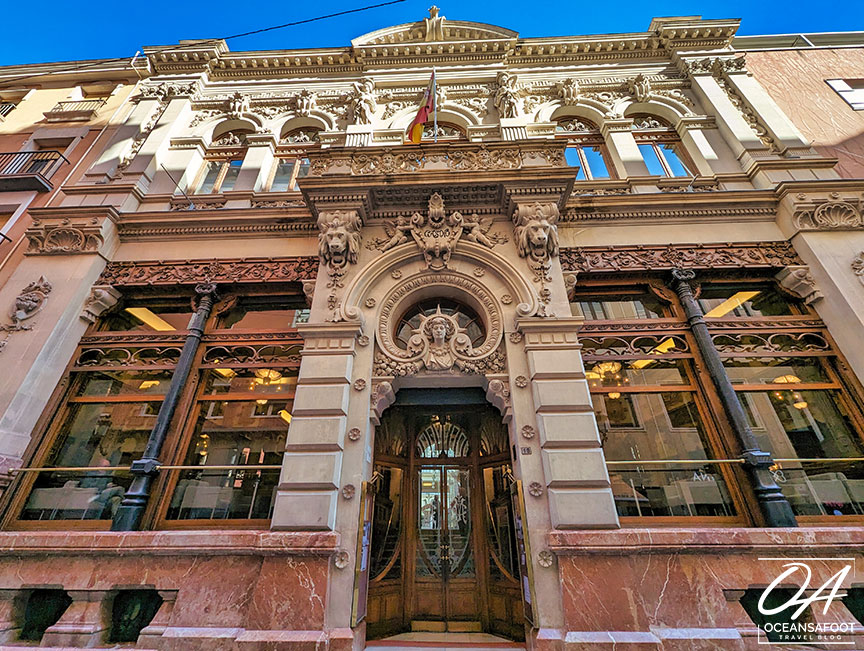
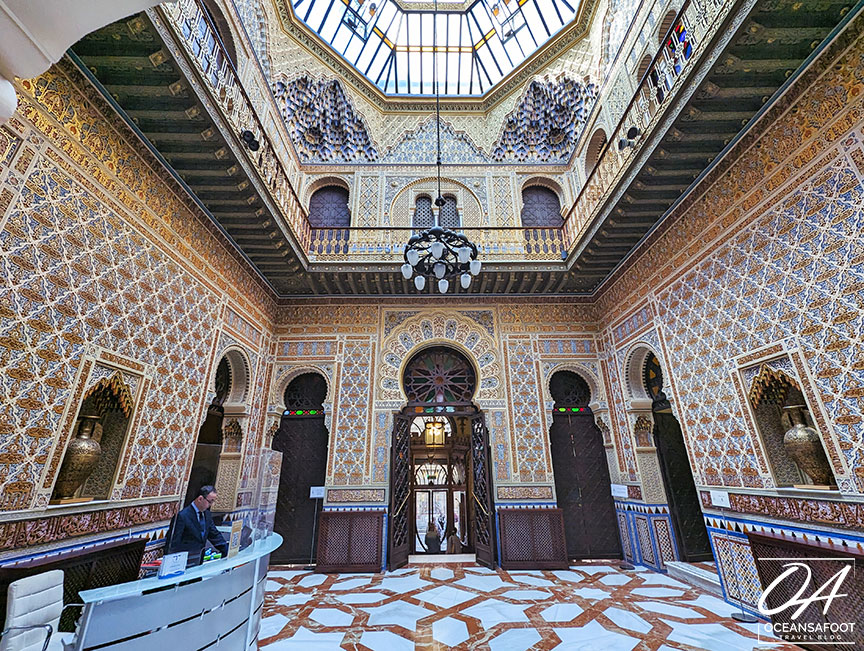
Our experience began the moment we stepped into the grand atrium, where intricate Moorish-style details immediately transported us to an era of long ago. The richly patterned tiles and carved arches, reminiscent of the Alhambra in Granada, created a dazzling visual display. Above us, a beautifully designed glass ceiling bathed the space in natural light, enhancing the sense of its grandeur.
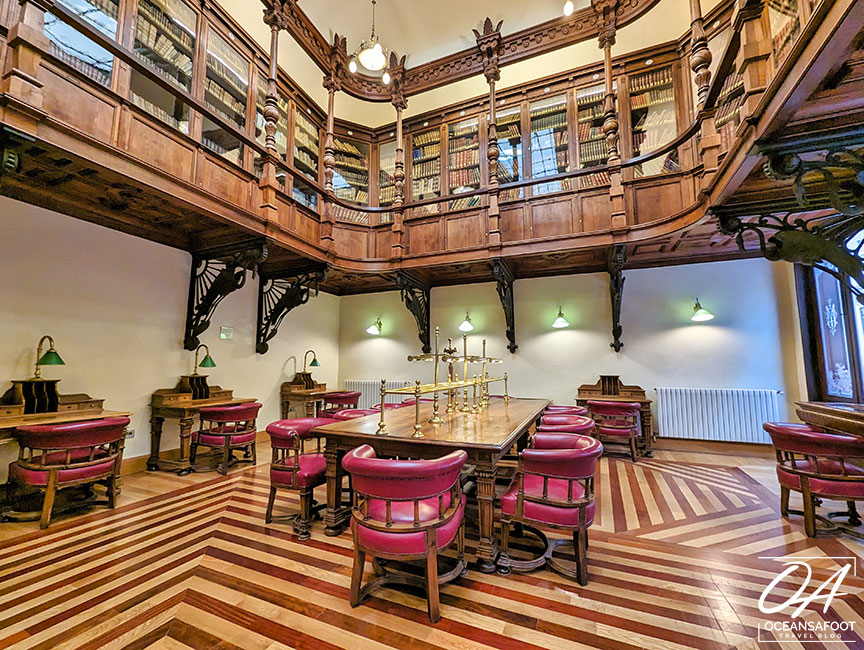
Our first stop was the library, a space of quiet sophistication that exuded old-world charm. The finely carved woodwork and shelves filled with leather-bound volumes whispered of the intellectual pursuits and private gatherings that once animated this room.
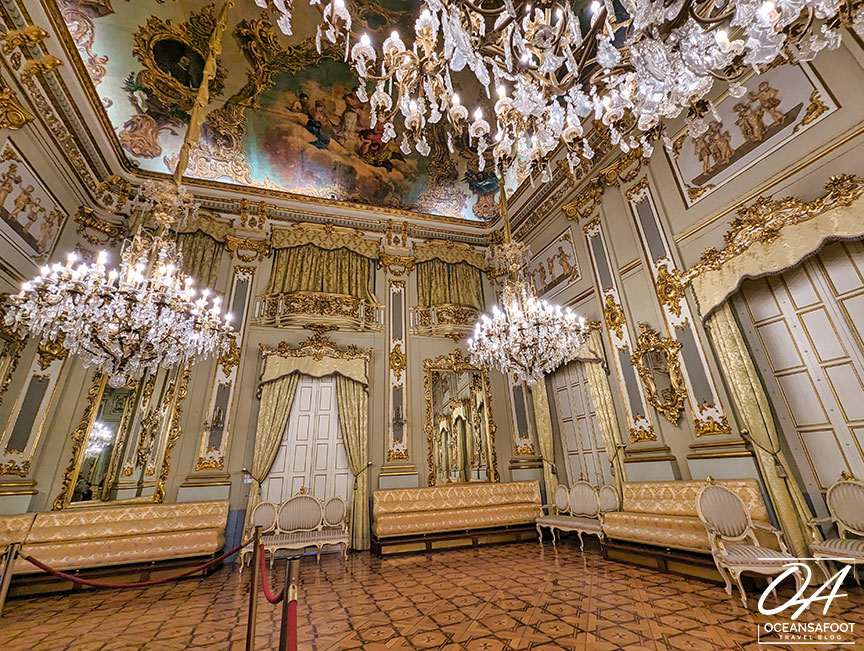
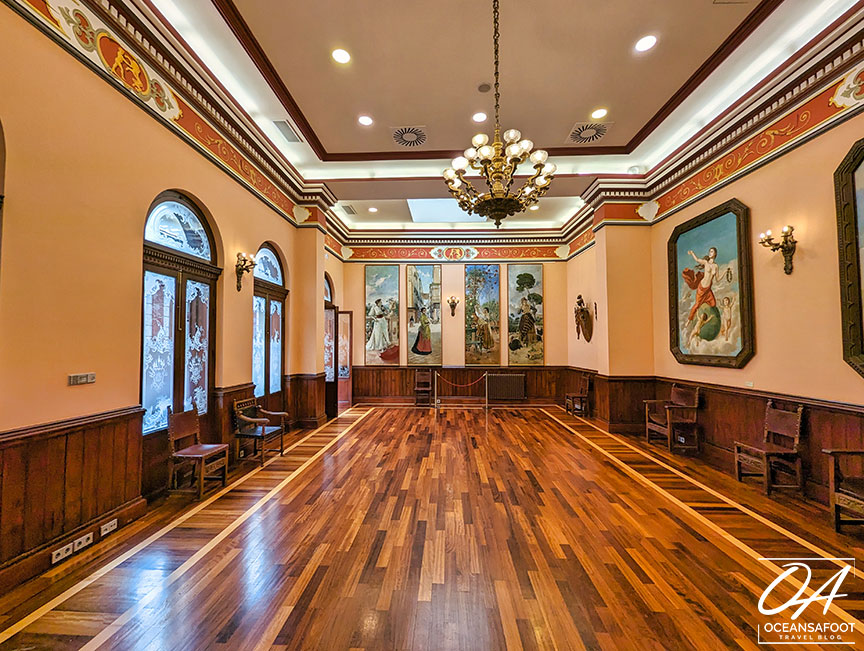
We next ventured to the ballroom, a stunning example of neo-Baroque design. This magnificent space was adorned with gilded details, ornate chandeliers, and murals paying homage to Murcia’s prominent figures. The grandeur of the ballroom once captured the social prominence and cultural aspirations of the region’s elite.
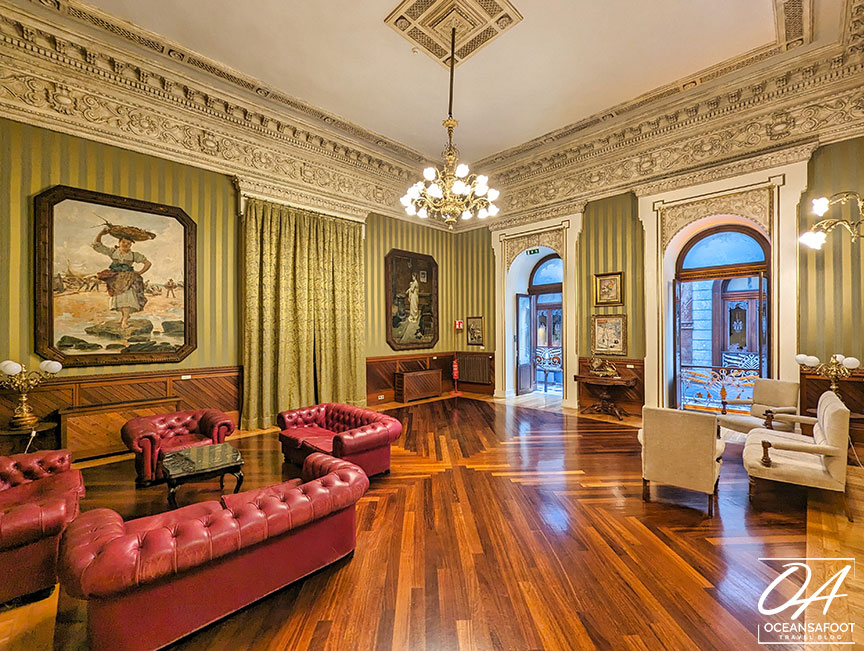
From there, we passed through the Congresillo, an intimate salon once used as a gathering space for Murcia’s elite. Its wooden floors, green silk-covered walls, and draped curtains radiated quiet sophistication, while plush seating and Romantic-era paintings reflected the conversations and social exchanges that once took place within.
One of the most whimsical surprises of the tour was a statue in the main area that bore a striking resemblance to Princess Leia from Star Wars. Pedro explained that local legends suggest this statue may have inspired the iconic hairstyle of the beloved cinematic character, adding an unexpected layer of charm to our visit.
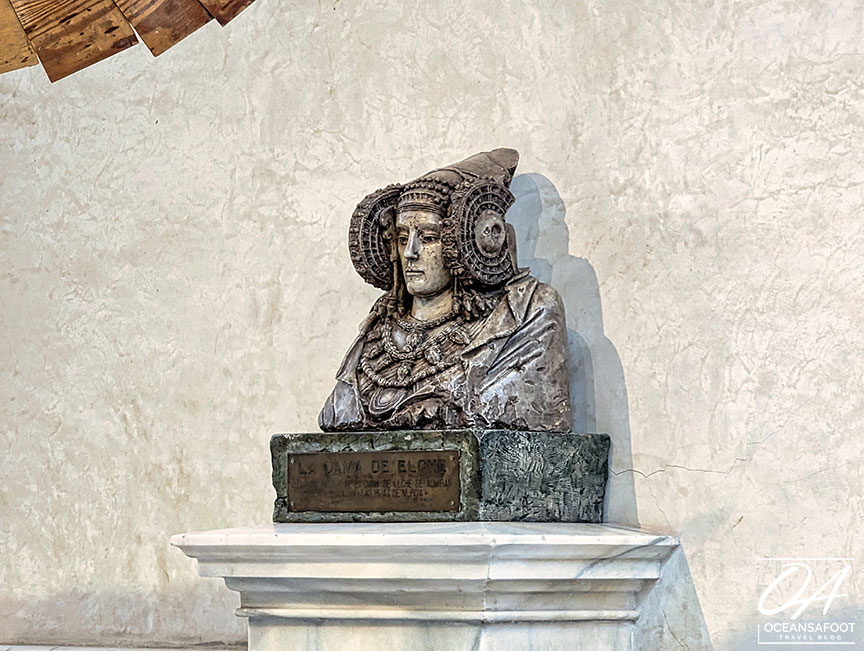
Our tour also led us to the ladies’ makeup room, a small yet elegant space that reflected the refinement and exclusivity of the club’s clientele. The room was lined with mirrors that seemed to create an endless reflection of one another, turning the space into a mesmerizing illusion of depth. This interplay of reflections made it difficult to capture a true picture of the area, but it only added to the room’s air of enchantment.
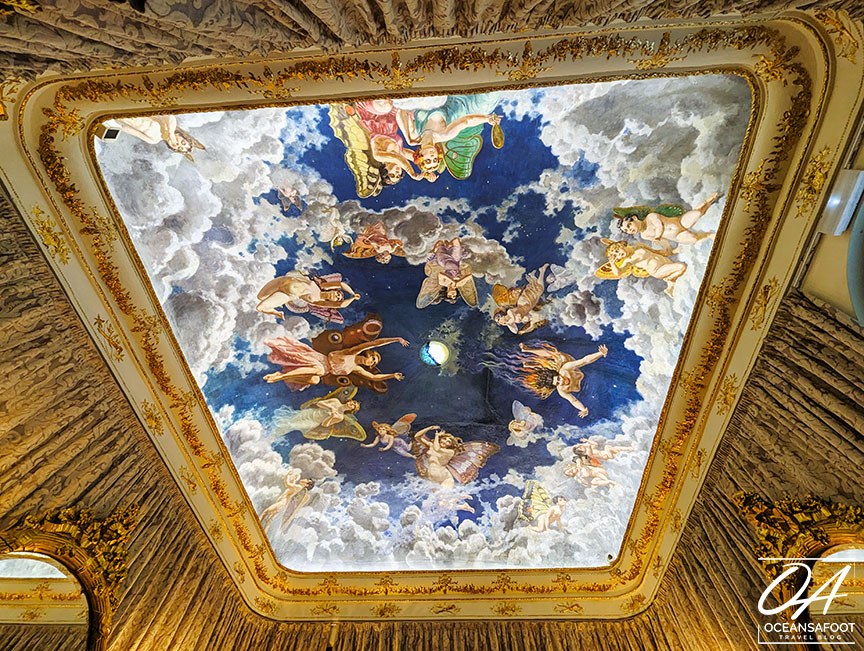
Our final stop was the Pompeian Room, a space unlike any other in the Casino. Inspired by the art and culture of ancient Rome, this room featured walls adorned with neoclassical frescoes, a nod to the ruins of Pompeii. The intricate details and historical motifs offered a quieter, more reflective contrast to the grandeur of the other spaces.
Dre Xco Café
Address: Calle de la Aurora, 8, 30001 Murcia, Spain
Time Spent: 45-minutes
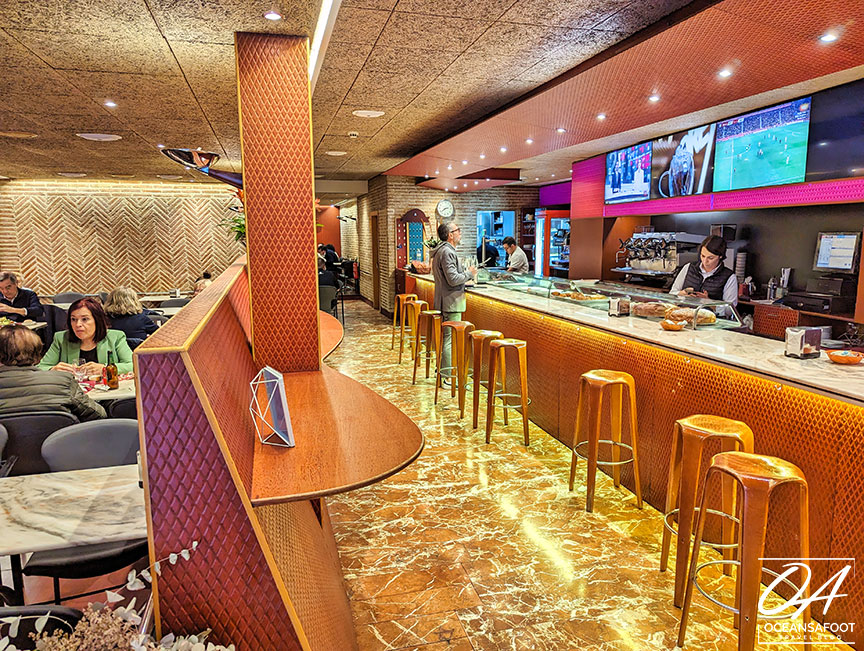
Bidding farewell to the Royal Casino, we enjoyed a leisurely forty-five minutes on our own which we spent at Dre Xco Café having lunch. Here, we savored local delicacies like pastel de carne, basking in the café’s warm ambiance. As we dined, the warm and relaxed ambiance of Dre Xco Café enveloped us. Locals and tourists alike filled the space, exchanging lively conversations that added to the café’s charm.
Concepción Hill
Address: Concepción Hill, Cartagena, Murcia, Spain
Time Spent: 1.5 hours
After completing our exploration of Murcia, we boarded the bus for a short ride to Cartagena, a historic coastal city where centuries of Mediterranean history converge. Within about an hour, we arrived to find Cartagena’s picturesque harbor framed by rugged mountains—a stunning backdrop that hinted at the city’s strategic significance through the ages.
From the bus drop-off, a leisurely five-minute walk brought us to the Panoramic Elevator, a modern glass-enclosed lift that ascends 45 meters (approximately 148 feet) to the top of Concepción Hill. Opened in 2004, this elevator offers not only convenient access to the hill but also uninterrupted views of Cartagena as you ascend.
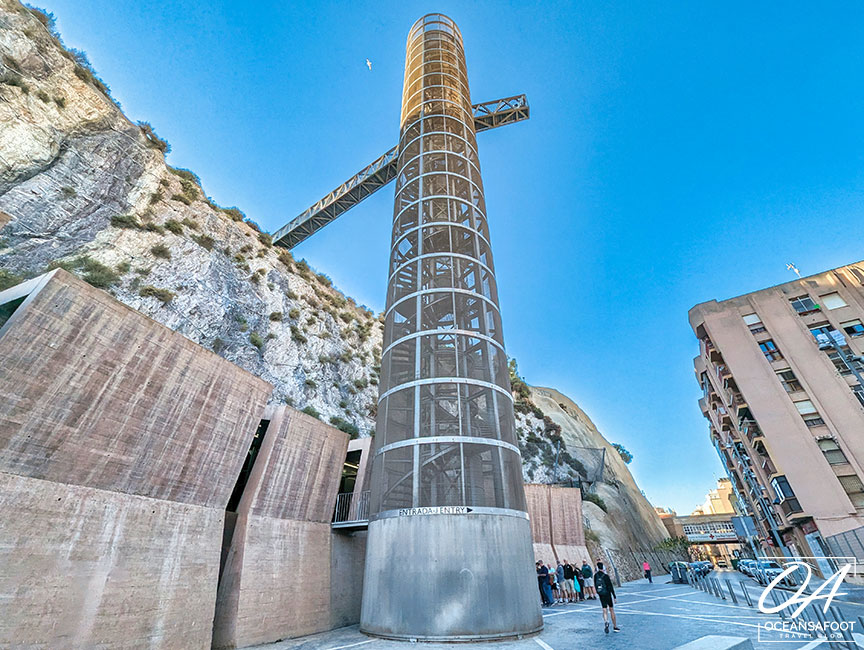
Through its transparent walls, the shimmering harbor below and the protective mountains beyond came into view, vividly illustrating Cartagena’s natural advantages as an 18th-century naval stronghold. Our guide, Pedro, explained how the city’s geography influenced its development into a key Mediterranean port. He further elaborated on Cartagena’s significance as an 18th-century naval base, emphasizing how its natural features made it a formidable stronghold.
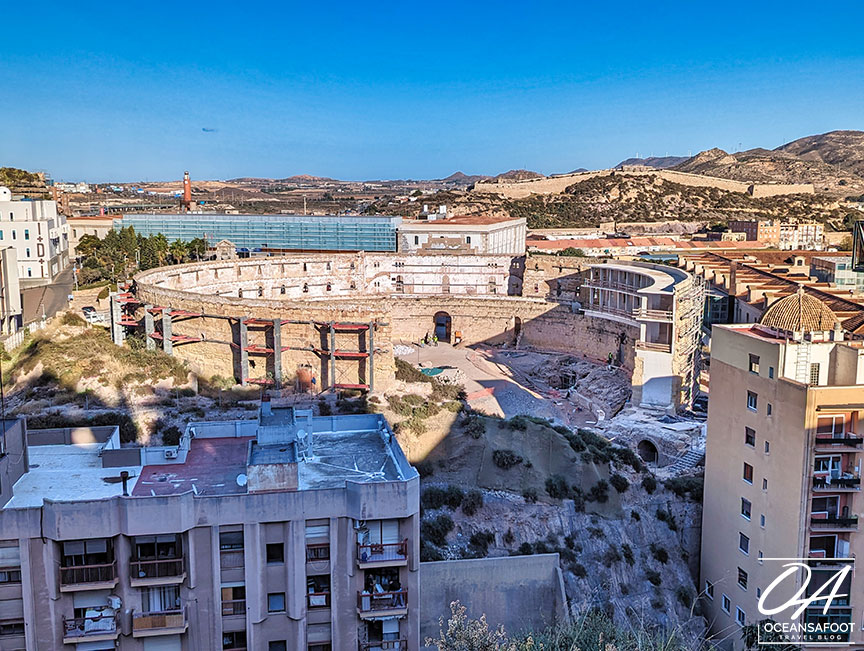
Upon stepping out of the elevator, we were greeted by further panoramic views of the city and its landmarks. The Bullring, a long-standing emblem of Spanish tradition, stood prominently, a testament to the cultural heritage of this historic city. Nearby, the former Military Hospital and Morgue served as reminders of Cartagena’s naval legacy. Though no longer active, these aging structures remain central to the city’s narrative, highlighting its vital role during times of conflict.
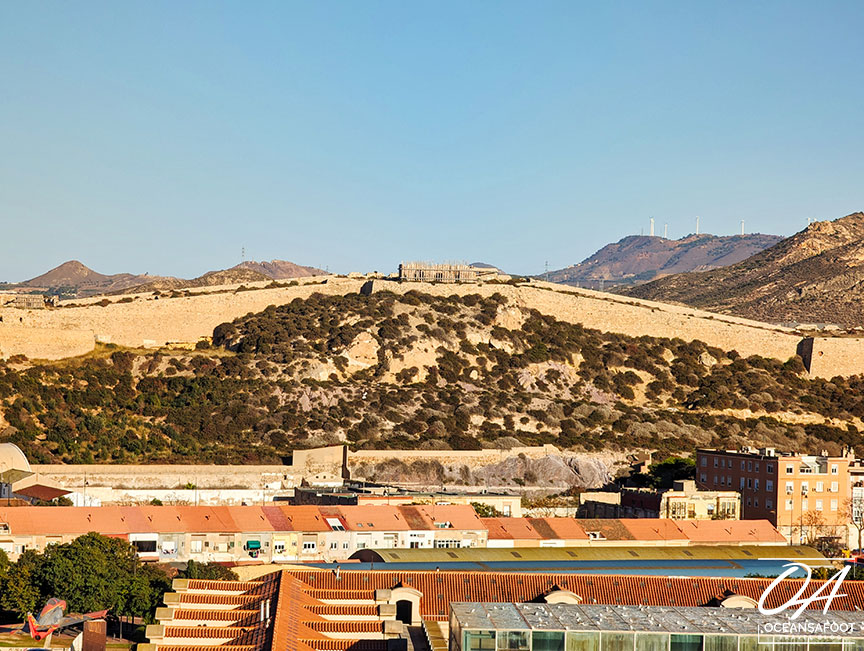
In the distance, the Moorish Castle came into view, its medieval silhouette perched high on the hills. Once an essential defense for Cartagena’s harbor and trade routes, the fortress stands as a symbol of resilience and strategic foresight, its enduring presence a connection to the city’s medieval past.
Parque Torres and Concepción Castle
As we moved deeper into Parque Torres, the natural and historical richness of Concepción Hill became even more apparent. The park offers serene pathways leading to notable landmarks, including a stone tower that forms part of Concepción Castle.
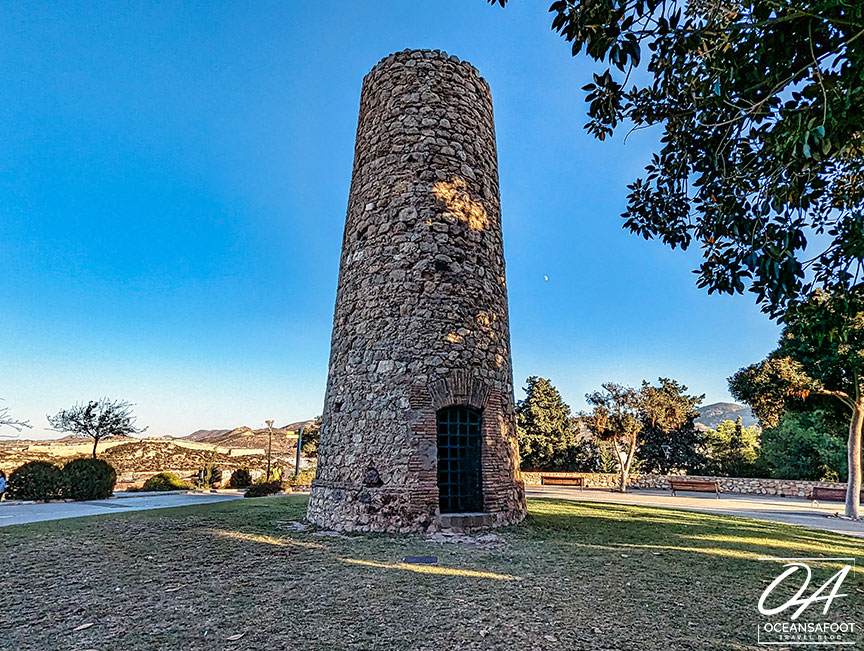
Once a strategic lookout point, the tower now serves as a preserved relic of Cartagena’s layered history, blending military purpose with cultural preservation. Its solid structure and commanding location reinforced the hill’s historical significance.
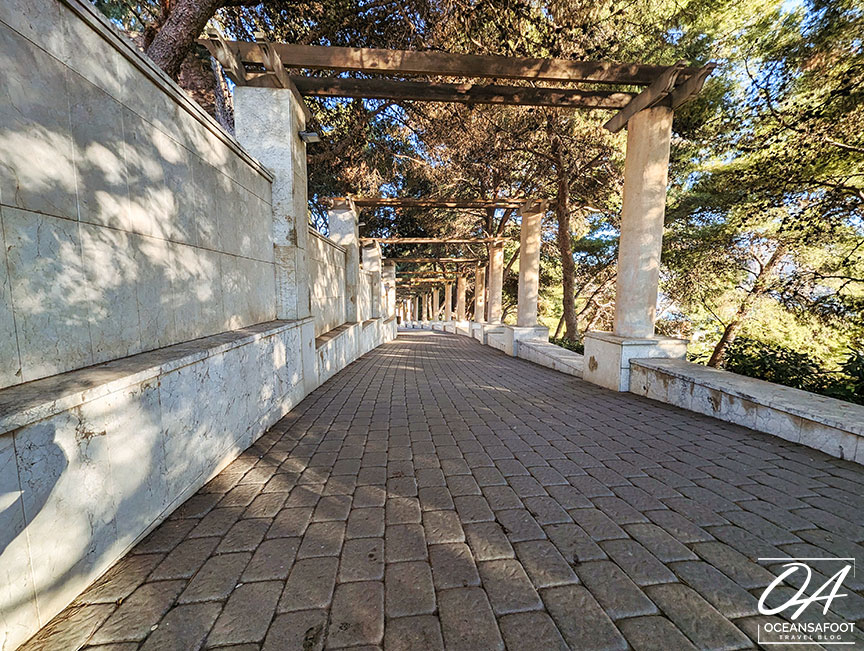
Continuing through the park, we navigated a series of steps and winding paths before arriving at Concepción Castle, now repurposed as an interpretation center. Here, visitors can delve into Cartagena’s history, from its ancient Roman roots to its more modern developments. The castle’s strategic location has made it a centerpiece of the city’s story, offering not only historical insight but also breathtaking views of Cartagena and its surroundings.
Concepción Castle Viewing Platform
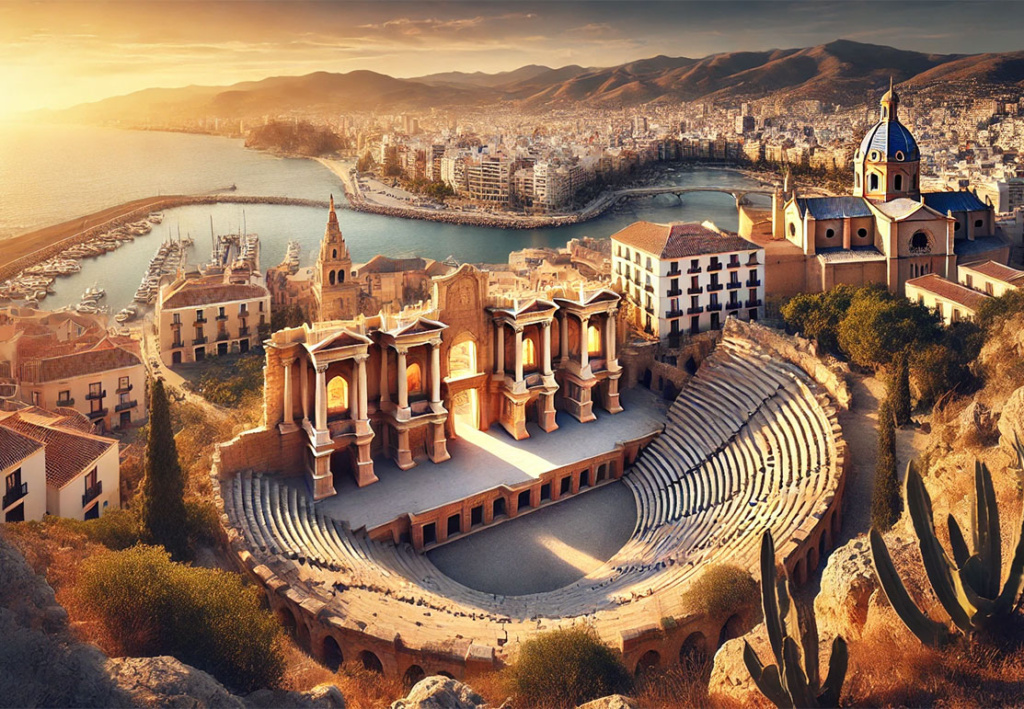
At the castle’s viewing platform, the vistas were nothing short of remarkable. Below us lay the Roman Amphitheater, its ancient stone tiers a reminder of the grandeur of Roman civic life.
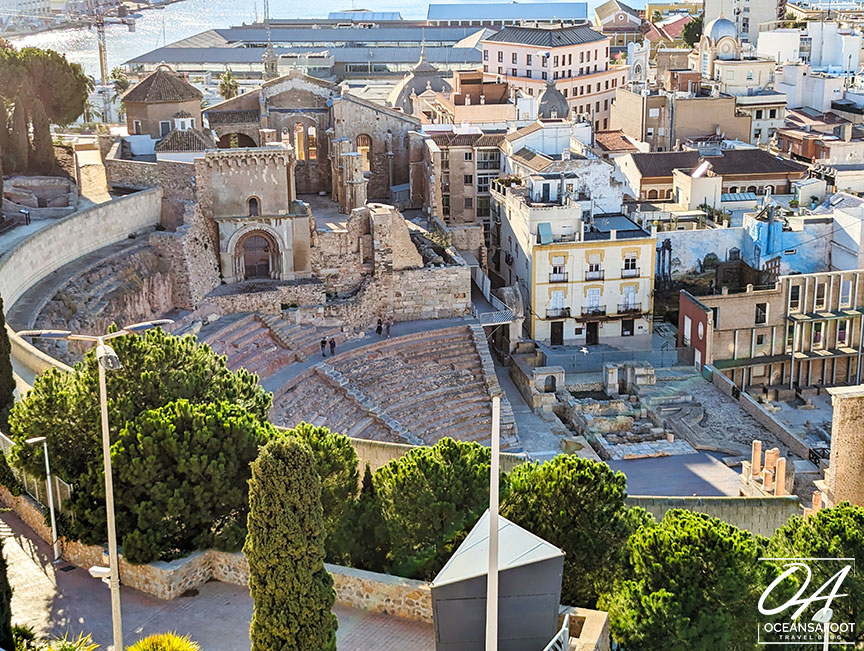
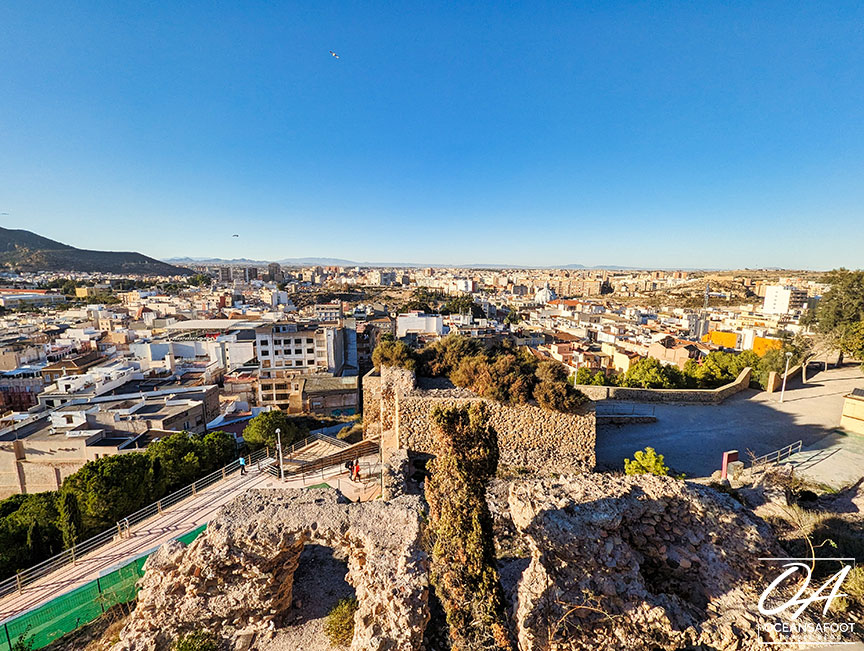
Nearby, the Santa Maria Church added another layer to the narrative, its architecture reflecting centuries of religious devotion and artistic evolution. Beyond these landmarks, the city of Cartagena stretched out in all its complexity, a mosaic of old and new. Framing it all was the glistening Mediterranean Sea and the dramatic mountains, completing a view that perfectly encapsulated Cartagena’s unique character.
A Tale of Two Cities: Cartagena and Murcia
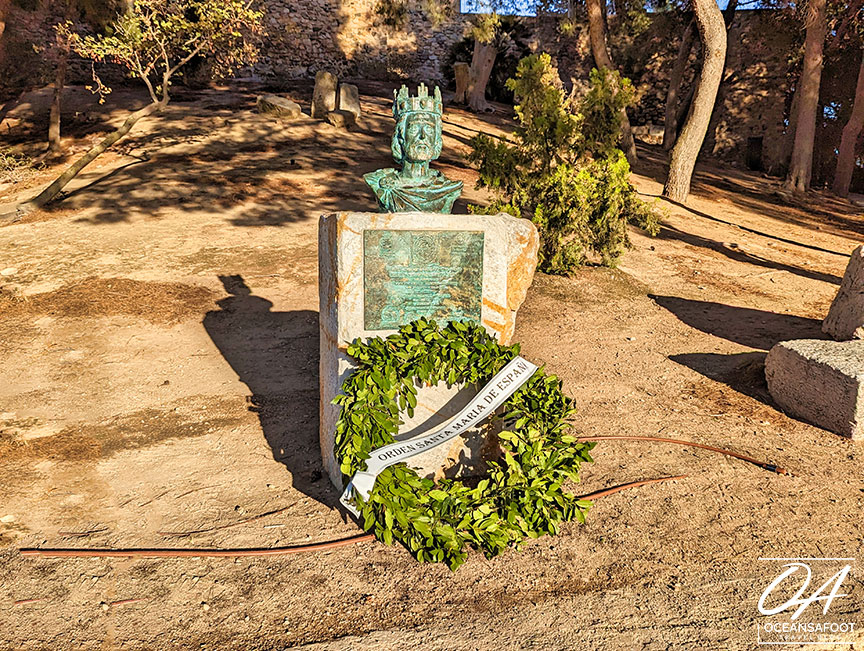
Before descending from Concepción Hill, Pedro shared a story linking Murcia and Cartagena, two cities whose histories are intertwined. He recounted the tale of a 10th-century king whose heart was enshrined in Murcia Cathedral upon his passing—a gesture symbolizing the enduring connection between the two cities. In Cartagena, his memory is honored with a statue, a quiet tribute to the historical bonds that have shaped this region for centuries.
As we boarded the elevator for the descent, the all-glass enclosure provided a final sweeping panorama of Cartagena.
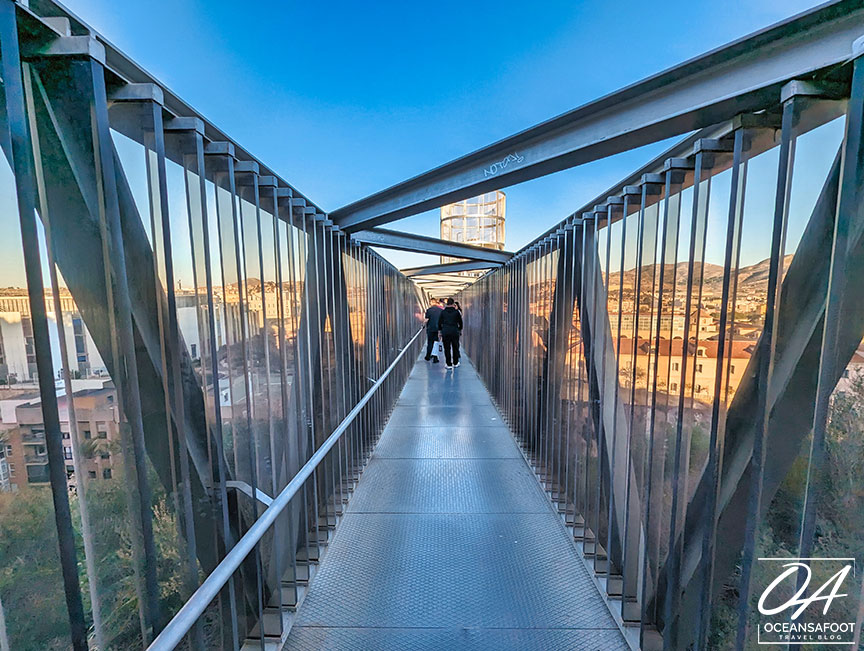
The Mediterranean glittered in the distance, framed by the rugged hills that had once protected this vibrant city. This final view captured the essence of Cartagena—a city defined by its resilience, its beauty, and its layered history.
Cruise Port: Cartagena, Spain
Tour Name: Best Of Murcia and Cartagena
Cruise Line/Ship: Norwegian Cruise Lines Prima
Duration: 6.5 hours
© OceansAfoot