✘ Barcelona, Spain • November 19, 2023
⌖ A Spontaneous Rail Journey into Catalonia’s Medieval Heart
Tour Route: Barcelona Sants Station → Girona Railway Station → Pont de Pedra → Plaza de Catalunya → Girona Cathedral → Jurats Square → Sant Domènec Convent → Arab Baths → Return to Barcelona
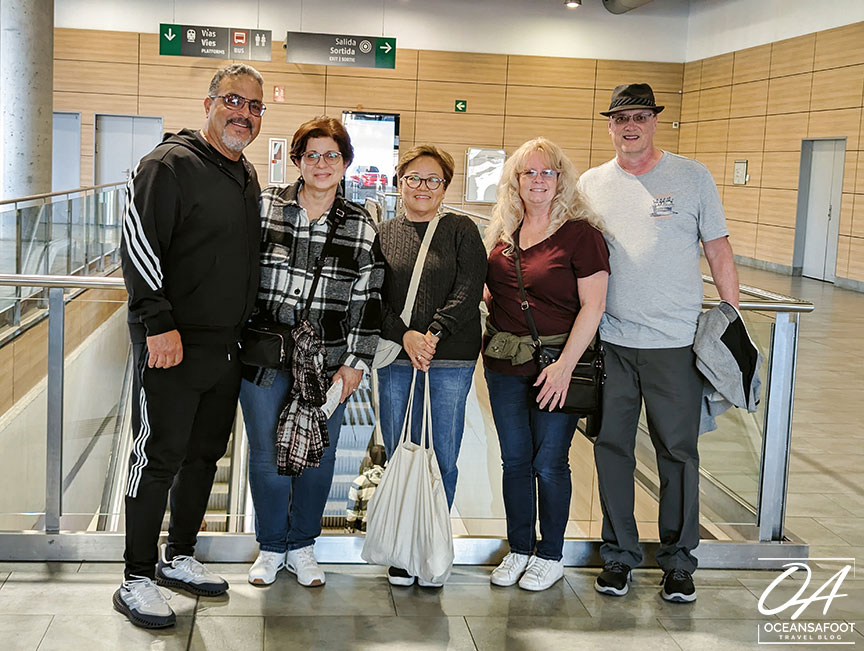
On a quiet Sunday, our planned Medieval Three Villages Small Group Day Trip from Barcelona was derailed when local authorities confiscated the tour companies van. With the tour canceled and no other tour options available, we quickly pivoted, taking a high-speed train to Girona with three fellow travelers, transforming a disappointing start of the day into an unexpected adventure.
⟳ Barcelona Sants Station
⚲ Barcelona Sants Station, Plaça dels Països Catalans 1, 08014 Barcelona, Spain
⧗ 30 minutes
With a bit of direction, we found our way through Barcelona’s metro to Sants station and boarded the Renfe Avant train to Girona. The €13.90 journey took just 39 minutes, and though assigned seating split up our group, the ride provided a moment to finalize our plans.
① Girona Railway Station
⚲ Girona Railway Station, Plaça d’Espanya s/n, 17002 Girona, Spain
⧗ 10 minutes
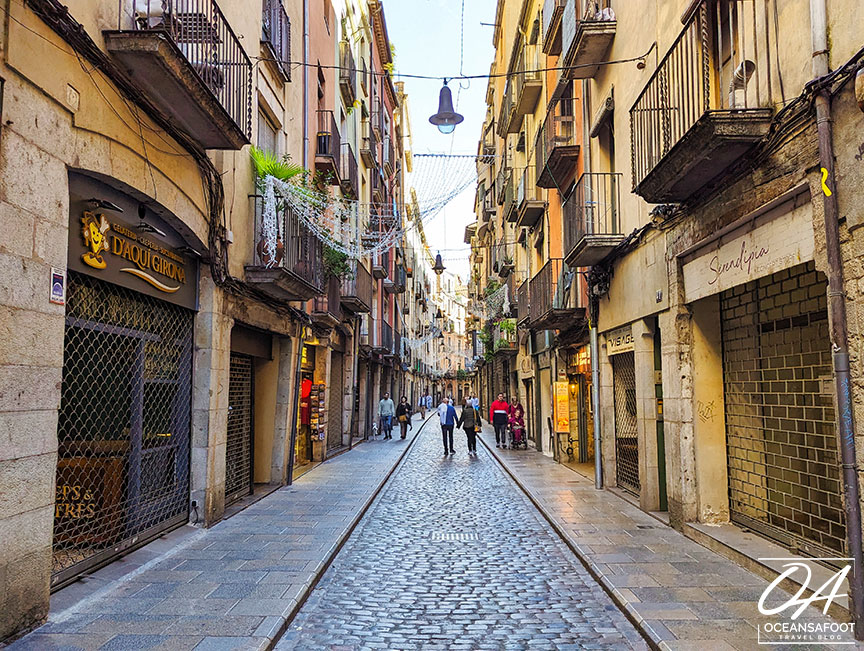
Arriving in Girona just before noon, we stepped off the train into relative calm, with the city stretching out before us. A short 10-minute walk from the station led us to Girona’s historic streets, where we were quickly surrounded by its rich history and culture.
② Pont de Pedra — Gateway to the Old Town
⚲ Carrer del Carme 17001 Girona, Spain
⧗ 15 minutes
Our exploration began at the Pont de Pedra, or Stone Bridge, a symbolic gateway connecting Girona’s contemporary side with its storied old town. This historic bridge, with its timeless arches, has long served as a point of connection, both practical and symbolic, for locals and visitors alike.
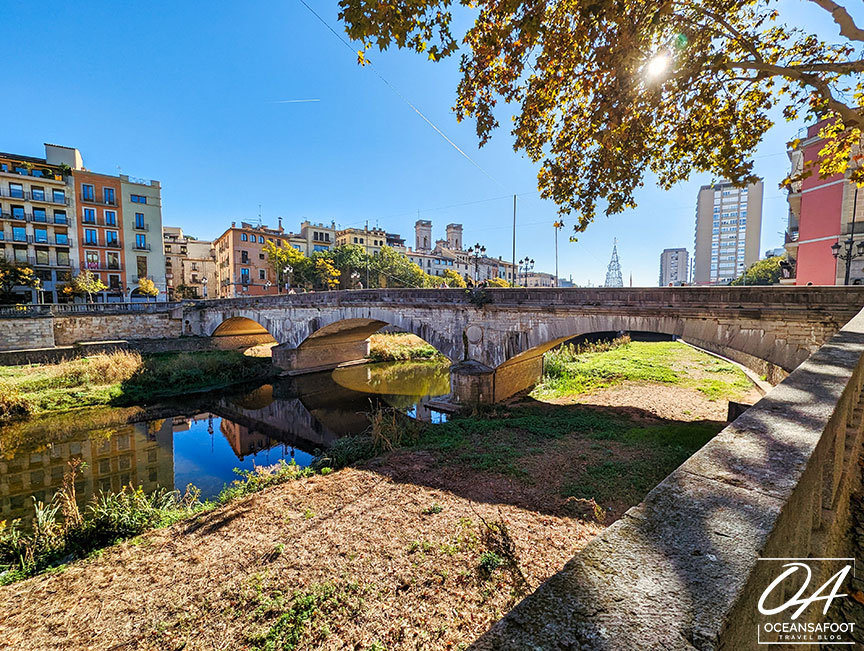
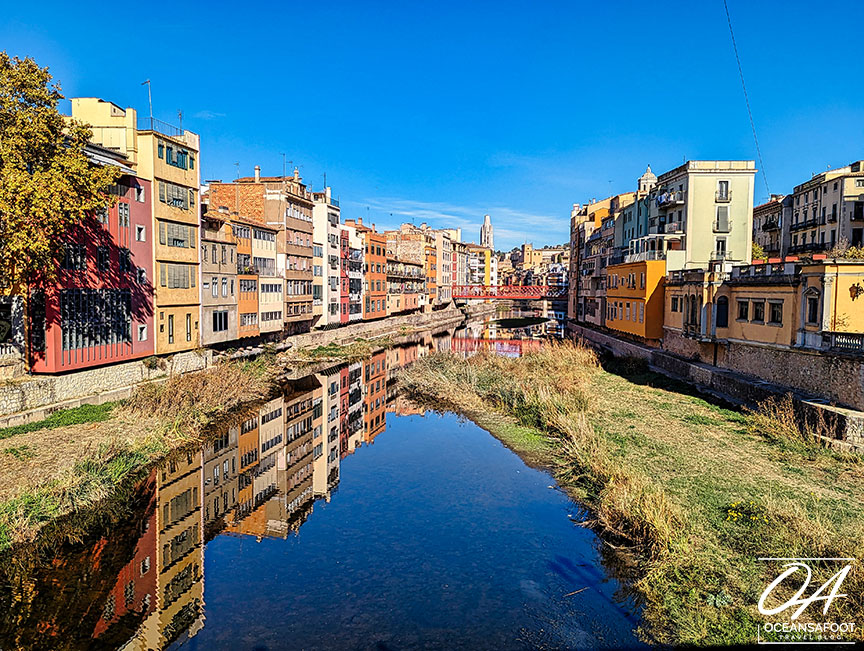
From its vantage point, we first photographed the striking Pont Eiffel in the distance, its vibrant red latticework standing out against the pastel hues of the buildings along the riverbanks. Designed by Gustave Eiffel before his Parisian masterpiece, the bridge exemplifies industrial elegance and adds a touch of modernity to Girona’s historic charm. The low water levels softened the reflection of the city’s colorful facades, creating a subdued but still captivating scene.
③ Plaza de Catalunya — Rhythms of Catalan Life
⚲ Plaça de Catalunya 17004 Girona, Spain
⧗ 20 minutes
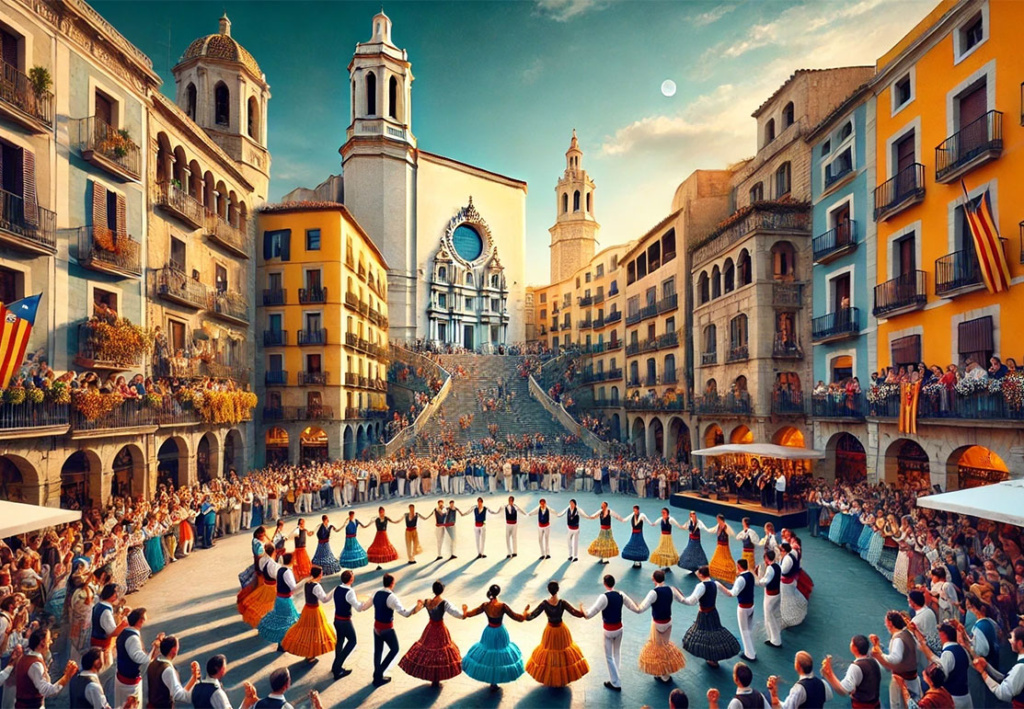
As we meandered through Girona’s ancient streets, the sounds of live music drew us toward Plaza de Catalunya, a bustling square that seemed to pulse with the energy of the city. Upon arriving, we found ourselves immersed in a vibrant cultural scene, where the melodies of a local band intertwined seamlessly with the sights and sounds of everyday life. The square, with its open space and welcoming ambiance, served as the perfect stage for a traditional Sardanas dance, a hallmark of Catalan culture.
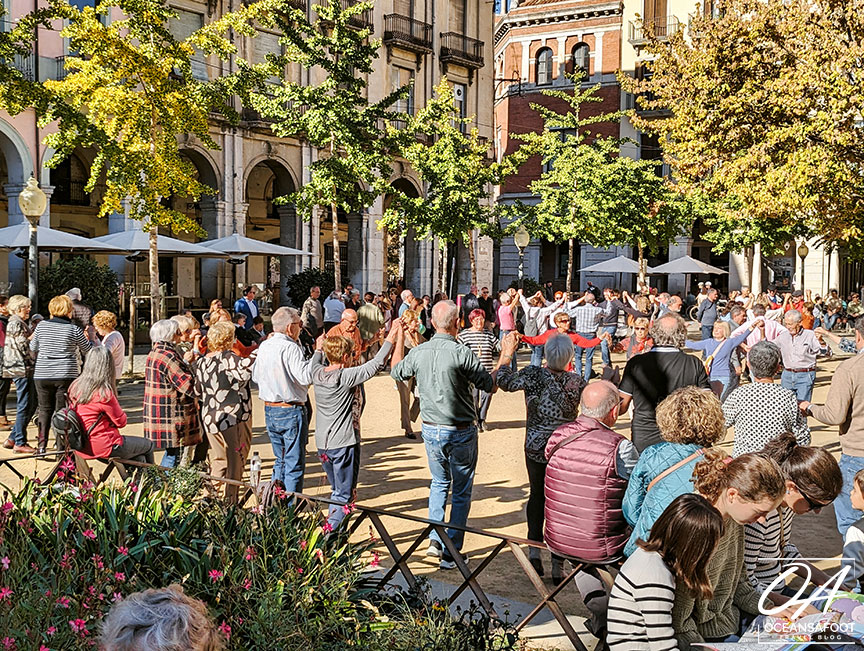
Before us, dancers formed tight-knit circles, their hands clasped in a display of unity and celebration. The dance itself was mesmerizing—methodical yet filled with emotion, as participants moved with synchronized steps to the music’s lively rhythm. We couldn’t help but pause, soaking in the vibrant atmosphere. The interplay of music, dance, and community spirit created a moment that felt both spontaneous and timeless.
④ Crossing Eiffel’s Bridge to the Old Quarter
⚲ Pont Eiffel (Bridge of Gustave Eiffel), Girona
⧗ 10 minutes
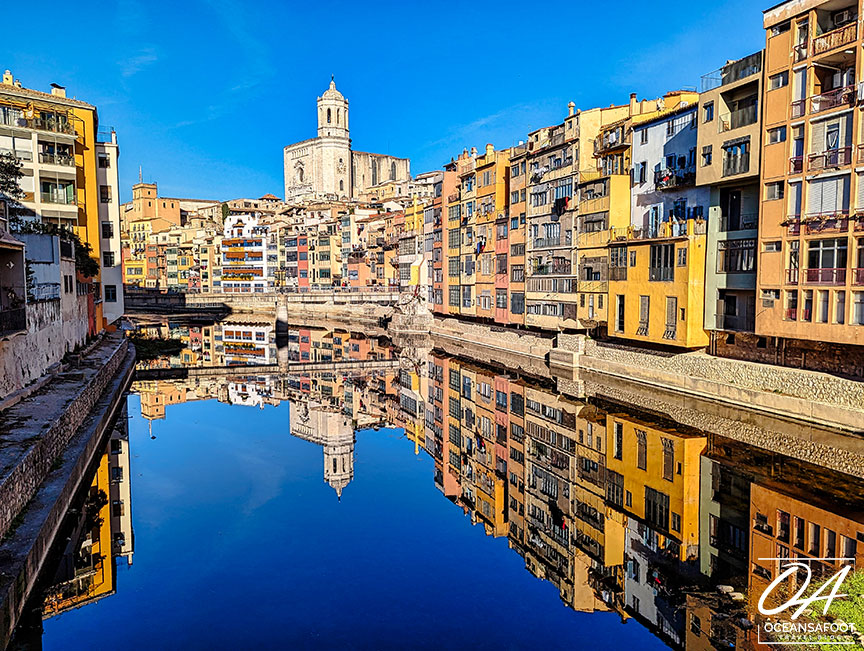
Leaving behind the lively Plaza de Catalunya, we crossed the striking red lattice bridge designed by Gustave Eiffel, referenced earlier. This architectural gem not only spans the Onyar River but also symbolizes Girona’s seamless blend of functionality and artistry. Here, the higher water levels transformed the scene into a vivid reflection of the colorful houses lining the riverbanks, creating a vibrant, almost paintin view of the city. It marked a transition from the vibrant rhythms of modern life to the awe-inspiring presence of Girona Cathedral, situated just a few blocks away.
⑤ Girona Cathedral — Faith, Film & Architecture
⚲ Plaça de la Catedral s/n 17004 Girona, Spain
⧗ 45 minutes
Ascending the imposing Baroque steps leading up to Girona Cathedral is an experience that blends history, architecture, and pop culture. This grand stairway, built in the 17th century, commands attention with its steep incline and symmetrical design. As you climb, the magnificence of the cathedral’s facade comes into full view, with its intricate stonework and commanding presence dominating the skyline of Girona. The steps themselves are steeped in cultural significance, and for fans of Game of Thrones (GOT), they offer an added layer of excitement.
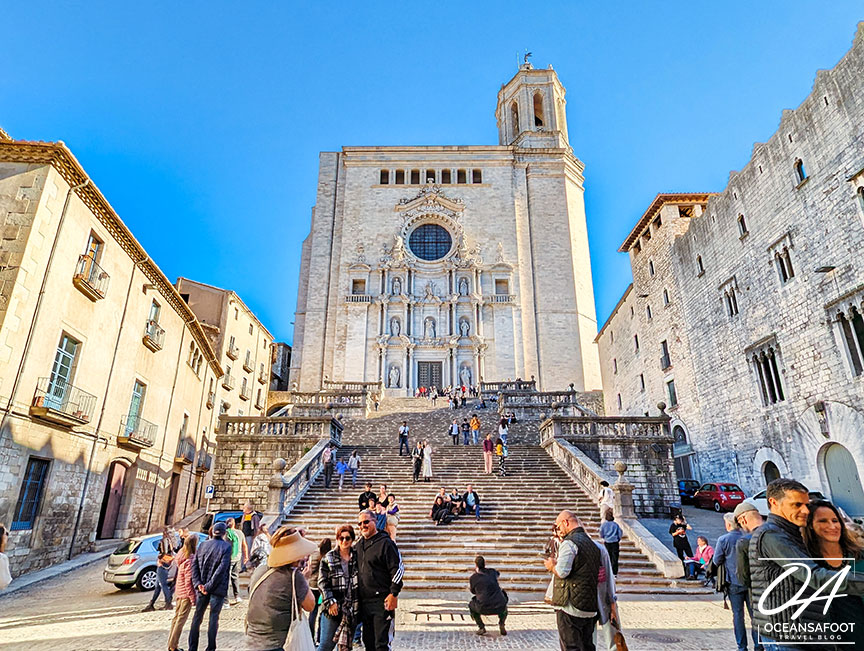
Approaching Girona Cathedral: A Journey Through History and Fantasy
The cathedral and its steps served as a filming location for pivotal scenes in Season 6 of GOT. In episode Blood of My Blood and The Winds of Winter, Girona Cathedral was transformed into the Great Sept of Baelor, the central house of worship in King’s Landing. Through the magic of special effects, the steps became the site of gripping confrontations, such as the Faith Militant’s defiance and moments of political intrigue. Standing at the base of these steps, it’s easy to imagine the tension-filled scenes, bringing the fictional world of Westeros vividly to life.
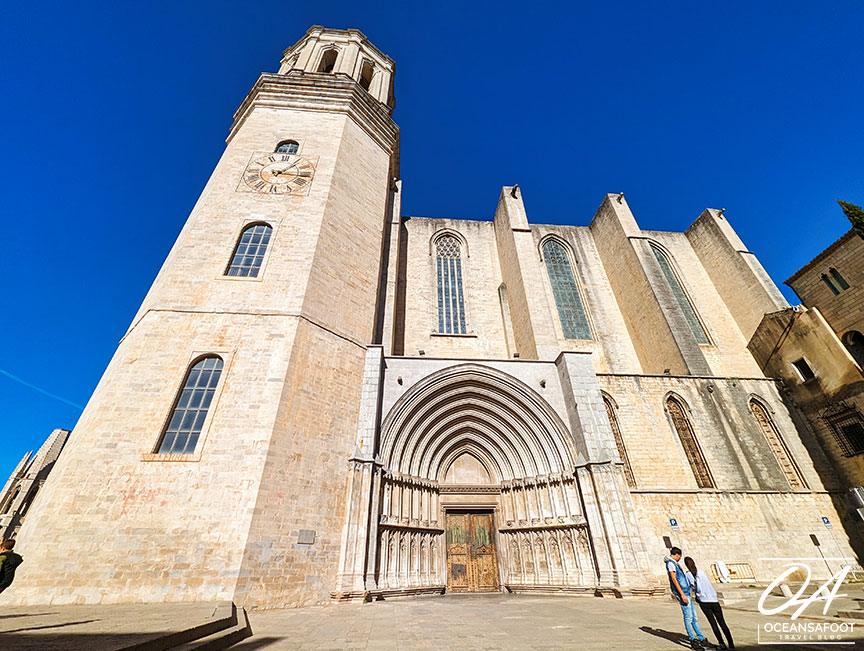
Yet even without its connection to modern storytelling, Girona Cathedral is a masterpiece of history and architecture. Its majestic facade, with a blend of Romanesque, Gothic, and Baroque elements, embodies centuries of artistic evolution. It invites visitors not only to admire its grandeur but also to step into its sacred interior, where its true treasures await.
Inside Girona Cathedral: A Sanctuary of Art and Faith
Upon stepping through the cathedral’s monumental doors, the vast Gothic nave immediately captivates. This architectural marvel holds the title of the widest Gothic nave in the world, spanning nearly 23 meters (75 feet). The immense open space seems to defy gravity, its ribbed vaults soaring high above, drawing the eye upward in a gesture of divine inspiration. The play of light through stained glass windows enhances this effect, as vibrant hues cascade onto the stone floors, creating a living tapestry of color and shadow. These windows, crafted with meticulous detail, narrate biblical stories and provide a window into the artistry of the medieval era.
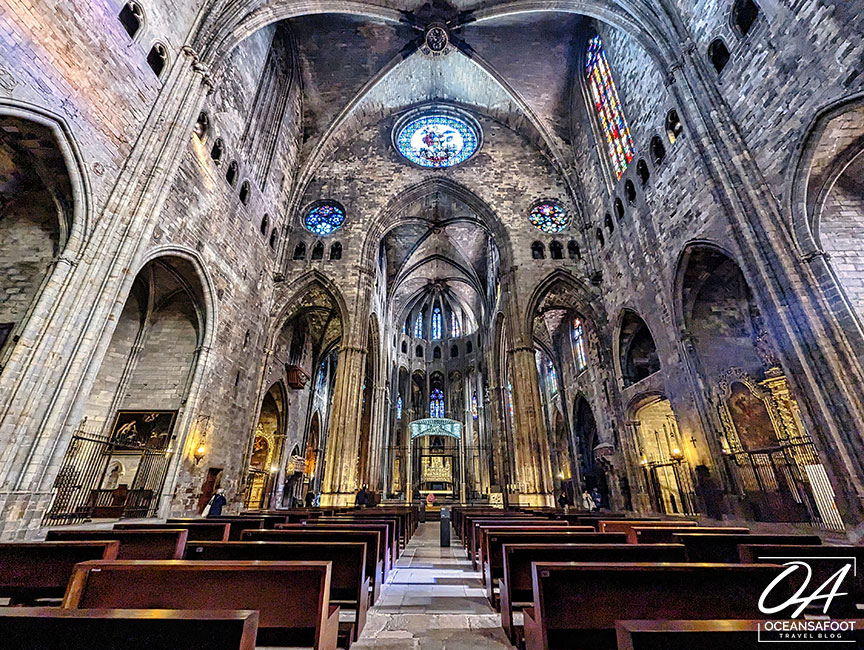
Along the sides of the nave are chapels, each dedicated to saints or significant religious figures. These chapels house a variety of artistic and devotional treasures, including altarpieces adorned with gold leaf, statues of saints, and memorial plaques commemorating notable figures in Girona’s history. Each one offers a glimpse into the deeply rooted spiritual traditions that have shaped the cathedral for centuries.

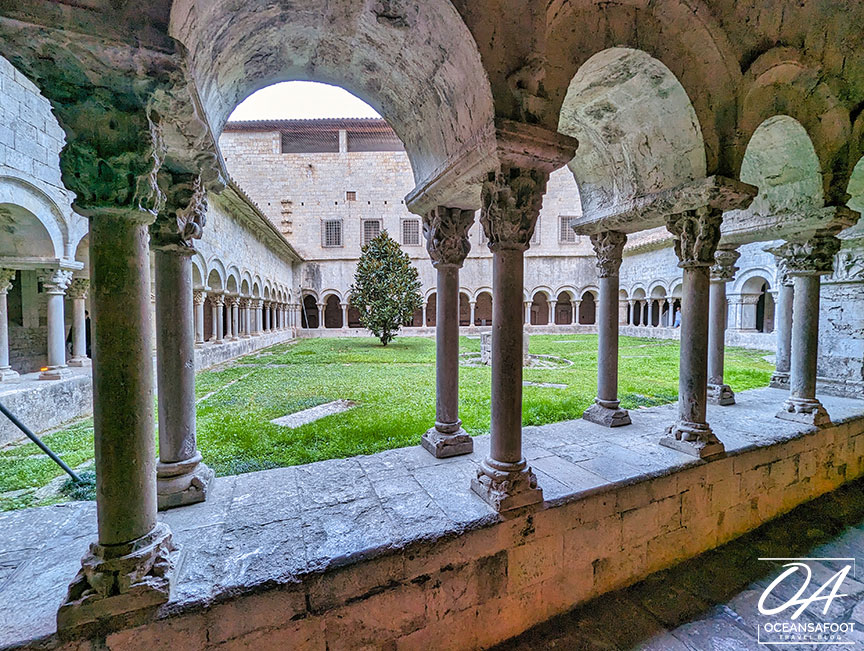
Outside is the Romanesque cloister, a remnant of the cathedral’s earlier construction in the 12th century, which is equally captivating. Its serene atmosphere contrasts with the grandeur of the nave, offering a quieter, contemplative space. The cloister’s capitals are adorned with intricate carvings, each telling a story—from biblical events to glimpses of daily medieval life. Walking through this space evokes a profound connection to the devotion and craftsmanship of the artisans who created it.
Treasures Beyond the Nave: The Chapterhouse Museum
Though we chose to focus our visit on the main sanctuary, the Girona Cathedral’s chapterhouse museum holds a wealth of artifacts that further illuminate its historical and religious significance. Among the treasures displayed are the Creation Tapestry, an 11th-century Romanesque masterpiece that vividly illustrates the biblical story of creation. This rare textile is regarded as one of the most significant pieces of its kind, both for its artistic quality and its preservation over nearly a millennium.
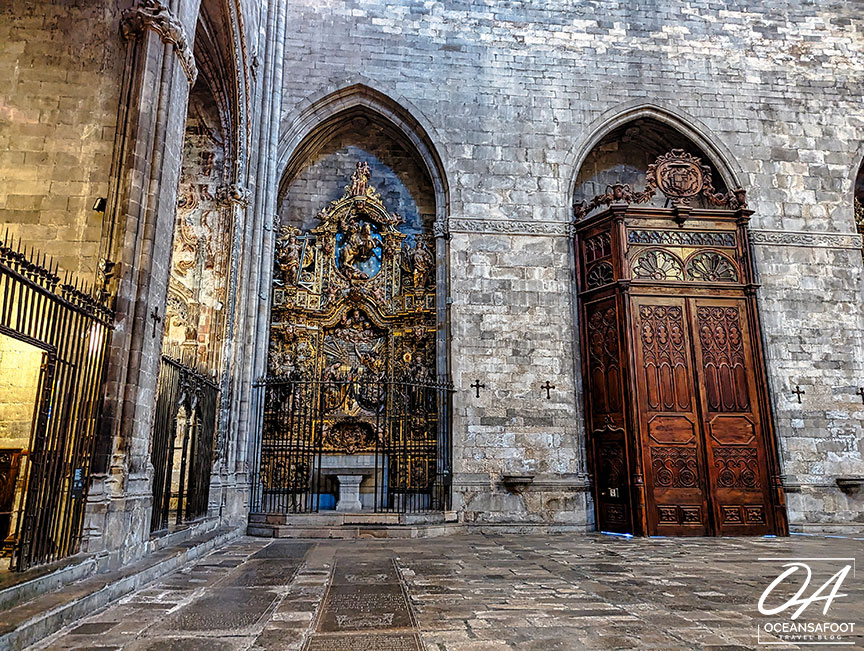
Another notable treasure is the Beatus Book, a richly illuminated 10th-century manuscript that offers a glimpse into early medieval religious thought and artistry. These items, along with a collection of liturgical objects and manuscripts, reveal the cathedral’s role not only as a place of worship but also as a custodian of cultural and artistic heritage.
⑥ Lunch on Via Augusta
⚲ Via Augusta Historic District, Girona
⧗ 1 hour lunch and rest
Eventually, our growing hunger guided us to Via Augusta, a bustling thoroughfare in the heart of Girona. The street, lined with a mix of traditional eateries, offered an inviting pause from our walking tour. Settling into a local restaurant, we took the opportunity to indulge in the authentic Catalan cuisine. We each chose something different, ranging from the hearty pa amb tomàquet (tomato-topped bread) with local cured meats to dishes that celebrated the influence of the Mediterranean.
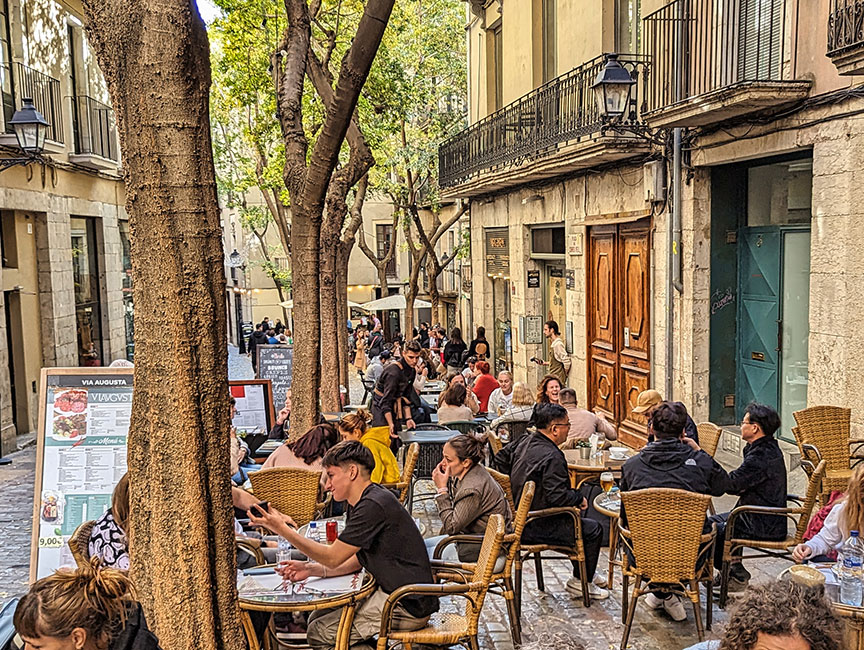
⑦ Jurats Square — Echoes of Council Voices
⚲ Plaça dels Jurats 17004 Girona, Spain
⧗ 20 minutes
Refreshed from our lunch, we made our way back toward Girona Cathedral, this time veering into the heart of the old town to explore Jurats Square. This historic plaza, tucked within Girona’s medieval quarter, carries the weight of centuries within its modest bounds. In the 14th century, it served as the central meeting place for the city’s council, where decisions vital to Girona’s governance and community life were debated and enacted.
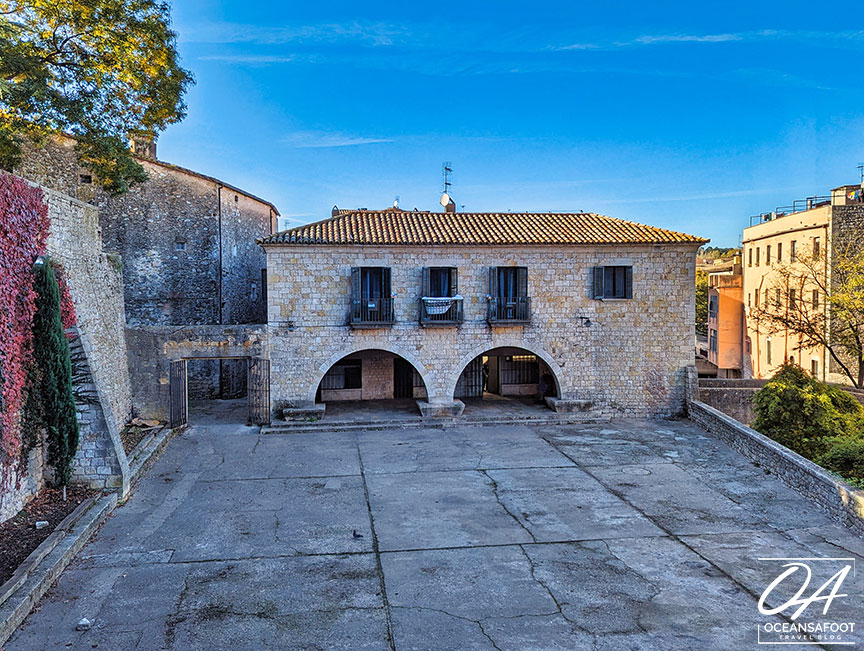
Standing in the square, it was as if the echoes of councilors debating trade, justice, and the welfare of their citizens still lingered in the air. The timeworn buildings surrounding the square may have eavesdropped on those long-ago conversations. I couldn’t help but wonder what secrets they might still be guarding.
⑧ Monastery of Saint Peter of Galligants
⚲ Carrer de Santa Llúcia 8, 17007 Girona, Spain
⧗ 10 minutes walking and observation
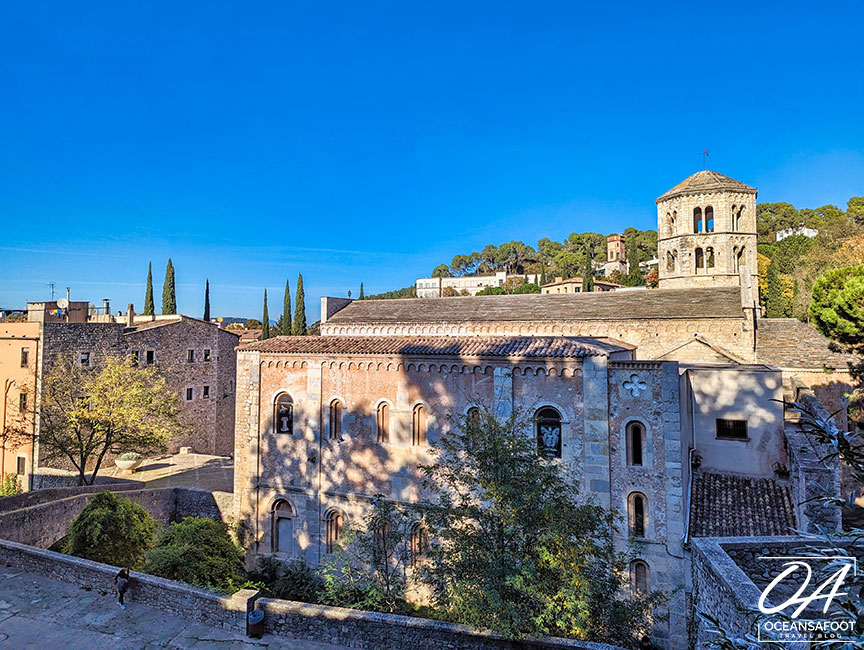
A short walk up a series of stone steps revealed a perfect vantage point to admire the Monastery of Sant Pere de Galligants, a significant piece of Girona’s architectural heritage.
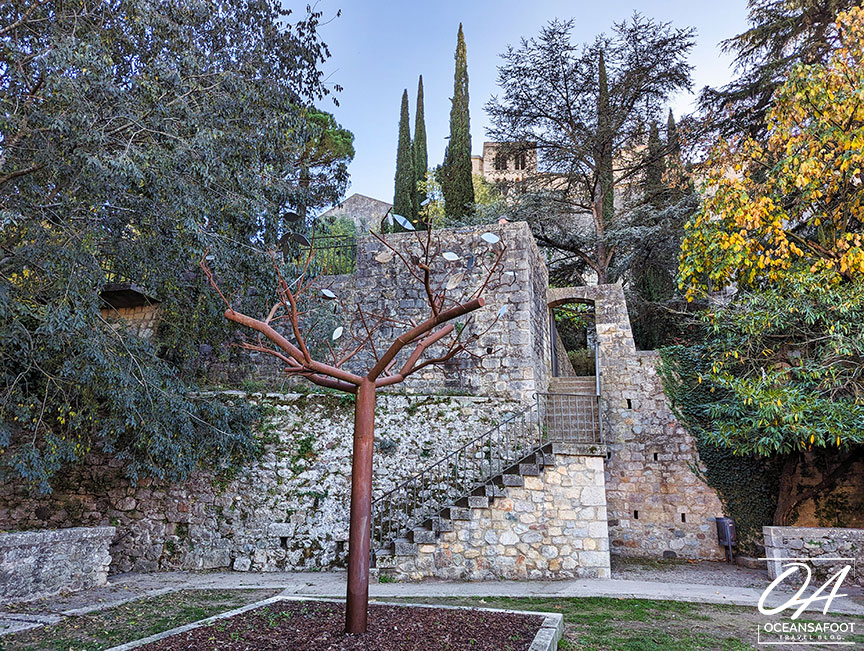
Originally built in the 12th century on earlier 9th-century foundations, this former Benedictine monastery played a vital role in the city’s religious and cultural development. Its Romanesque architecture, characterized by solid stone walls, intricately carved arches, and a distinctive bell tower, showcases the exceptional craftsmanship of the period. Today, the monastery houses the Girona branch of the Archaeological Museum of Catalonia, where visitors can view a collection of artifacts spanning from prehistory to the medieval era, including tools, ceramics, and burial objects that reveal the region’s ancient history.
⑨ Sant Domènec Convent
⚲ Plaça de Sant Domènec, 17004 Girona, Spain
⧗ 10 minutes walking and observation
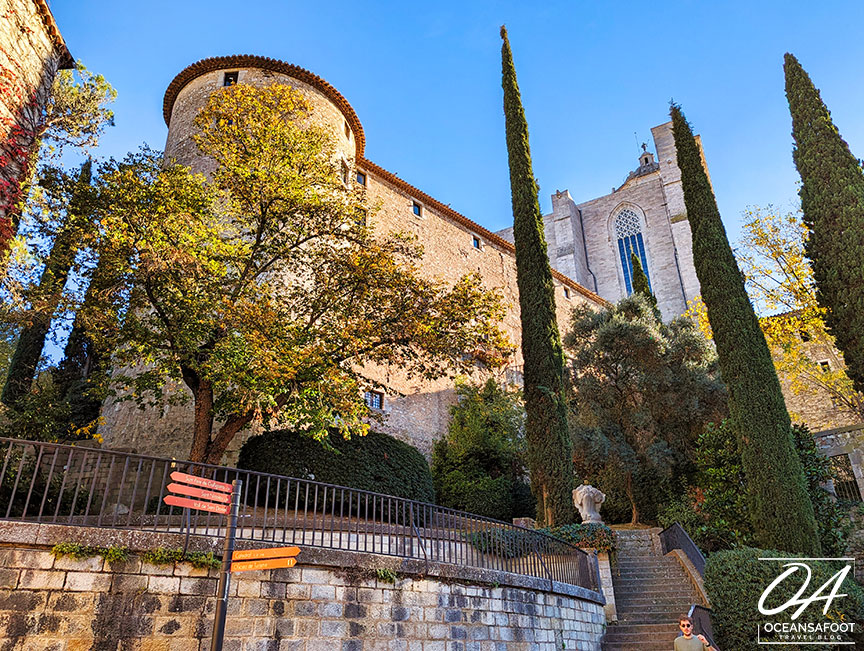
Reaching the top of the stone staircase, we followed a path that took us alongside the Sant Domènec Convent, a striking Gothic complex from the 13th century. Built for the Dominican Order, the convent displays impressive features such as towering walls, pointed arches, and a cylindrical defensive tower, emphasizing its role as both a spiritual center and a fortified structure. The peaceful grounds surrounding the convent offered a welcome moment of quiet, contrasting with the bustling streets below.
⑩ The Arab Baths — A Glance Through Closed Gates
⚲ Carrer Ferran el Catòlic s/n, 17004 Girona, Spain
⧗ 10 minutes (outside only, attraction closed)
Descending a stone staircase on the other side, we followed a path leading to the Arab Baths, a remarkable 12th-century structure that blends Roman-inspired design with Islamic architectural elements. We had planned our route specifically to visit this historic site; however, upon arrival, we discovered that the baths are closed on Sundays, which was unfortunate.
Known for their octagonal dome and intricate interior design, the baths once served as a communal space for both bathing and social interaction. While we couldn’t explore the interior, the site remains a remarkable testament to Girona’s dedication to preserving its layered heritage.
⟲ Return to Barcelona Sants
⚲ Girona Railway Station → Barcelona Sants Station
⧗ 39 minutes by high-speed train
As the late afternoon began to take hold, our time in Girona gradually drew to a close. The day’s explorations, filled with history, architecture, and cultural discovery, left us both tired and deeply fulfilled. Retracing our steps through the city’s historic streets, we made our way back to Plaza de Catalunya, where our journey had begun.
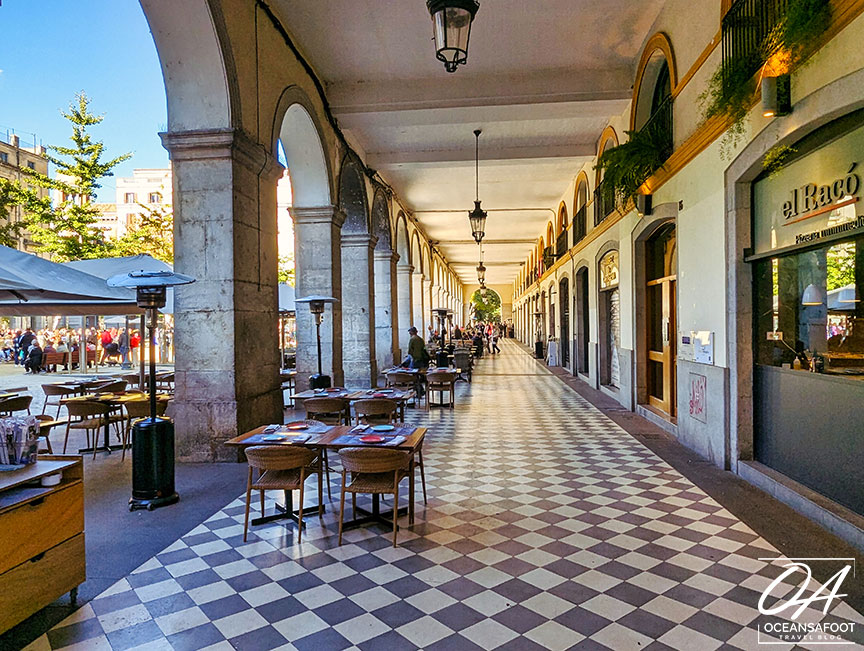
There, we paused to enjoy a well-deserved dessert, choosing from tiramisu, panna cotta, and gelato, as we reflected on the day’s experiences. With our appetites satisfied and hearts full, we eventually departed, heading back to the railway station to bring our visit to a close.
Reflecting on a Whim: A Day in Girona
Traveling to Girona was not part of a carefully planned itinerary but a spontaneous decision made after a canceled tour left us stranded in Barcelona. With little information beyond a vague mention of a high-speed train to this historic city, we decided to make the most of the day. Our visit, though unstructured, became an opportunity to wander Girona’s streets, soaking in its charm and history.
Looking back, I realize how much more Girona had to offer—such as the Galligants Bridge and the Wall Walk, which we missed entirely. Our few hours there were far from exhaustive, but they introduced us to the city’s timeless allure. It was a lesson in adaptability and a reminder that while spontaneity has its rewards, being prepared can unlock a destination’s hidden depths. Even so, our day in Girona salvaged what could have been a disappointment, turning it into a memorable adventure.
☑ Who Is This Tour Best For?
- Architecture Lovers: Romanesque, Gothic & Baroque masterpieces from Galligants to Girona Cathedral.
- Cultural Travelers: Sardana dances, Catalan traditions, and centuries-old streets.
- History Seekers: Ancient monasteries, city councils, and medieval baths.
- Film Fans: Game of Thrones filming sites brought vividly to life.
- Urban Explorers: Scenic bridges, riverside facades, and cobblestone alleys.
⊞ Tour Summary
- Tour Name: Discovering Girona: A Half-Day Medieval Adventure
- Cruise Line/Ship: Self-Guided
- Cruise Port: Barcelona, Spain
- Total Duration: 6 hours 30 minutes
- Main Stops: Girona Railway Station, Pont de Pedra, Plaza de Catalunya, Girona Cathedral, Via Augusta, Jurats Square, Monastery of Saint Peter of Galligants, Sant Domènec Convent, Arab Baths
- Drive-By Highlights: Eiffel Bridge, Onyar Riverfront, Via Augusta Dining District

▣ Activity Summary
- Walking Distance: Approximately 4 miles (6.4 km)
- Terrain: Cobblestones, cathedral steps, uneven medieval streets
- Accessibility: Moderate — steep inclines and stone staircases at historic sites
- Meals Included: Independent lunch on Via Augusta
Excursion Disclaimer: Descriptions of shore excursions on OceansAfoot reflect individual travel experiences and are not official representations of cruise lines or tour providers. All information is based on personal participation, publicly available facts, or traveler observation.
© OceansAfoot