Civitavecchia, Italy • May 17, 2016
✝️ Rome’s Imperial Past and Papal Splendor
Tour Route: Port of Civitavecchia → Central Rome (Via A12 and A91 Highways)
The excursion commenced with a motor coach transfer from the Port of Civitavecchia, a major maritime gateway to Rome located approximately 80 kilometers (50 miles) northwest of the city. The route followed the A12 and A91 motorways, connecting the coastal region of Lazio with the capital.
This shore tour, officially titled Exclusive Best of Rome, was limited to 24 participants to allow for efficient group movement and pre-scheduled admission to high-demand sites. The itinerary focused on several of Rome’s most significant historical and religious landmarks, beginning with the Roman Colosseum—an enduring symbol of the city’s imperial past.
Stop 1: Roman Colosseum
Location: Colosseum, Piazza del Colosseo 1, 00184 Roma RM, Italy (Metro: Colosseo – Line B)
Time Spent: Approx. 1 hour
Upon arrival, the group began with an exterior view of the Colosseum, where the scale and preservation of the structure stood out immediately. Security procedures at the entrance were efficient—slightly less stringent than airport screening but sufficient to ensure safety for all visitors.
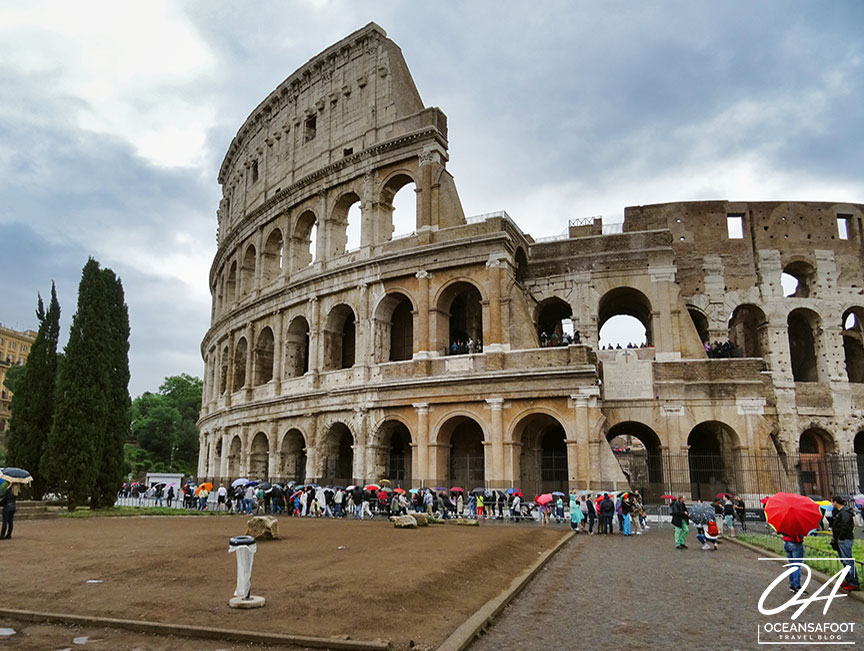
Inside, the group toured the partially restored inner levels of the amphitheater, where the ancient substructures (known as the hypogeum) remain visible. These underground chambers once held gladiators, animals, and equipment used during the events. Built in AD 70–80 under Emperor Vespasian and completed by his son Titus, the Colosseum could hold an estimated 50,000 to 80,000 spectators and served as the centerpiece for public spectacles, including combat, executions, and dramas based on Roman mythology.
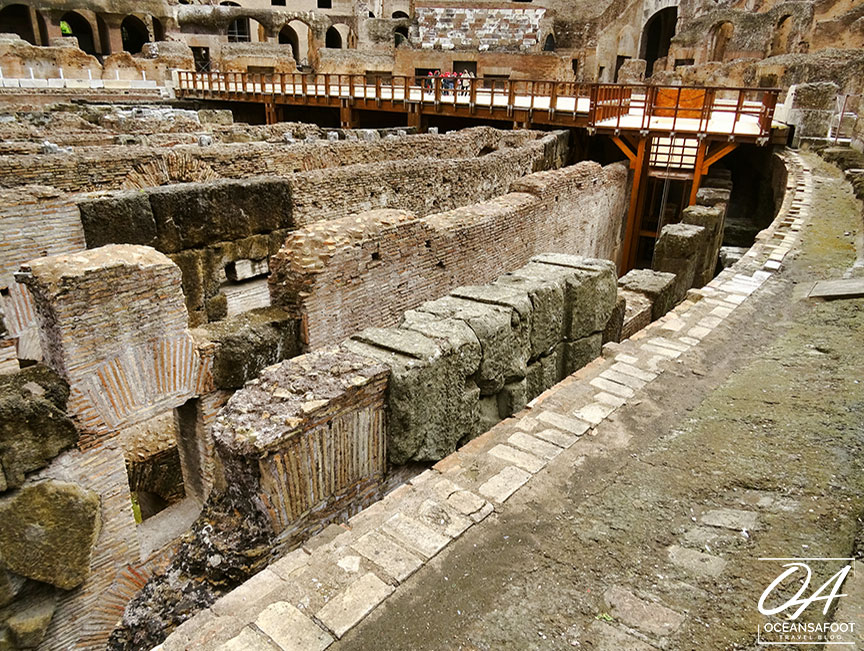
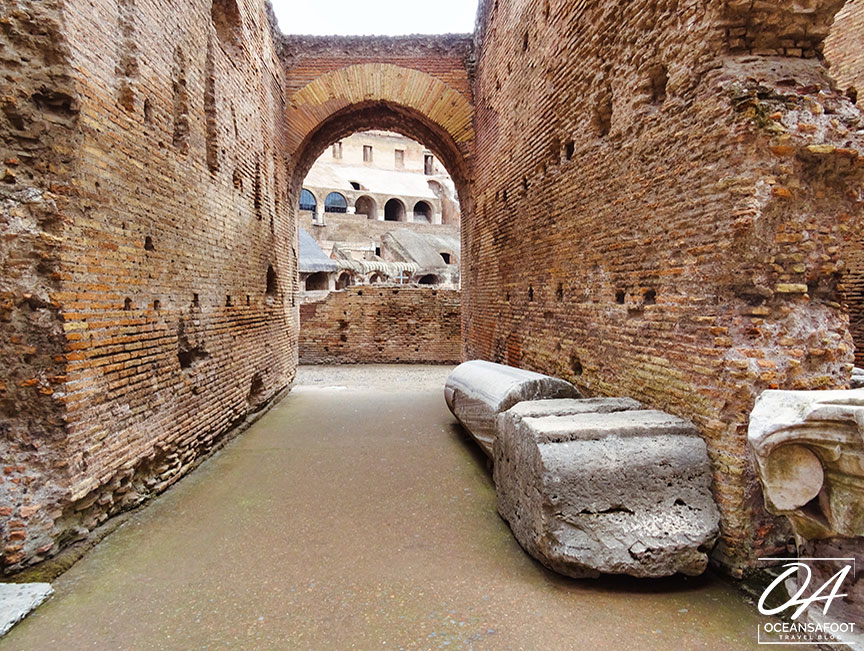
The group had time to observe key architectural elements such as tiered seating, vaulted corridors, and stone staircases—many of which influence the layout of modern sports stadiums. Over the centuries, however, the Colosseum was heavily quarried for its valuable materials. Marble facing blocks were removed for reuse in later Renaissance and Baroque buildings, including the construction of St. Peter’s Basilica. During the Middle Ages, iron clamps used to reinforce the stonework—estimated at over 300 tons—were extracted and melted down for armaments and tools.
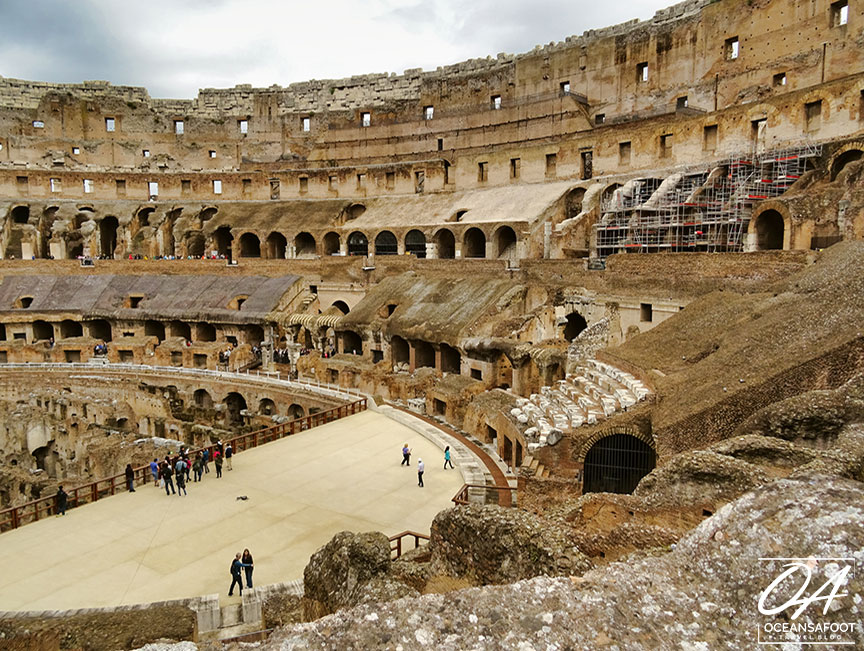
These removals resulted in structural gaps and exposed holes still visible today. Nonetheless, significant conservation efforts are underway to stabilize the site and, in some sections, reconstruct architectural components using historically accurate methods. These restoration projects allow modern visitors to better visualize the original grandeur of Rome’s most famous amphitheater.
Stop 2: Trevi Fountain
Location: Trevi Fountain, Piazza di Trevi, 00187 Roma RM, Italy (District: Trevi, Metro: Barberini – Line A)
Time Spent: Approx. 25 minutes
After departing the Colosseum, the group continued by motor coach into central Rome, passing through the Aurelian Walls—a system of defensive fortifications constructed in the late 3rd century AD during the reign of Emperor Aurelian. Originally built to protect the city against external threats, portions of the wall still stand today as a reminder of Rome’s imperial infrastructure.
The group disembarked near Piazza di Trevi and continued on foot to the Trevi Fountain, one of the most iconic Baroque monuments in the city. Designed by Nicola Salvi in 1732 and completed by Giuseppe Pannini in 1762, the fountain forms the elaborate facade of the Palazzo Poli and marks the terminal point of the restored Aqua Virgo aqueduct—originally constructed in 19 BC to supply clean water to Roman baths and public fountains.
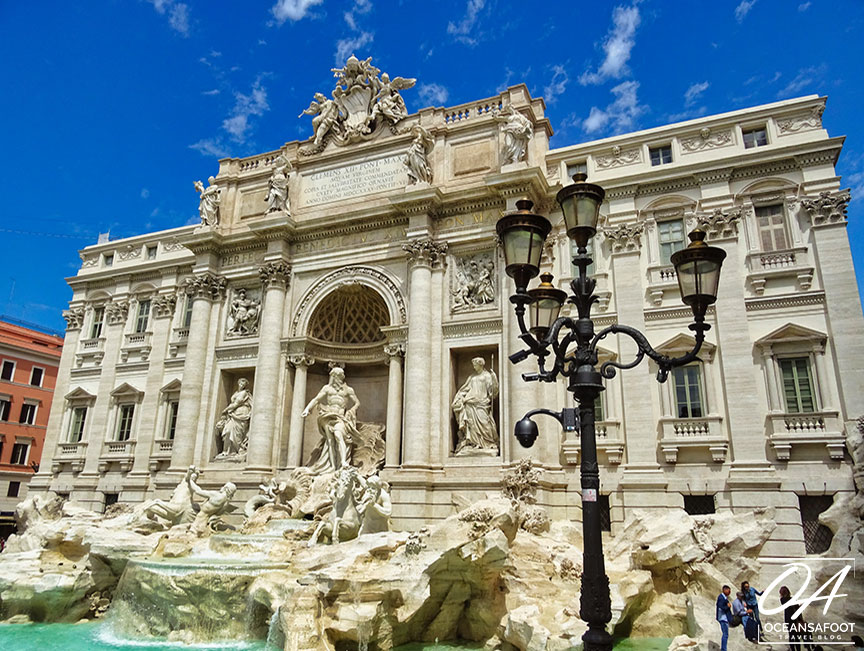
The central sculpture features Oceanus, god of all water, standing beneath a triumphal arch and flanked by personifications of Abundance and Health. Below, sculpted horses and tritons emerge from dramatic rock formations as part of the fountain’s theatrical composition.
Despite the crowds typically present at this site, the group reached the lower edge of the basin and took part in the traditional coin toss: throwing a coin using the right hand over the left shoulder. According to Roman legend, this gesture ensures a return to the Eternal City.
Stop 3: Lunch at Hotel Savoy
Location: Hotel Savoy Rome, Via Ludovisi 15, 00187 Roma RM, Italy (Near Via Veneto)
Time Spent: Approx. 1.5 hours
From the Trevi Fountain, the group proceeded on foot to the Hotel Savoy, located approximately 0.6 miles north in Rome’s Ludovisi district. The 20–25 minute walk included numerous intersections and a climb of more than 50 stairs. To keep morale high, the guide repeatedly mentioned that the hotel was “just around the next corner,” later confessing each time that it was a little farther—an approach that lightened the effort and helped manage expectations.
Guests preferring not to walk were given the option to take a taxi at their own expense, and one couple in the group opted for this alternative. Upon arrival, the group used a compact elevator—sized for six to eight people—to reach the fifth floor. From there, two short staircases led to the rooftop dining terrace, offering sweeping views of Rome’s skyline.
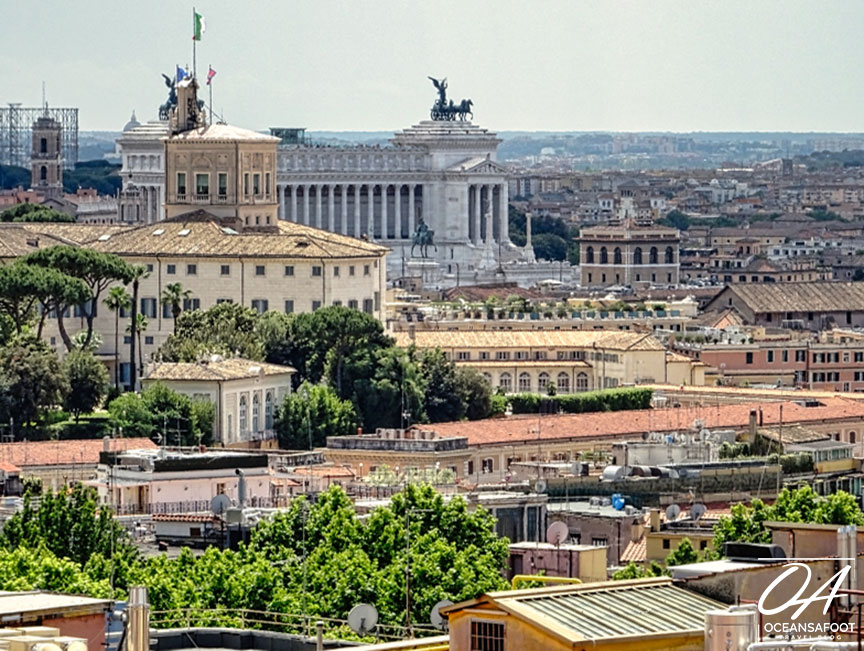
Lunch included a pasta starter, followed by an entrée choice of chicken or fish. The meal concluded with a slice of Mimosa cake and was complemented by white wine and champagne. The elevated setting and relaxed atmosphere made for a scenic and well-timed break in the day’s itinerary.
Stop 4: Vatican Museums and Sistine Chapel
Location: Vatican Museums, Viale Vaticano, 00165 Roma RM, Italy (Entrance: group access on north wall)
Time Spent: Approx. 1.5 hours
Following lunch, the group reboarded the motor coach and proceeded directly to Vatican City, specifically the Vatican Museums. The drive took approximately 15 minutes, and entry into the museum complex was relatively efficient—using the designated group entrance, the wait time was around 15 minutes.
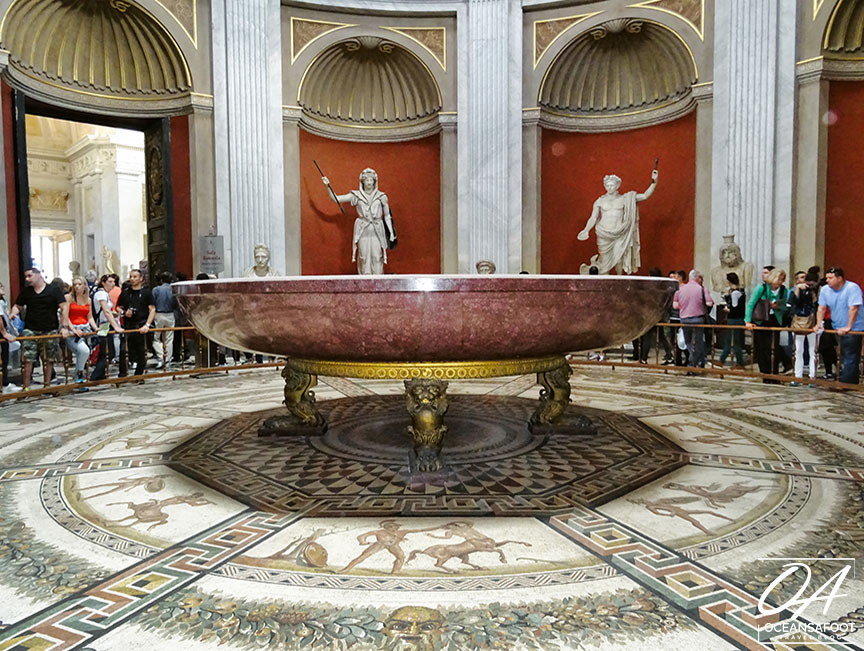
Upon entering, visitors were immediately immersed in an environment of extraordinary visual richness. The Vatican Museums house one of the largest and most significant art collections in the world, with galleries filled with classical sculptures, Renaissance masterpieces, and centuries of religious artifacts. The galleries were densely packed with tourists—comparable to the scale of foot traffic in institutions like the Hermitage Museum in St. Petersburg.
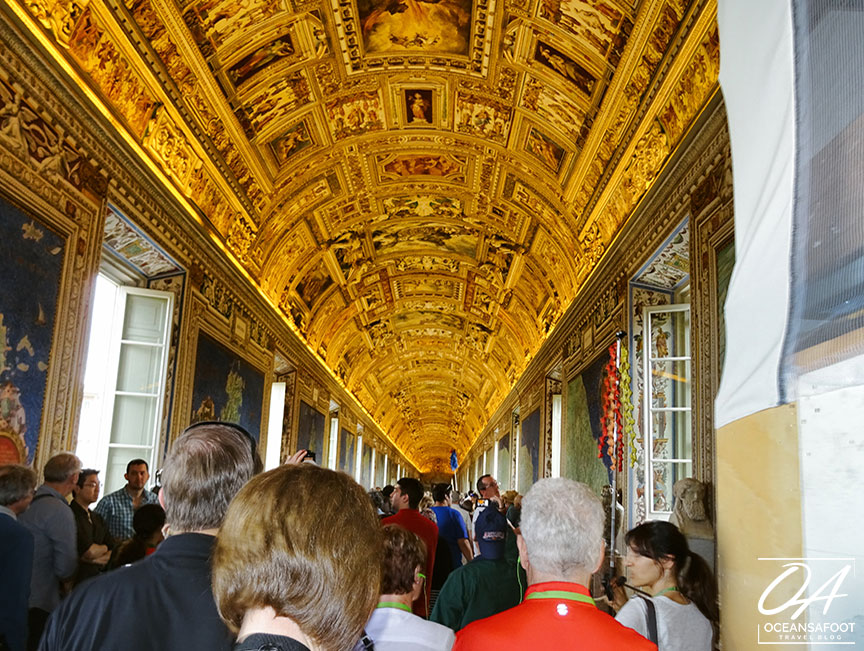
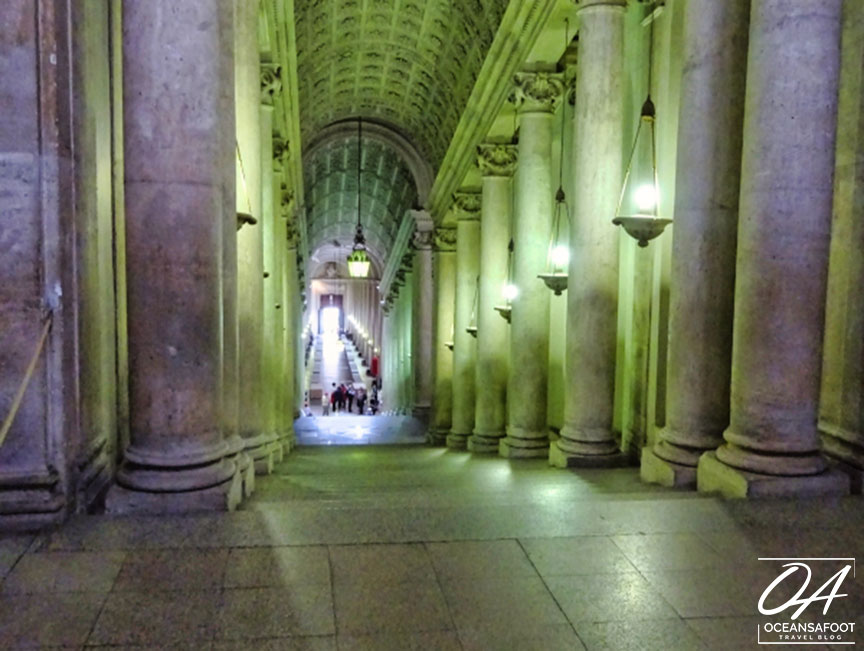
Roughly 30 minutes into the visit, the group arrived at the entrance to the Sistine Chapel, consecrated in 1483. As the official site of the papal conclave, the chapel holds immense religious and historical importance. Visitors stood in reverent silence among a crowd of several hundred, absorbing the architectural and artistic impact of the space.
Notably, the group viewed the small area on the chapel floor where the fumata—the smoke signal released during a papal election—is generated. A stove is placed at this location, and a narrow chimney directs the smoke through the roof to signal the outcome of the conclave: black smoke for no decision, white smoke for a newly elected pope.
The centerpiece of the chapel is Michelangelo’s ceiling fresco (1508–1512), which depicts scenes from the Book of Genesis, including The Creation of Adam. Behind the altar, his Last Judgment (painted between 1536 and 1541) dominates the wall with a sweeping portrayal of the final resurrection. Complementing these are earlier frescoes along the side walls by artists of the 15th century—including Botticelli, Ghirlandaio, and Perugino—commissioned under Pope Sixtus IV, for whom the chapel is named.
Stop 5: St. Peter’s Basilica via the Holy Door
Location: St. Peter’s Basilica, Piazza San Pietro, 00120 Vatican City
Time Spent: Approx. 45 minutes
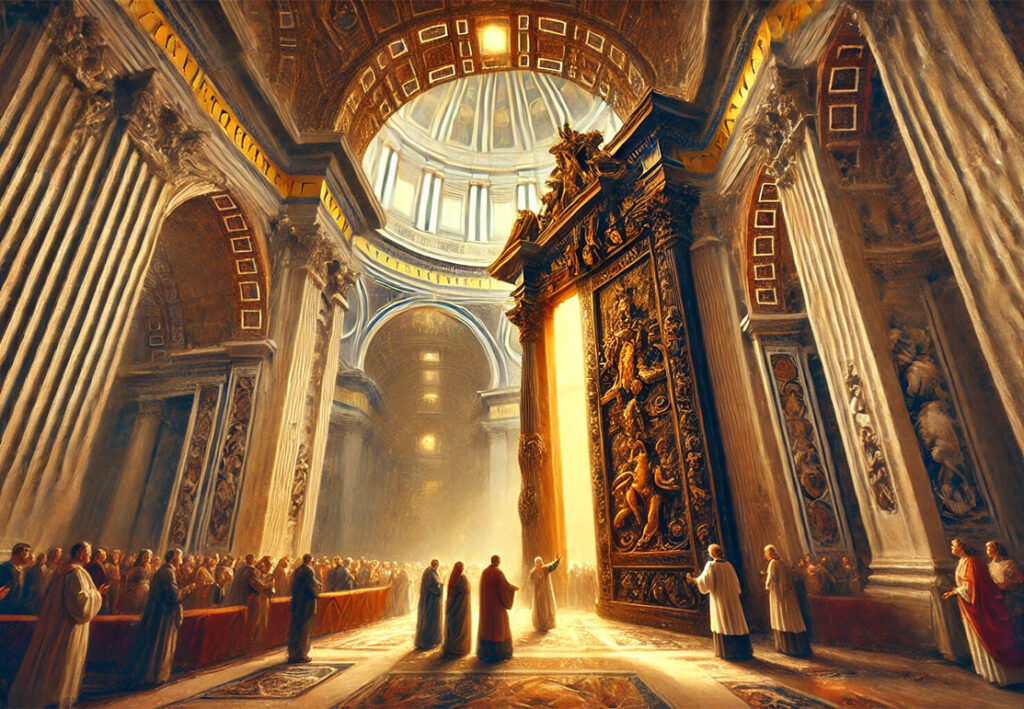
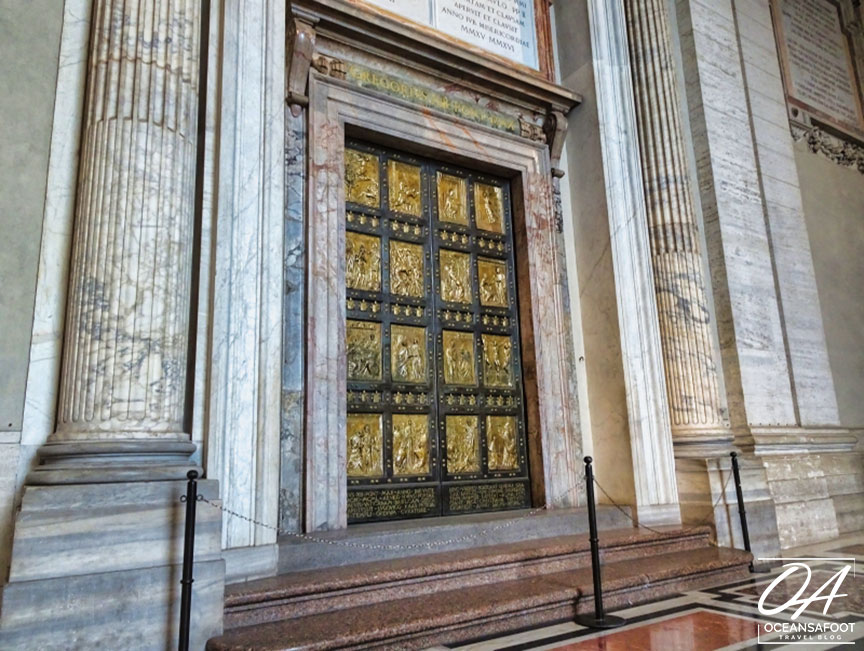
After departing the Sistine Chapel, the group proceeded directly into St. Peter’s Basilica—but not through the main public entrance. On this occasion, visitors were granted entry via the Holy Door (Porta Sancta), an opportunity reserved for Jubilee Years. The door remains sealed for decades at a time and is ceremonially opened only during Holy Years designated by the Pope.
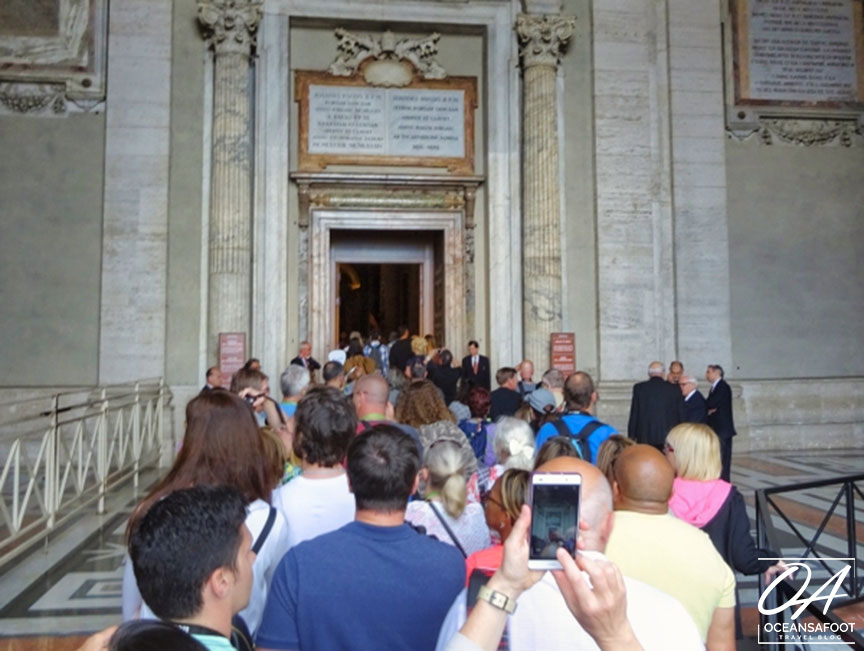
This visit coincided with the Extraordinary Jubilee of Mercy, proclaimed by Pope Francis for the year 2016, making the entry through the Holy Door a rare privilege. Many participants took a moment to touch the sculpted bronze panels of the door, which represent themes of forgiveness and grace in Catholic theology.
Inside, the group explored key sites within the basilica, including the tomb of Pope John Paul II, located beneath the Chapel of St. Sebastian, and the main papal altar positioned directly above the tomb of St. Peter. The altar is marked by Bernini’s bronze baldachin, a monumental canopy over 90 feet tall, supported by spiraled columns. It is used exclusively by the Pope for liturgical ceremonies, including Christmas and Easter Mass.
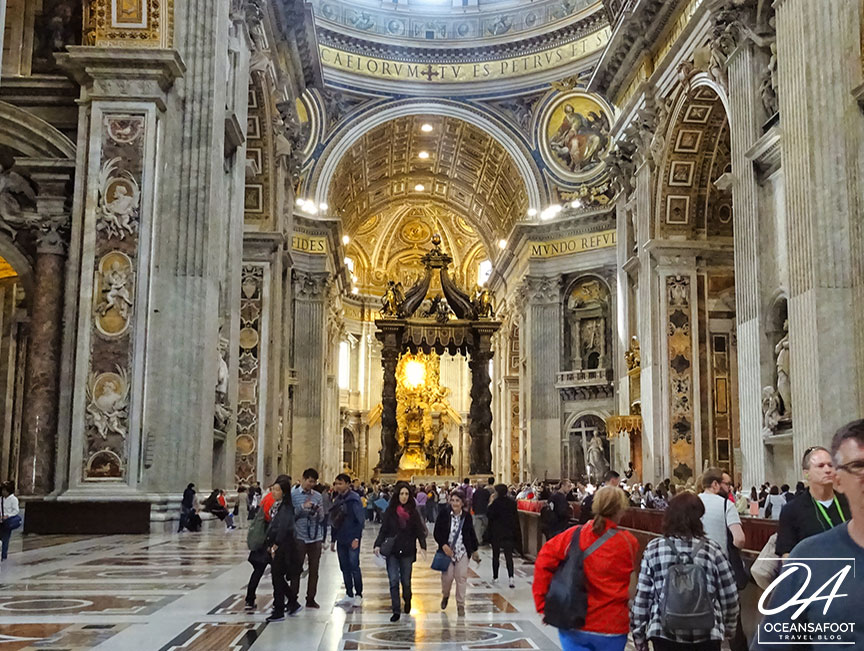
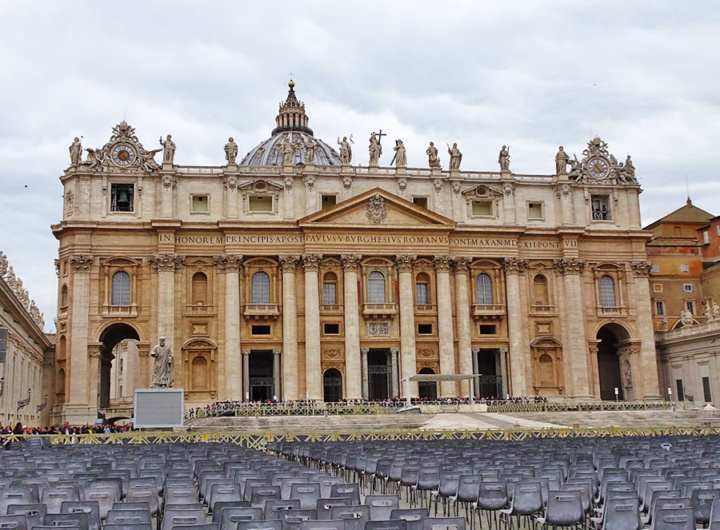
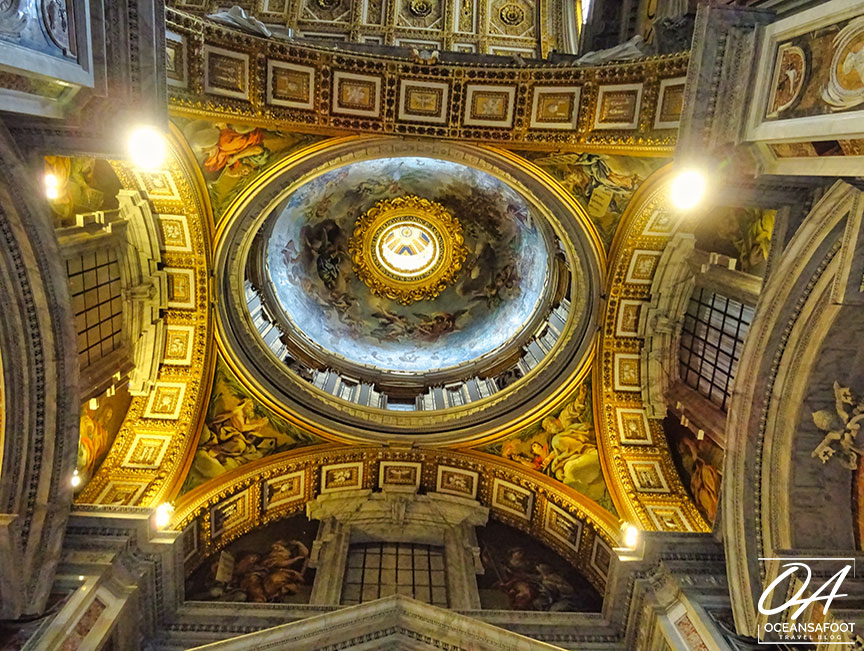
St. Peter’s Basilica is renowned not only for its spiritual importance but also for its architectural scale and artistic detail. The structure measures over 600 feet in length and can accommodate more than 60,000 people, making it the largest Catholic church in the world. Every surface—floor, walls, and ceiling—is adorned with intricate marble, mosaics, and sculptural works created by masters such as Michelangelo, who also designed the dome.
The group also learned that Vatican City—though geographically located within Rome—is an independent, sovereign state. Officially established in 1929 by the Lateran Treaty, it functions with its own governance structure, postal service, and security force, and remains the world’s smallest country by both land area and population.
Papal Residence and Guard Post
Location: Apostolic Palace and Swiss Guard Post, Piazza San Pietro, 00120 Vatican City
Time Spent: Walk-by
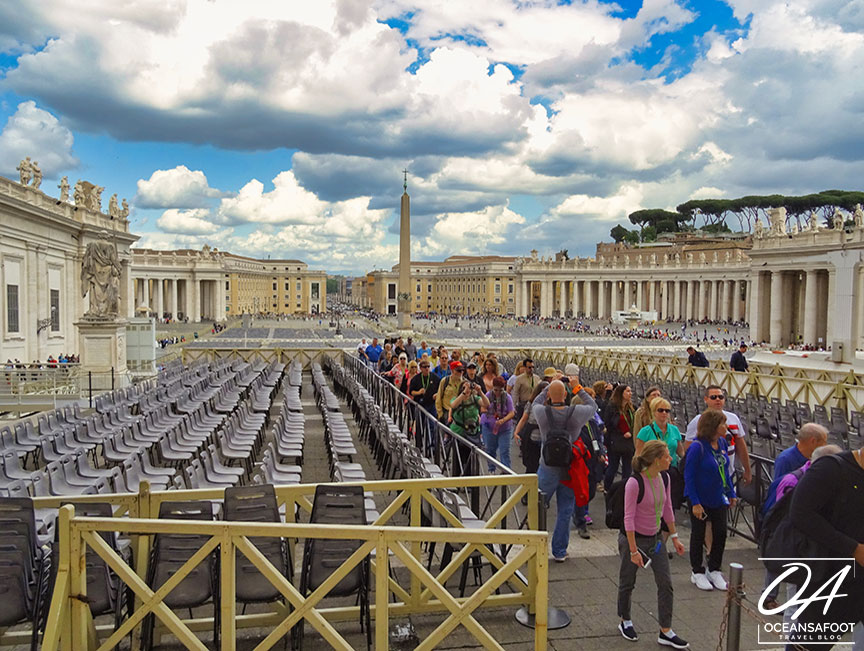
After exiting St. Peter’s Basilica, the group continued on foot to observe the Apostolic Palace, the official residence and administrative headquarters of the Pope. Located adjacent to St. Peter’s Square, this complex includes the papal apartments, offices, and reception halls.
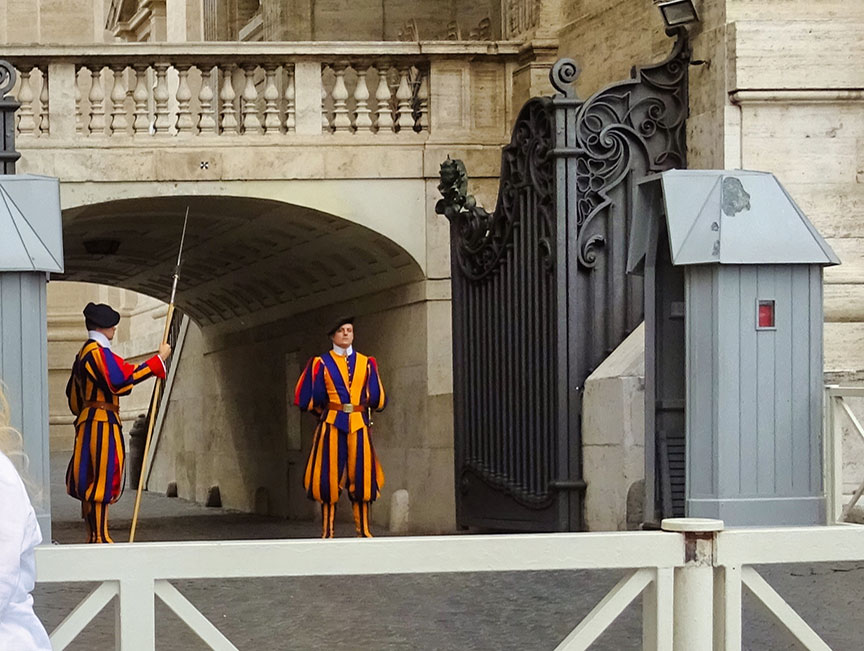
At the entrance, visitors viewed the Pontifical Swiss Guard, a security corps established in 1506 under Pope Julius II. Known for their distinctive Renaissance-era uniforms in blue, red, and yellow, the guards are responsible for safeguarding the Pope and Vatican property. Though ceremonial in appearance, they are a fully trained and armed military unit under the direct command of the Holy See.
Nearby, the group saw the Papal Apartment window, from which the Pope delivers the weekly Angelus blessing and addresses the public during major liturgical events.
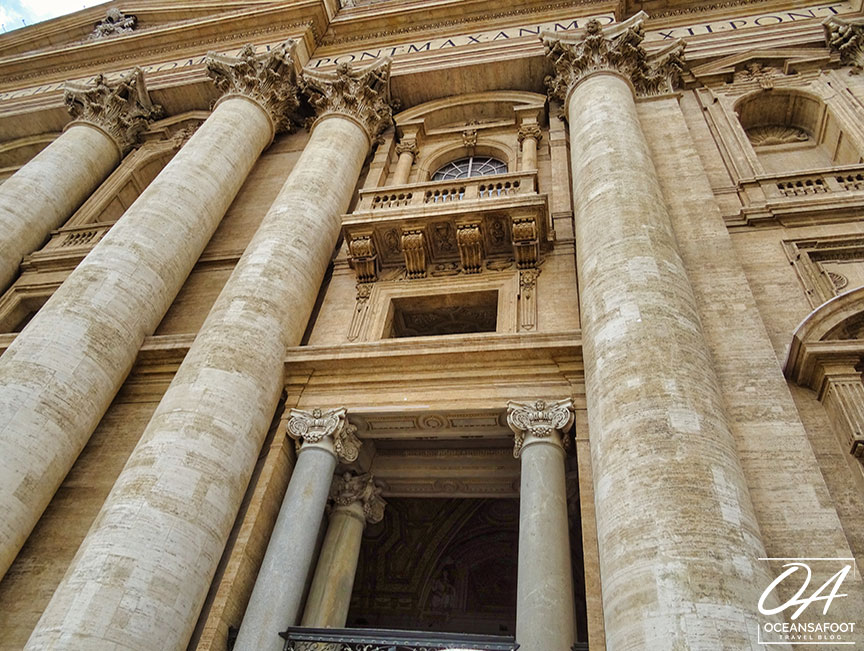
Also visible from the square was the chimney outlet of the Sistine Chapel, used during papal conclaves to emit smoke signals (fumata). Black smoke indicates no decision has been reached; white smoke signals that a new pope has been elected.
Shopping Opportunity
Location: Souvenir Shops, Via di Porta Angelica, 00193 Roma RM, Italy (Outside Vatican walls)
Time Spent: Approx. 20 minutes
Before concluding the tour, the group made a short walk to a nearby souvenir shop within Vatican City. Visitors had time to purchase religious articles, books, or small mementos commemorating their time at the Vatican. The brief stop provided a final opportunity to collect gifts or keepsakes.
Return to Ship
Location: Port of Civitavecchia, Varco Vespucci, 00053 Civitavecchia RM, Italy
Time Spent: 1.5 hours (return drive)
After shopping, the group reboarded the motor coach for the return journey to the port. The 90-minute drive allowed for rest and reflection following an itinerary filled with historical landmarks and cultural highlights. The group arrived back at the ship around dinner time, marking the close of a well-paced and enriching excursion through Rome’s imperial and religious heritage.
Who Is This Tour Best For?
- First-time visitors
- History lovers
- Cultural immersion travelers
- Extended walkers
- Photography enthusiasts
Tour Summary
- Tour Name: Exclusive Best of Rome
- Offered By: Royal Caribbean
- Total Duration: 10.5 hours
- Main Stops: Colosseum, Trevi Fountain, Hotel Savoy, Vatican Museums, Sistine Chapel, St. Peter’s Basilica
- Drive-By Highlights: Arch of Constantine, Aurelian Walls, Roman Forum, Circus Maximus
Activity Summary: Approx. 12,075 steps walked during the excursion.
Excursion Disclaimer: Descriptions of shore excursions on OceansAfoot reflect individual travel experiences and are not official representations of the cruise lines or tour providers mentioned. All information is based on personal participation, publicly available facts, or traveler observation.
© OceansAfoot