Naples, Italy • May 18, 2016
🏞️ Cliffs, Crafts, and Ruins Along the Campanian Coast
Tour Route: Port of Naples → Sorrento → Positano → Pompeii (via SS145 and SS163)
The day began with an early morning departure for the Exclusive Amalfi Coast, Positano, Sorrento & Pompeii itinerary. A 19-seat minivan served as the day’s transport, but with only nine participants onboard, the group benefited from extra space and a more comfortable, uncrowded experience.
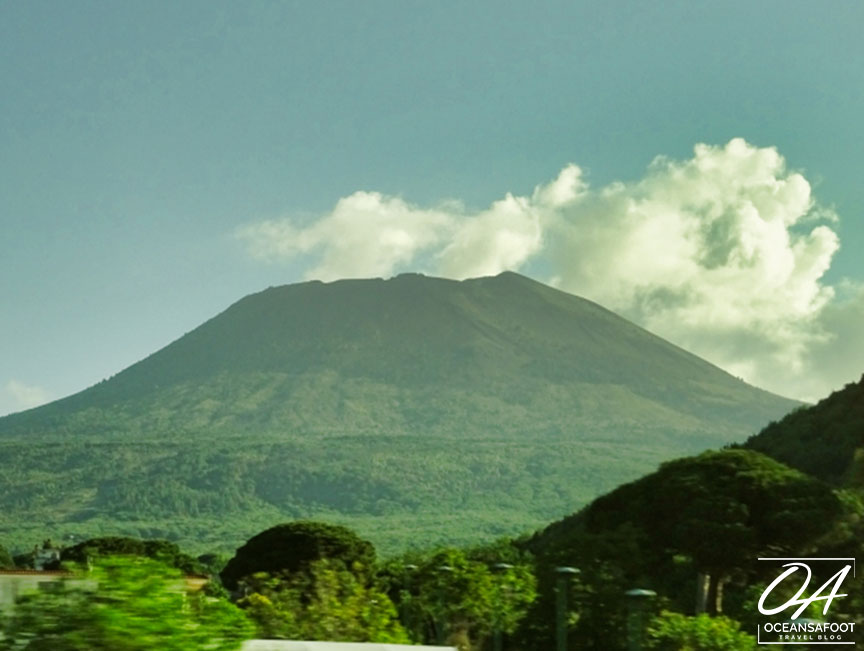
The route started along the Port of Naples before leaving the city behind. On the left side of the vehicle, passengers had a clear view of Mount Vesuvius, the still-active volcano that famously destroyed Pompeii in 79 AD. On the right, the Bay of Naples opened toward the Isle of Capri, one of the most iconic islands in the Campania region.
Rather than following a circular route, the tour was structured to travel first to the most distant destination and then gradually work its way back toward the port. The drive initially passed through the coastal town of Meta, located on the Sorrento Peninsula, before arriving at the first official stop: the town of Sorrento.
Stop 1: Marquetry Demonstration in Sorrento
Location: A. Gargiulo & Jannuzzi, Piazza Torquato Tasso 1, 80067 Sorrento NA, Italy
Time Spent: Approximately 15 minutes
The first stop in Sorrento brought the group to A. Gargiulo & Jannuzzi, a long-established showroom located on the central Piazza Tasso. This artisan workshop is known for its production of marquetry—an intricate wood inlay technique that assembles contrasting pieces of veneer to form decorative designs.
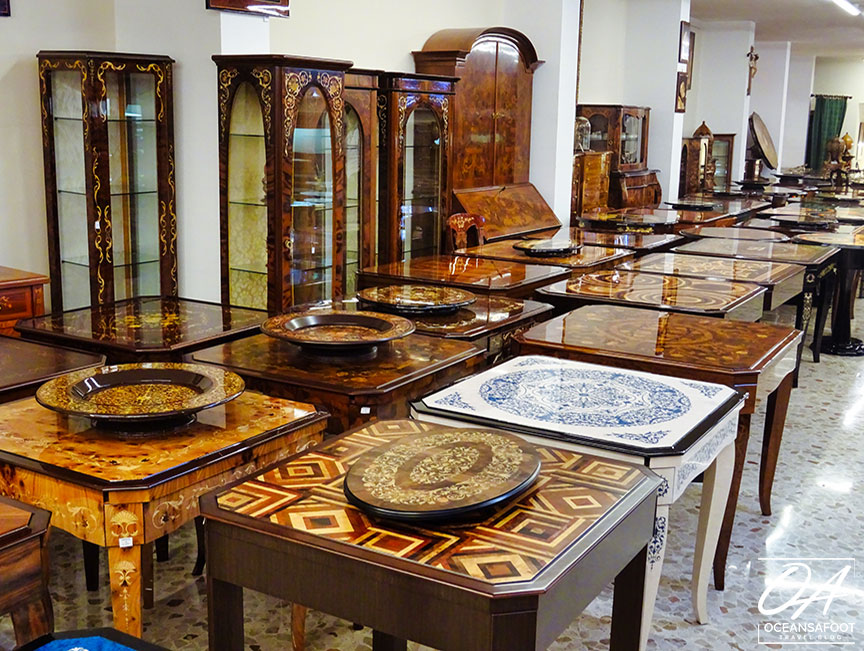
A short demonstration highlighted the manual process of composing geometric and pictorial motifs using multiple wood types, each selected for its natural color and grain. One notable example on display was a multifunctional gaming table, combining fine detail with traditional joinery methods.
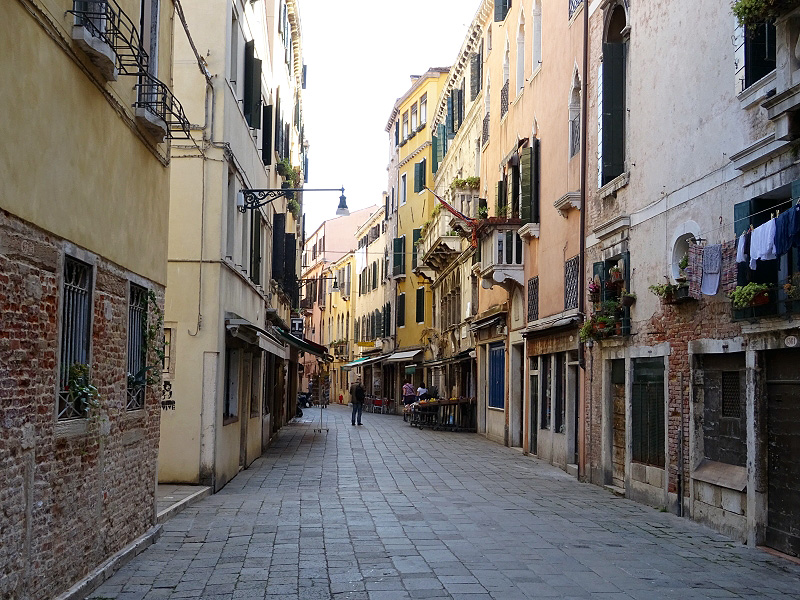
The demonstration lasted approximately fifteen minutes, after which participants were given one hour of free time to explore the area independently. For those unsure how to spend the time, the guide recommended a walk down Via San Cesareo, a narrow pedestrian street often mistaken for an alley but lined with a variety of souvenir shops, specialty stores, and local artisan goods.
Free Time in Sorrento
Location: Via San Cesareo, 80067 Sorrento NA, Italy (Walking route from Piazza Tasso through historic center)
Time Spent: 1 hour
Walking the full length of Via San Cesareo takes roughly 20 minutes without stopping, but for those inclined to browse, it can easily take an hour or more. The street is lined with shops selling handcrafted items, regional products, and quality souvenirs.
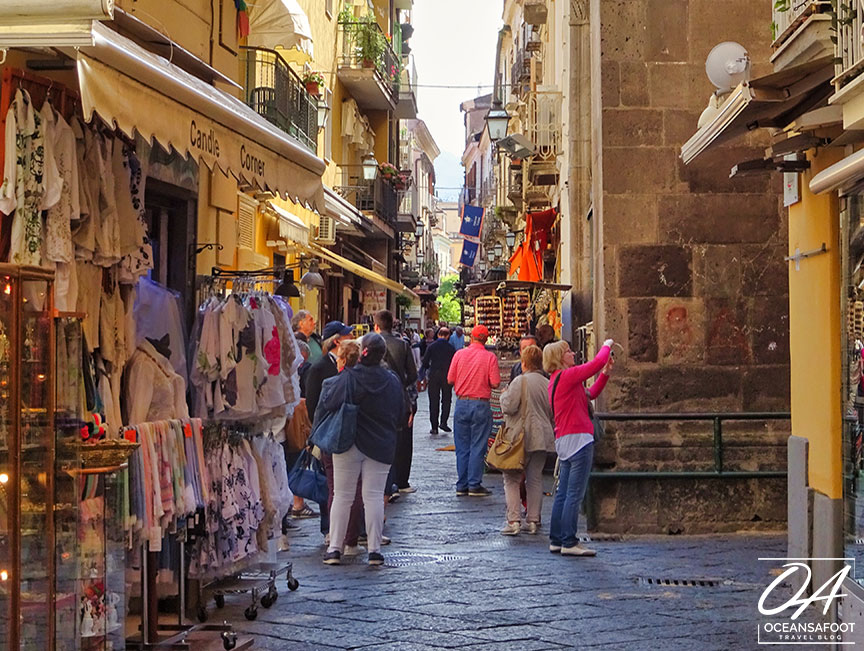
Unlike many tourist-heavy areas, the vendors here are notably non-intrusive, allowing visitors to explore at their own pace without being pressured—a common trait throughout Italy and a welcome contrast to the more assertive sales tactics often encountered in Caribbean markets. At one point, after losing our bearings slightly, we stopped at a pharmacy in Piazza Tasso to ask for directions.
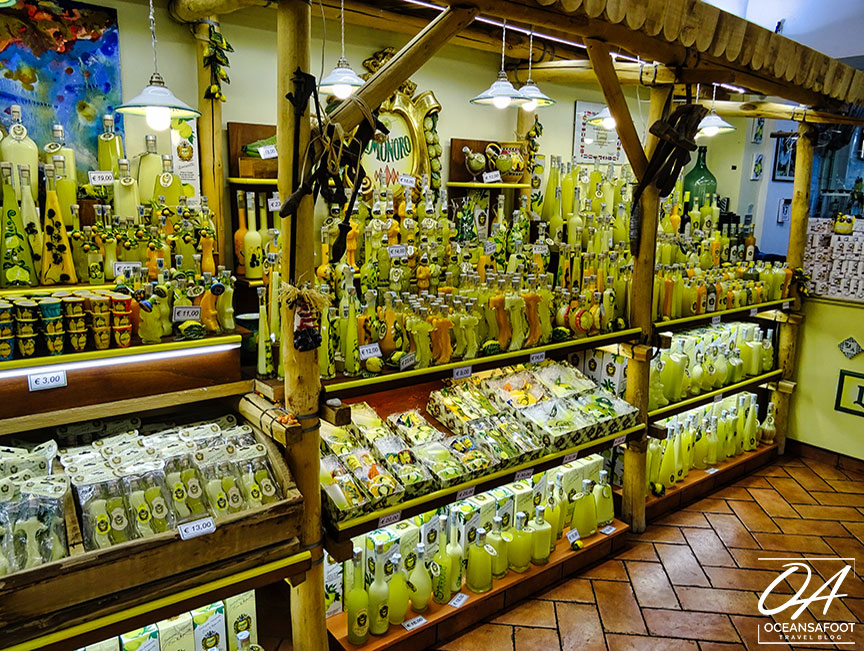
During the walk, we stumbled upon a limoncello production shop where tastings were offered. The owner provided generous samples of all three varieties produced on-site. Although there was no sales push, the quality of the limoncello made it difficult to leave empty-handed.
After reaching the end of Via San Cesareo, we chose to return via Corso Italia, one of Sorrento’s main thoroughfares. While functional, it offered a more conventional city-street experience compared to the charm of the earlier route. In hindsight, retracing the path along Via San Cesareo may have provided a more engaging return.
Amalfi Coast Scenic Drive
Location: Strada Statale 163 Amalfitana, 84017 Positano SA, Italy (Coastal route between Sorrento and Amalfi)
Drive Time: Approximately 1 hour (including scenic photo stops)
After regrouping at A. Gargiulo & Jannuzzi, we boarded the minivan and began the next leg of the tour: a drive along the famed Amalfi Coast Road, known for its tight switchbacks, dramatic elevation changes, and uninterrupted views of the sea. The narrow road twisted through cliffs and villages, with vehicles passing each other so closely that it was hard to believe there weren’t constant collisions. The drive itself felt like part of the adventure.
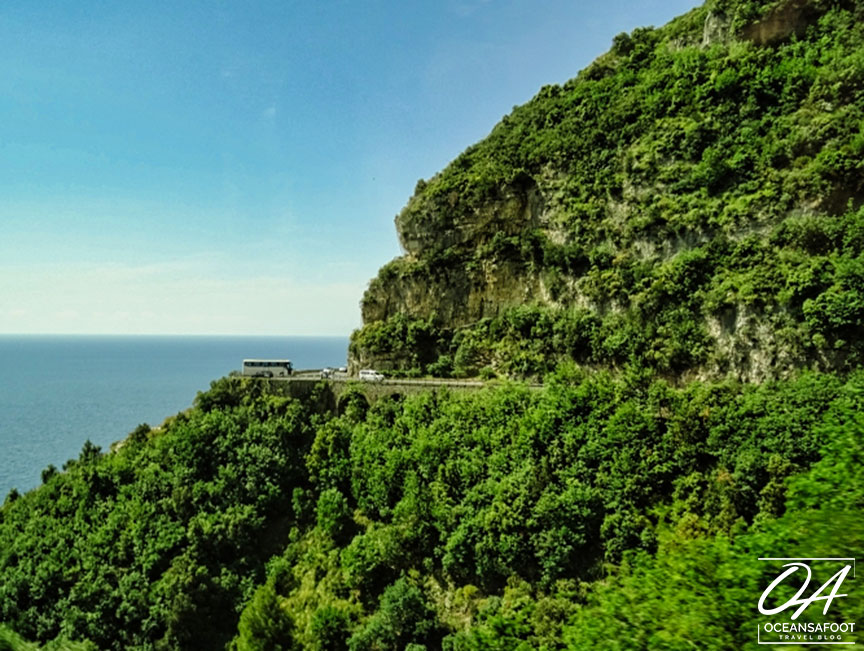
This one-hour segment included several brief photo stops, allowing passengers to step out and take in panoramic views before continuing the descent toward the next destination.
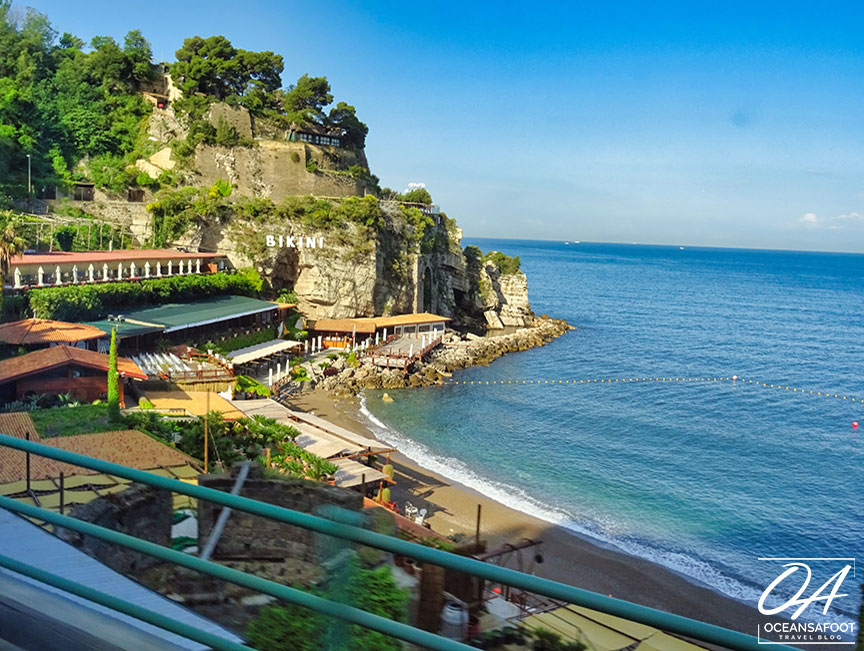
Stop 2: Village Walk and Exploration in Positano
Location: Positano Historic Center, Via dei Mulini, 84017 Positano SA, Italy (Pedestrian zone accessed from Via Cristoforo Colombo)
Time Spent: Approximately 50 minutes (free time)
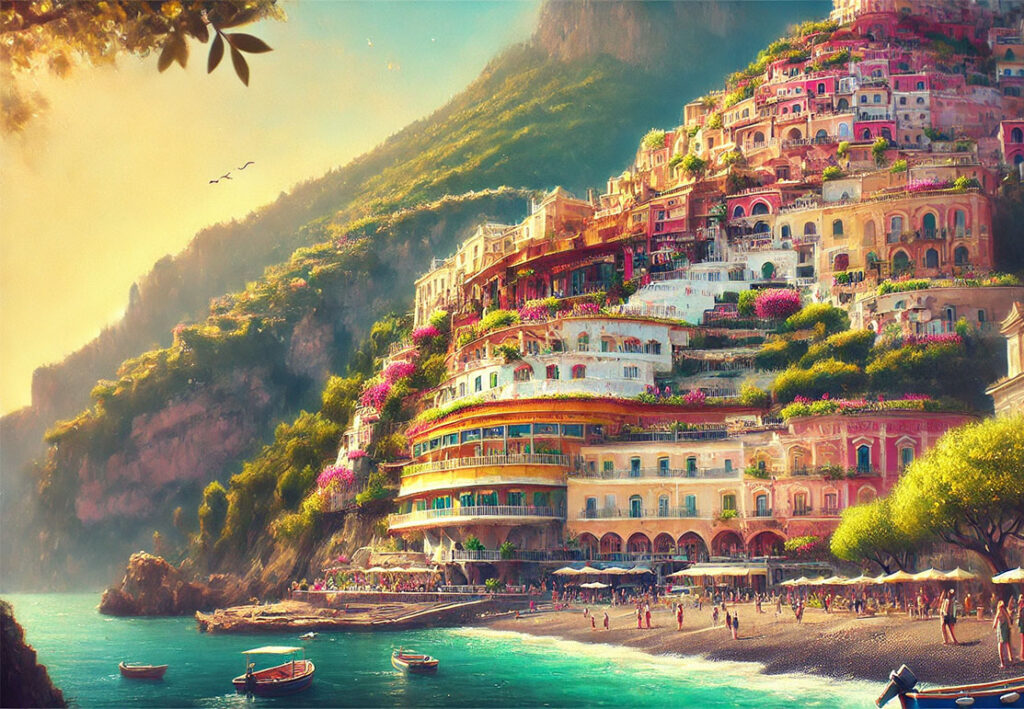
The journey led to Positano, a coastal village tucked into the cliffs and known for its vertical layout and pastel-colored buildings cascading down to the sea. Due to traffic regulations and the narrow nature of the village roads, the minivan had to stop at a designated point above town where vehicular access ends.
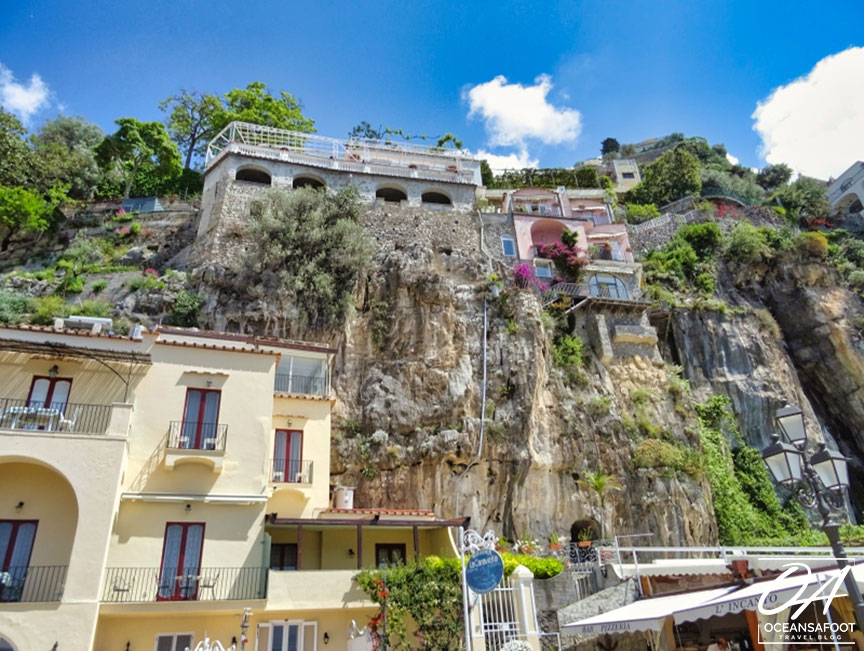
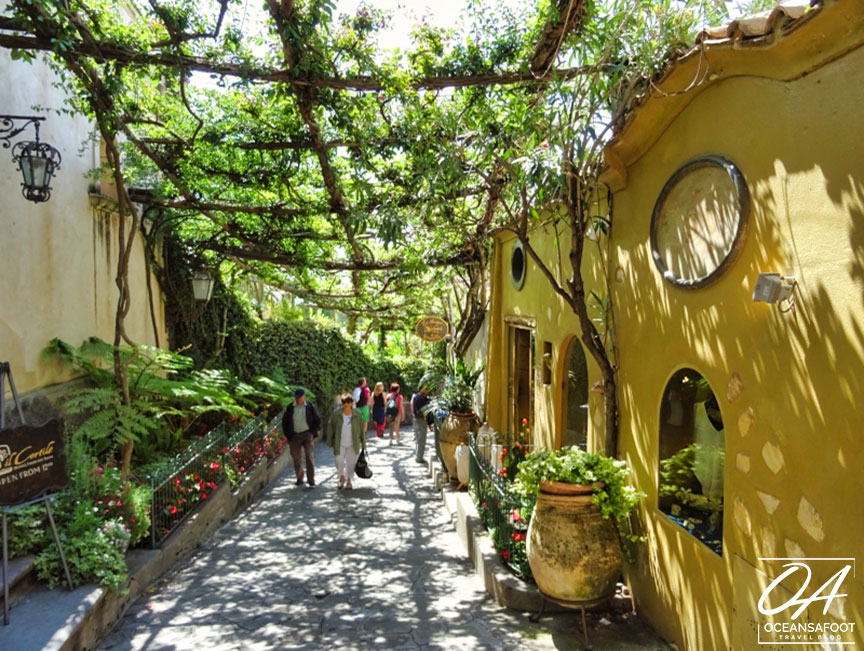
From there, the group proceeded on foot down a sloped, paved road that led into the village’s pedestrian-only center. The historic zone is composed of narrow alleyways and staircases that descend toward the coastline, flanked by local boutiques, artisan shops, and small art galleries. These routes reflect the village’s traditional Mediterranean design, adapted to the rugged topography of the area.
As the sloped path leveled out near the shoreline, we passed Santa Maria Assunta, Positano’s most iconic church. Its tiled majolica dome is visible from nearly every vantage point in town, but stepping inside revealed a quieter grandeur—white marble arches, gilded altars, and floral arrangements framing the revered Black Madonna. Just beyond the doorway, a modern bronze relief echoed the town’s coastal geography in symbolic form, connecting tradition with artistic expression.
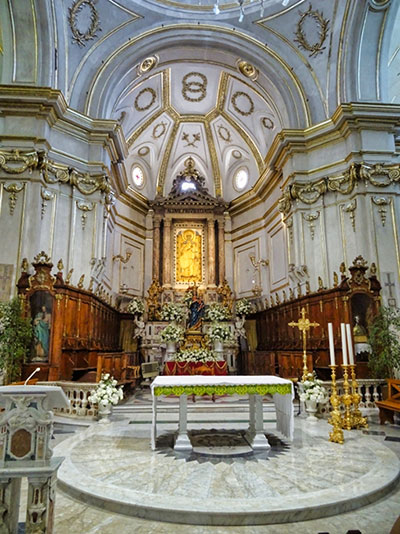
The Black Madonna stands framed by Positano’s baroque altar beneath a soaring marble vault.
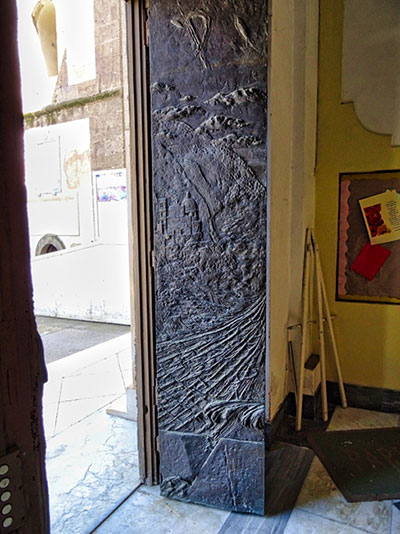
A bronze relief at the church entrance echoes Positano’s cliffs in textured form.
Reaching the lower levels, visitors encountered the marina and beach, where Positano’s characteristic black volcanic sand meets the Tyrrhenian Sea. From the shore, the tiered village rises dramatically above, presenting one of the most recognizable views along the Amalfi Coast.
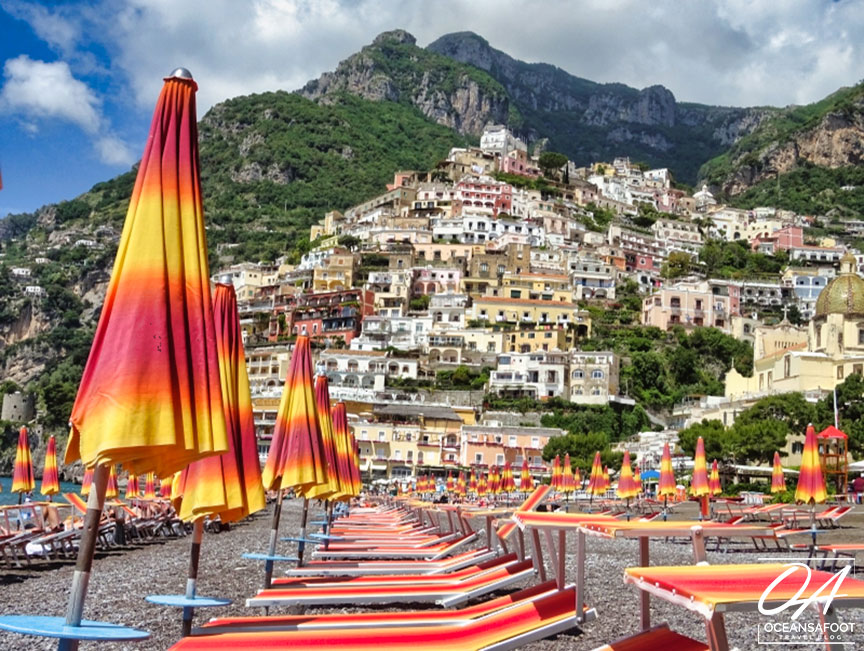
Dining Experience: Hotel Covo dei Saraceni
Location: Hotel Covo dei Saraceni, Via Regina Giovanna 5, 84017 Positano SA, Italy (Marina beachfront)
Time Spent: Approximately 1 hour
After the independent exploration of Positano, the group gathered at Hotel Covo dei Saraceni, a historic seaside hotel situated directly on the village’s marina. The restaurant’s terrace provided panoramic views of the Tyrrhenian Sea and the cliffside buildings above, offering a scenic setting for lunch.
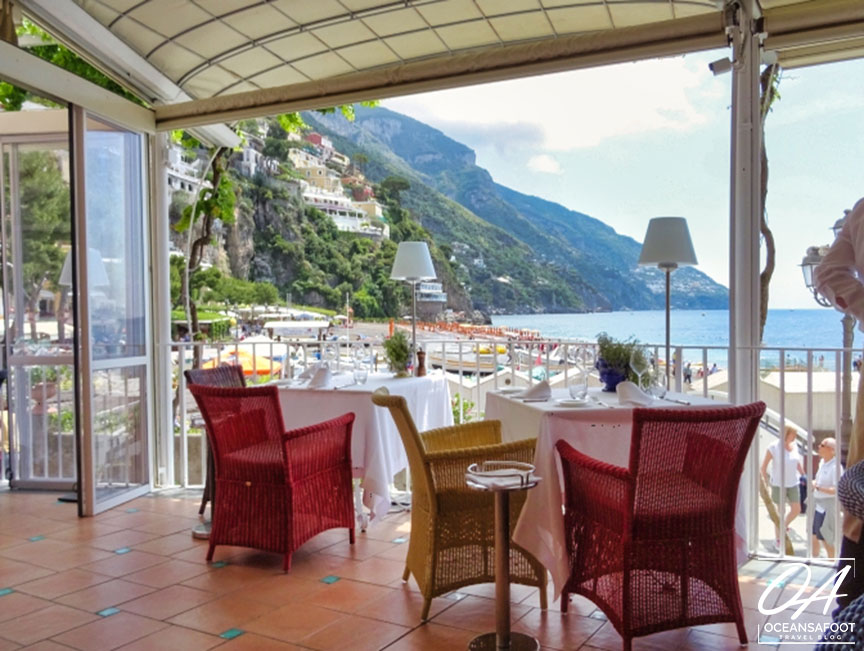
The meal followed a traditional multi-course format. It began with a fresh salad, followed by a pasta dish, and a main course with a choice between fish or chicken. For dessert, guests were served Babà, a sponge cake soaked in rum, accompanied by a limoncello cream sauce—both reflecting local Campanian culinary traditions. Beverages included wine, sparkling wine, and coffee.
Once the meal concluded, the group retraced their steps uphill to the designated minivan pick-up point. The transfer to Pompeii then commenced, lasting approximately 50 minutes. Most participants used this interval to rest in preparation for the final and most historically intensive portion of the excursion.
Stop 4: Guided Tour of Pompeii Archaeological Park
Location: Pompeii Archaeological Park, Via Villa dei Misteri 2, 80045 Pompei NA, Italy (Entrance: Porta Marina gate)
Time Spent: Approximately 1.5 hours
The guided tour resumed at Pompeii Archaeological Park, a vast and exceptionally preserved Roman cityscape covering more than 150 acres. Entry was through the Porta Marina gate, located on the western edge of the site near the modern Circumvesuviana train station. In antiquity, this entrance linked the city to its harbor and remains one of the primary access points for visitors today.
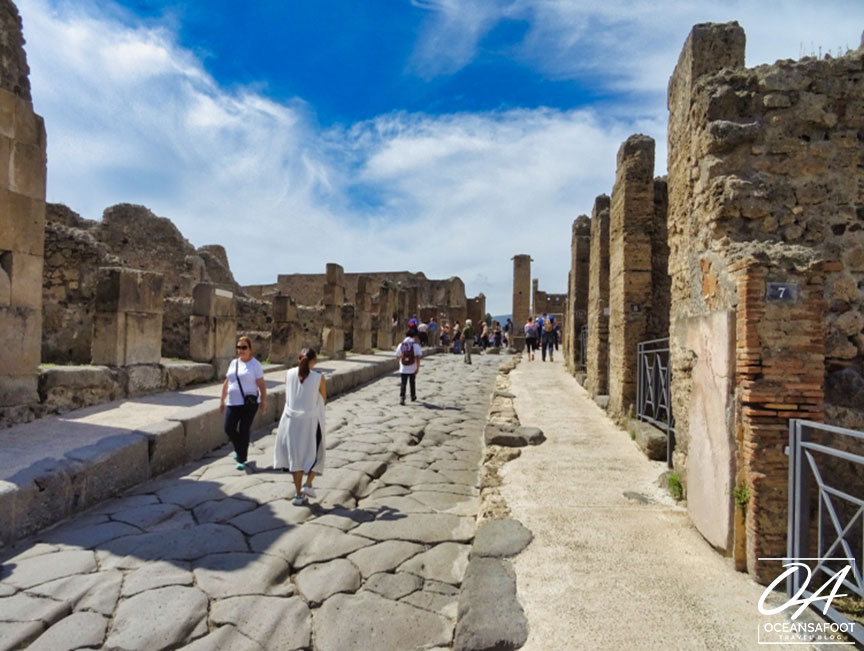
The walking route concentrated on Regio VII, one of the site’s nine administrative zones. This district includes a dense mix of civic, commercial, and residential structures—offering a representative glimpse into Pompeii’s urban layout. The tour highlighted several key features within the region, including a gladiator training barracks, a covered theater, a public bath complex, and a brothel, each reflecting distinct aspects of daily life in the ancient city.
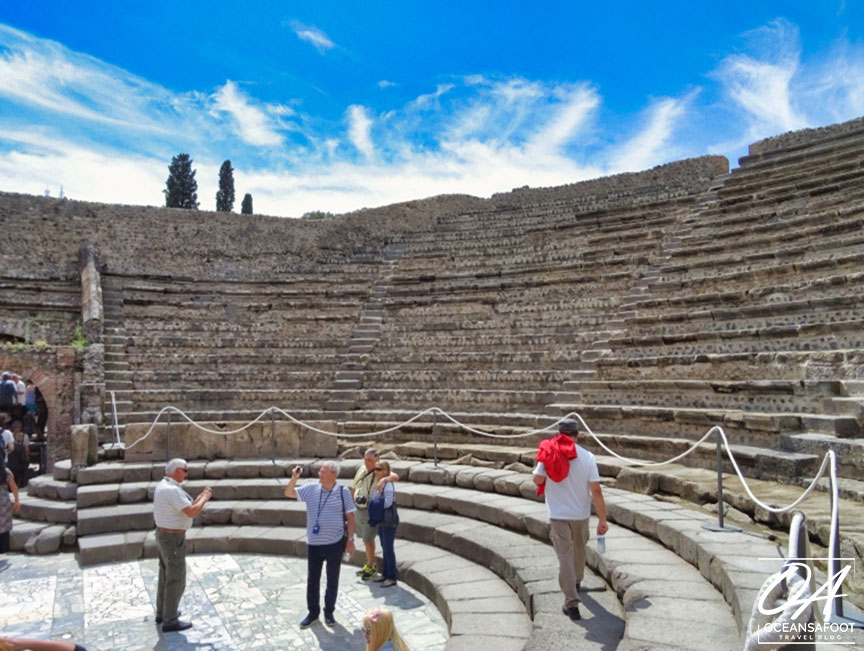
The Odeon, or Small Theater, was constructed around 80 BCE as a covered venue for refined performances such as poetry, music, and rhetorical presentations. In contrast to Pompeii’s larger open-air amphitheater used for mass spectacles, the Odeon accommodated smaller audiences in a more intimate setting. The semicircular design features tiered stone seating and a central orchestra area, both of which remain well preserved, illustrating the architectural emphasis on acoustics and audience engagement.
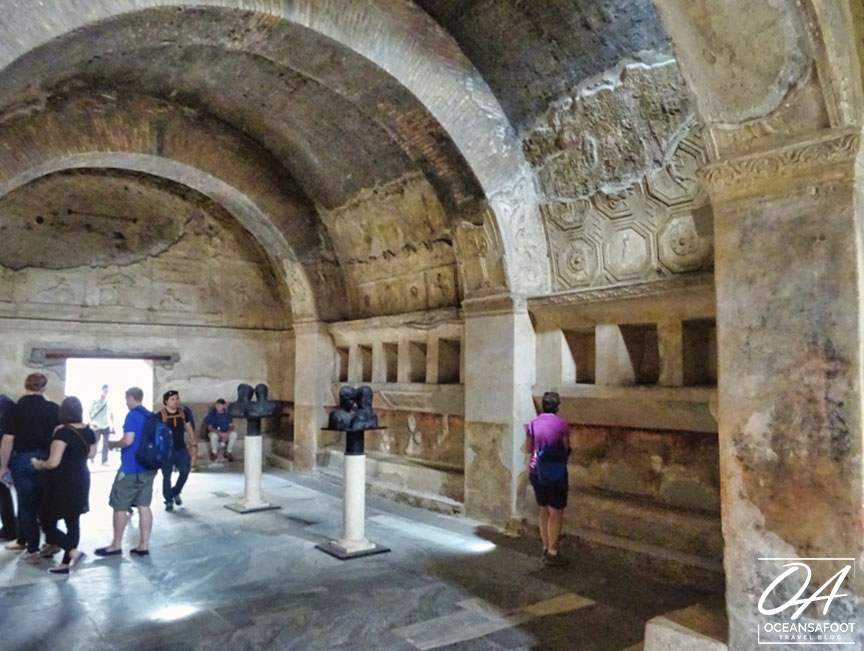
The Stabian Baths, located near the intersection of several key streets in Regio VII, represent one of the oldest and most complete bathing complexes in Pompeii. The facility includes a sequence of functional spaces typical of Roman bathhouses: the apodyterium (changing room), tepidarium (warm room), caldarium (hot room), and frigidarium (cold plunge).
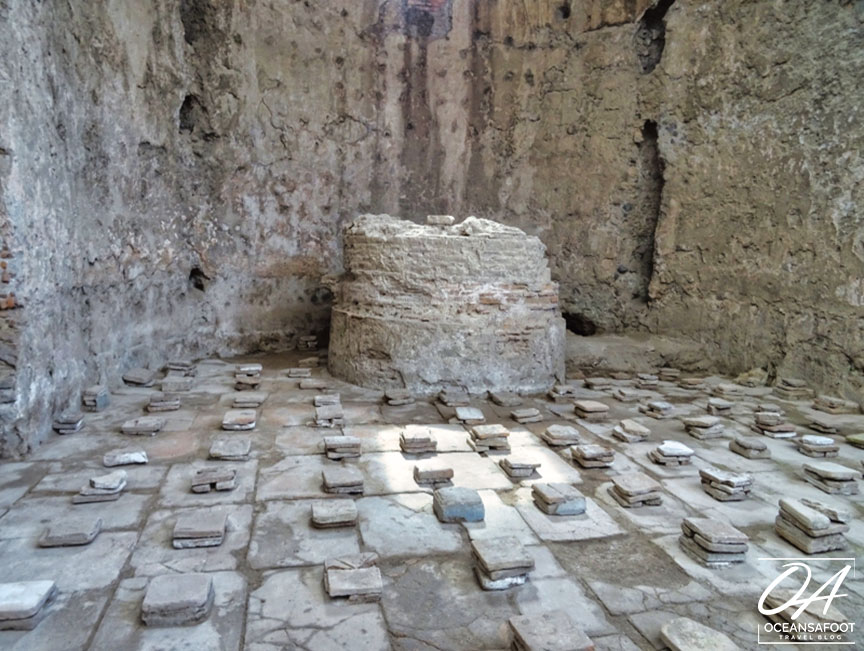
The remains of the hypocaust system—used to circulate heated air beneath the floors—are still visible, along with vaulted ceilings and decorative frescoes that indicate the social and architectural sophistication of public bathing in Roman culture.
The Lupanar, Pompeii’s best-preserved brothel, contains a series of compact rooms arranged along a central corridor. Each room includes a built-in stone bed, and many doorways are topped with erotic frescoes likely intended to advertise available services. The layout and condition of the site provide valuable archaeological insight into the structure and operation of Roman brothels, a subject rarely documented in such direct physical form.
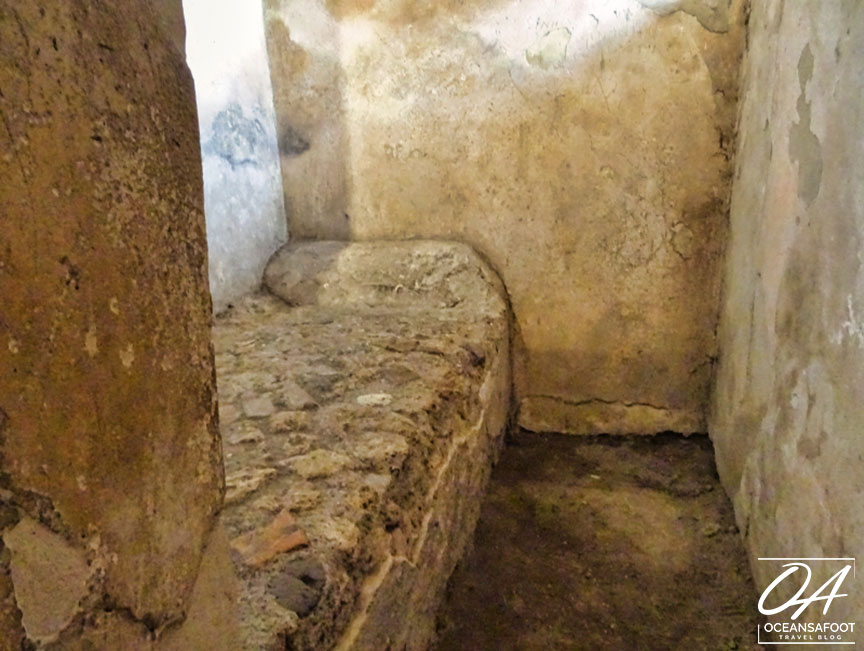
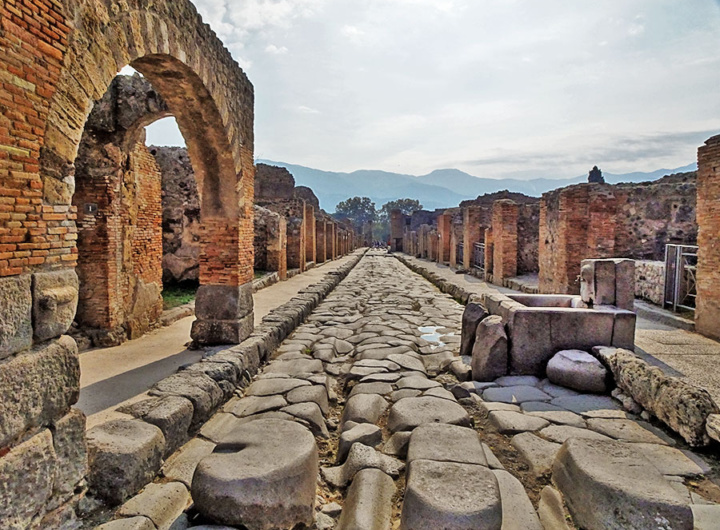
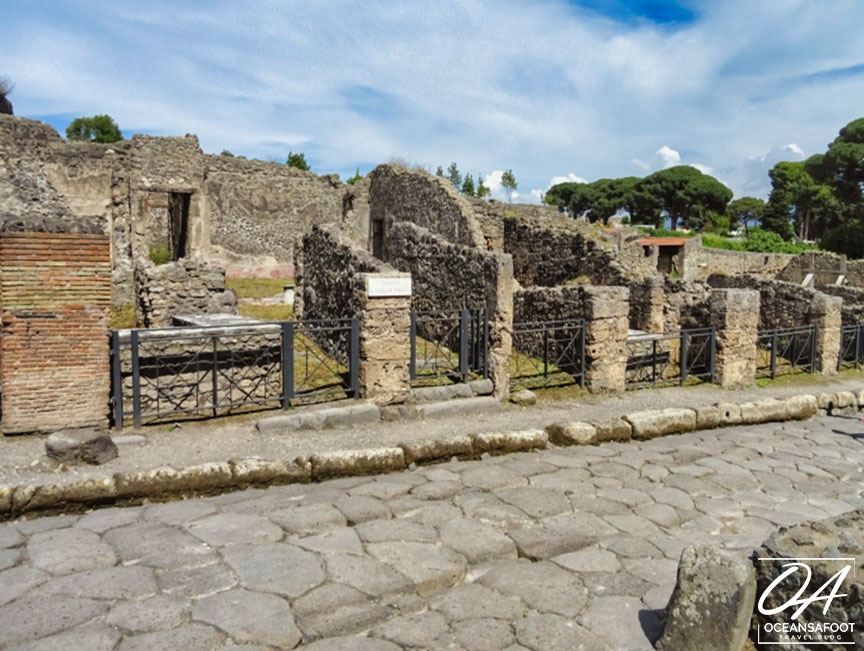
The walking route continued through several ancient streets, where remnants of commercial life were still visible. Among these were the remains of a thermopolium (a Roman wine and food shop) and a bakery equipped with stone mills and an oven—sites that illustrate the economic activity of Pompeii’s urban neighborhoods. The tour concluded in the Forum, the city’s primary civic and administrative center.
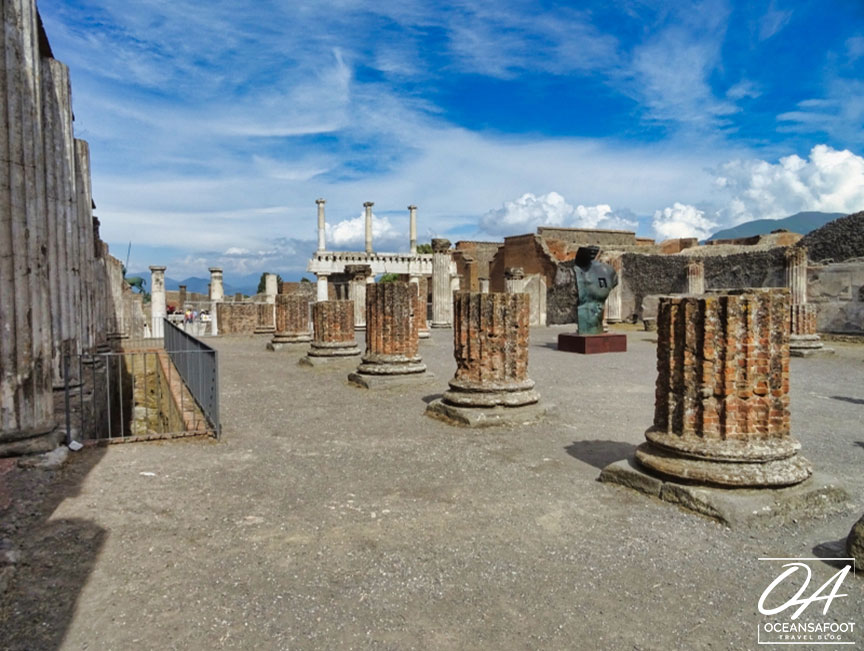
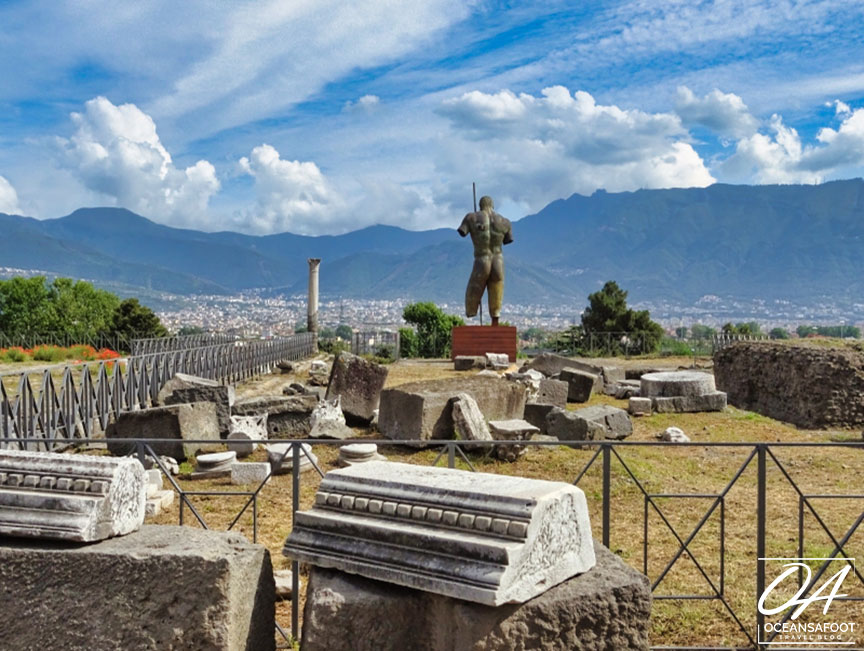
This expansive open plaza was once surrounded by temples, markets, and public buildings, forming the core of political, religious, and commercial life in Pompeii. Though much of the architecture now stands in partial ruin, the arrangement of columns and foundations remains intact, offering a clear view of the Forum’s original layout. From this vantage point, Mount Vesuvius rises in the distance, framing the archaeological site and underscoring the volcanic event that led to its preservation.
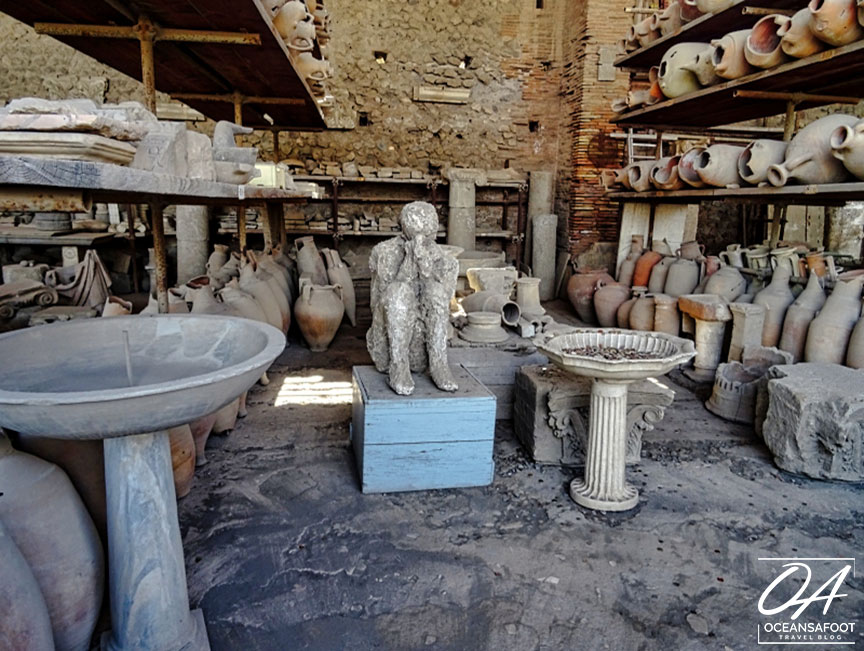
Adjacent to the Forum, the group passed through the Forum granary (Granai del Foro), a roofed storage area now used to house a variety of recovered artifacts. Rows of amphorae, marble fragments, statues, and plaster casts of eruption victims are displayed here in open view, offering a tangible record of the scale and diversity of materials uncovered during excavations. This depot functions both as a holding area and as a visual testament to the ongoing preservation work conducted at the site.
The extent of architectural preservation at Pompeii is remarkable. Even within the limited scope of a standard visit, the site reveals a comprehensive view of Roman urban planning, infrastructure, and daily life. Streets, homes, public buildings, and commercial establishments remain in a condition that allows for detailed study and interpretation. Although the tour covered only a portion of the city, it offered a compelling overview of how life functioned in a provincial Roman settlement abruptly frozen by the eruption of Mount Vesuvius in 79 AD.
Following the conclusion of the guided visit, the group returned to the ship, marking the end of a full-day excursion that spanned the scenic coastline of Campania and the archaeological richness of Pompeii.
Who Is This Tour Best For?
- First-time visitors
- History lovers
- Independent explorers
- Photography enthusiasts
- Cultural immersion travelers
Tour Summary
- Tour Name: Exclusive Amalfi Coast, Positano, Sorrento and Pompeii
- Offered By: Royal Caribbean
- Total Duration: 9.5 hours
- Main Stops: A. Gargiulo & Jannuzzi, Sorrento, Positano, Hotel Covo dei Saraceni, Pompeii Archaeological Park
- Drive-By Highlights: Mount Vesuvius, Isle of Capri, Meta, Amalfi Coast Road

Activity Summary: Approx. 16,842 steps walked during the excursion.
Excursion Disclaimer: Descriptions of shore excursions on OceansAfoot reflect individual travel experiences and are not official representations of the cruise lines or tour providers mentioned. All information is based on personal participation, publicly available facts, or traveler observation.
© OceansAfoot