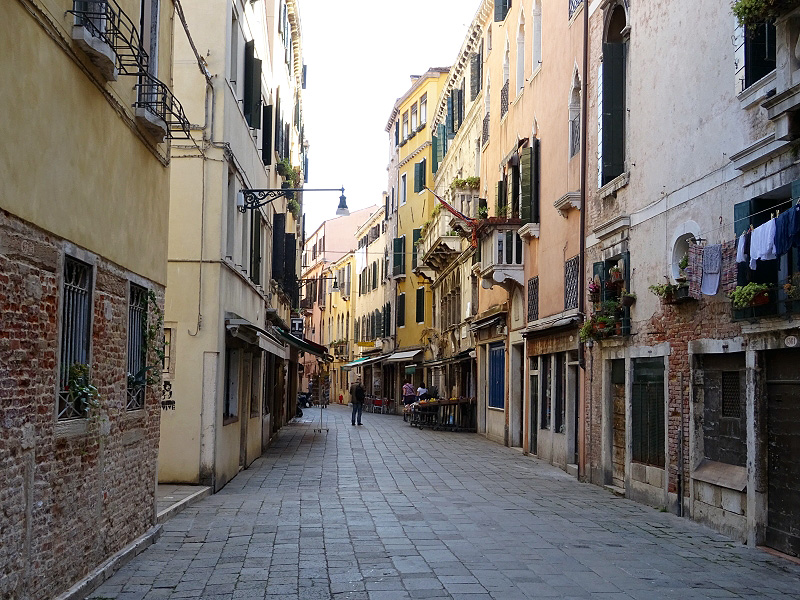
The Castle Road (circa 1266 A.D.) was our exit point from the pier of Naples. As we headed towards the Pompeii archaeological site, Mount Vesuvius loomed over us with its imposing presence. It is considered the most dangerous volcano in the world because of the large expanse of population living beneath it.
Naples, Italy
30 minute drive
At the time of eruption, October 24, 79 A.D., the population of Pompeii was about 10,000. Today 3 Million people live in the foothills of Mount Vesuvius.
Donadio Corals and Cameos, Portici, Italy
30 minute inside visit
Our first stop was the Palazzo del Corallo, a coral cameos showroom, at the Herculean exit. Here we watched a short video presentation about Cameo crafting, saw a craftsman at work, and perused the attached showroom and store.
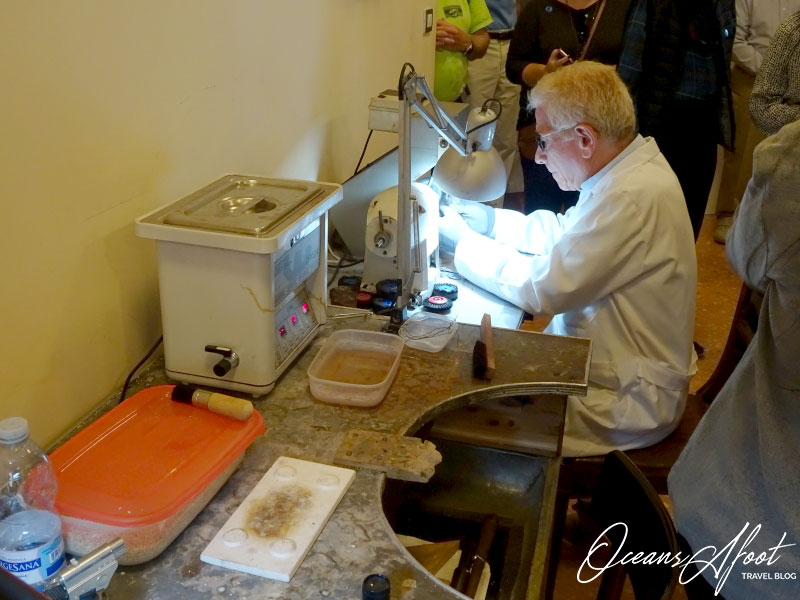
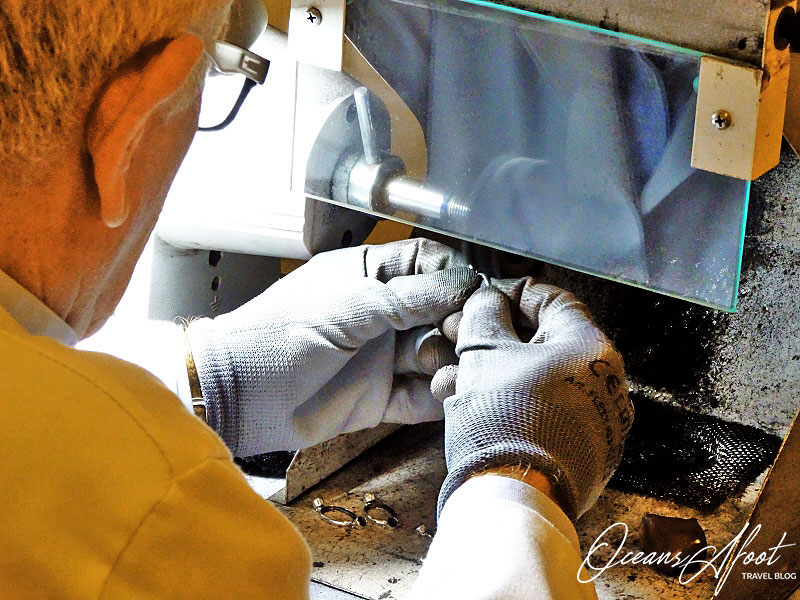
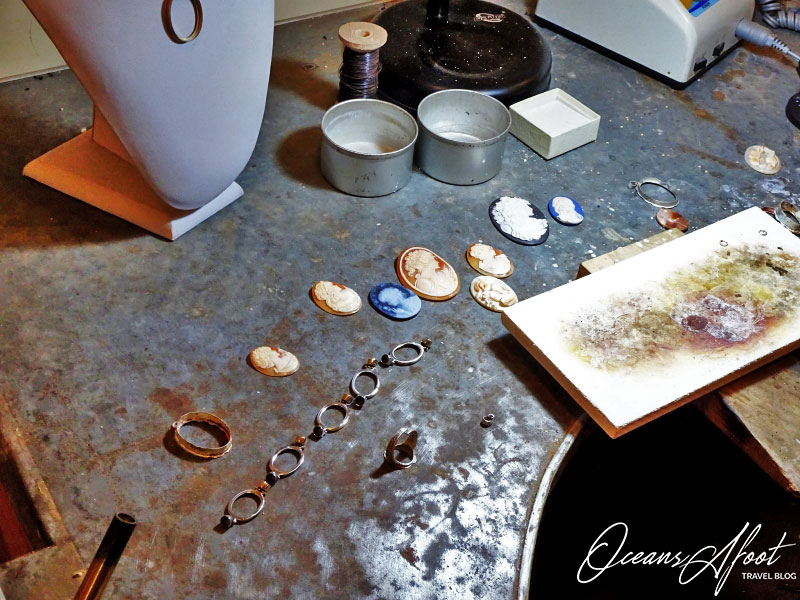
Now back to the road to the Pompeii Archaeological Site, Mount Vesuvius comes in and out of view from the left side bus.
30 minute drive
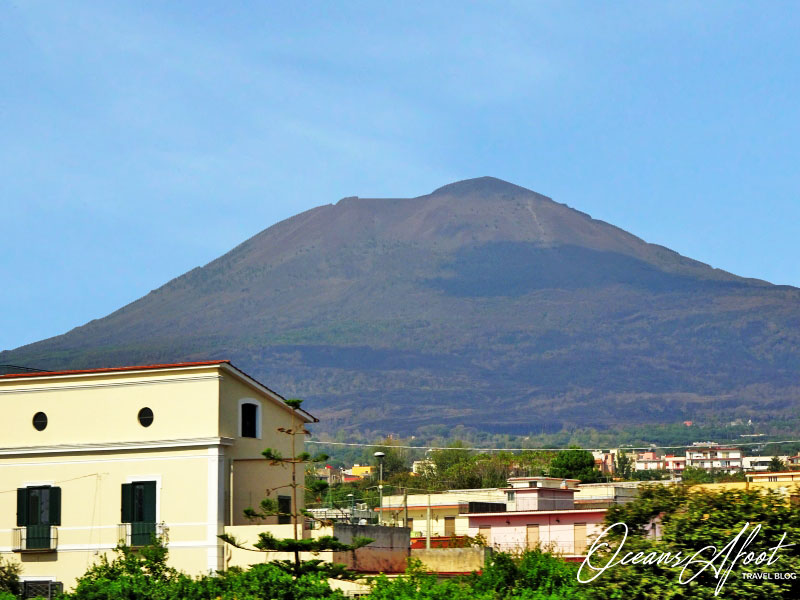
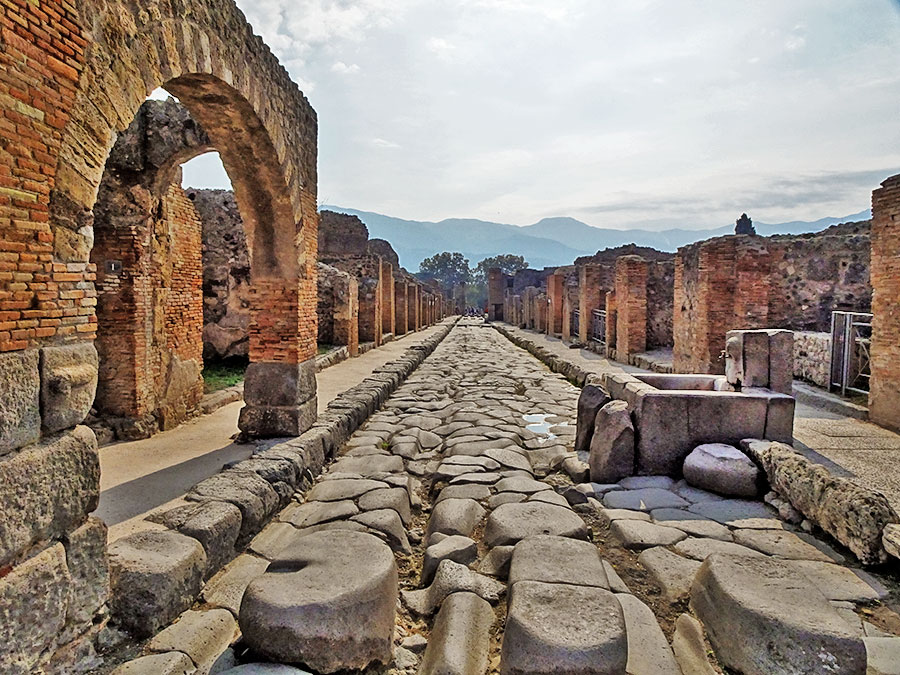
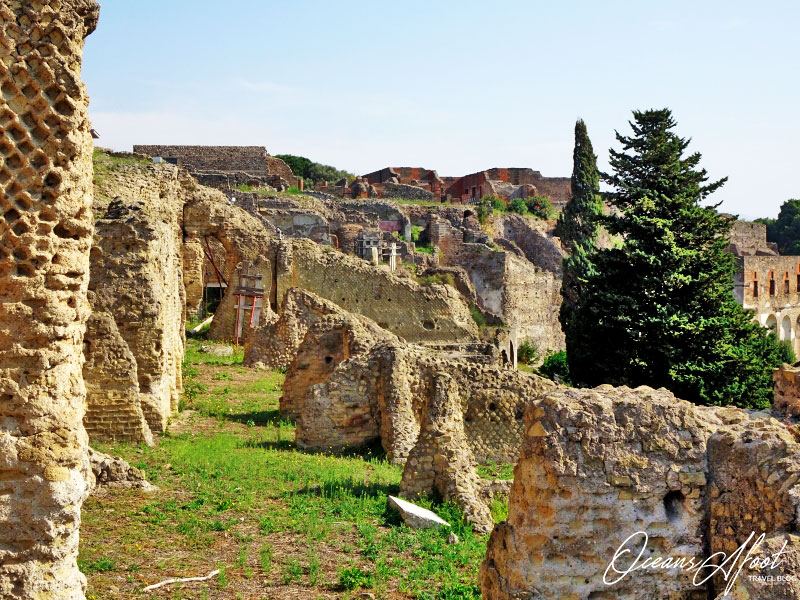
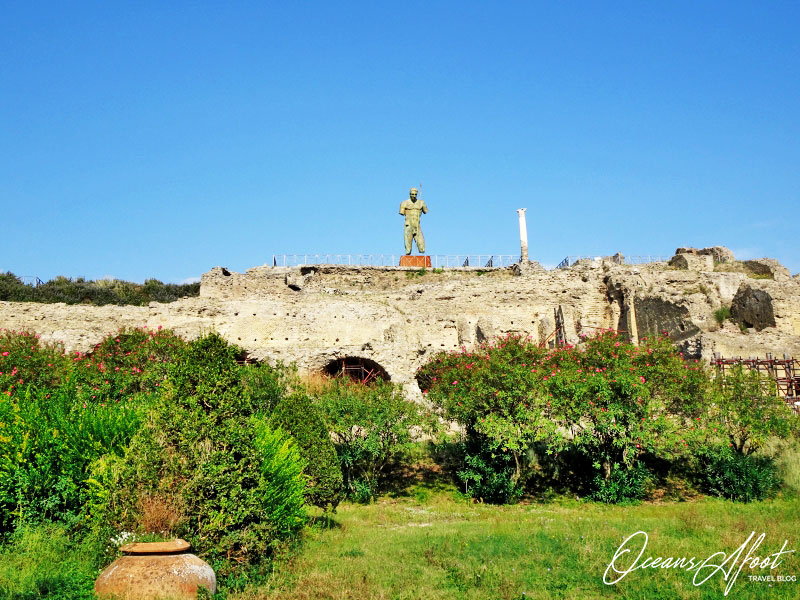
Arriving at the Pompeii archaeological site it becomes hard to comprehend that this area was once totally consumed by lava and ash. Largely excavated now, there are still many area’s of planned archaeological development. Access to the buildings for tourist purposes is vast, however many of the yet to be excavated areas remain unopen to the public.
This being our second visit to the Pompeii archaeological site – see Exclusive Amalfi Coast – Positano – Sorrento – Pompeii – we are hopeful to see a few new areas.
Pompeii Archaeological Site, Pompeii, Italy
2 hour outside visit
Established in 600 B.C. and destroyed some 679 years later in 79 A.D. it is estimated that ash from Mount Vesuvius fell at the rate of six inches per hour. In total, somewhere around 13 to 20 feet of ash would eventually cover this quarter mile area known as Pompeii.
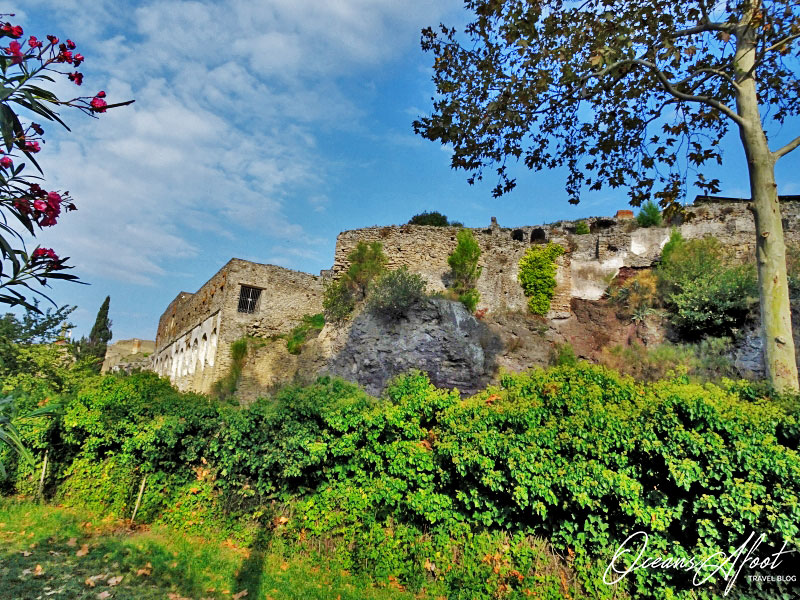
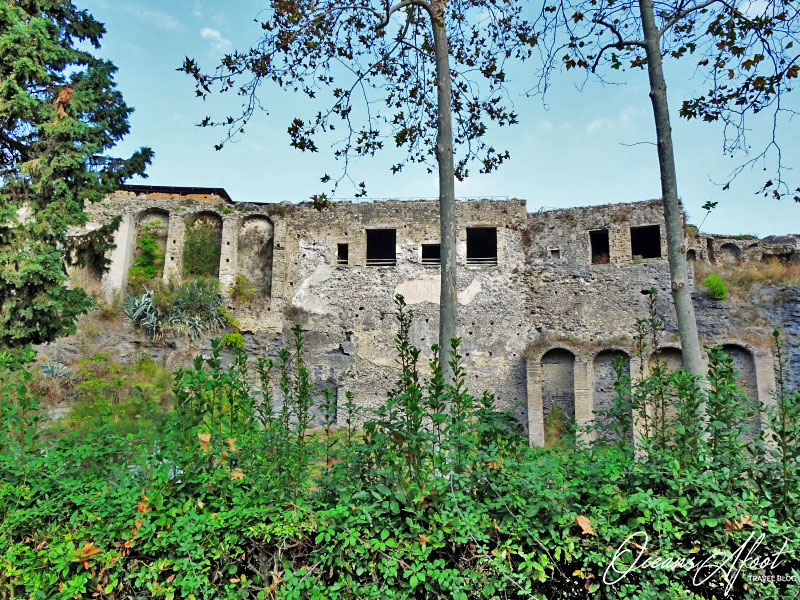
We entered Pompeii at Piazza Esedra gates taking a long walk down Viale Delle Ginestre.
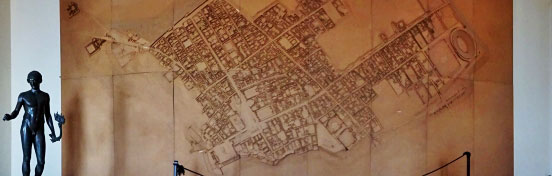
On the map of Pompeii excavations, our tour is limited to Regions VII and VIII. Unlike our previous visit however we have more latitude to wander up and down inter-connected streets, and in and along other structures. In addition, today’s crowd is much lighter than before.
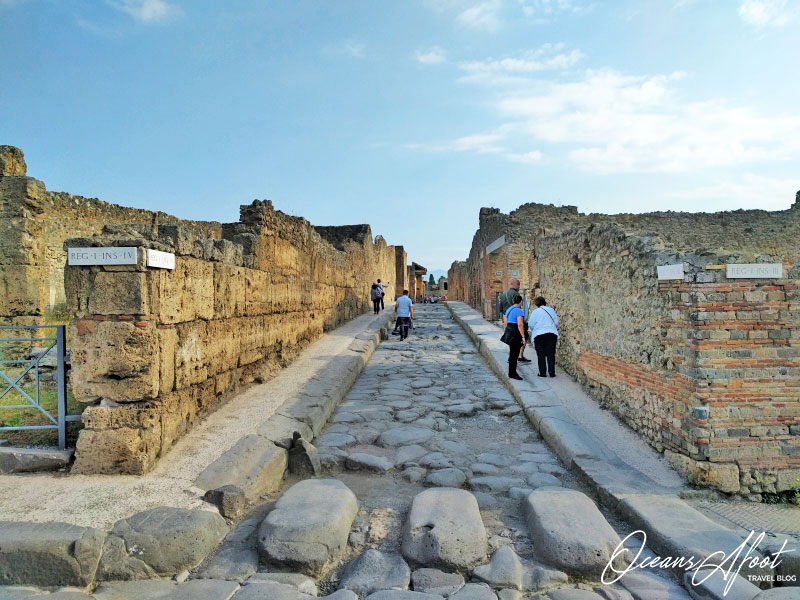
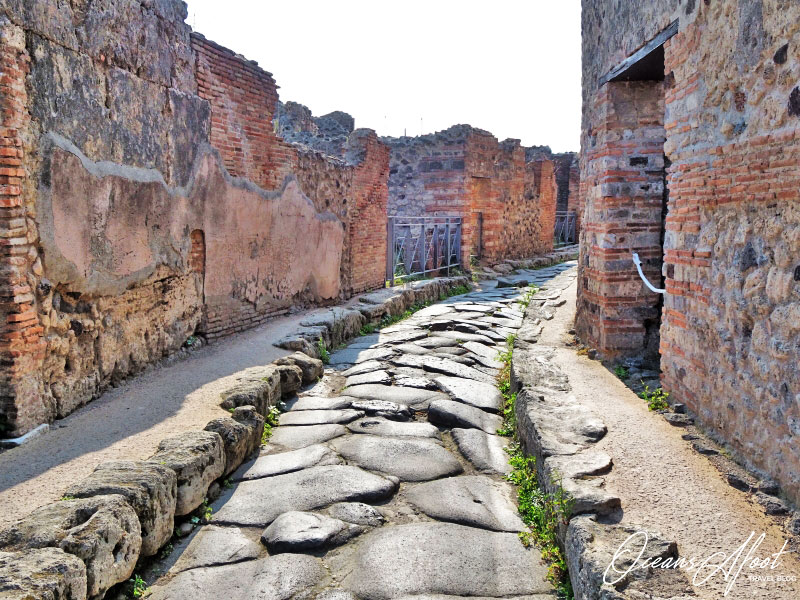
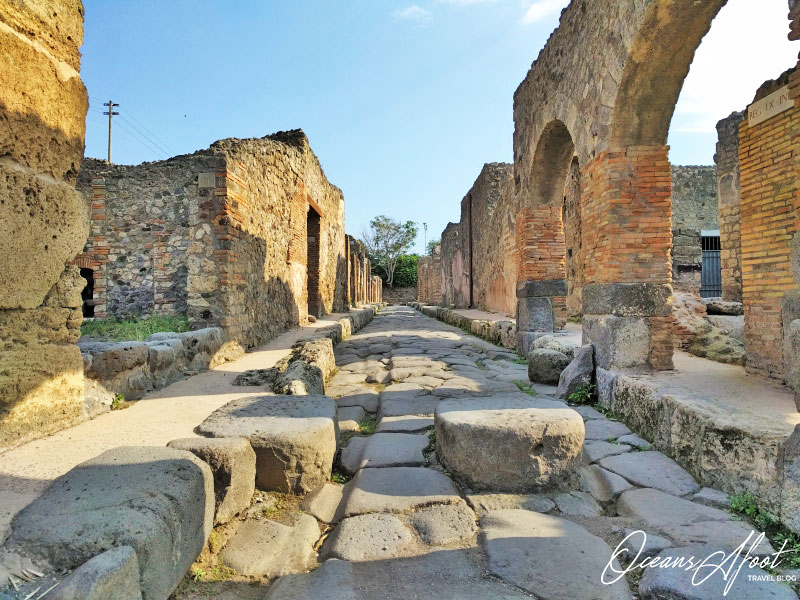
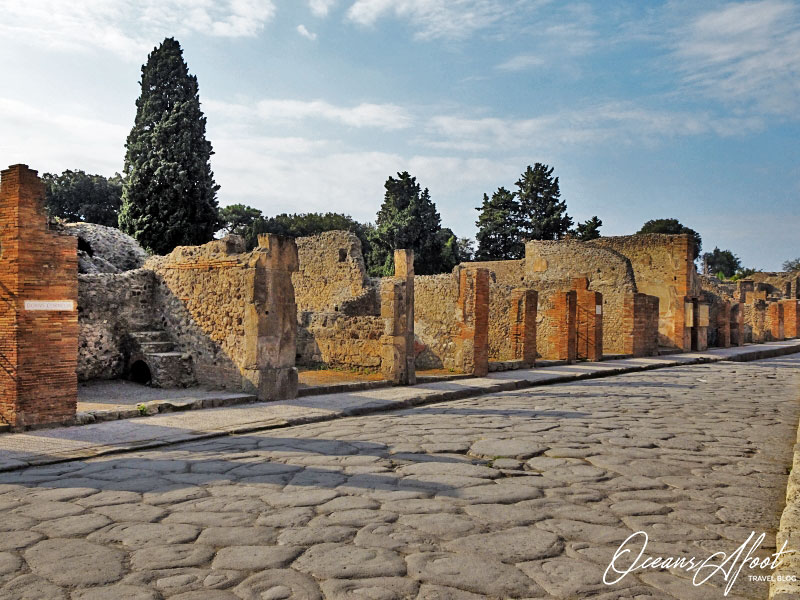
Once inside the ruins, Quadriporticus of the Theatres or Gladiators Barracks (Region VIII # 11) was our first glimpse of life in the ancient city of Pompeii. Originally a foyer used during theater production intermissions, the building changed purpose in 62 A.D. becoming a barracks for gladiators.
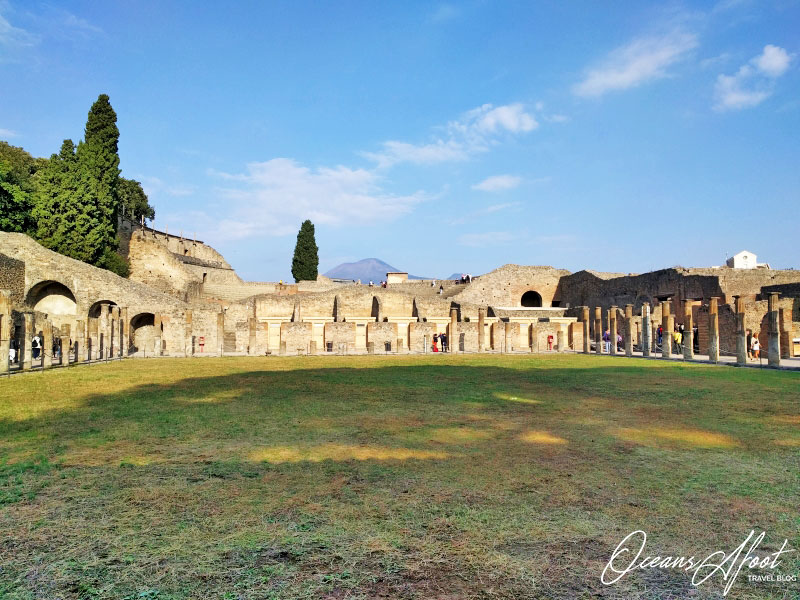
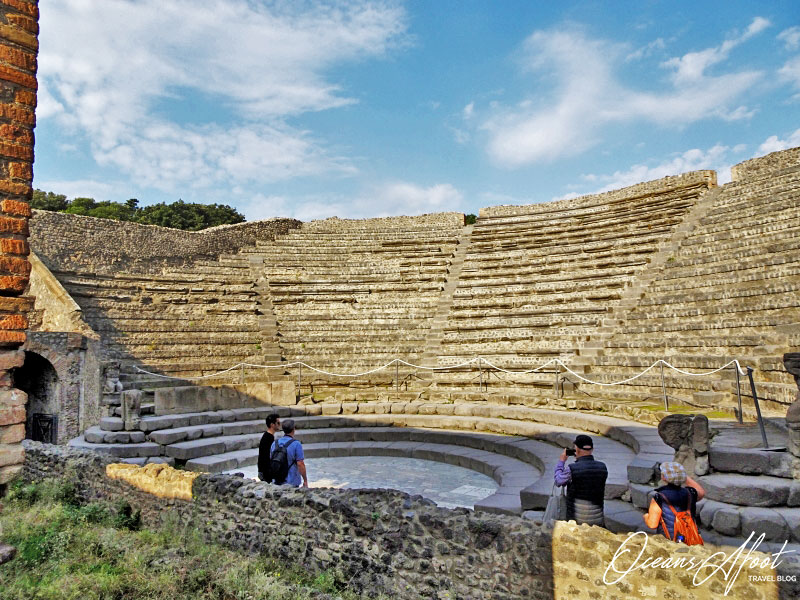
Attached to the Gladiator training area is a larger theatre (Region VIII # 10) where performances of comedies and tragedies of Greek-Roman tradition took place. Our tour bypassed this area, and instead visited the Small Theatre or Odeon at (Region VIII # 12). This Theatre was used for miming and musical performances, some of the most popular theatrical genres of the time.
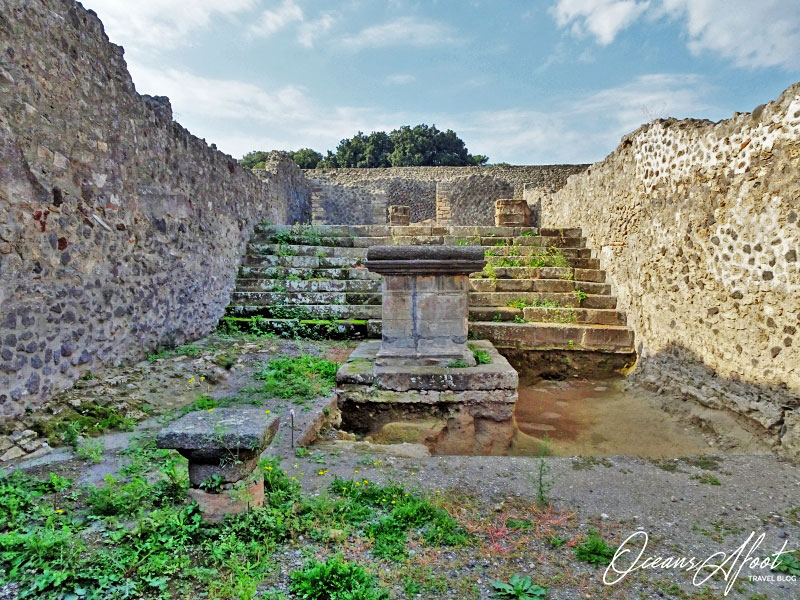
Continuing on Via Stabiana, our next visit is to the Temple of Aesculapius or Jupiter Meilichios (Region VIII # 13). The smallest of the religious buildings of Pompeii, it was built between the 3rd and the 2nd century BC.
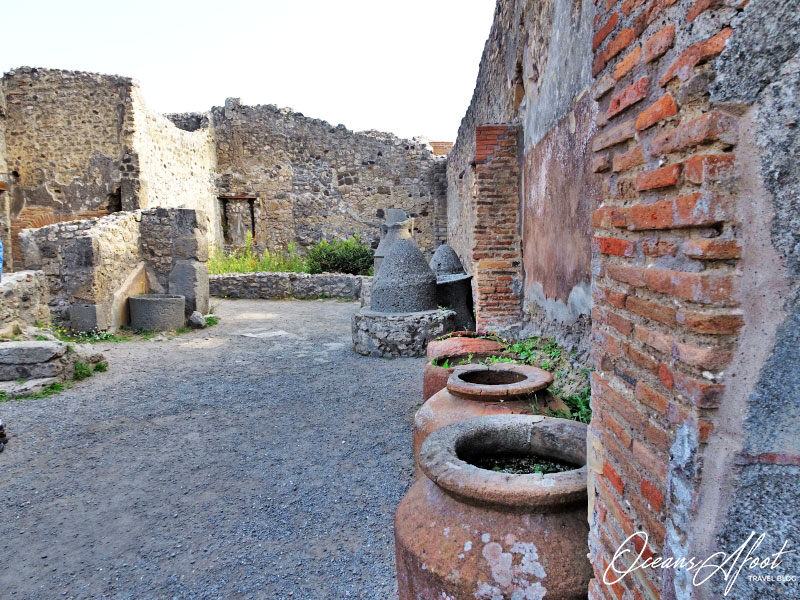
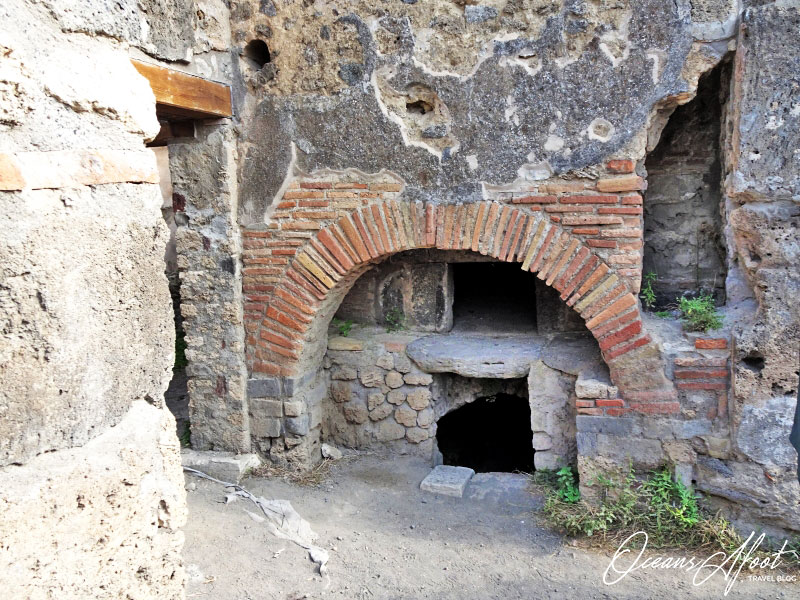
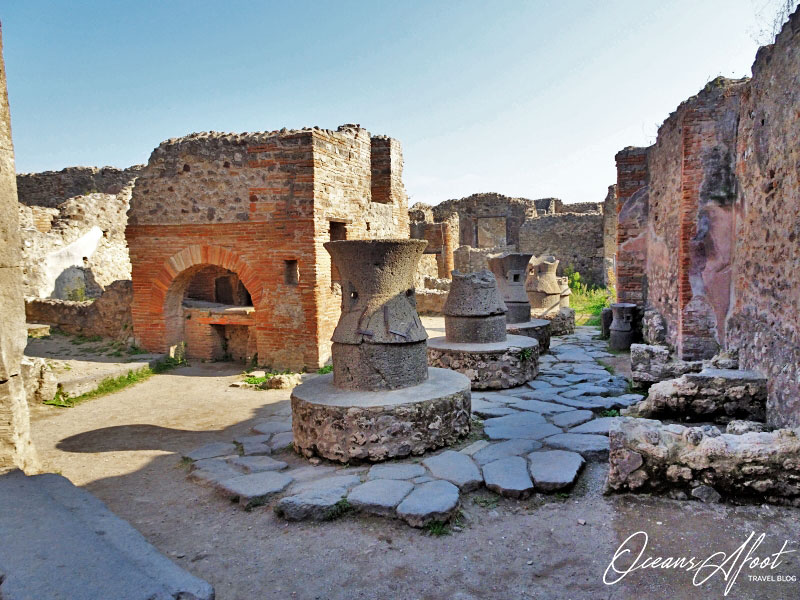
Now we have stumbled upon one of many bakeries in the Ancient City of Pompeii. I was not able to determine location of this establishment, but it was a great example of a functional building. There are ovens visible here used in the baking of bread as wells as lava millstones for grinding grain into flour and water basins to wash the grain.
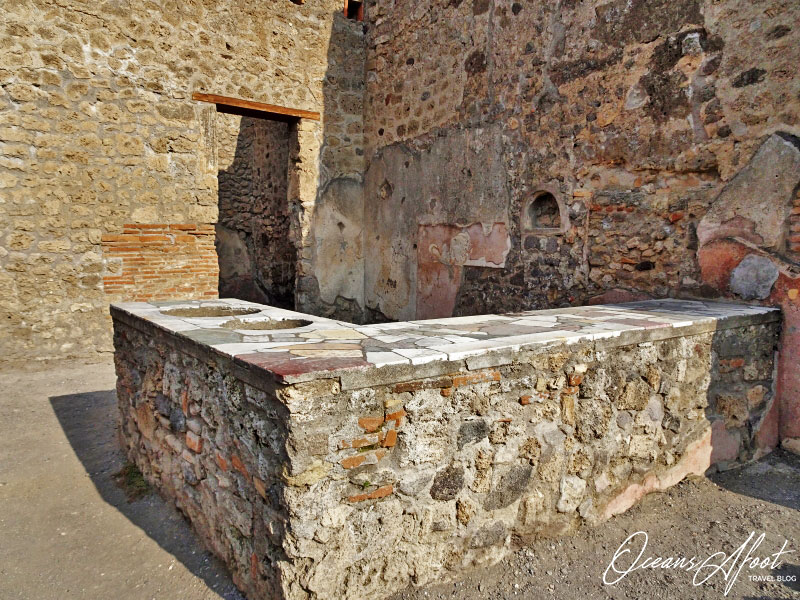
Next up is the House of Sirico (Region VII # 17). This large house belonged to Publius Vedius Siricus, who was part of the political and commercial class of Pompeii. The house has been the subject of impressive reconstruction and restoration work completed as recently as 2016 to return the home to all its grandeur.
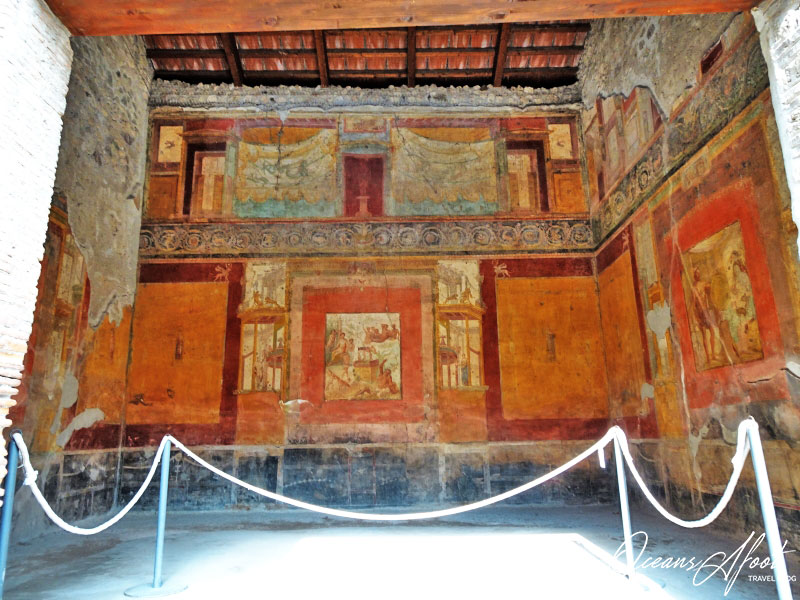
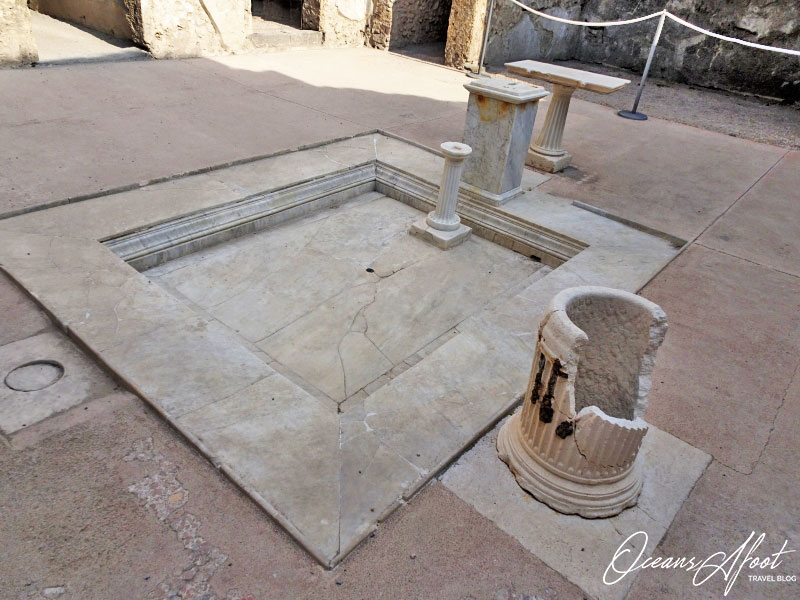
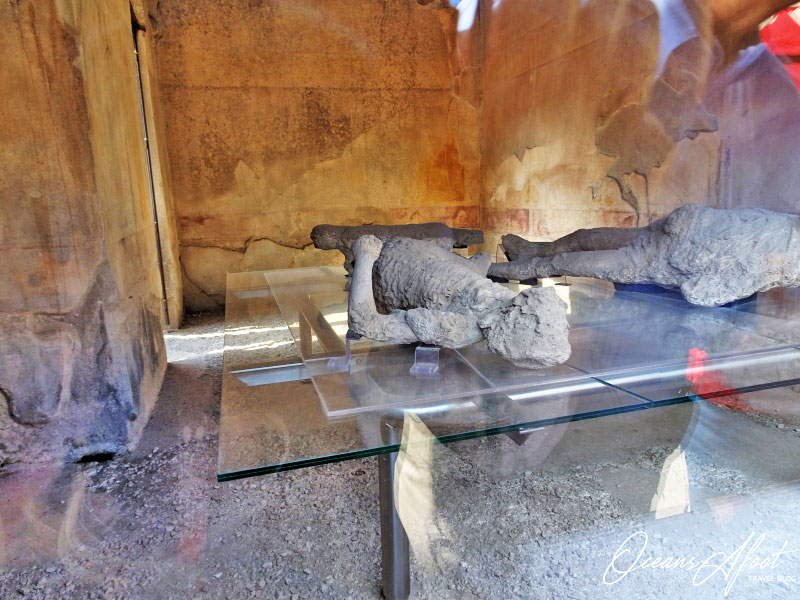
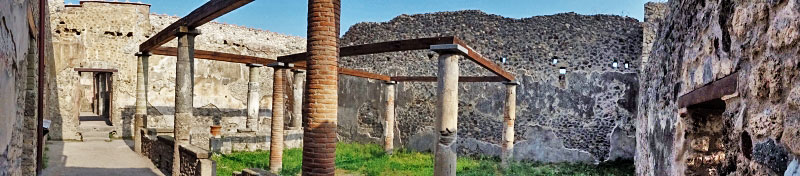
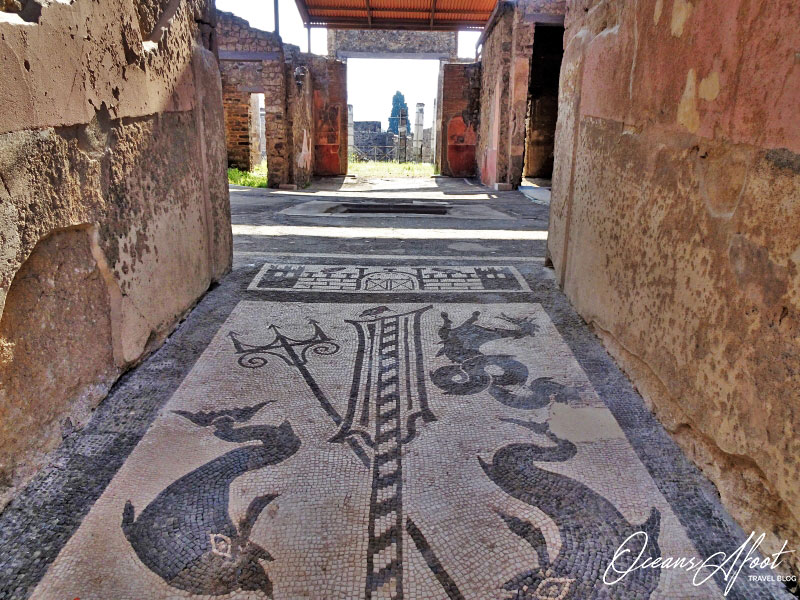
Now we turned left onto Vicolo Degli Augustali and visited the Casa dell’Orso Ferito or House of the Wounded Bear (Region VII # 19}. The house, owes its name to the beautiful mosaic with a wounded bear placed at the entrance. It was reopened to the public after a major restoration of the mosaics, floors and frescoes.
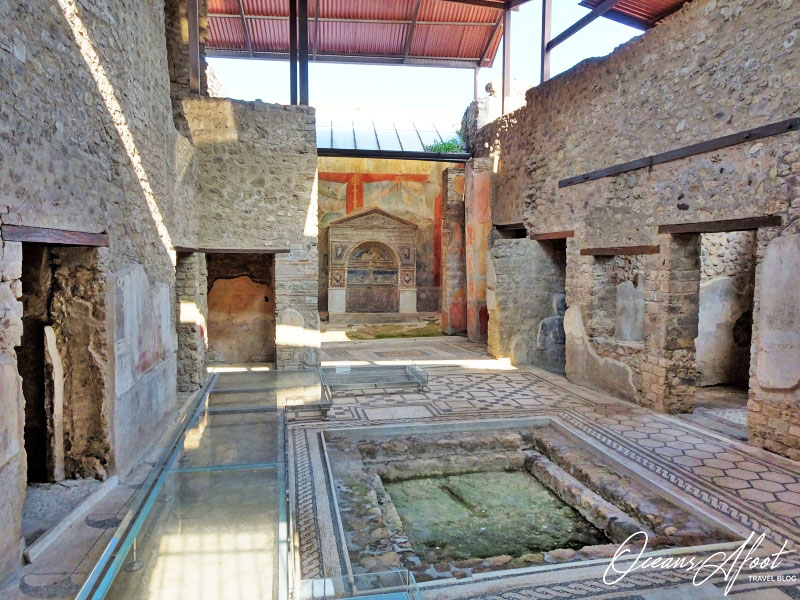
Arriving at the Bakery of Popidio Prisco (Region VII # 20) we see that the mill and bakery are connected. Flour production, processing and grinding of wheat are all done here with the aid of large lava millstones. Bread was baked in the large oven.
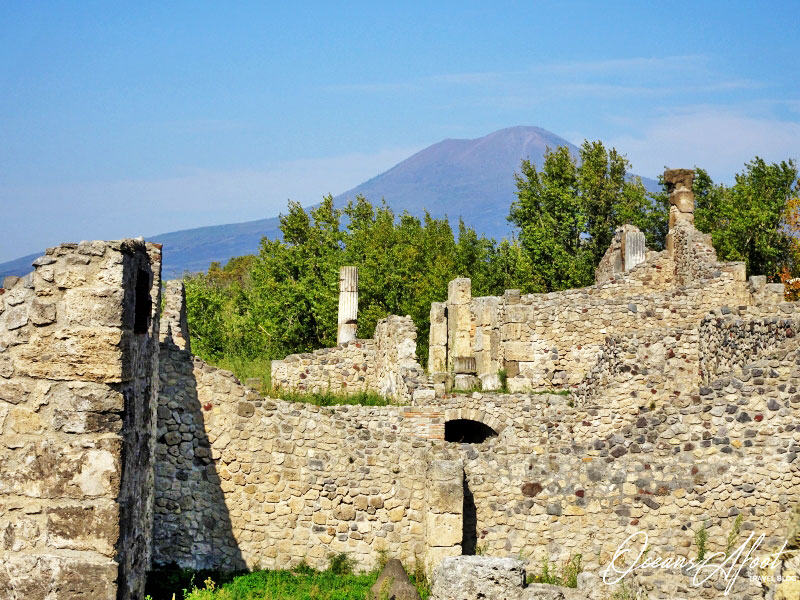
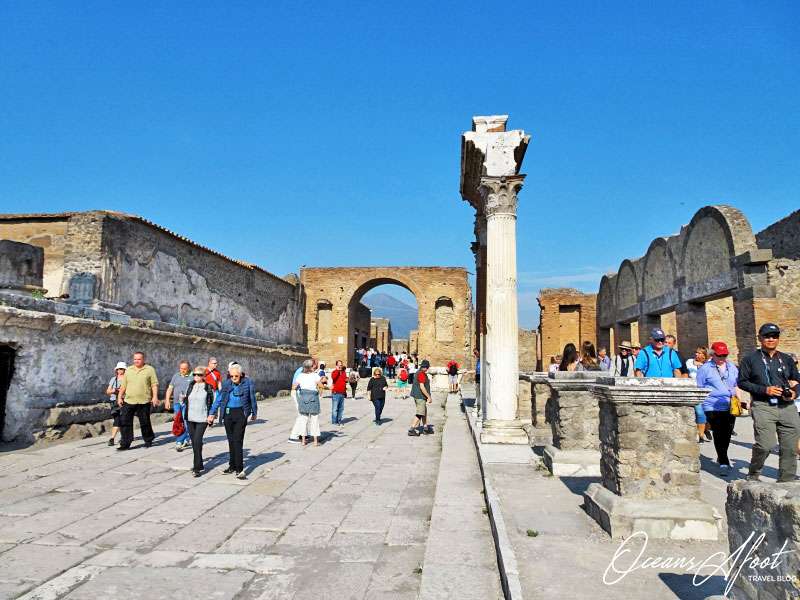
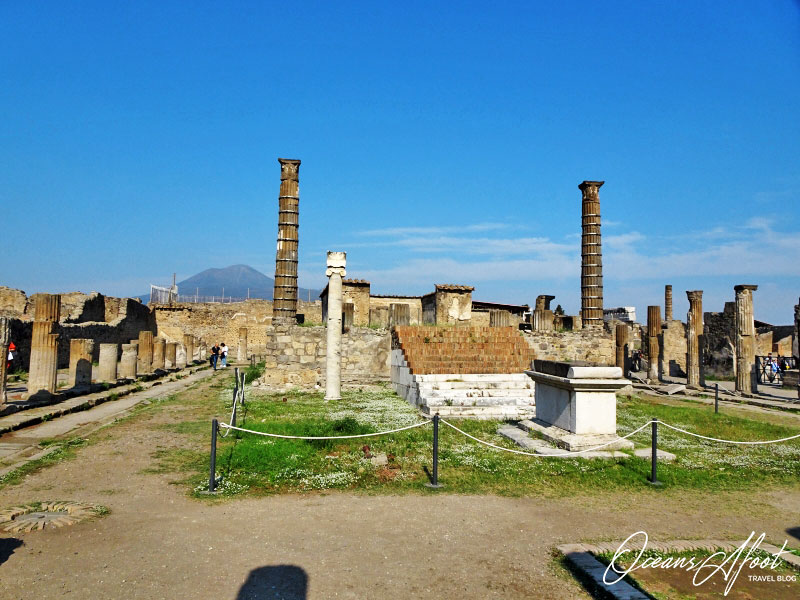
We can see in the distance The Temple of Jupiter (Region VII # 8) dominating the north side of the Forum, with Mount Vesuvius just behind.
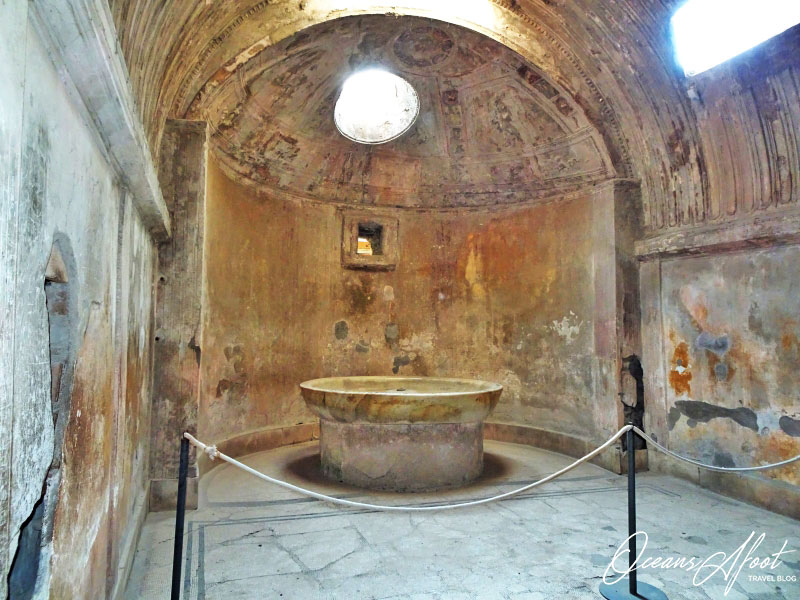
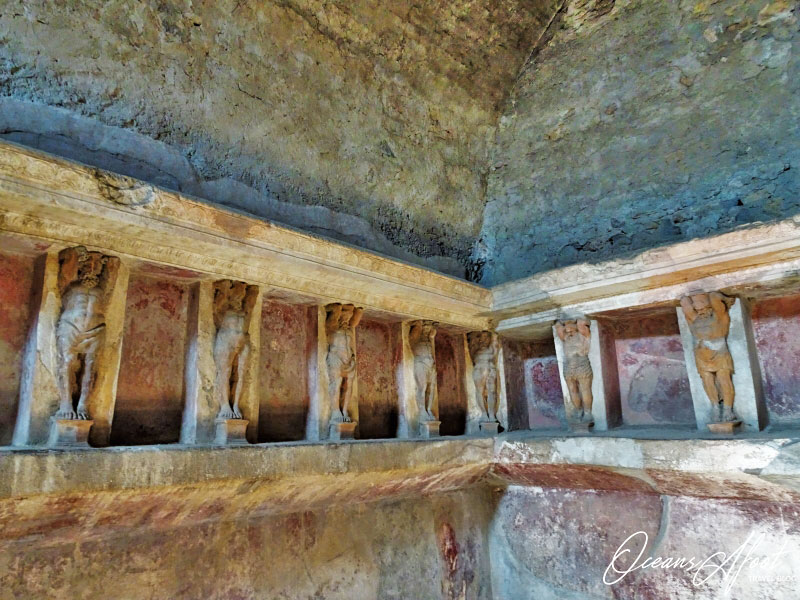
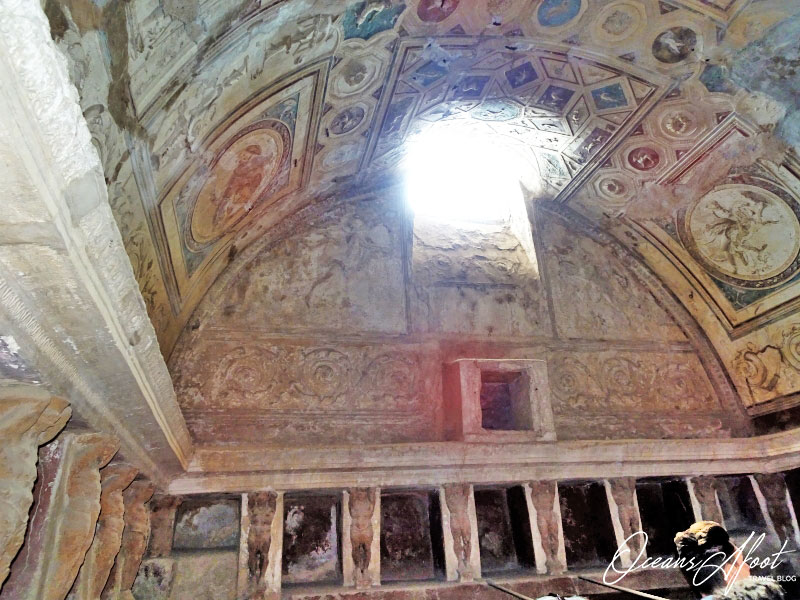
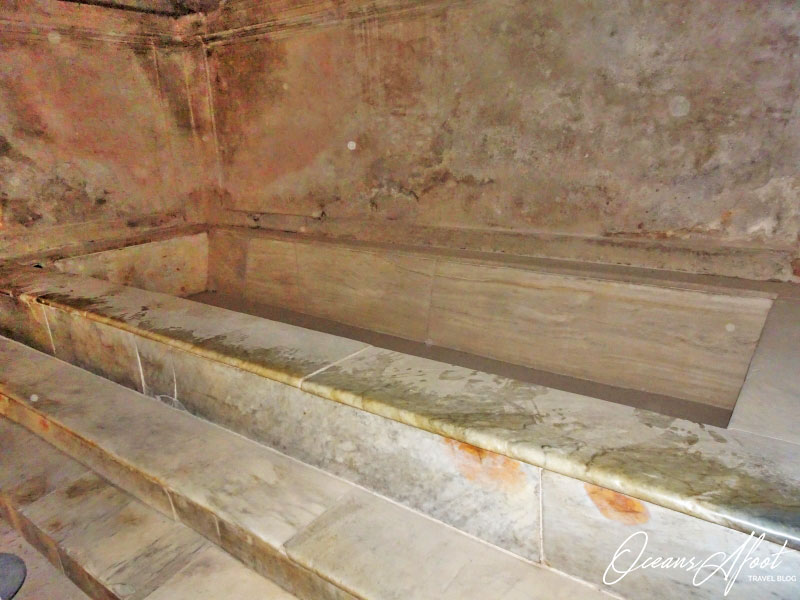
Turning onto Via Della Fortuna we have found the Forum Baths (Region VII # 10). These baths are located behind the Temple of Jupiter and date to 80 B.C. Women’s and men’s quarters had separate entrances. The men’s bathroom was decorated with male figures in terracotta.
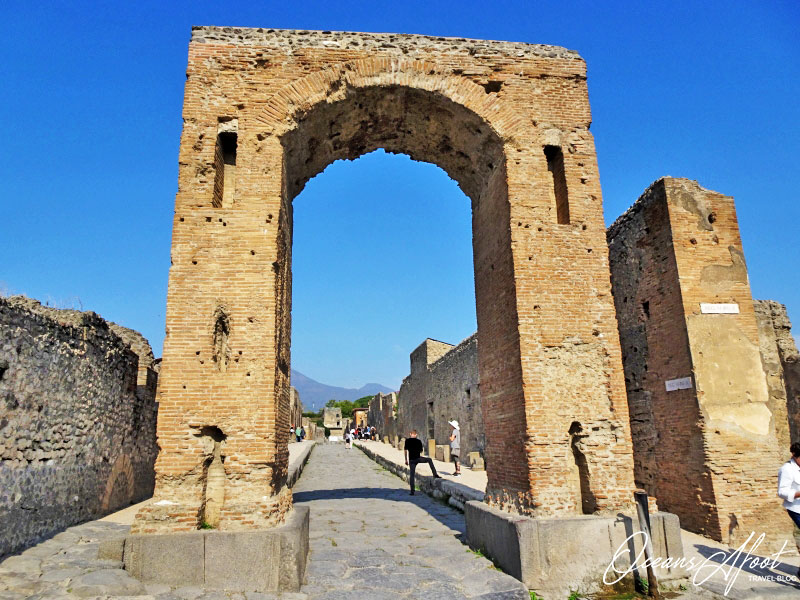
Turning left onto Vicolo Delle Terme, and after a short walk, we are able to see the Honorary Arches (Region VII # 9). Found at the side of the temple of Jupiter these two arches are made of bricks covered with marble. These along with other arch’s in the area, close the sequence of buildings intended for the imperial court.
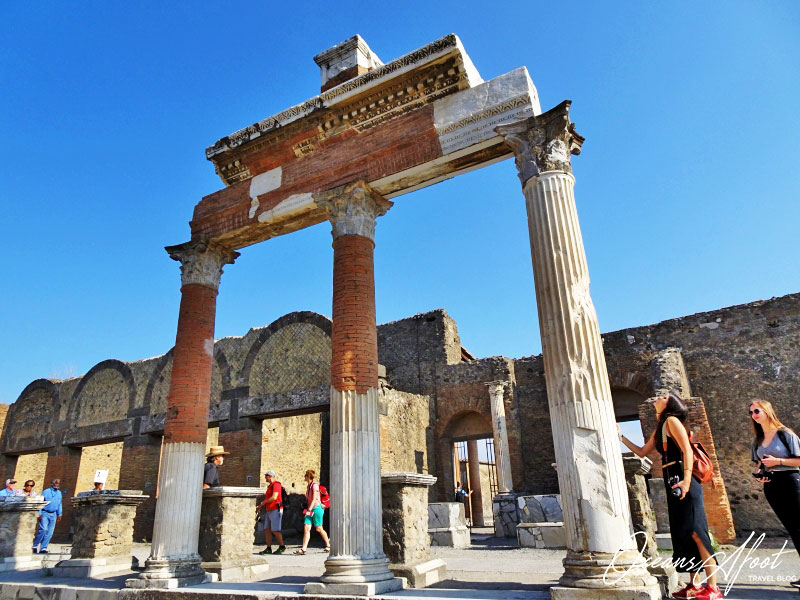
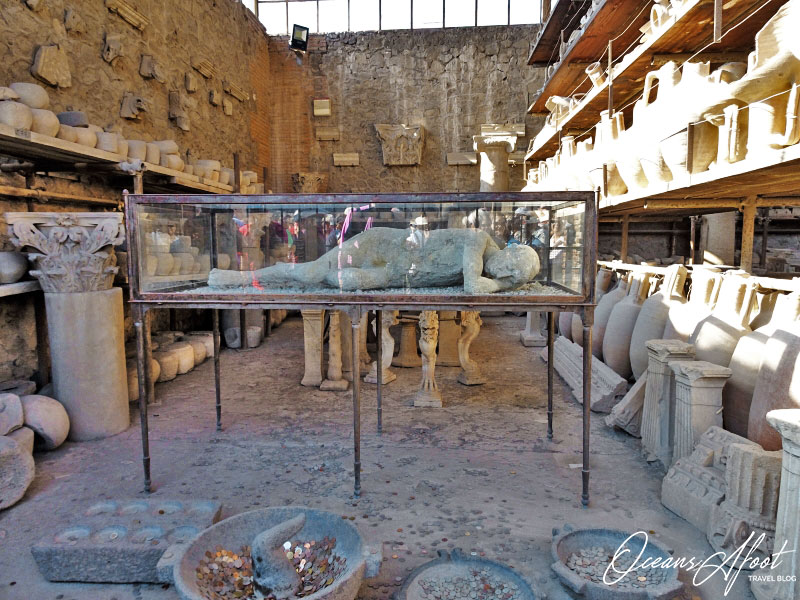
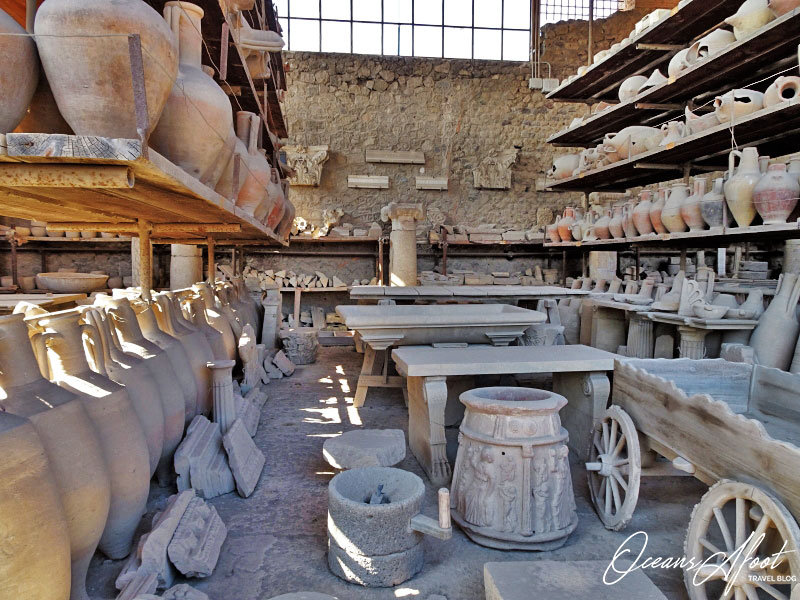
Next we are browsing the Forum Granary (Region VII # 7) which in Pompeii times was used as a marketplace for fruits and vegetables. Today this Granary houses archaeological inventory that consists of more than 9000 artefacts retrieved from excavation.
The Civil Forum (Region VII # 5) is huge and all encompassing. This was the location of all main public buildings for city administration, justice, trade and retail activities as well as the main place of citizen worship.
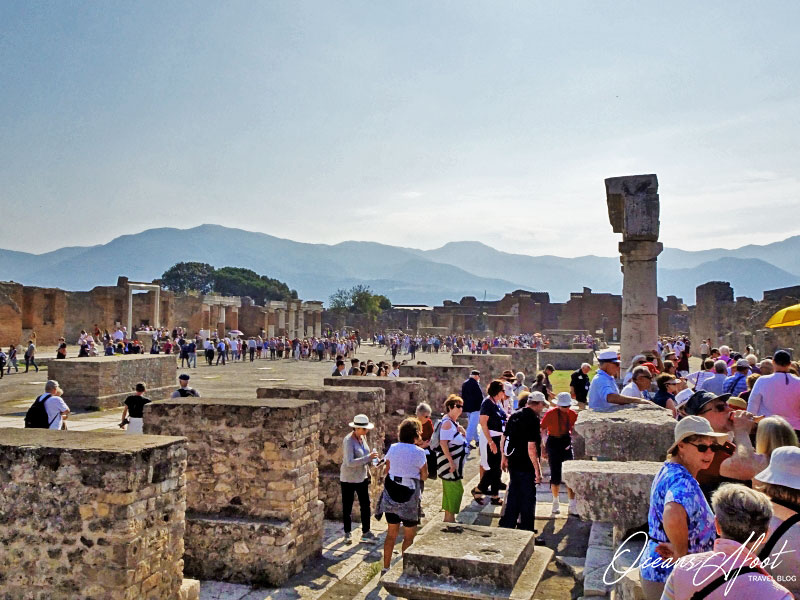
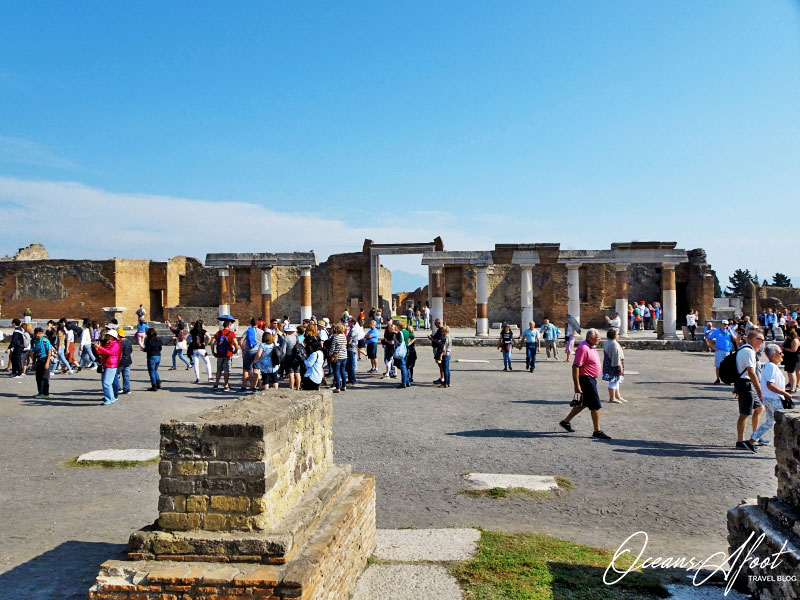
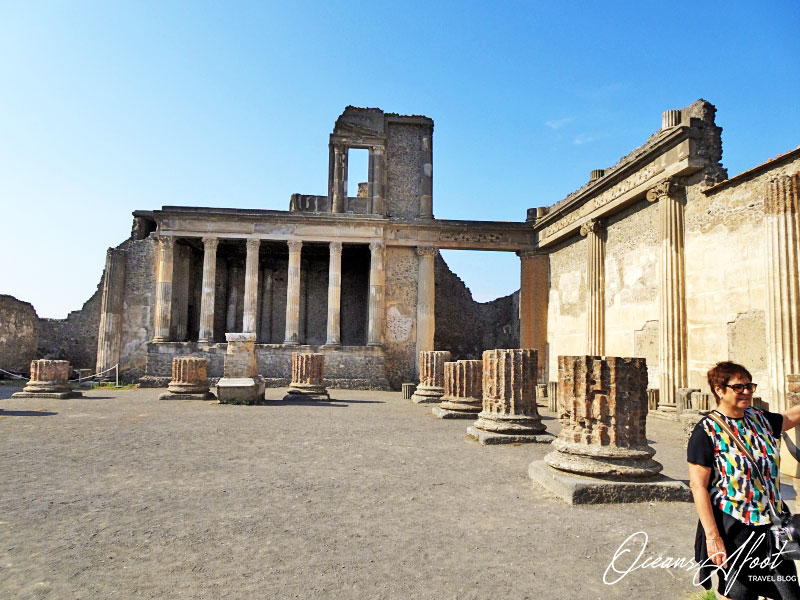
As we wondered around the Forum we can upon the Sanctuary of Apollo (Region VII # 4). This is one of the oldest places of worship in Pompeii, built in alignment with Marina Gate leading directly to the heart of the City and its citizens.
Marina Gate and walls (Region VII # 2). The gate, shown just behind the pine tree, is the most impressive gate of Pompeii and provided access to the west of the City, with an exit road that led to the sea. Excavations found here found dated back to an older Silla colony around 80 B.C.
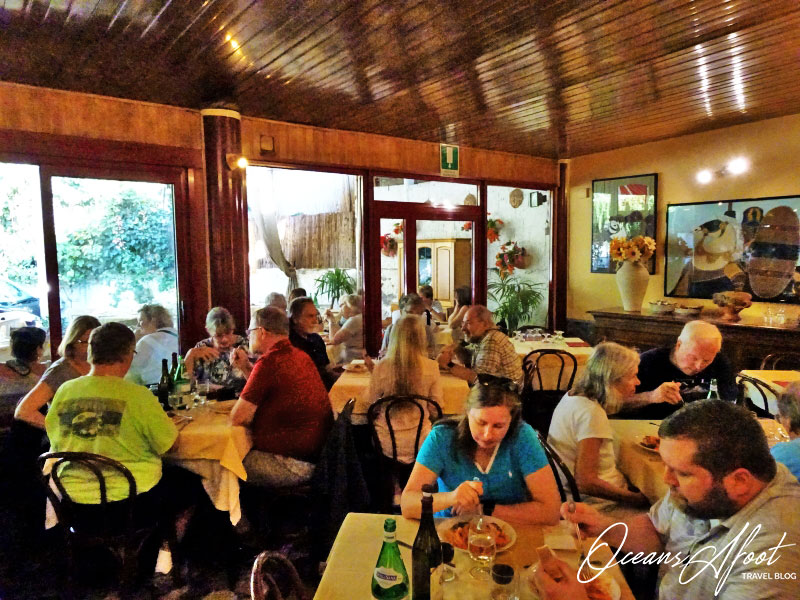
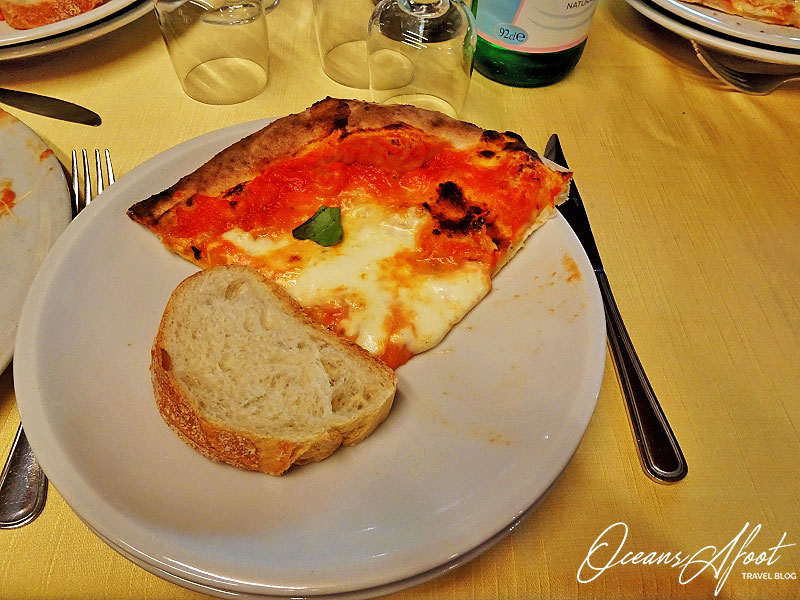
After a great visit to the Pompeii archaeological site we walked to a nearby Italian restaurant. Service comprised Margarita Pizza, Cantellano, Veal & Potatoes, and Tiramisu. Provided drinks were either Wine – Il Cantiniere Vino Rosso or bottled water.
Lucullus Restaurant, Pompeii, Italy
1-1/2 hours provided for Lunch and Refreshments
50 minute drive
Naples National Archaeological Museum, Naples, Italy
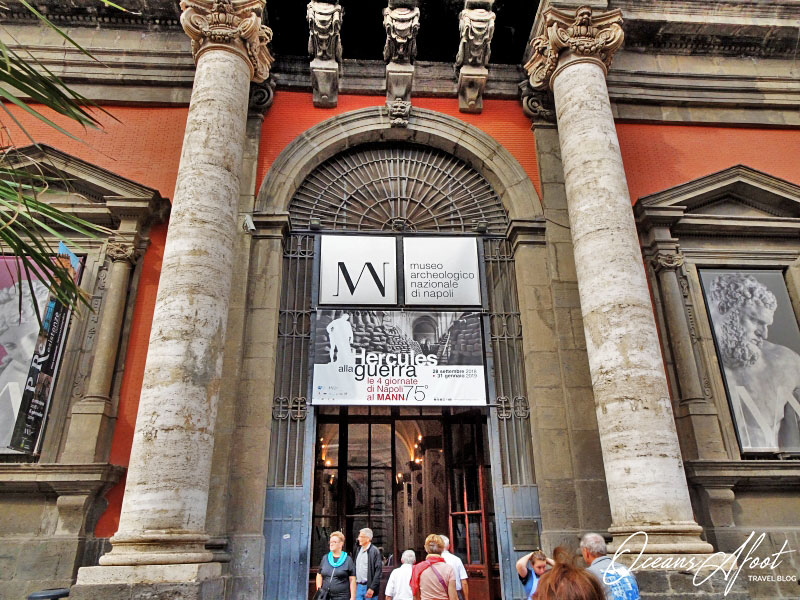
The Naples National Archaeological Museum has a vast collection of artifacts from both Pompeii and Herculaneum. Its entrance is awe inspiring and inside the museum are vast open spaces dedicated to ancient archaeology at its finest.
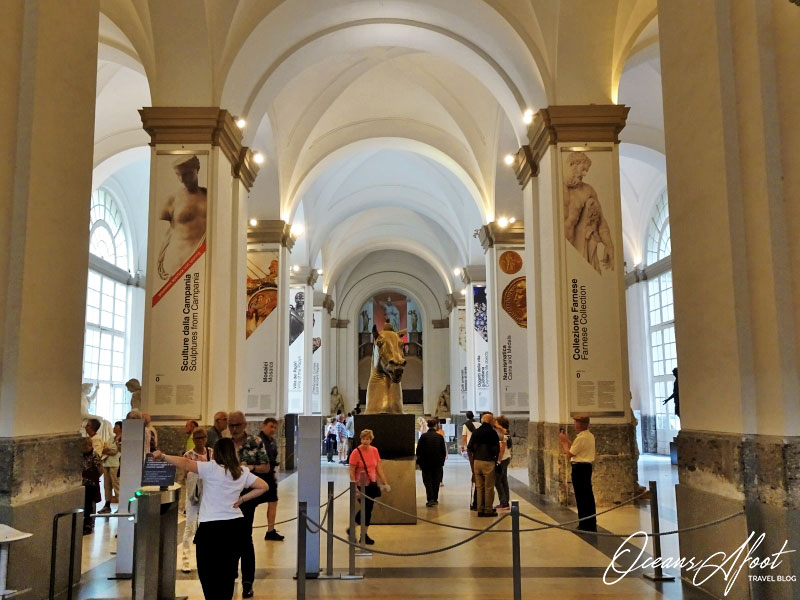
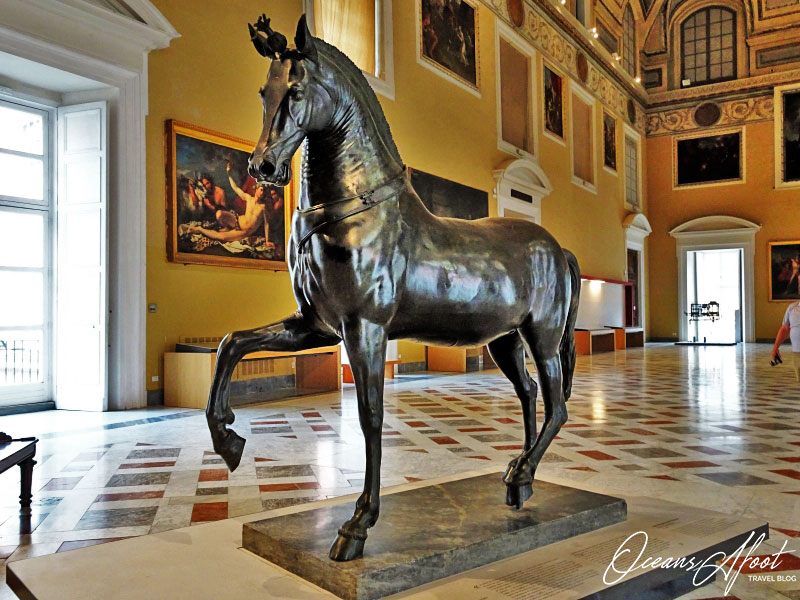
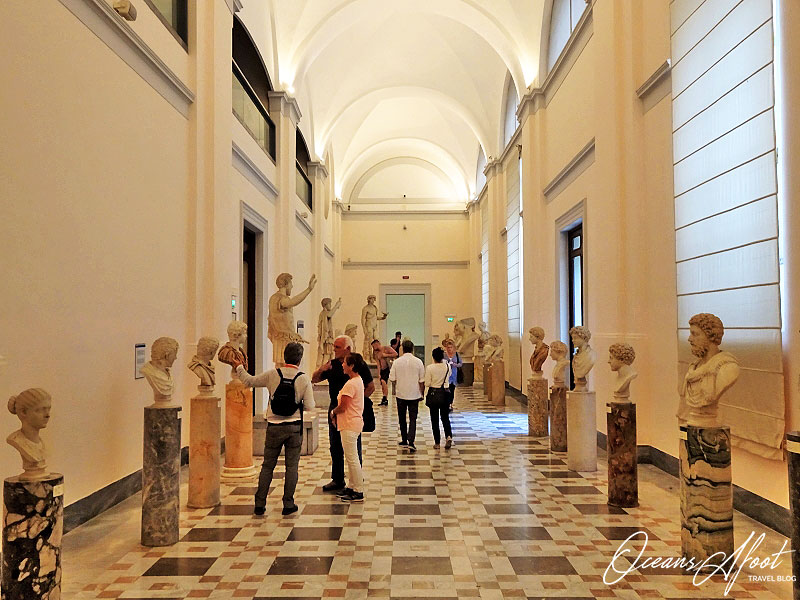
As our tour focused on Pompeii we sought out the mosaic’s, frescoes and artifacts that had been preserved from the Ancient City.
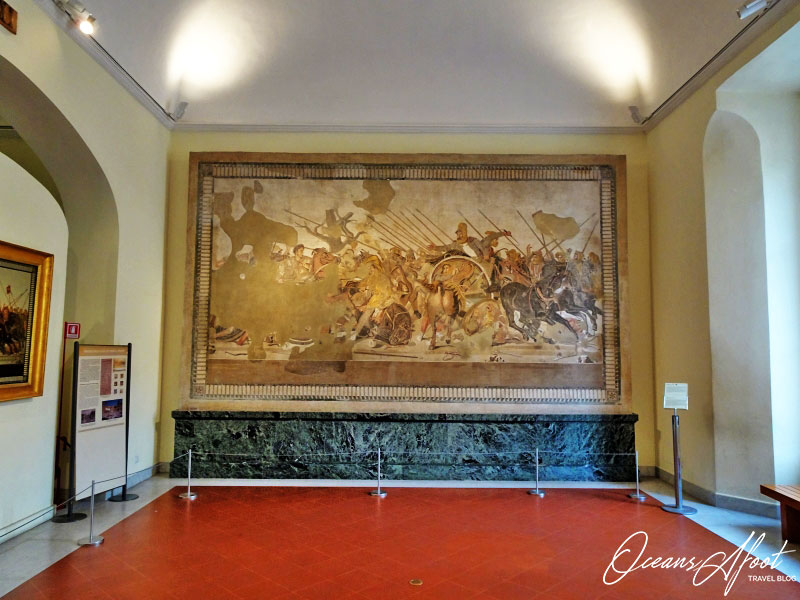
The most wondrous mosaic certainly was of the Battle of Issus between Alexander and Darious II assembled with at least 1 million mosaic tiles, of enormous size, and recovered from the House of Faun. Other mosaic’s illustrated here were additionally recovered from Tablinum House and the Villa of Cicero.
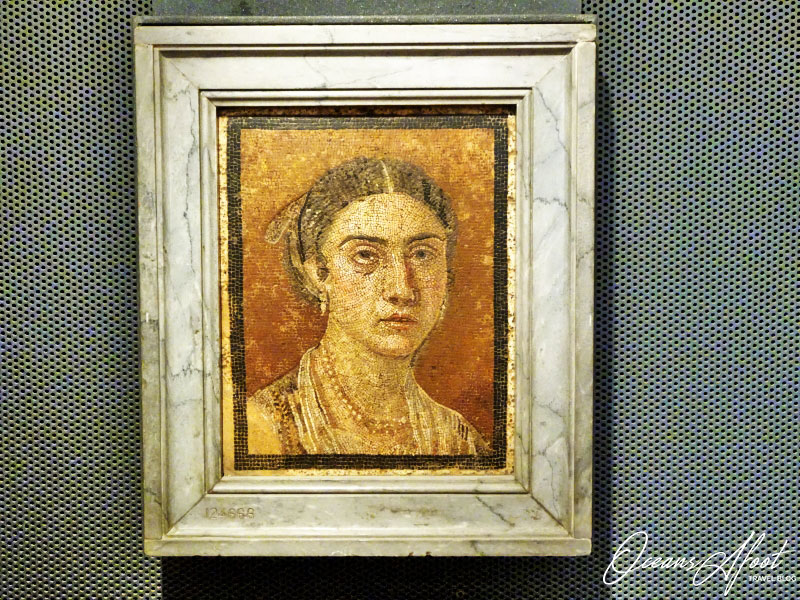
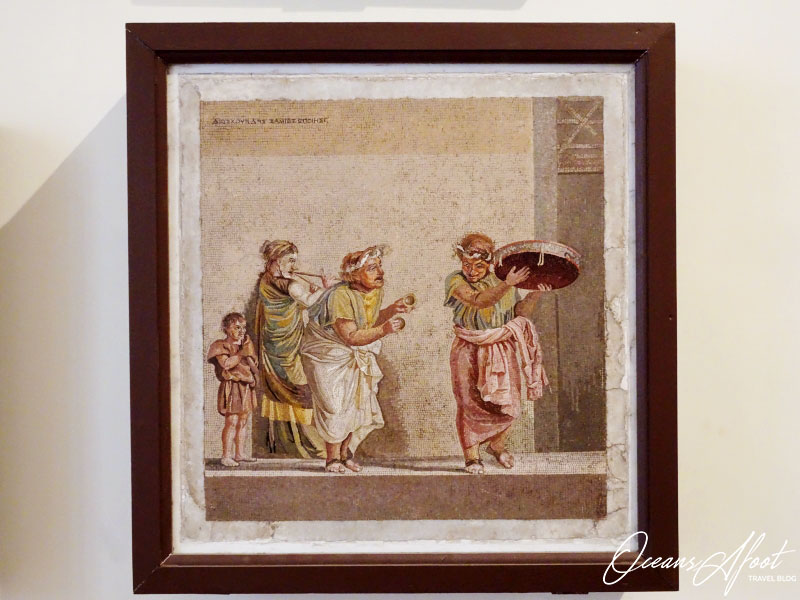
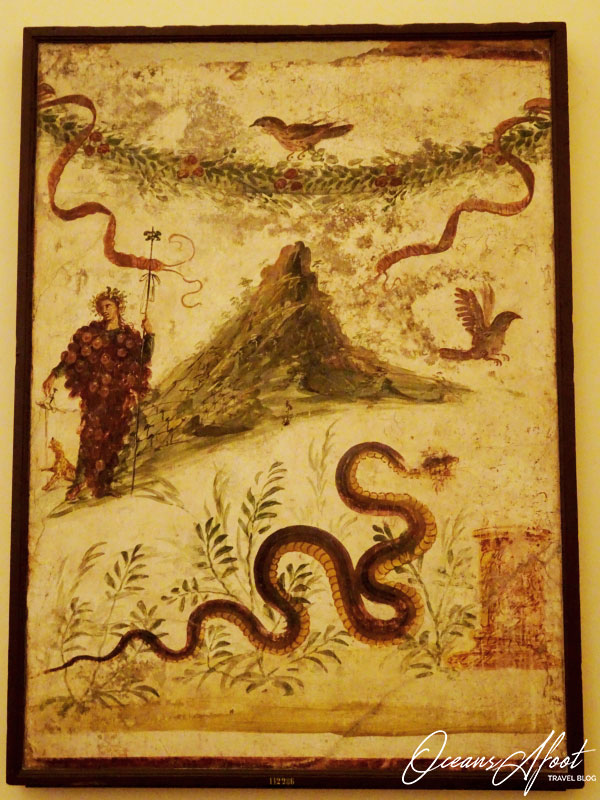
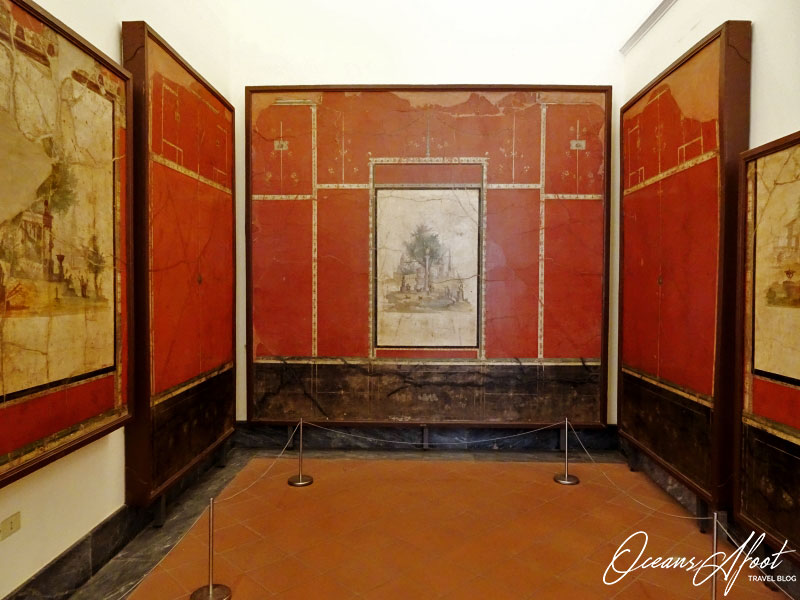
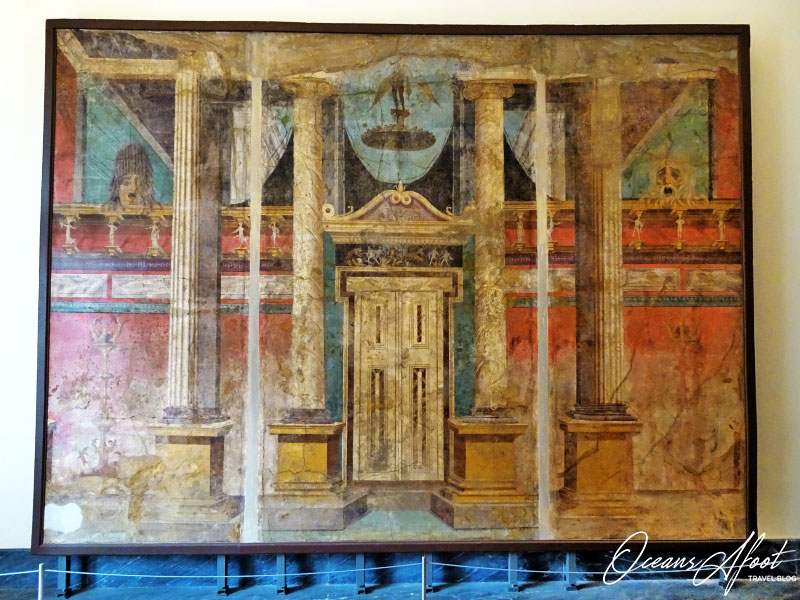
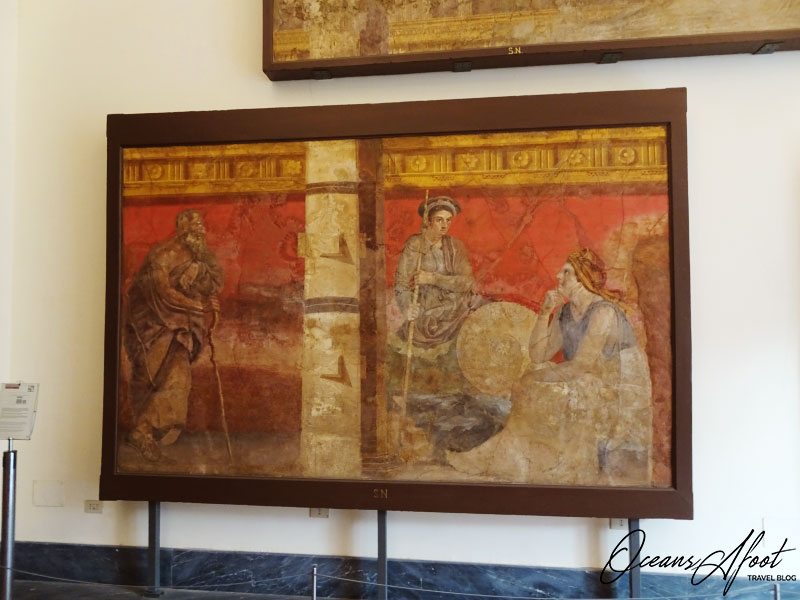
Of the fresco’s is Bacchus and Vesuvius showing Mount Vesuvius as a single peak and therefore prior to the eruption of 79 AD. Fresco’s depicted here were recovered from Praedia of Lulia Felix and the House of the Centenary.
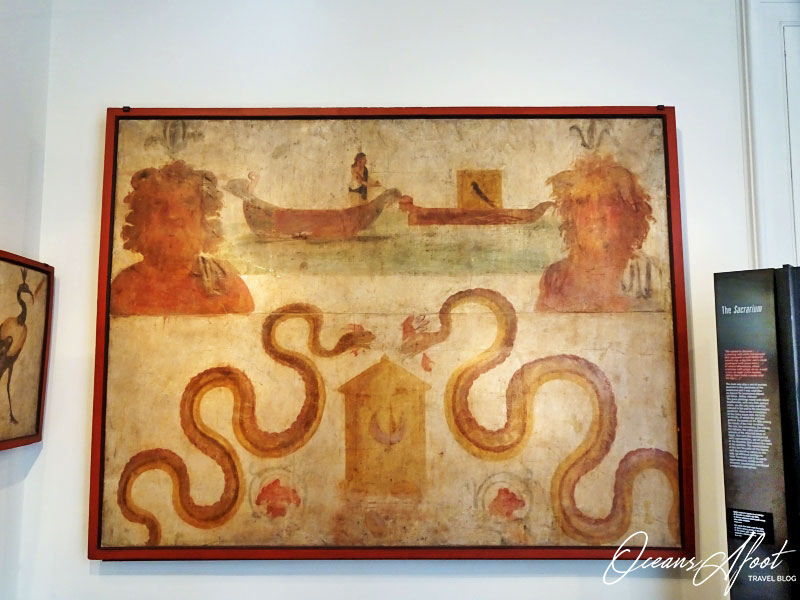
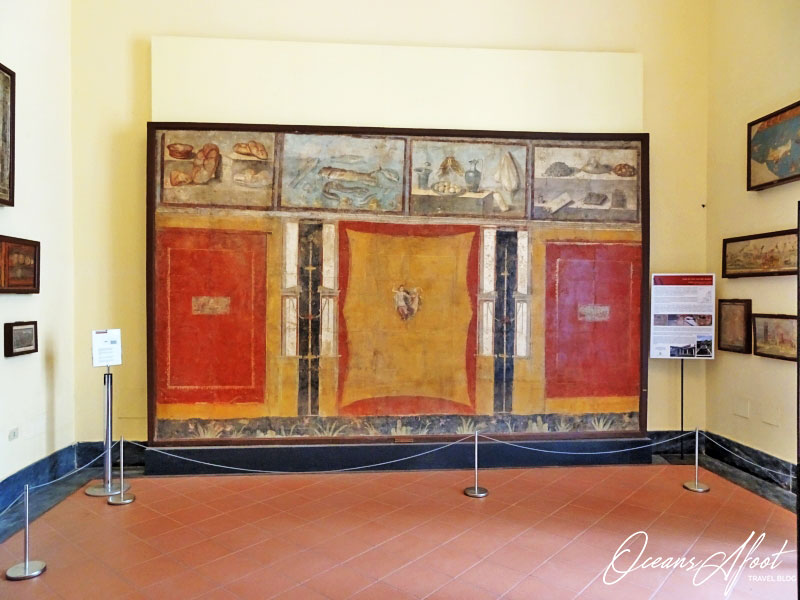
The museum also contained a historical garden and other non-Pompeian related interests like a ceiling fresco by Pietro Bardellino from 1781 and the Great Hall of the Sundial 1612 – 1615.
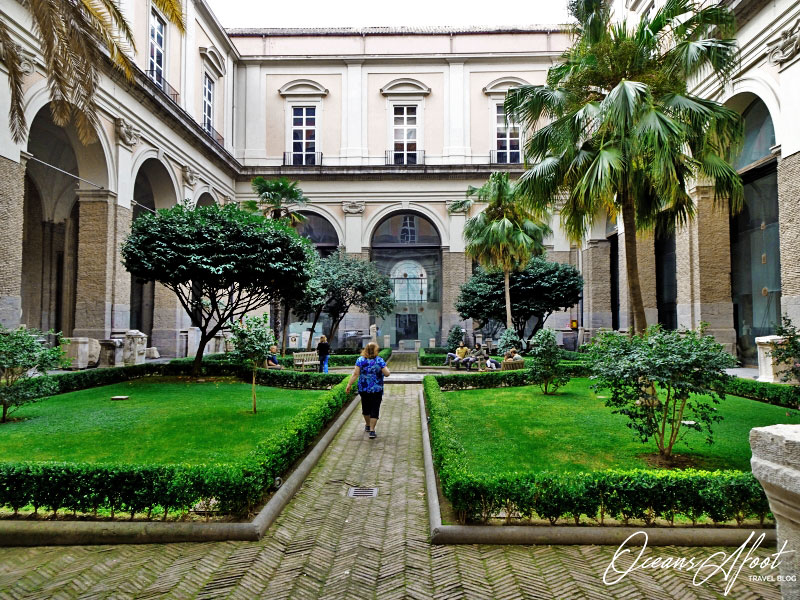
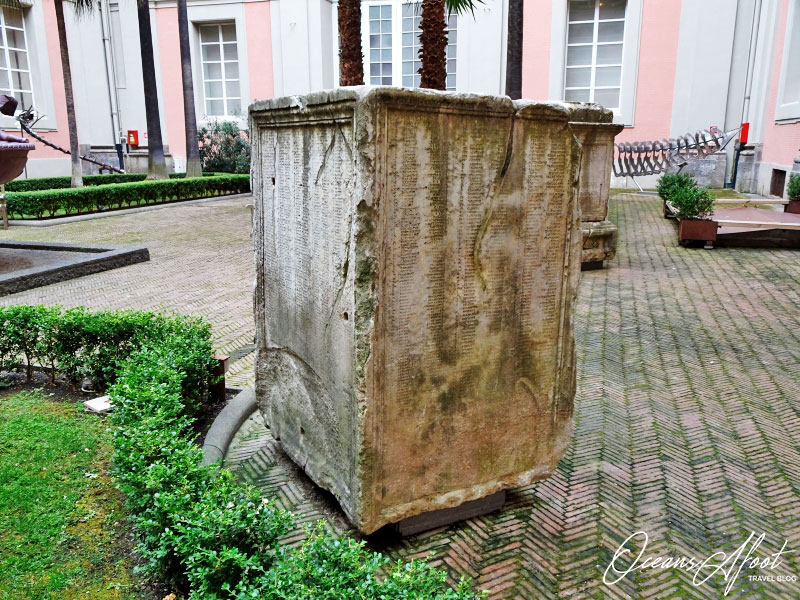
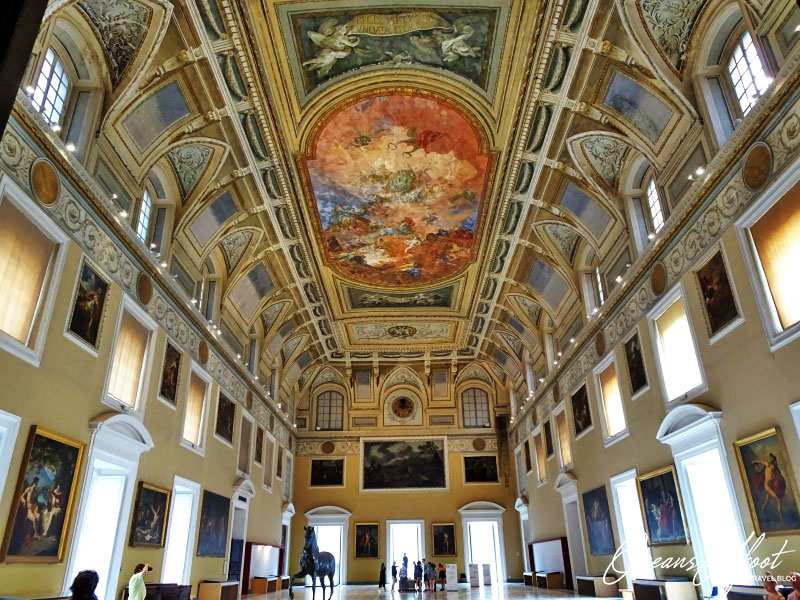
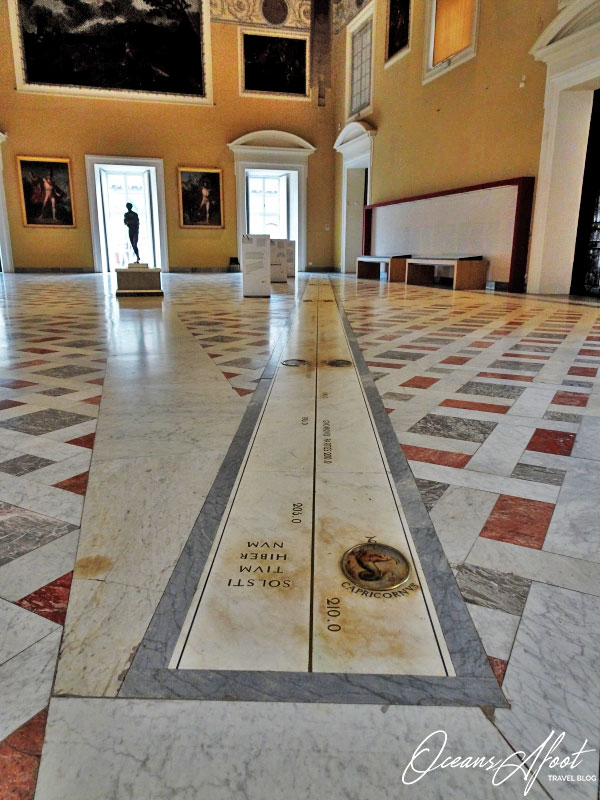
Additionally, the museum houses the Secret Cabinet rooms which showcase erotic art and depictions recovered from residences within Pompeii and Herculaneum.
40 minute drive
Departing the Archaeological Museum we were returned to the Oosterdam having had a pleasant day in Pompeii and its surroundings.
Cruise Port: Naples, Italy
Tour Name: Insider’s Pompeii & Naples Archeological Museum
Cruise Line/Ship: Holland America Oosterdam
Tour Guide: Pierluigi