Yerkes Observatory
2-hour, 30-minute guided tour
Yerkes Observatory, 373 W Geneva St, Williams Bay, WI 53191
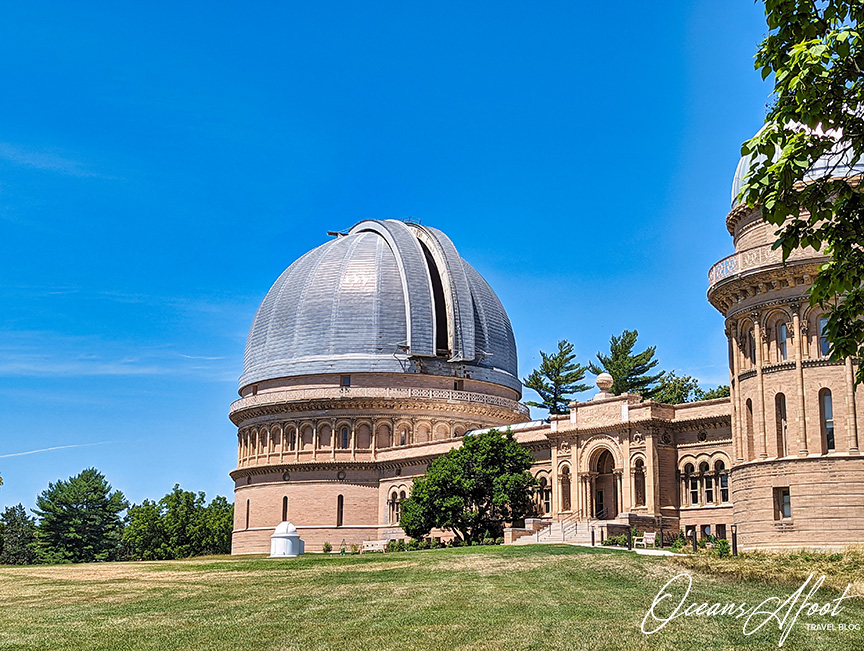
As the sun climbed into the sky on a warm July afternoon, we found ourselves at the gates of the Yerkes Observatory. It was 10 am, and the day was set to be one filled with cosmic intrigue and a voyage into a time when giants walked the earth. By giants, I mean towering intellects who revolutionized the realm of astronomy.
The Dawn of Yerkes Observatory
Upon arrival, we joined the other tour participants, a group of ten, and we were warmly welcomed by Dennis, the director of the observatory. He began to introduce us to the illustrious history of the Yerkes Observatory, whose story begins back in the late 19th century.
From 1895 to 1897, under the supervision of the University of Chicago, construction began on the observatory, backed by the financial prowess of the elusive financier and philanthropist, Charles Yerkes. A figure as controversial as he was influential, Yerkes’ name is interwoven into Chicago’s history. Despite his notoriety, his astronomical contributions stand undisputed. His only caveat? The observatory had to be built within a hundred-mile radius of Chicago.
A Marvel of Its Time: The World’s Largest Refractor
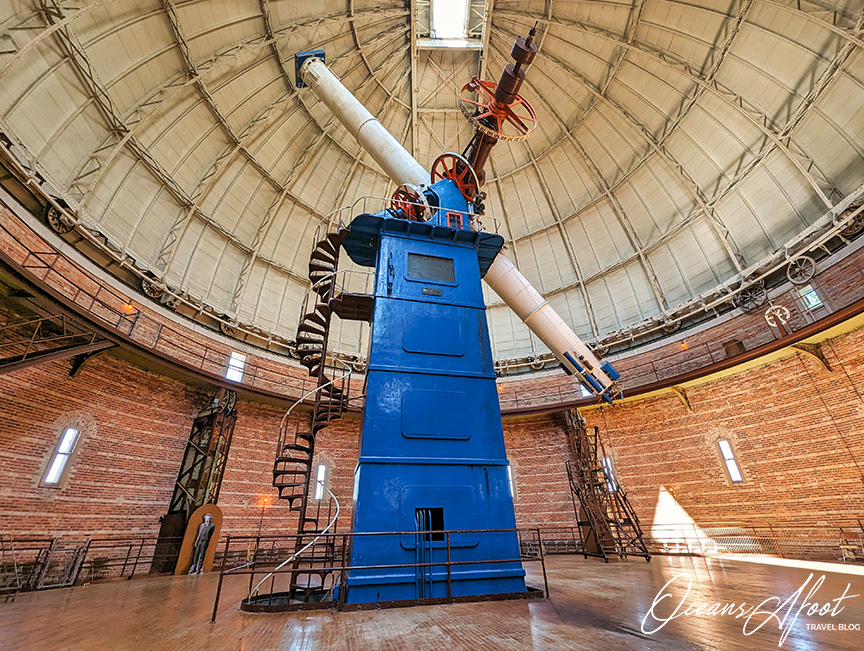
Until 1913, the Yerkes Observatory was renowned for housing the world’s largest refracting telescope. This 40-inch marvel, crafted by the renowned telescope makers Alvan Clark & Sons, was a marvel of its time. Its unprecedented detail attracted leading minds of the era, including Albert Einstein, and established the observatory as a landmark in astronomical science.
Restoring Cobb’s Masterpiece
Designed by the illustrious Henry Cobb, the Yerkes Observatory is a testament to architectural brilliance, its grand entrance framed by majestic pillars. Among these, the playful “bee sting” on the John D. Rockefeller busts, a subtle nod to one of the era’s giants, highlighted Cobb’s creative flair.
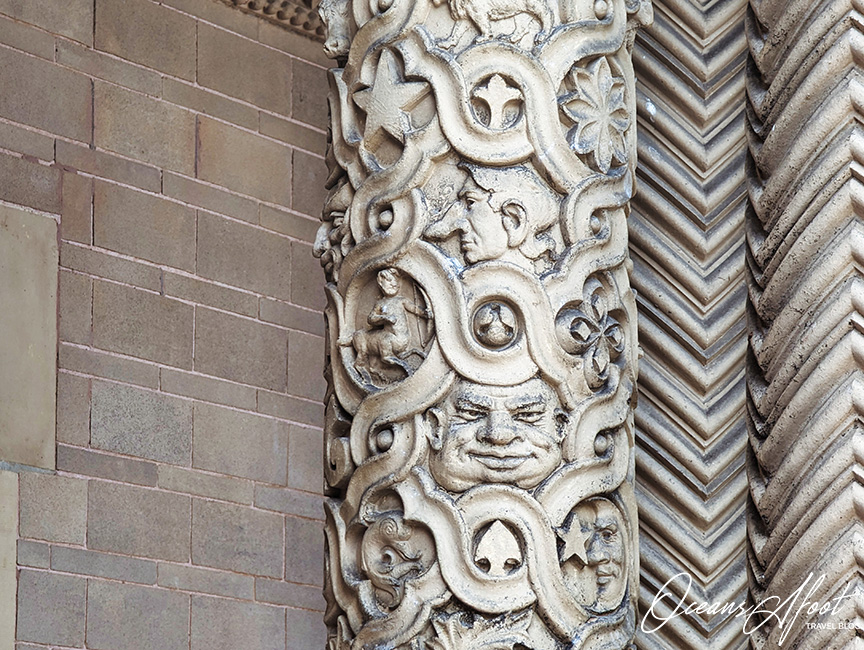
Despite its splendor, time took its toll, and the observatory fell into disuse. However, in 2020, a determined restoration project resurrected this heritage site, replacing antiquated wiring and diligently restoring Cobb’s masterpiece, reigniting the luminosity of this astronomical sanctuary.
The Evolution of Astronomy at Yerkes
As we ventured further into the heart of the observatory, a rich tapestry of stellar achievements, each telling a unique story of astronomical progress and discovery, began to unfold. The observatory’s triumphs ranged from capturing the lunar images that underpinned the Keiper map to harboring a seminal 1718 book speculating about life beyond Earth, echoing its enduring influence in the field of astronomy.
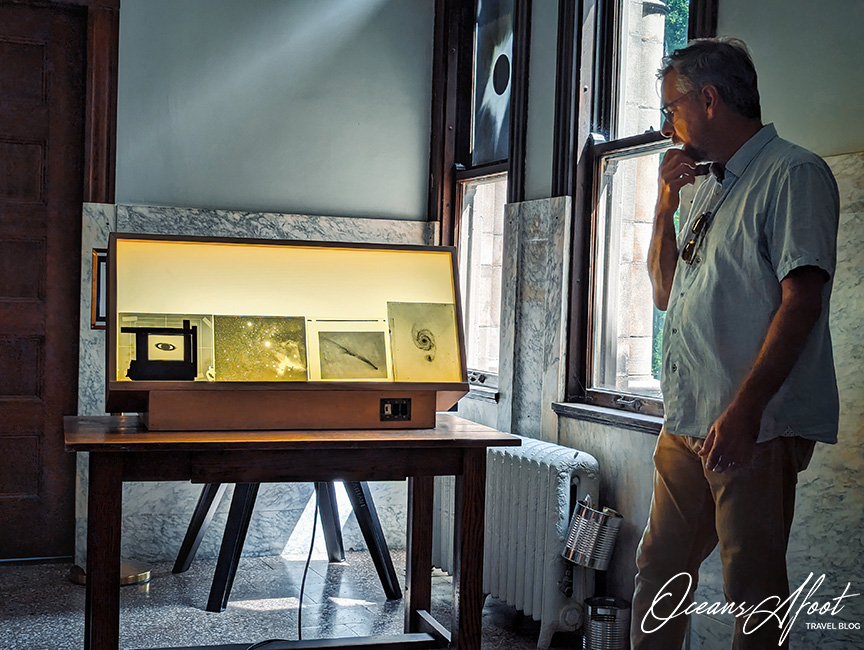
The journey through the corridors of discovery transitioned to a celebration of technological evolution. The shift from manually drawn sketches to photography, a groundbreaking leap in astronomy, is manifest in the observatory’s extensive archives. The historical repository ranged from photographic slides from the 1920s to rooms of plate records, underscoring the observatory’s ceaseless march towards progress and innovation.
Treasures of Astronomical History
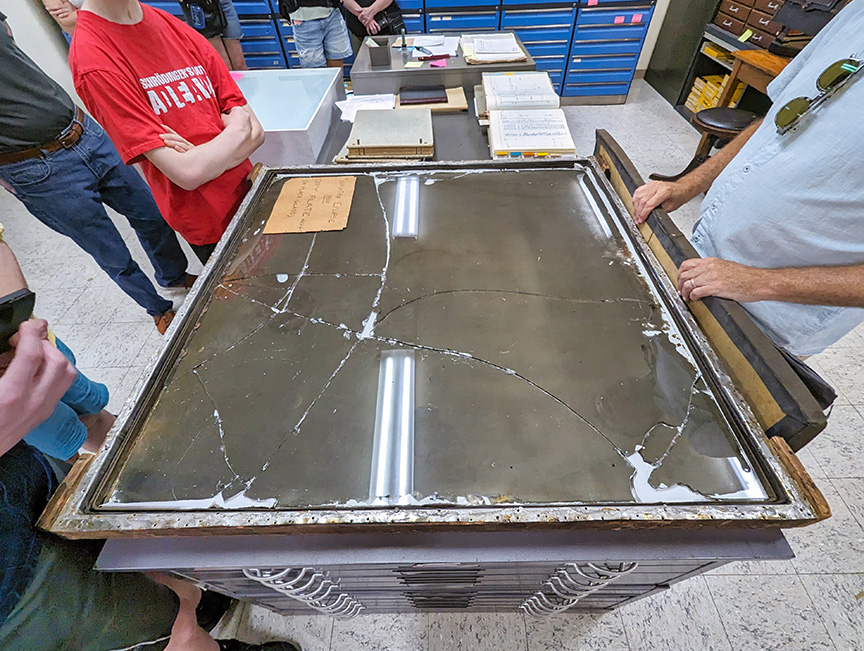
The culmination of this exploration was an upstairs room dedicated to historical artifacts. It housed logbooks of telescopes and a blink comparer—a device that highlighted discrepancies in astronomical images, providing a tangible expression of the observatory’s thirst for knowledge. Among the myriad artifacts, a 40 x 40 full solar eclipse plate from 1902 was a standout, symbolizing the breadth of the observatory’s work and its rich heritage.
Illuminating Solar Mysteries: The Sun Reflection Room
Our exploration of the observatory advanced to a special nook hidden in the attic – the sun reflection room. This room, a relic from the early days of solar physics, was ingeniously designed to channel sunlight through a system of mirrors and lenses.
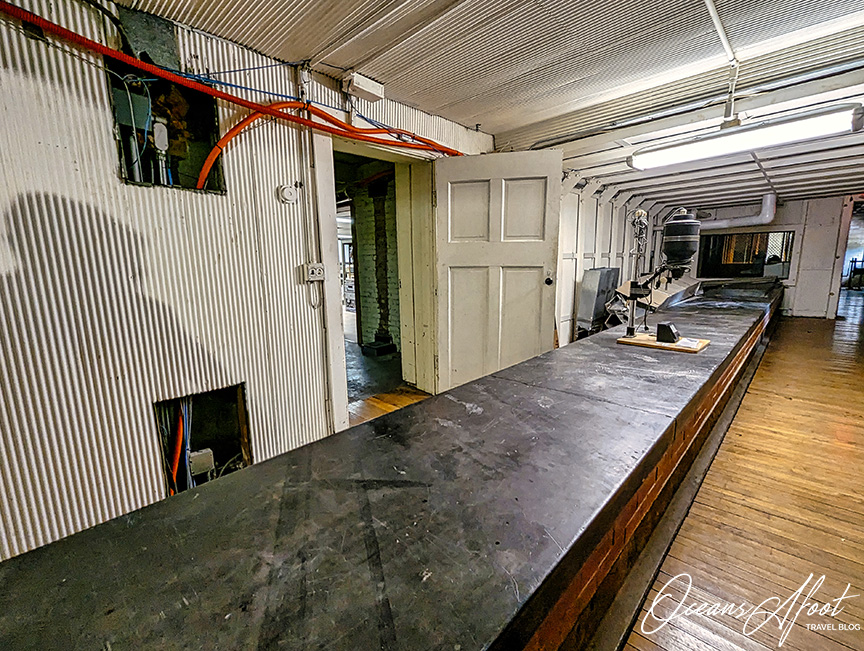
It served as a controlled environment for observing and scrutinizing the sun’s many properties, from the study of enigmatic sunspots to the investigation of solar flares and the solar magnetic field. These studies were crucial to our understanding of space weather, an area of research that can greatly impact satellite communication and terrestrial power grids.
The Future of Observation: Robotic Telescopes
Progressing further, we ascended to a small dome that housed an impressive modern spectacle – a robotic-controlled telescope. This wasn’t any ordinary instrument; it was a 40-inch reflector telescope constructed in 1967 by the reputable Warner & Swasey Company from Cleveland, Ohio.
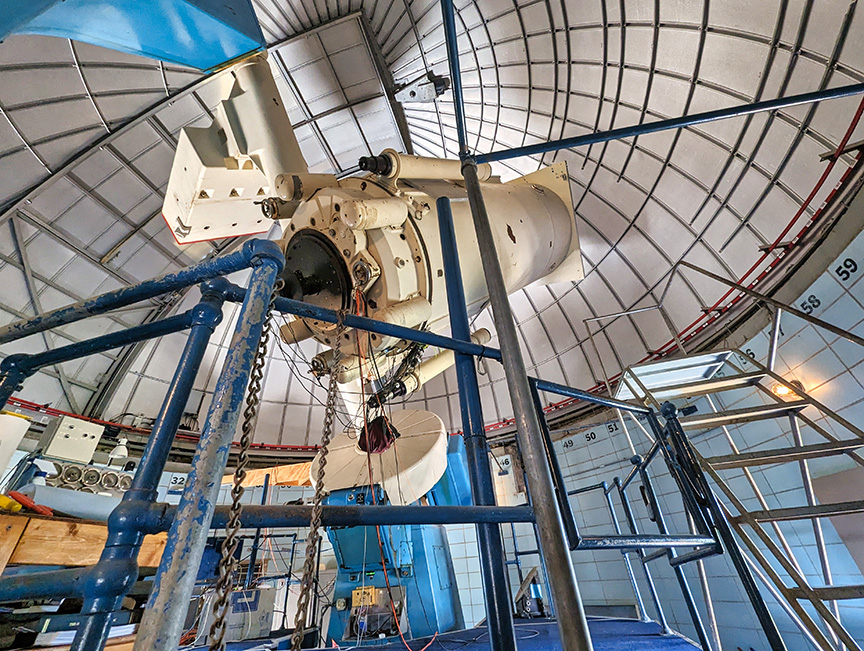
A trusted manufacturer of precision instruments and telescopes in its prime, the company was a significant contributor to the world’s largest telescopes in the early 20th century.
Yerkes on Screen: The ‘Chain Reaction’ Connection
In these very attic spaces of Yerkes, several scenes from Keanu Reeves’ movie ‘Chain Reaction’ were filmed which adds a fun pop culture connection, serving to further highlight the observatory’s enduring relevance and appeal.
Honoring George Elroy Hale’s Legacy
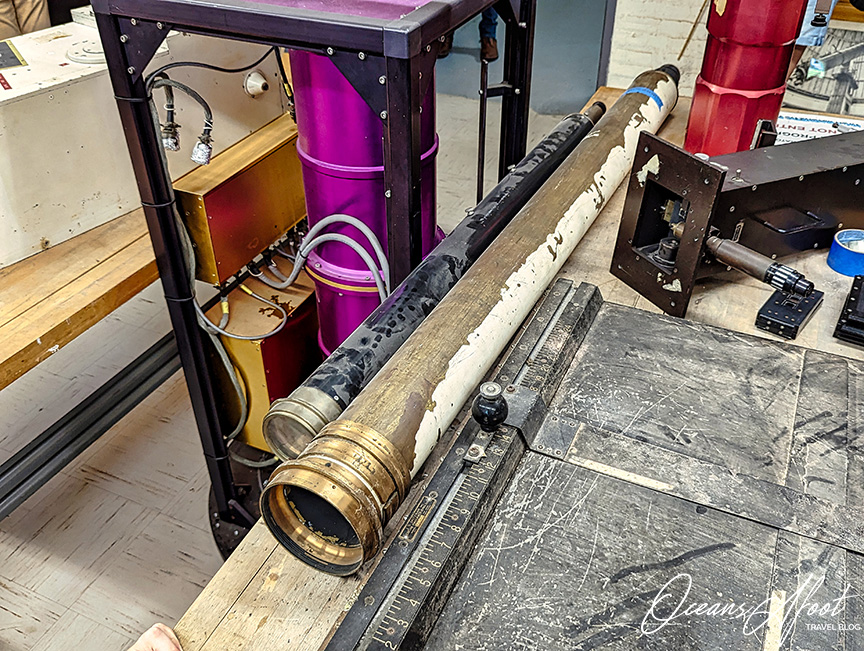
Within the depths of the basement lay a memento of personal significance – George Elroy Hale’s childhood telescope. This pioneering American astronomer’s legacy is indelibly linked to the observatory, a fitting homage to his monumental contributions.
Capturing the Cosmos: The Kodak Medalist Legacy
As the clock struck 12:30 pm, we reached the culmination of our tour. We first stopped to marvel at an immense photo enlargement apparatus. This machine, utilized to replicate detailed telescope observations, operated on a specialized medium – the Kodak Medalist photographic paper.
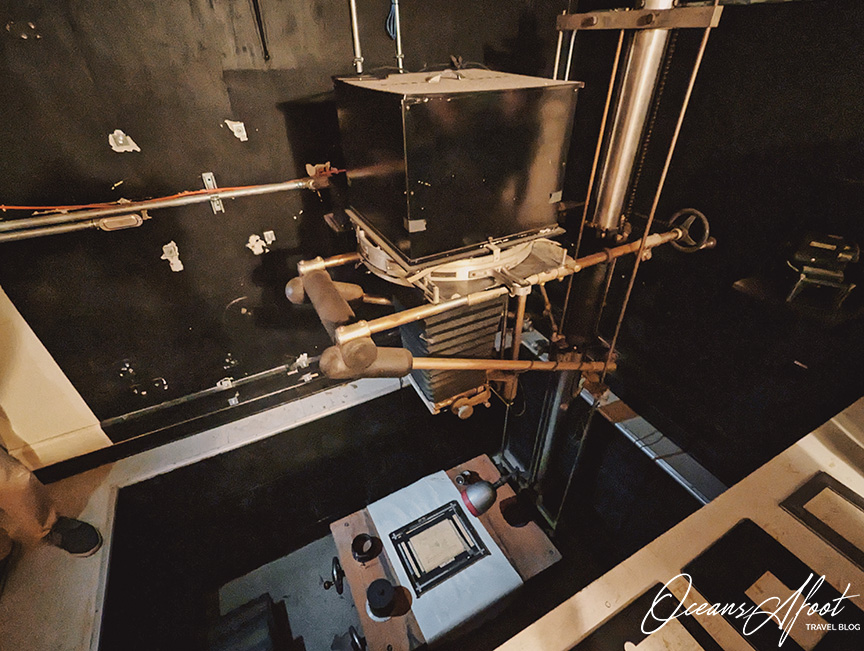
Renowned for its high silver content, this paper offers an exceptional grayscale rendition, enabling astronomers to capture nuanced details of celestial bodies.
Pioneering Space with Wavefront Experiments
Following this, we proceeded to an intriguing room housing a light table. This particular light table was central to a series of wavefront control experiments, also known as the Starlab experiment. The goal of these experiments was twofold. On one hand, they sought to ascertain how wavefronts, the unbroken surfaces of a wave, could be manipulated in real time. On the other, they aimed to understand and further the development of the ‘chaos laser’ theory.
The ‘chaos laser’ under invention was designed to utilize chaotic light patterns to improve image quality, particularly in space applications. The light table and the wavefront control experiments it hosted were critical to this research, offering a testbed for the chaos laser’s effects on wavefronts.
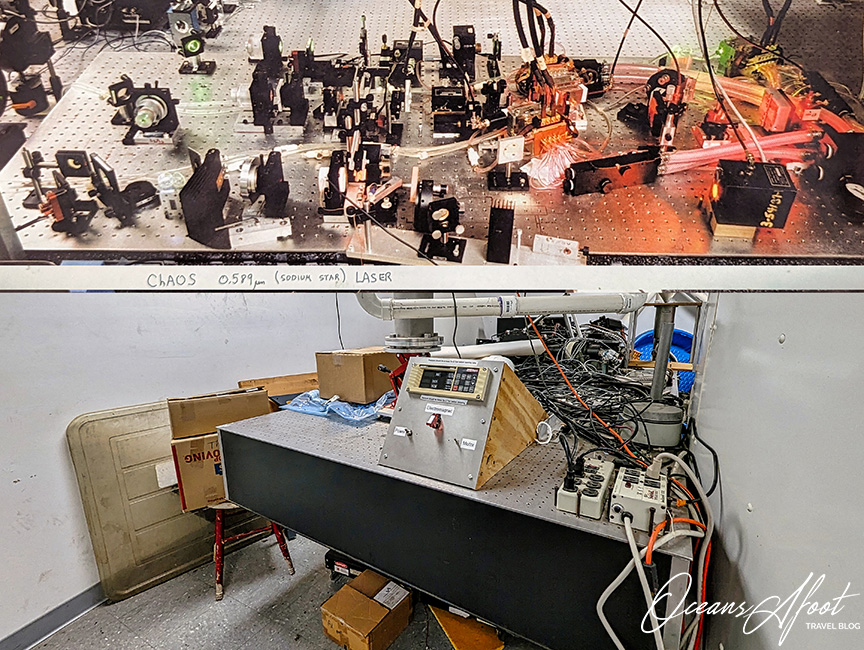
The ultimate ambition was to perform these wavefront control experiments aboard a space shuttle, thus bridging terrestrial research with cosmic exploration. The potential results from these experiments could significantly enrich the field of advanced adaptive optics. This is a technological area that strives to minimize the atmospheric distortion that earthbound telescopes experience, allowing for an increasingly precise view of the cosmos.
In this way, the light table served not only as an intriguing relic of astronomical history, but also as an emblem of our continuous quest for deeper, more nuanced understanding of our universe and the technology we create to explore it.
Archival Wonders: Pages from the Past
Our tour’s final chapters unfolded in the observatory’s main library, where history whispered from the shelves. Highlights included a December 1909 edition of Scientific American with Yerkes Observatory on its cover, and the manuscript “Photographic Investigations of Faint Nebulae.” This manuscript, rich with astronomical heritage, had an extraordinary journey, traveling to space with astronauts on Shuttle Mission STS-109, symbolizing the blend of earthly discovery and cosmic exploration.
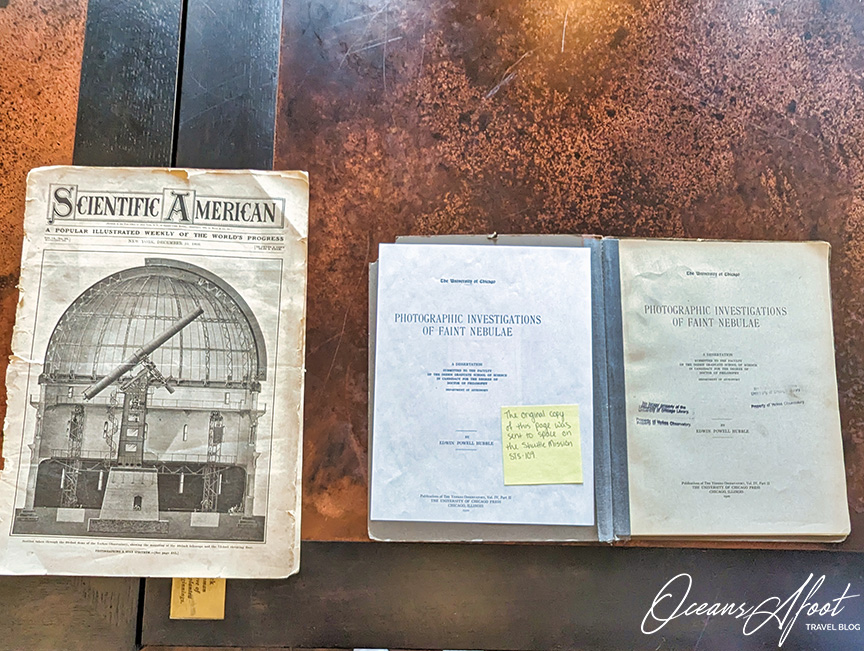
Adjacent, two archive rooms, styled as living museums, offered a deep dive into the observatory’s past, bringing to life the stories and achievements of its astronomers.
Cosmic Memories: Souvenirs of the Stars
Concluding our visit, the gift shop presented a collection of memorabilia and astrological wonders, allowing us to take a piece of the cosmic journey home. This section of the tour encapsulated the observatory’s legacy as a crucible of astronomical discovery, linking the past with an ever-expanding future.
Yerkes Observatory: A Beacon of Resilience and Discovery
The Yerkes Observatory, once a giant abandoned by time, now stands proud once again, ready to inspire new generations of astronomers. From its historic origins to its modern resurrection, the observatory truly is a beacon of astronomical advancement, and its tale is one of resilience and the undying pursuit of knowledge.
Cruise Port: Williams Bay, Wisconsin
Tour Name: Directors Hidden Spaces Tour
Tour Operator: Yerkes Observatory
© OceansAfoot