✘ Hilo, Hawaii • October 21, 2024
⌖ Steam Vents, Lava Legends, and Towering Waterfalls
Tour Route: Hilo Port → Hawaiʻi Volcanoes National Park (Steam Vents → Kīlauea Overlook → Nāhuku Lava Tube → Volcano House → Visitor Center Lunch) → Rainbow Falls → ʻAkaka Falls → Liliʻuokalani Gardens → Hilo Hawaiian Hotel → Return to Ship
After disembarking from the ship, we met our guide, Marcus, at the terminal. Our group of 12 set out on a one-hour drive to Hawaiʻi Volcanoes National Park, an expansive area showcasing the geological and cultural significance of Hawaii’s volcanic landscape. As we traveled, Marcus introduced us to the park’s history and the powerful forces that continue to shape the island. He explained how Hawaii’s volcanic activity began millions of years ago, with eruptions from underwater volcanoes eventually forming the island chain we know today.
As we drove higher in elevation toward the park’s entrance, he also discussed how these volcanoes contribute to the island’s diverse ecosystems, with recent lava flows gradually creating new terrain that becomes colonized by native plants over time. By the time we arrived at the park, we had a deeper appreciation of how the landscape has evolved, shaped by both the relentless forces of nature and centuries of cultural significance.
① Hawaii Volcanoes National Park
Address: 1 Crater Rim Drive, Hawaii National Park, HI 96718
Time Spent: 2-hours
Upon arrival at Hawaiʻi Volcanoes National Park, we headed straight to the natural steam vents, a unique and active feature of the park. Here, hot steam rises from the ground, giving us a tangible sense of the volcanic power still simmering beneath the island. As we stepped closer, we could feel the intense warmth radiating up through the vents, quickly fogging our glasses and prompting us to step back for comfort.
Marcus explained that these steam vents are created when groundwater seeps down to areas heated by underground volcanic activity. When the water reaches hot rock layers close to the earth’s surface, it vaporizes and rises back up as steam, creating visible plumes that escape through cracks and fissures. This process is a direct result of geothermal energy generated by the nearby Kīlauea volcano, which lies just below the surface, continually heating the surrounding area.
Kilauea Crater Overlook
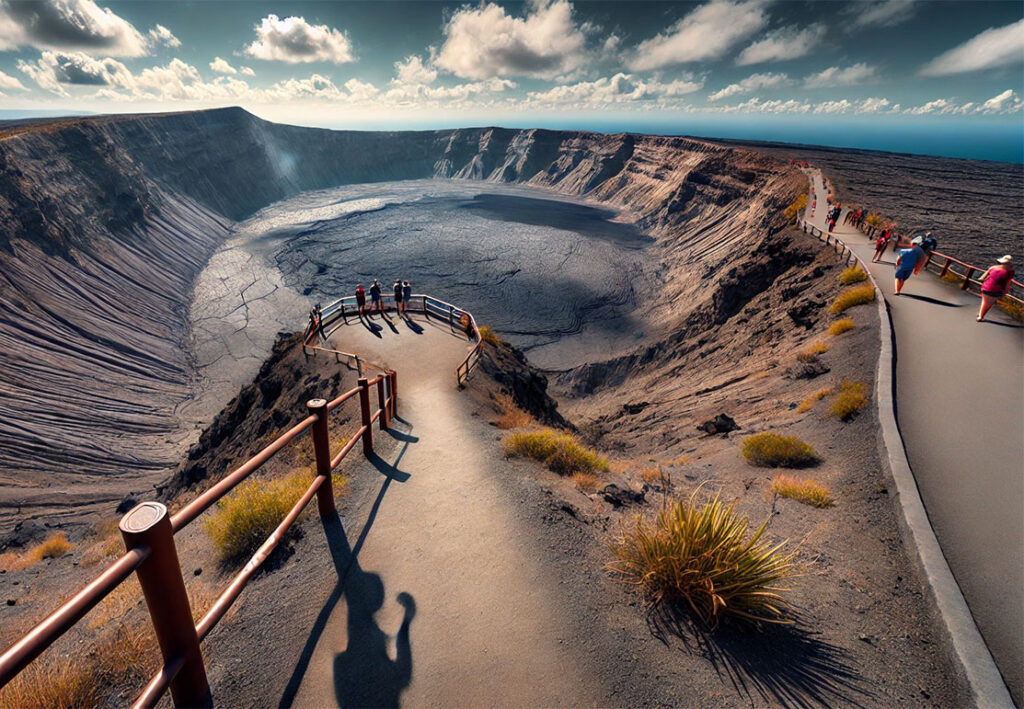
We followed a gravel path leading to the Kīlauea Caldera’s Crater Overlook, a breathtaking viewpoint locally revered as Pele’s Realm. This site holds cultural importance for Hawaiians, as it is believed to be the sacred domain of Pele, the Hawaiian goddess of fire and volcanoes. From the overlook, we took in the vast, rugged caldera, shaped by Kīlauea’s explosive eruptions and shifting lava flows over thousands of years.
Our view also included the historic Volcano House, perched on the caldera’s rim—a longstanding landmark that has offered refuge to travelers for over a century. Adding a touch of history to the scene, we could see traces of the old Crater Rim Drive, a road that once circled the caldera. This road has since been overtaken by volcanic activity and now lies within the crater, swallowed by the landscape’s transformation.
Marcus elaborated on Pele’s enduring significance in Hawaiian culture, explaining how legends hold that she resides within Kīlauea, shaping and guarding the island. These stories underscore Kīlauea’s sacred status, blending geological marvels with spiritual reverence.
Thurston Lava Tube (Nāhuku)
Our next stop brought us to the Thurston Lava Tube, locally known as Nāhuku, a remarkable underground tunnel forged by ancient lava flows. As we descended into this naturally formed tube, its size and length immediately struck us—it stretched far longer and wider than any lava tube we had encountered, a testament to the intensity of past volcanic events. Walking through its hollowed-out pathway, we marveled at the way molten lava once carved through solid rock, leaving behind this vast subterranean passage.
The trail leading to Nāhuku was flanked by native flora that thrived in this unique volcanic environment. Marcus pointed out plants that had adapted to the lava rock terrain, explaining their roles in stabilizing the ecosystem and regenerating after volcanic disturbances. Seeing the resilient vegetation reclaiming the rugged land highlighted the island’s cycle of destruction and renewal, a natural theme echoed throughout Hawaii’s volcanic landscape.
Volcano House
Before lunch, we spent some time exploring the historic Volcano House, a hotel that sits right along the rim of Kilauea Caldera. From this vantage point, we enjoyed yet another striking perspective of the vast crater, even spotting the overlook we had visited earlier. The panoramic views from the hotel’s location provided an impressive sight, where we could truly appreciate the sheer scale and depth of the caldera.
Inside the Volcano House, there’s a rim-side restaurant offering diners the chance to enjoy a meal while gazing over one of nature’s most powerful creations. Then heading back to the picnic area, we passed by yet another steam vent, this one partially concealed by the vegetation. Although there was no steam from the vent the intense heat wafted upward from the earth, a constant reminder of the volcanic activity that has shaped and continues to shape this island.
Lunch at Kilauea Visitor Center
Back at the Hawaii Volcanoes National Park Visitor Center, we settled at picnic tables shaded by trees for a lunch break, where we enjoyed simple turkey sandwiches in the refreshing outdoor setting. While we relaxed, I suddenly felt a sharp, intense pain—a large wasp had found its way under my shirt and stung me. The sting was unexpectedly painful, leaving a lingering, sharp sensation that I tried to manage as best as I could. Despite the discomfort, I rejoined the group as we prepared to continue our journey, eager to explore the next chapter of the tour in Hawaii’s volcanic landscape.
② Rainbow Falls
Address: 967 Waianuenue Avenue, Hilo, HI 96720
Time Spent: 45-minutes
After lunch, we made our way to Rainbow Falls, nestled within Wailuku River State Park. Known for its striking beauty, this waterfall is surrounded by dense tropical foliage that accentuates the lushness of the landscape. As water cascaded over the falls, mist rose into the air, and Marcus shared the enchanting reason behind the waterfall’s name: when sunlight hits just right, a rainbow forms in the mist, adding a magical layer to the scene.
We followed a staircase leading to an elevated vantage point that provided a closer view of both the falls and a massive banyan tree nearby. The banyan, with its sprawling roots and towering branches, held an ancient, almost mystical presence. This tree, a natural marvel on its own, invited exploration, and surprisingly, we noticed someone had climbed up to its higher branches—a bold but risky adventure. Standing beneath its canopy, we took in the combined beauty of the falls and the banyan, appreciating both the power of the water and the serenity of the natural surroundings.
③ Akaka Falls
Address: 875 Akaka Falls Road, Honomu, HI 96728
Time Spent: 45-minutes
After leaving Rainbow Falls, we journeyed through the quaint, picturesque town of Honomu on our way to ʻAkaka Falls State Park. Upon arrival, we were given two path options to reach the falls: a longer, more scenic route with approximately 300 steps, or a shorter, less challenging path. We opted for the longer trail, which took us on a winding descent through the dense, vibrant rainforest, immersing us in the rich greenery of the Hawaiian landscape.
As we approached the viewing area, ʻAkaka Falls came into full view, its impressive 442-foot drop cascading dramatically into the gorge below. The view of ʻAkaka Falls was certainly worth seeing, with the powerful cascade set against a lush backdrop of ferns, wild ginger, and towering bamboo. However, the dense vegetation and the angle from the viewing area made it difficult to see the base of the falls. I felt the park could benefit from an elevated staging area here, which would allow for a clearer view and a fuller appreciation of the waterfall’s scale. Although there was no shade from the sun at this spot, the natural beauty of the scene made the stop memorable.
For our return, we chose the shorter path, which provided a different perspective of the rainforest and its diverse plant life. Each turn offered a new view, revealing how the landscape around ʻAkaka Falls had been shaped by centuries of volcanic activity and abundant rainfall.
④ Liliʻuokalani Park and Gardens
Address: Banyan Drive, Hilo, HI 96720
Time Spent: 10 minutes
On our drive back, we made a brief stop at Liliʻuokalani Park and Gardens, a tranquil Japanese-style garden named in honor of Queen Liliʻuokalani, Hawaii’s last reigning monarch. This 24-acre garden, among the largest of its kind outside Japan, features traditional Japanese landscaping elements, including koi ponds, arched stone bridges, pagodas, and meticulously arranged paths lined with native and Japanese plants. The calm atmosphere and carefully designed spaces provided a peaceful contrast to the rugged volcanic landscapes and dense rainforests we had explored earlier, offering a moment of reflection amidst the serene beauty of Hilo.
⑤ Hilo Hawaiian Hotel
Address: 71 Banyan Drive, Hilo, HI 96720
Time Spent: 20 minutes
Our final stop brought us to the Hilo Hawaiian Hotel, where we paused to capture photos of a graceful hula statue, symbolizing the vibrant spirit of Hawaiian tradition, set against the picturesque backdrop of Hilo Bay. From this vantage point, we could also see Coconut Island (Mokuola) nearby—a site rich in cultural significance and Hawaiian heritage. The hotel, a notable landmark in Hilo, offered us a moment of reflection on our journey, with expansive views over the bay and the lush, scenic shoreline stretching out before us. After this last scenic stop, we made our way back to the ship, bringing our day of exploration to a close.
☑ Who Is This Tour Best For?
- Geology Lovers: Steam vents, lava tubes, and Kīlauea’s massive caldera.
- Cultural Travelers: Legends of Pele and Queen Liliʻuokalani’s legacy.
- Nature Enthusiasts: Towering waterfalls and tropical rainforest trails.
- Photographers: Rainbows at Rainbow Falls, ʻAkaka’s dramatic drop.
- Leisure Explorers: A balanced day mixing hikes, viewpoints, and serene gardens.
⊞ Tour Summary
- Tour Name: VIP Volcanoes National Park and Waterfall Tour
- Offered By: Carnival Cruise Line
- Total Duration: 6 hours
- Main Stops: Steam Vents, Kīlauea Overlook, Nāhuku Lava Tube, Volcano House & Visitor Center Lunch, Rainbow Falls, ʻAkaka Falls, Liliʻuokalani Gardens, Hilo Hawaiian Hotel
- Drive-By Highlights: Honomu town, Wailuku River State Park landscapes, Hilo Bay shoreline

▣ Activity Summary
- Walking Distance: ~4,000–5,000 steps (lava tube + waterfalls trails)
- Terrain: Boardwalks, gravel paths, rainforest stairs (ʻAkaka ~300 steps on long route)
- Accessibility: Moderate; stairs and uneven trails may limit access
- Meals Included: Picnic lunch with turkey sandwiches
Excursion Disclaimer: Descriptions of shore excursions on OceansAfoot reflect individual travel experiences and are not official representations of the cruise lines or tour providers mentioned. All information is based on personal participation, publicly available facts, or traveler observation.
© OceansAfoot