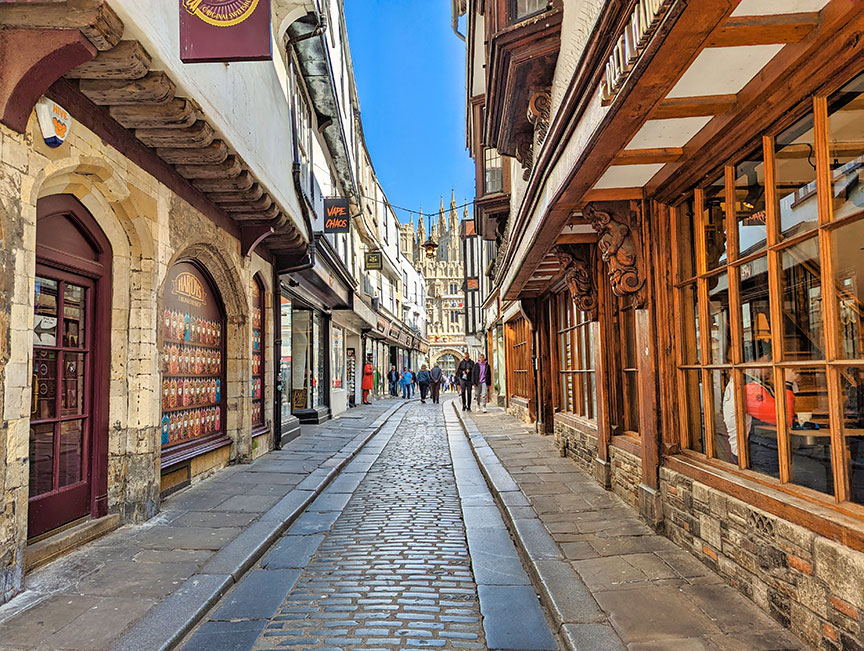
Setting Off for Canterbury: The Journey Begins
Embarking on a half-day shore excursion to Canterbury Cathedral and City, our group of 46 set off early in the morning, brimming with excitement and anticipation.
A Brief Stop: Dover Castle in View
5-minute bus ride | 10-minute photo stop
Dover Rd & Castle Hill Rd., Dover CT16 1HU, UK
The bus made a brief photo stop at the intersection of Castle Hill and Dover Road on the A258 lot, providing us with an obscured view of the imposing Dover Castle.
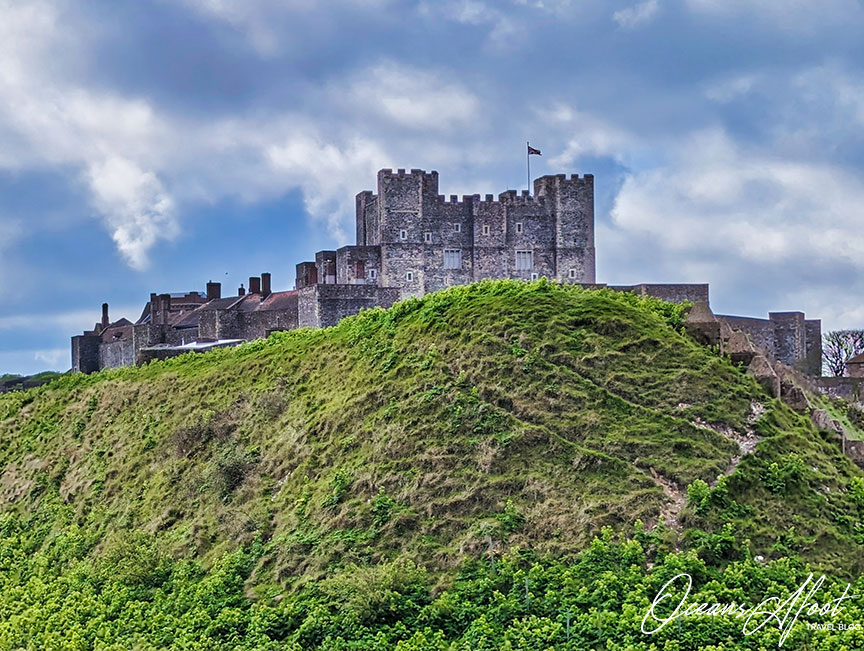
After capturing the moment, we continued our journey, filled with anticipation to explore the charming city of Canterbury and its awe-inspiring Cathedral.
Arrival in Canterbury: A Walk Through History
1-hour, 45-minute bus ride | 15-minute panoramic walk
14 Gravel Walk, Canterbury CT1 2TF, United Kingdom
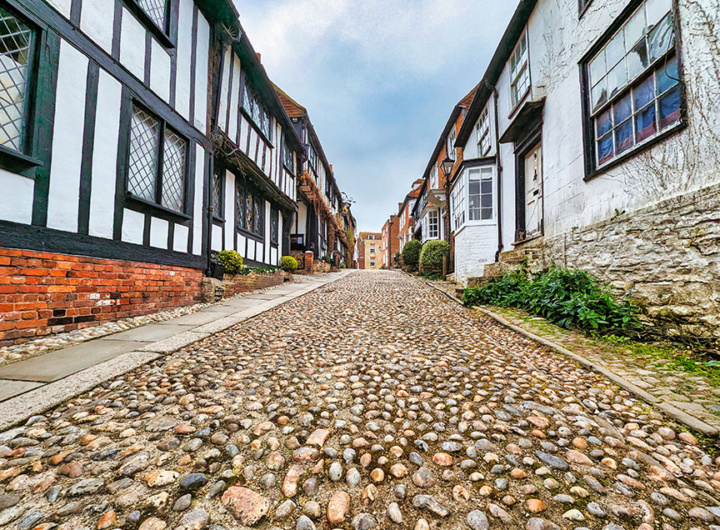
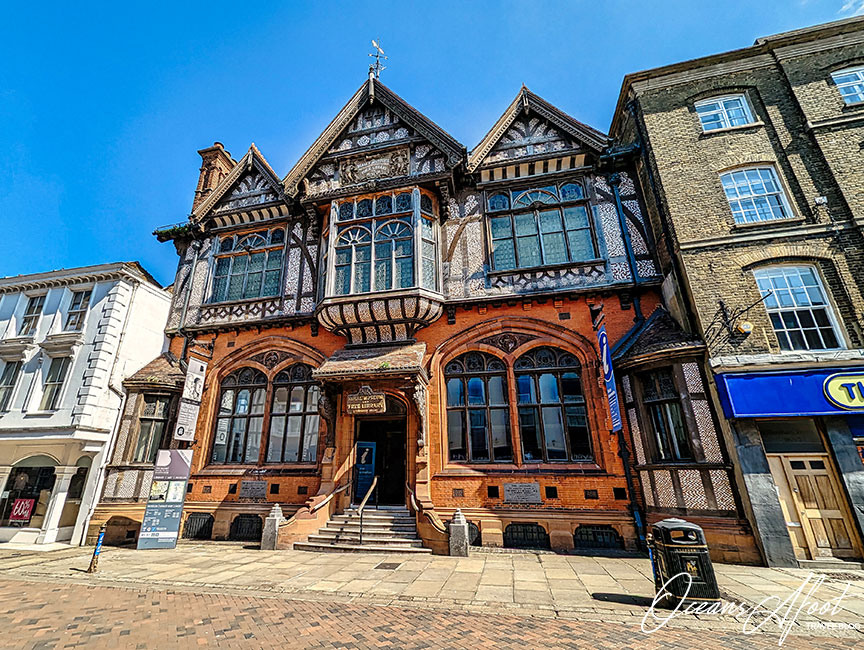
Our adventure started as we stepped out at Whitefriars, ready to explore the city’s charm. We set off for a leisurely walk along the city’s cobblestone streets, taking in the sights of the colorful buildings with their striking architecture.
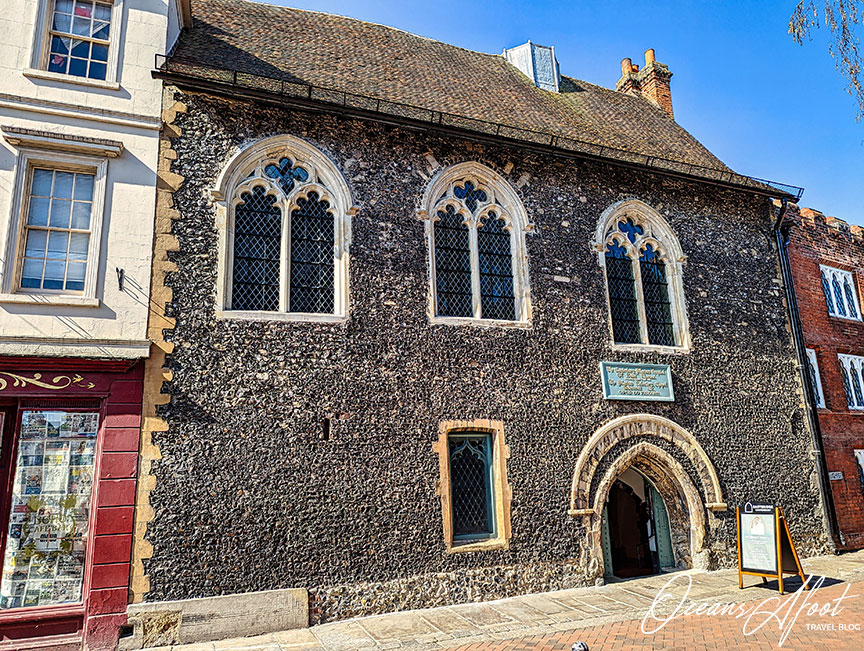
Moving along, we came across several notable landmarks. Among them was the Hospital of St. Thomas the Martyr. This hospital, dating back to the 12th century, was a place of rest and comfort for pilgrims on their journey to the shrine of St Thomas Becket.
As we followed along Canterbury’s charming cobblestone streets, we found ourselves at a stunning lookout. It framed the River Stour, the city’s primary waterway, flowing serenely between the age-old buildings. The sight was nothing short of a postcard-perfect moment, stirring visions of Venice’s picturesque canals.
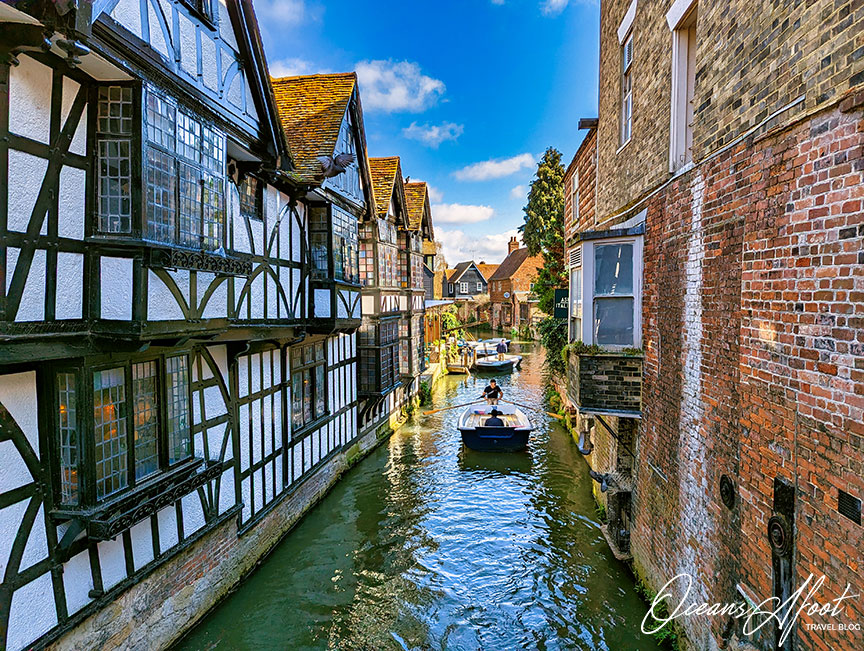
In the distance, the remnants of Canterbury’s ancient walls were visible, with the West Gate standing alone as the last piece of the city’s fortified past.
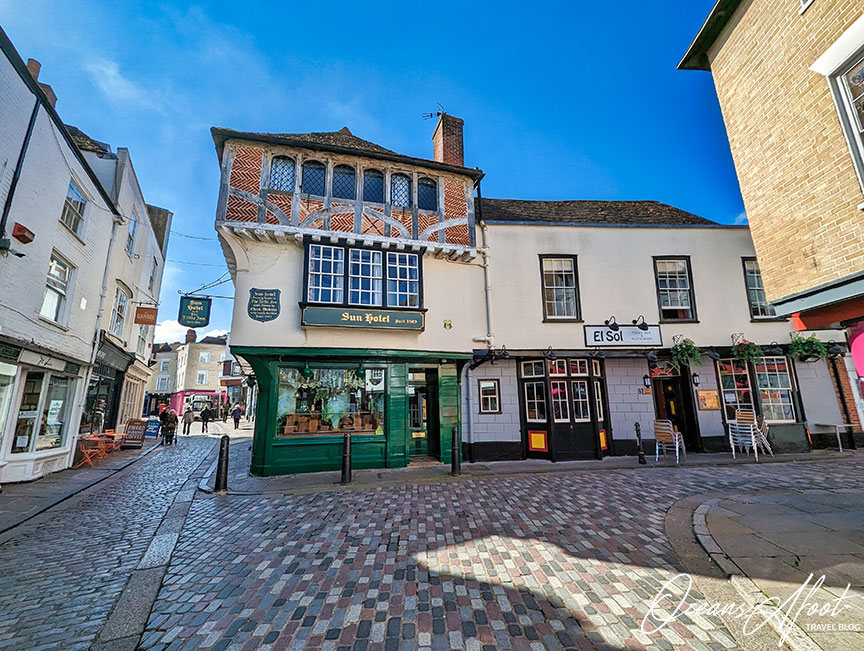
We then reversed course and made our way to the Sun Hotel, formerly known as ‘The Little Inn’. It earned its renown as a frequent lodging spot for Charles Dickens during his travels through rural Kent.
Navigating the labyrinth of quaint side streets, we found ourselves standing before the grand Christ Church Gate. This 16th-century artifact served as the official entry point to the cathedral precinct. Its intricate stone carvings and the usually imposing statue of Christ typically demanded attention, yet restoration works had temporarily led to the removal of the iconic Christ statue.
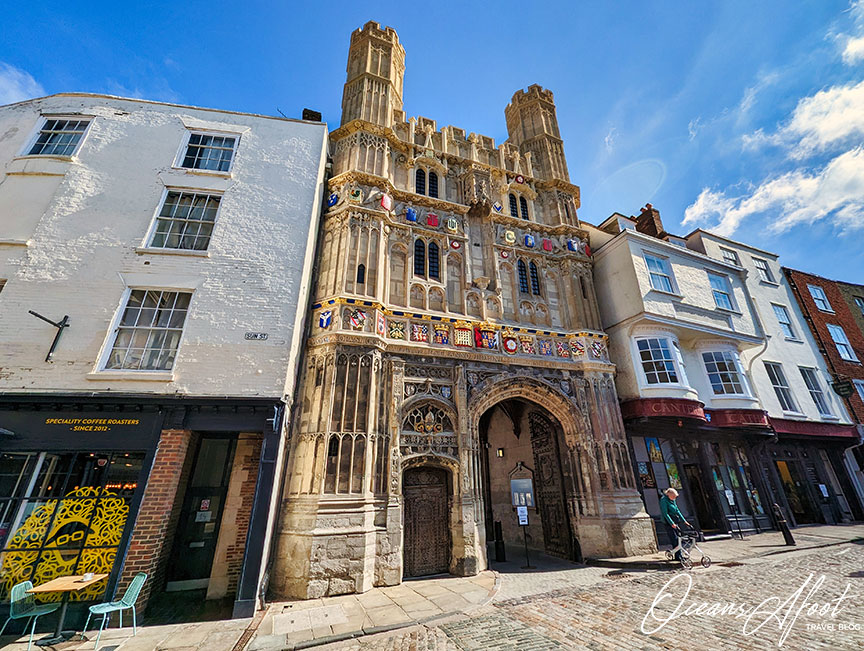
Despite the missing piece, the gate retained its power to evoke a profound connection to the past, bridging the gap between the bygone eras and the present. Emerging from the shadow of the gate, the sight that greeted us was the magnificent Canterbury Cathedral.
Canterbury Cathedral: Stepping into the UNESCO World Heritage Site
1-hour, 30-minute free time
Canterbury Cathedral, Cathedral House, 11 The Precincts, Canterbury CT1 2EH, United Kingdom
As we approached the Canterbury Cathedral, a UNESCO World Heritage site and the mother church of the worldwide Anglican Communion, we were awestruck at its sheer size and stunning Gothic architecture. With a history that dates back over 1,400 years, it has been a site of pilgrimage and worship for millions of people over the centuries.
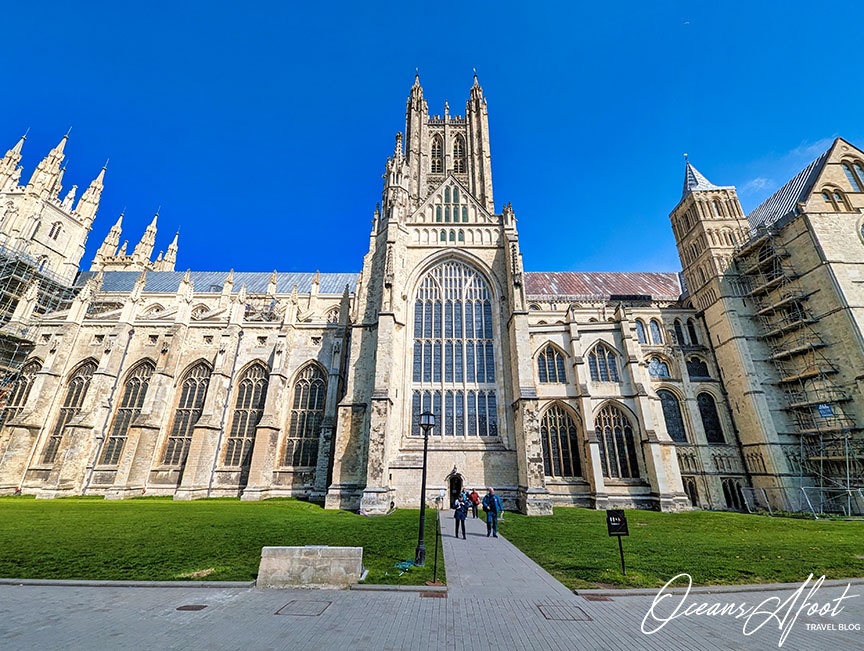
The Cathedral’s Gothic grandeur, with its majestic spires piercing the heavens, left an indelible mark on our memories.
Inside Canterbury Cathedral: Exploring Sacred Beauty
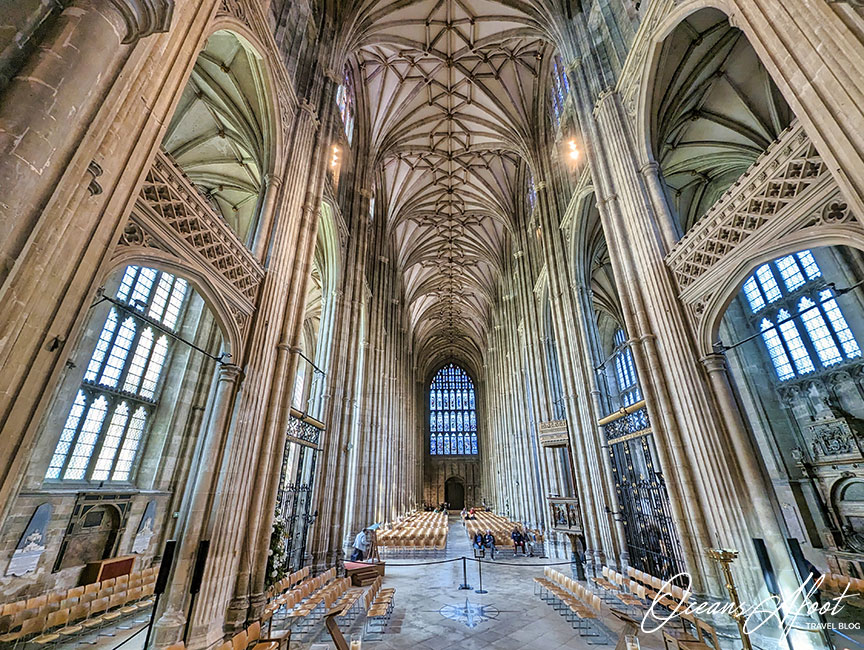
Crossing the threshold of Canterbury Cathedral, you are greeted by a grand spectacle of architectural and artistic brilliance that transcends time. The soaring Gothic arches draw your gaze upward towards the vaulted ceiling, which seems to brush the heavens. The ribbed vaulting and ornate bosses are a testament to the exceptional craftsmanship of the medieval masons.
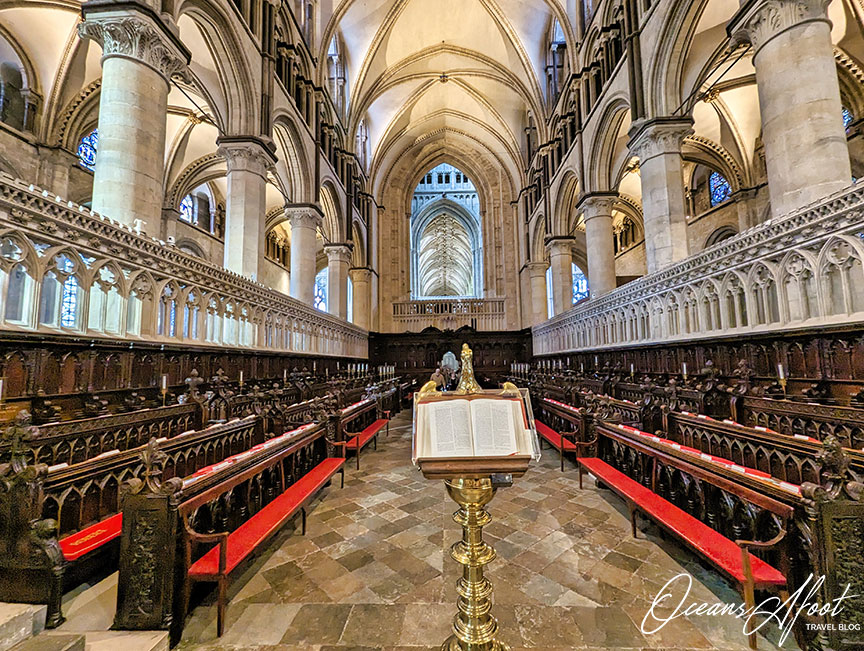
Your attention is then drawn to the choir, a spectacular display of intricately carved wooden stalls. The artistry and detail of the carvings, with their historical and biblical themes, are truly captivating.
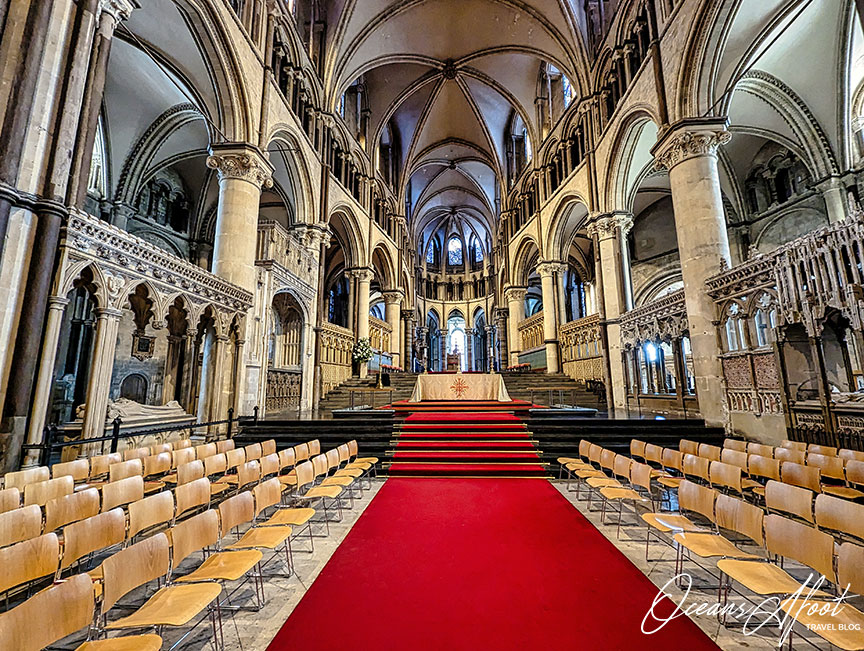
Beyond this lies the grand High Altar, the spiritual heart of the cathedral, around which the entire structure is centered.
Miracle Windows and Shrine of Saint Thomas Becket: A Colorful Narrative
As we ventured further, we came across a treasure trove of historic artifacts, including the Miracle Windows. These finely crafted windows serve as a colorful canvas, vividly illustrating the dramatic events surrounding Becket’s martyrdom and the ensuing miracles reportedly taking place at his tomb.
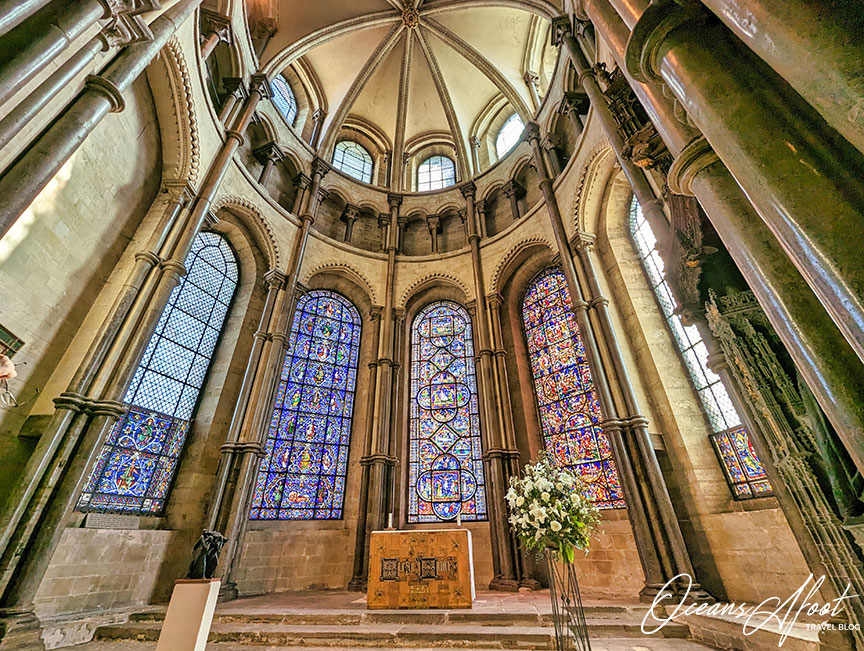
Each windowpane, an array of brilliant hues, acts as a literal and metaphorical portal into the past. They weave together a series of stories, portraying scenes from divine intervention to the healing of ordinary people, all beautifully detailed.
The Miracle Windows do more than simply allow light into the cathedral; they recount the compelling tale of Saint Thomas Becket’s life, his martyrdom, and the miracles associated with him posthumously. In essence, they offer a colorful, detailed narrative of Becket’s tragic end and the lasting impact of his legacy.
Quiet Reflections: Chapels and Sacred Shrines in Canterbury Cathedral
We continued our exploration, wandering through the serene chapels within the Cathedral. Each one seemed to have its own unique atmosphere, inviting moments of quiet reflection and reverence. In time, we reached the site once graced by the Shrine of Saint Thomas Becket. Unfortunately, the shrine fell victim to the tumultuous period of the Reformation and was destroyed. Today, a lone candle flickers endlessly at the spot, a tender tribute and a stark reminder of Becket’s timeless impact.
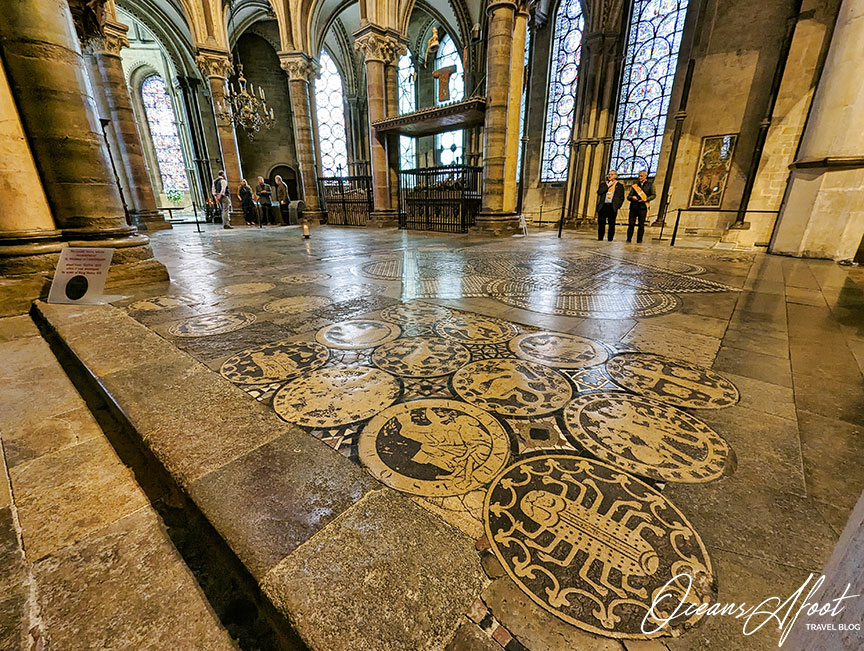
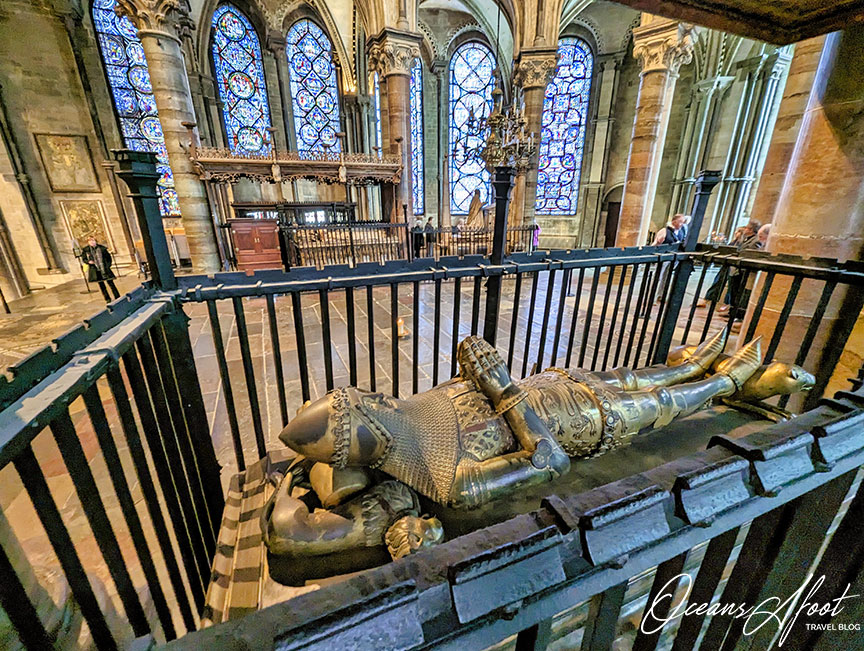
This sacred space, dedicated to the martyred saint, exuded a powerful sense of devotion and spirituality. As we continued exploring the cathedral’s historical treasures, the resplendent Black Prince’s Tomb nearby commanded our attention with its intricate details and rich history.
Medieval Wall Paintings: Tales of St. Eustace
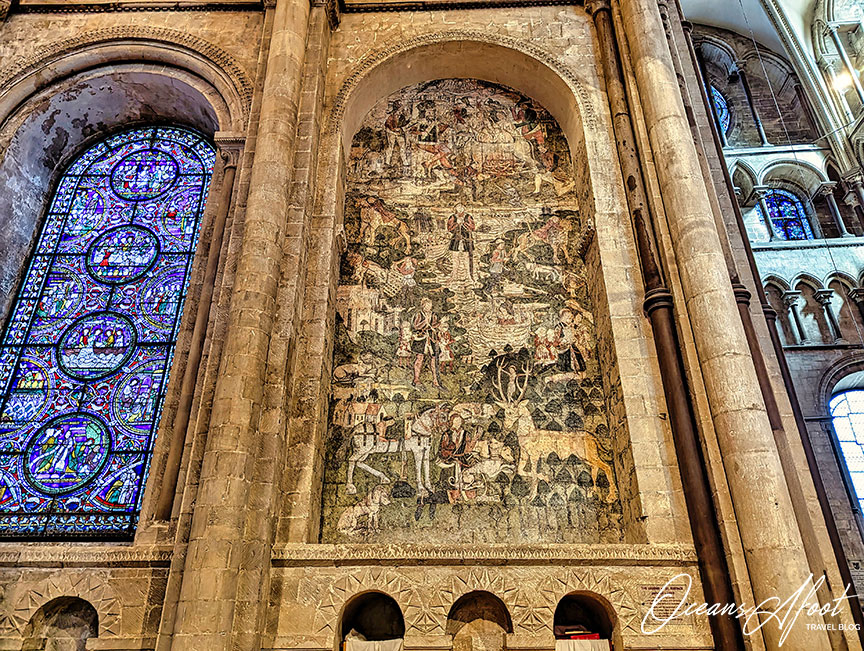
As we venture further into the enchanting depths of Canterbury Cathedral, we are greeted by a collection of diverse medieval art pieces. Among these treasures, our focus is drawn towards a captivating series known as the “Tales of St. Eustace.” These remarkable 15th-century wall paintings, unveiled to the world in 1830, offer a vivid glimpse into the narrative of St. Eustace’s life.
Echoes of the Past: The Crypt of Canterbury Cathedral
However, another experience, steeped in age and history, waits to be discovered in the tranquil depths of the cathedral – the crypt.
Regarded as one of the oldest sections of the cathedral, the crypt offers a stark contrast to the grandeur of the structure above. Here, under the shadowy arches, history whispers tales of ages past. The crypt’s Romanesque architecture, characterized by solid columns and rounded arches, is a tribute to the masterful construction of the 11th century.
Within its hushed confines, you can explore a series of chapels, each radiating its own distinct aura. The Chapel of Our Lady of the Undercroft, often referred to as the Martyrdom crypt, and the Chapel of St. Gabriel offer serene spaces for reflection. Notably, the Chapel of St. Gabriel, once a refuge for Huguenot worshippers, has retained much of its unadorned charm.
In the crypt, you’ll also find a number of tombs and memorials, including those belonging to Archbishop Theobald and Archbishop Courtenay. Their intricately carved stones are silent storytellers, revealing much about the artistic craftsmanship of the period.
However, visitors should note that while the crypt’s serene atmosphere and historical significance might stir the urge to capture its beauty, photography is not permitted within this area of the cathedral. This restriction helps to preserve the crypt’s delicate atmosphere, providing an experience purely focused on reflection, respect, and the allure of history.
The crypt’s captivating aura concludes the cathedral visit on a profound note, reminding us that we walk not just on cobblestone streets, but on layers of rich, living history.
Beyond the Cathedral: The City of Canterbury Awaits
St. Peter’s Street, Canterbury, CT1 2BE
Opting to explore further, we set our sights on the historic West Gate, previously just a distant silhouette. Our path took us back through the picturesque town, crossing over the idyllic River Stour.
Standing Tall: A Visit to the Westgate Towers Museum & Viewpoint
15-minute walk from Cathedral
Westgate Towers Museum & Viewpoint, 1 Pound Ln, Canterbury CT1 2BZ
As we approached the West Gate, we were captivated by its imposing structure, which stands as the last remaining gate of the city’s medieval walls.
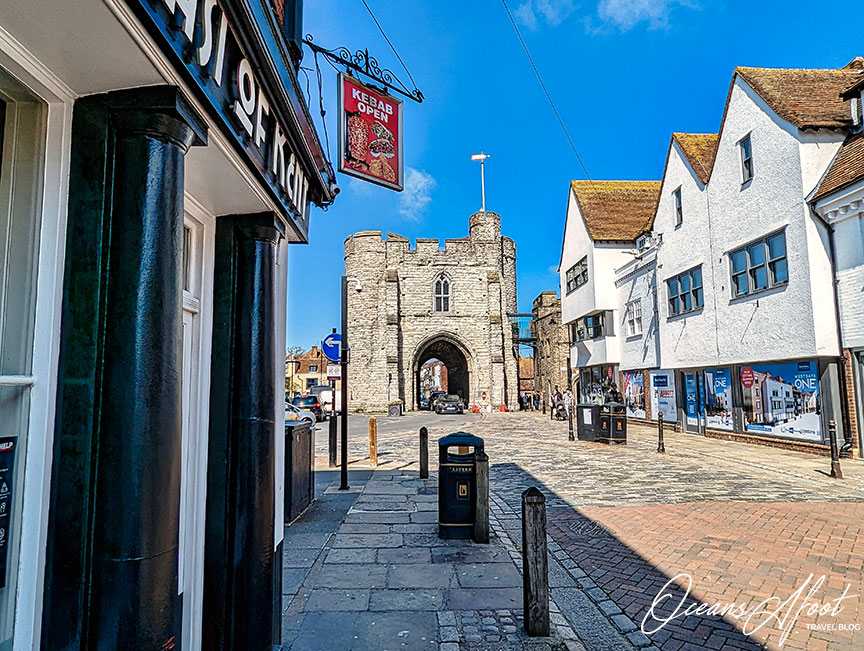
The West Gate has a rich history, having served as a defensive fortification and a prison in the past. Its impressive architecture and storied past provided a tangible connection to Canterbury’s vibrant history.
A Breath of Fresh Air: Westgate Gardens Park
Alongside Westgate Towers Museum & Viewpoint
Westgate Gardens, Westgate Grove, Canterbury CT1 2DB
Nestled adjacent to the West Gate, we discovered the picturesque Westgate Gardens Park. This enchanting green space, with its manicured lawns, beautiful flower beds, and inviting riverside trail, beckoned us to linger.
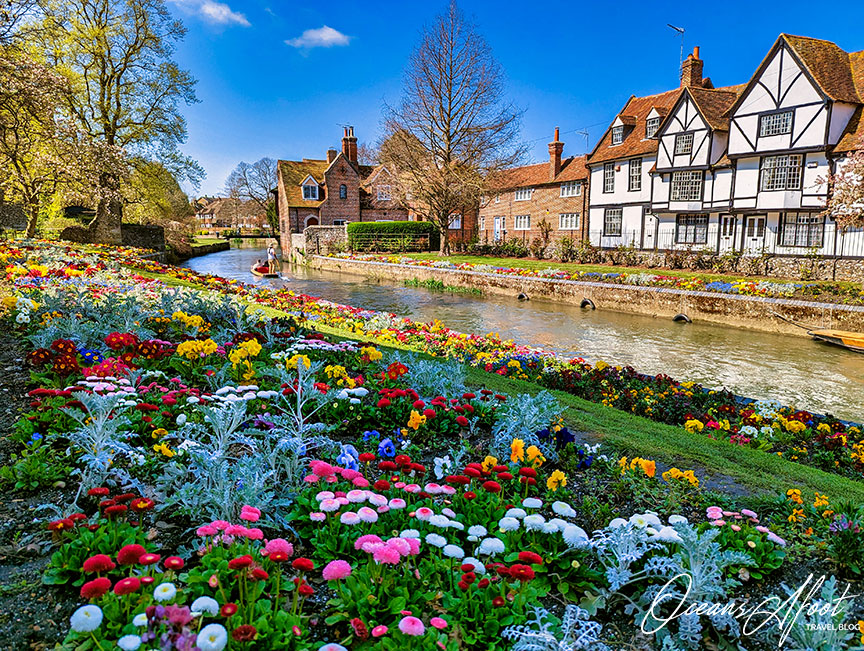
Alas, time was a cruel mistress, and we vowed to return to unearth the park’s hidden jewels at a later date.
Farewell to Canterbury: The Journey Home
40-minute bus ride
Dover Cruise Terminal, Lord Warden Square, Dover CT17 9DQ
As our shore excursion drew to a close, we arrived back at the pier by mid-afternoon, filled with gratitude for the chance to immerse ourselves in the history and charm of Canterbury. Our morning was undoubtedly well spent, and we encourage fellow travelers to add Canterbury to their must-visit lists. Personally, I can’t wait to uncover the mysteries of the nearby town of Sandwich during my next adventure to this captivating region.
Cruise Port: Dover, England
Shore Excursion: Canterbury Cathedral and City
Cruise Line/Ship: Holland America Rotterdam
Tour Operator: Intercruises
© OceansAfoot