Panama Canal • December 29, 2015
About This Experience
This once-in-a-lifetime maritime journey traced the entire route of the Panama Canal, from the Pacific entrance at Balboa to the Atlantic exit at Colón. Travelers witnessed multiple lock systems, scenic freshwater lakes, and dense jungle corridors—all while remaining aboard the ship with prime deckside viewing throughout the day.
🚇 Pacific to Atlantic: A Full-Day Transit of the Panama Canal
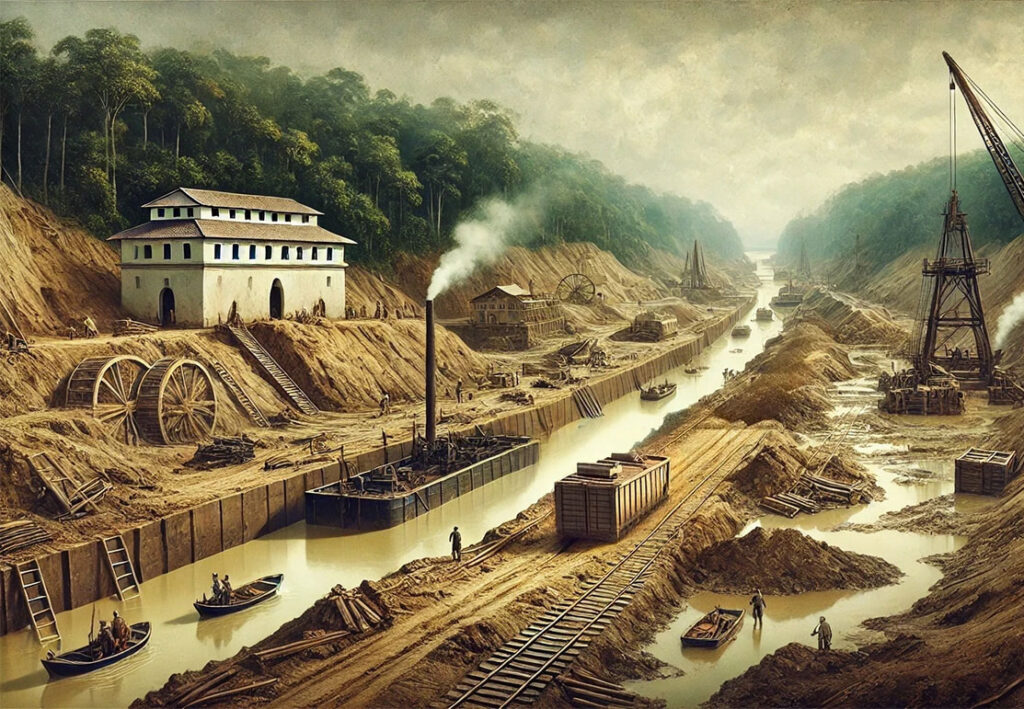
We rose before sunrise to prepare for one of the most technically impressive segments of our voyage: a complete daytime crossing of the Panama Canal aboard Holland America’s Amsterdam. Our passage would span the full 48-mile route from Balboa, on the Pacific coast, to Cristóbal, on the Caribbean side, tracing the original canal system that has operated continuously since 1914.
This globally significant waterway, which connects the Pacific and Atlantic Oceans across the narrow Isthmus of Panama, remains one of the most strategically important trade routes in the world. The ship’s naturalist provided live commentary from the bridge throughout the transit, offering historical background and engineering explanations at each stage.
Conditions were ideal for observation. Under dry-season skies typical for late December, passengers lined the outer decks early, many with binoculars and cameras, ready to follow the ship’s progress through the canal’s intricate system of locks, lakes, and cuts. While Amsterdam followed the original route, we also had visible access to portions of the Panama Canal Expansion—a parallel system of locks completed in 2016 to accommodate significantly larger cargo vessels known as New Panamax ships.
🚇 Station 1: Pacific Approach and Miraflores Locks
📍 Location: Miraflores Locks, Panama Canal Zone, Panama
⏳ Time Spent: Approximately 1.5 hours
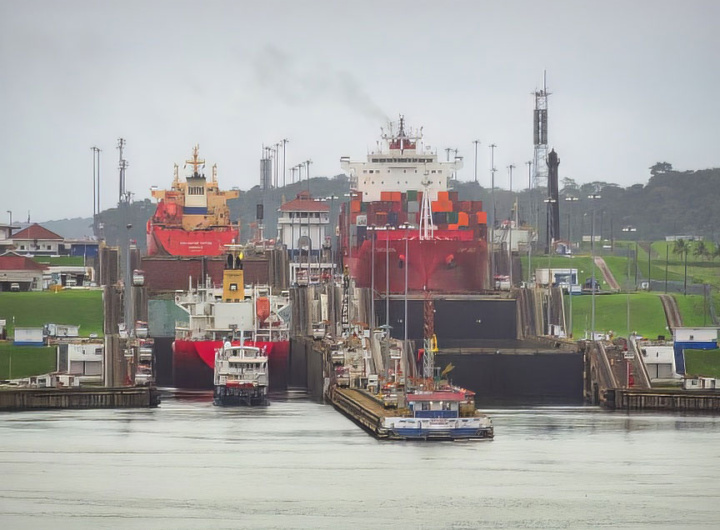
The transit officially began at the Miraflores Locks, located near the Pacific entrance of the canal just east of the Port of Balboa. This two-step lock system is the first elevation change in the canal’s west-to-east sequence, lifting vessels from sea level to the height of Miraflores Lake.
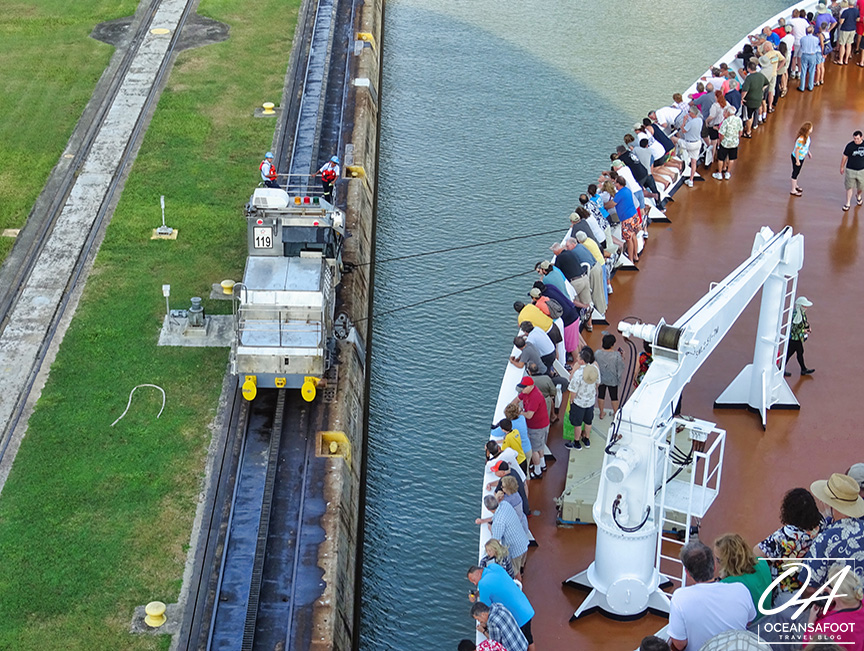
As Amsterdam approached the chamber, tugboats assisted with alignment to ensure safe entry. Once inside, a pair of electrically powered locomotives—locally known as “mules”—took over, securing the ship with cables and guiding it steadily through the lock. The filling process began with gravity-fed water drawn from upper reservoirs, raising the ship in controlled stages.
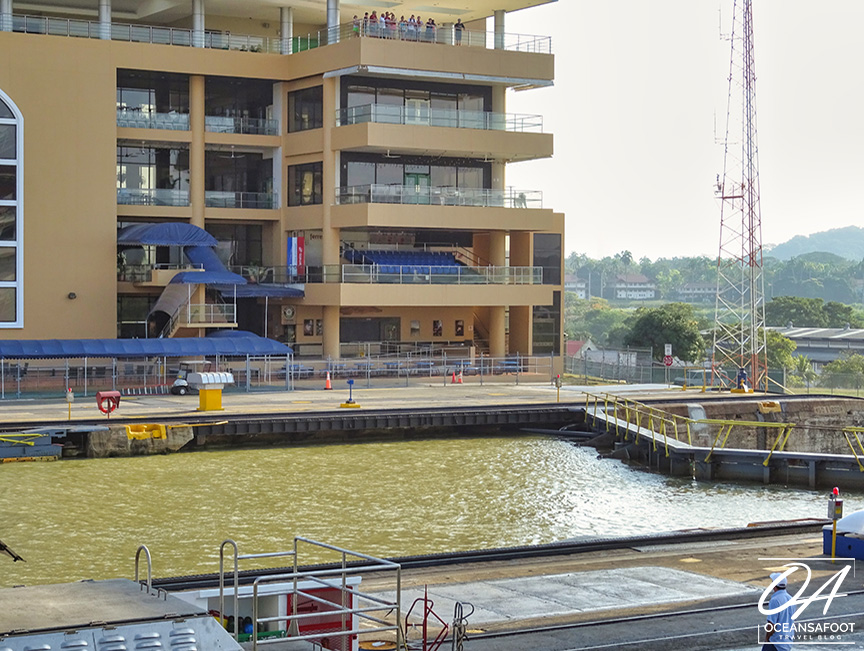
To the right of our position, we had an unobstructed view of the Miraflores Visitor Center, a multilevel complex perched beside the lock with large viewing terraces open to the public. Operated by the Panama Canal Authority, the facility includes a museum, café, and several open-air platforms where land-based visitors can watch vessels ascend and descend in real time. Dozens of spectators were visible along the rails, observing Amsterdam‘s transit and waving to passengers onboard.
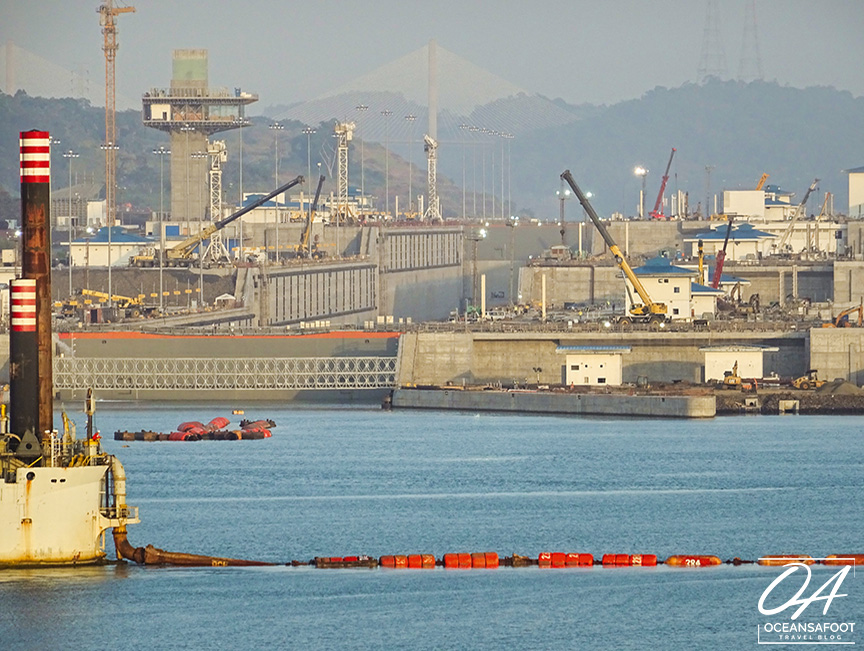
Off to the west, we could also see the Panama Canal Expansion—commonly referred to as the Third Set of Locks. Still nearing completion at the time of our crossing, this infrastructure project would open in 2016 and allow much larger New Panamax ships to use the waterway via a wider, parallel route.
From the outer decks, guests watched the Pacific slowly fall away as the ship ascended, marking the start of the carefully engineered elevation sequence that powers eastbound canal transits.
🔩 Lock Engineering – The original canal lock gates are hollow steel structures, 7 feet thick and up to 82 feet high, designed to float during maintenance.
🚇 Station 2: Pedro Miguel Lock and Centennial Bridge
📍 Location: Pedro Miguel Lock, Panama Canal Zone, Panama
⏳ Time Spent: Approximately 45 minutes
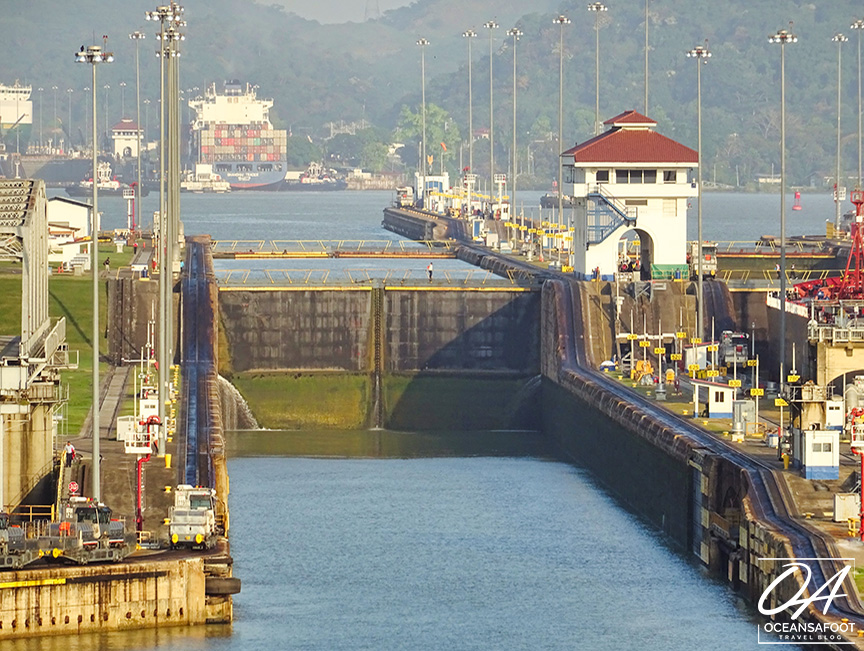
Following our ascent through the Miraflores Locks and a brief passage across Miraflores Lake, we arrived at the Pedro Miguel Lock, the only single-chamber lock in the original Panama Canal system. This chamber provided the final lift required to reach the elevation of Gatun Lake, raising Amsterdam to approximately 85 feet above sea level.
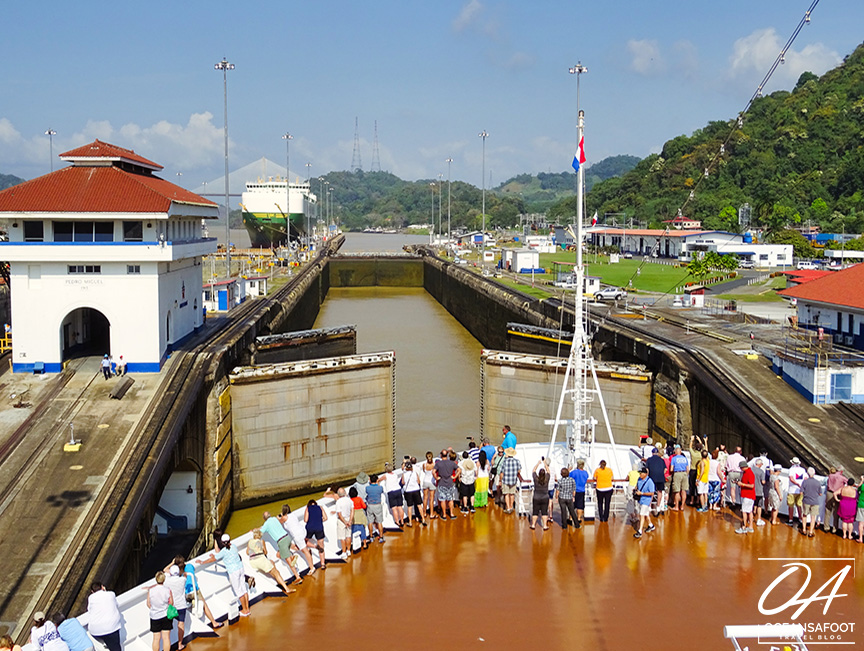
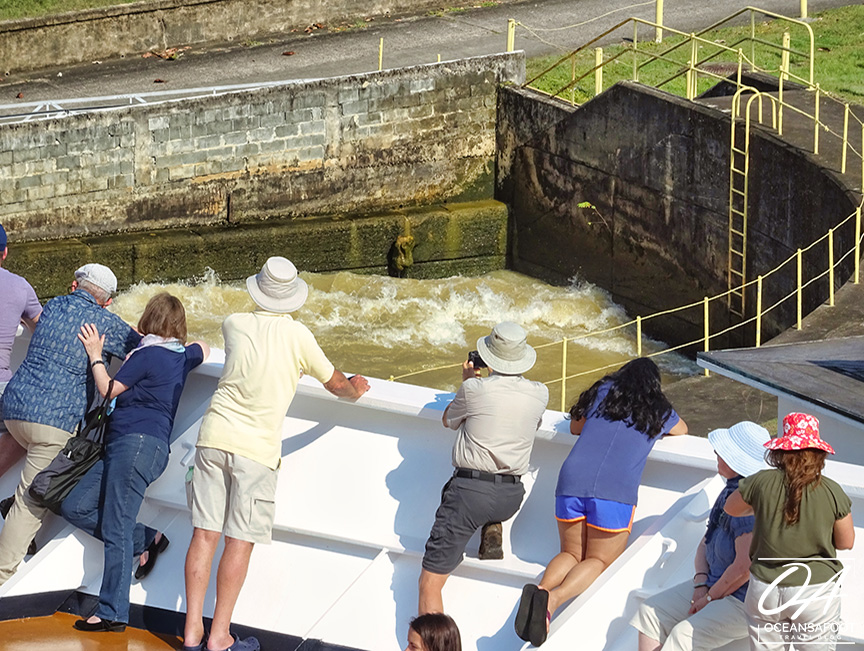
From the ship’s forward port side, we had a direct view into the chamber’s recessed base as pressurized water surged in, filling the lock from below and generating visible turbulence along the inner wall. This hydraulic action, fed by gravity from higher reservoirs, powered the lift with no mechanical pumps involved.
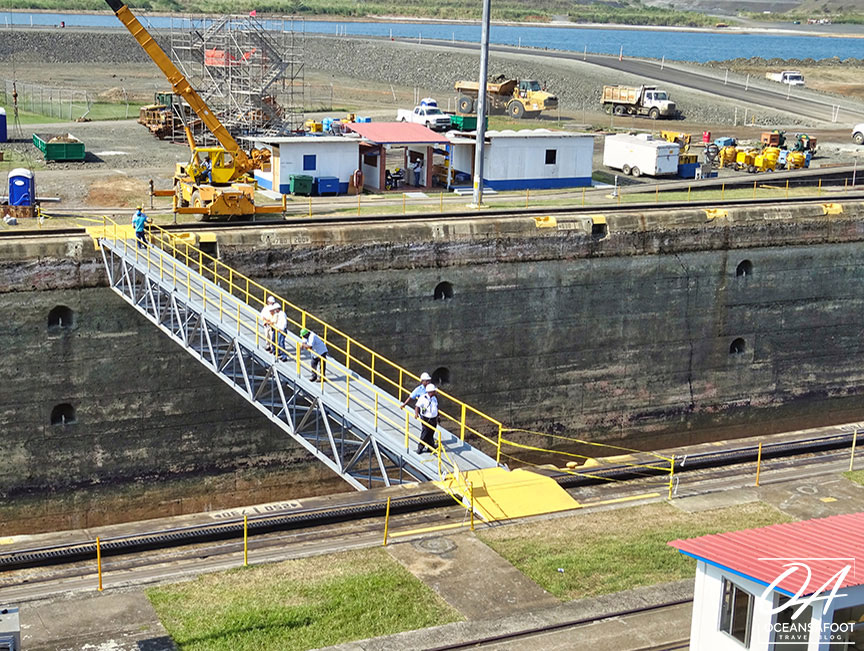
Along the opposite lock wall, we also observed a steel pedestrian bridge set up for canal workers to cross the drained chamber. The walkway was suspended above the tracks used by the lock’s electric mules and connected two maintenance platforms flanking the lock. With one side temporarily emptied, crews used the span to move tools and personnel across the chamber floor—an unusual perspective not typically visible during routine operations.
Positioned at the southern end of the Culebra Cut—the canal’s narrowest and most geologically demanding section—Pedro Miguel Lock serves as a vital transition point in the west-to-east navigation sequence.
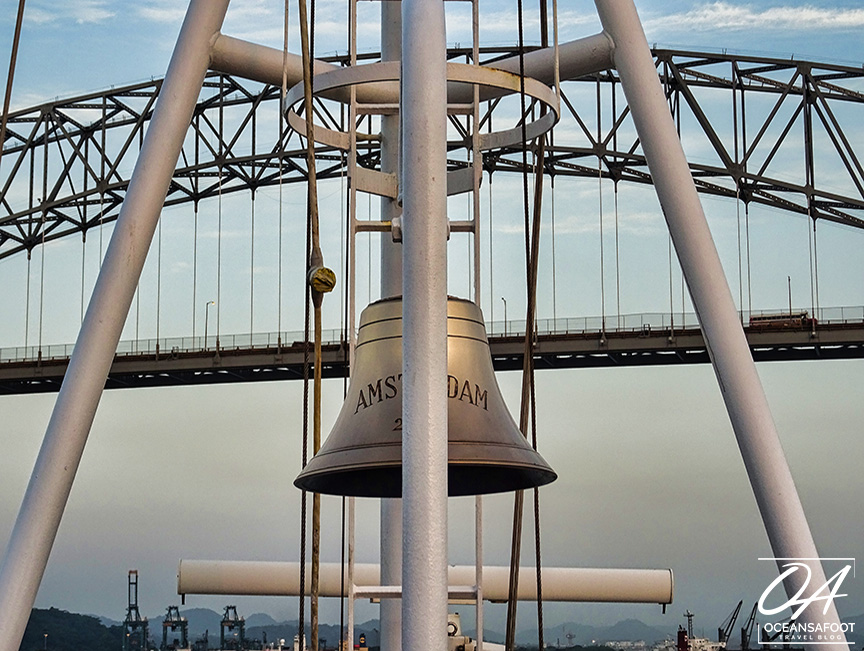
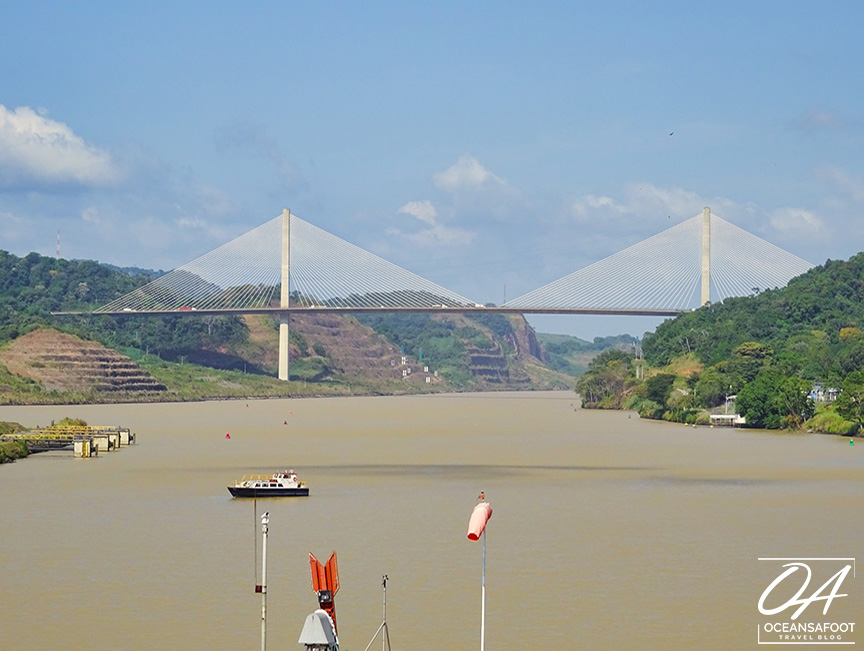
Just beyond the chamber, Amsterdam passed beneath the soaring Centennial Bridge, a modern concrete span inaugurated in 2004 to relieve congestion from the nearby Bridge of the Americas. At more than 260 feet above the waterline, it links the eastern and western halves of Panama and is one of Central America’s tallest vehicular bridges.
🌍 Maritime Corridor – The Panama Canal handles roughly 5% of all global maritime trade, with over 12,000 vessels transiting annually.
🚇 Station 3: Gatun Lake Transit
📍 Location: Gatun Lake, Colón Province, Panama
⏳ Time Spent: Approximately 3 hours
The central segment of our Panama Canal transit carried us across Gatun Lake, a vast artificial reservoir formed in 1913 by damming the Chagres River. Elevated approximately 85 feet above sea level, the lake serves as the main waterway linking the canal’s lock systems at either end enabling uninterrupted navigation across the continental divide.
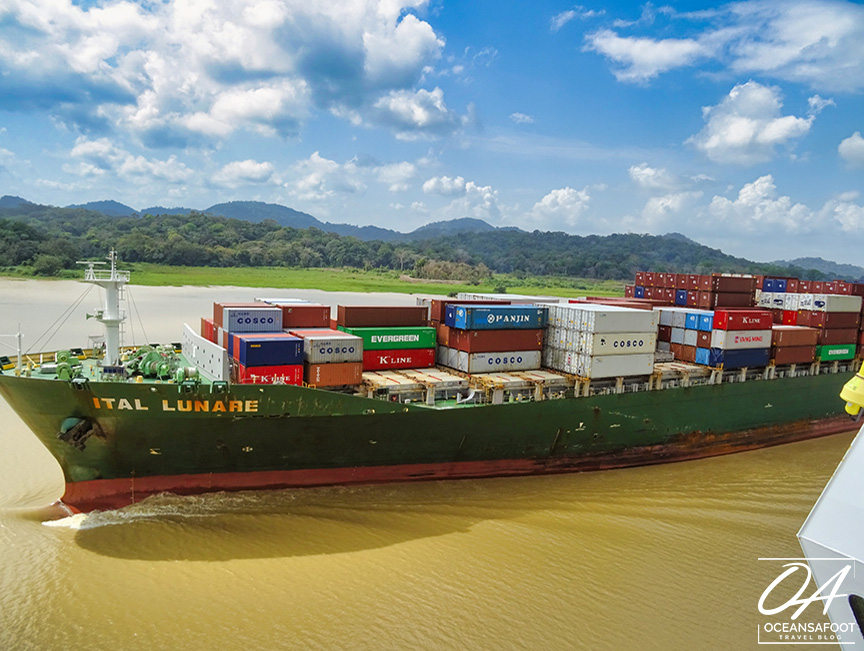
Amsterdam traveled at a controlled pace through the lake’s winding channels, bordered by thick rainforest and remote inlets. Along the way, we passed occasional dredging barges and cargo vessels navigating the opposite direction, all part of the continuous flow of global commerce routed through the canal.
👷 Workforce Legacy – Over 30,000 laborers from more than 50 countries worked under U.S. administration to complete the canal between 1904 and 1914.
🚇 Station 4: Gatun Locks and Atlantic Descent
📍 Location: Gatun Locks, Colón, Panama
⏳ Time Spent: Approximately 1.5 hours
The final stage of our Panama Canal transit took place at the Gatun Locks, a three-step chamber system that returned the Amsterdam from the elevated level of Gatun Lake down to sea level at Cristóbal, on the Caribbean coast. Opened in 1914, the Gatun complex remains the largest and most complex of the original locks and continues to serve as a crucial link in global shipping routes.
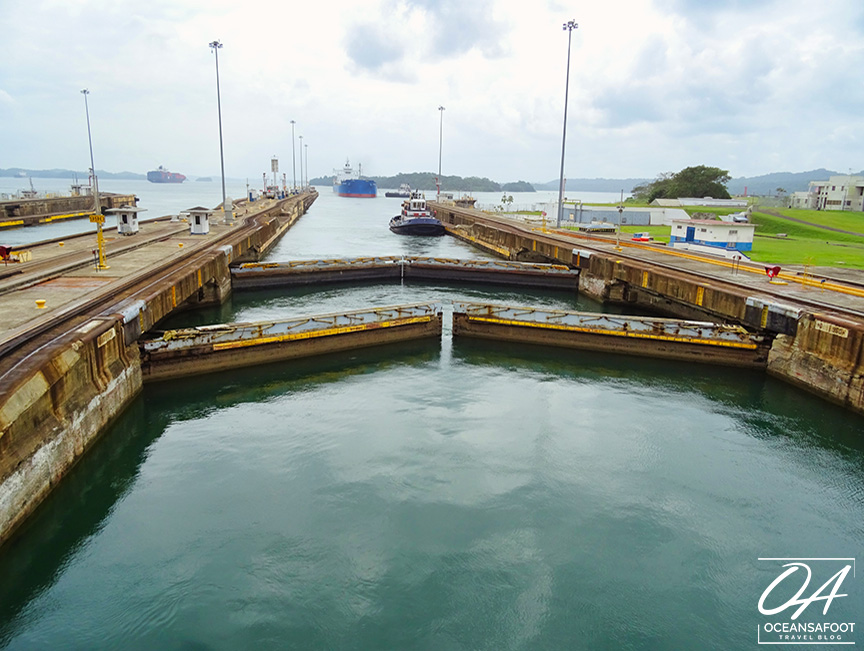
Each of the three lock chambers drained in sequence, lowering the ship a total of 85 feet over approximately 90 minutes. From the observation decks, passengers had a close-up view of the massive steel gates in operation and the coordinated effort of the mechanical mules guiding the vessel along the narrow concrete walls.
What stood out most at this stage was just how precisely the ship fit within the lock chamber. There was often less than a foot of clearance between the hull and the edge of the canal wall, leaving little margin for error. This tight configuration was especially apparent when we passed another vessel in the adjacent chamber—an industrial-scale example of marine choreography.
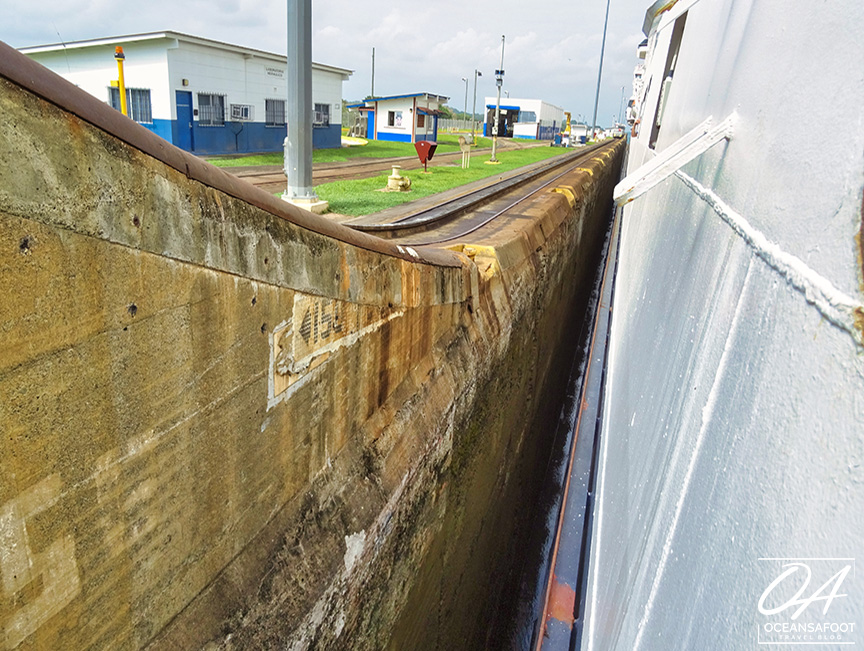
As the final gate opened and the Amsterdam eased into the Caribbean, the full Pacific-to-Atlantic transit came to a smooth and successful conclusion—completing a rare and iconic voyage across the Isthmus of Panama.
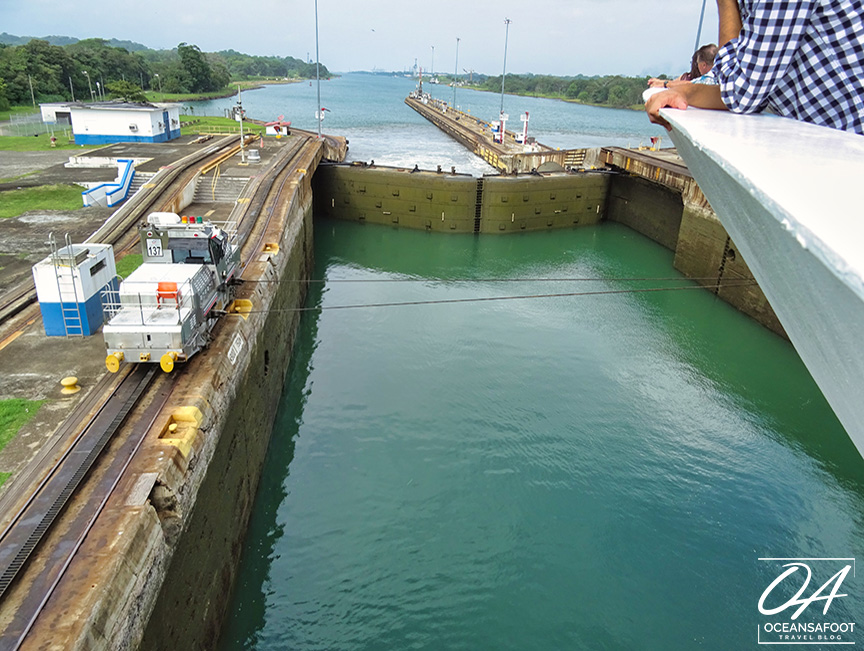
📊 Water Use Fact – Each full canal transit requires approximately 52 million gallons of freshwater, all gravity-fed from Gatun Lake.
✅ Who Is This Tour Best For?
✅ First-time visitors
✅ Maritime enthusiasts
✅ History lovers
✅ Photography enthusiasts
✅ Engineering and infrastructure buffs
📰 Tour Summary
🔖 Tour Name: Full Transit of the Panama Canal
🚢 Offered By: Holland America Line
⏳ Total Duration: Approximately 9 hours
⛔ Stations: Miraflores Locks, Pedro Miguel Lock, Gatun Lake, Gatun Locks
🚍 Float-By Highlights: Culebra Cut, Gamboa Rainforest, New Canal Expansion, Pedro Miguel Town
Shipboard Experience Disclaimer:
Descriptions of shipboard experiences on OceansAfoot—such as canal transits, scenic cruising, or maritime events—are based on personal participation aboard commercial voyages. OceansAfoot is not affiliated with any cruise line or transportation authority mentioned. All observations reflect individual experience and are intended for informational use only.
© OceansAfoot