✘ Montevideo, Uruguay • February 9, 2025
⌖ Cobblestones, Colonial Forts, and Riverside Charm
Tour Route: Montevideo → Plaza de Toros → Colonia Sign → Barrio Histórico → Mesón de la Plaza (Lunch) → Artisan Shops & Promenade → Return
The day began as we boarded the bus at Montevideo’s cruise terminal, greeted by our guide’s warm welcome and a detailed preview of the adventure ahead. Our itinerary promised a scenic journey through Uruguay’s countryside, a visit to the historic Plaza de Toros, and a deep dive into the heart of Colonia del Sacramento, one of the most well-preserved colonial towns in South America.
As the bus pulled away, we caught sight of the Río de la Plata, its vast, shimmering expanse stretching toward the horizon. “Despite its name,” our guide explained, “this is not a river but an estuary—one of the widest in the world.” Beyond the water lay Buenos Aires, a mere speck in the distance, but our focus was on Colonia, founded by the Portuguese in 1680 and fiercely contested between Spain and Portugal for much of its early history.
As we neared Colonia, the countryside unfolded in rolling pastures and sprawling vineyards, the heart of Uruguay’s dairy and wine industries. The region was particularly known for its butter, cheese, and Tannat wine, a bold red varietal that had become Uruguay’s signature.
① Plaza de Toros
Location: Plaza de Toros, Real de San Carlos, Av. Mihanovich 66, Colonia del Sacramento, Uruguay
Time Spent: 15 minutes
Our first stop was the Plaza de Toros Real de San Carlos, an imposing yet timeworn bullring on the outskirts of Colonia. Built in 1910, it was intended to bring the grandeur of Spanish bullfighting to Uruguay, but the sport was banned just two years later, leaving the arena to decay.
Stepping off the bus, we stood before the grand circular structure, its arched entryways and faded yellow façade whispering of a bygone era. The guide explained that this bullring was once part of a lavish entertainment complex, which included a casino, racetrack, and hotel, designed to attract the elite of Buenos Aires. While the casino had long since vanished, the bullring had recently been partially restored and now hosted concerts and cultural events.
Walking along the weathered outer walls, we peered through rusted gates and imagined the roaring crowds that never truly had a chance to fill them. After capturing photographs, we boarded the bus once more, eager for the next chapter of our journey.
② Colonia Sign Photo Stop
Location: Colonia Sign, Rambla de las Américas, Colonia del Sacramento, Uruguay
Time Spent: 10 minutes
Just before entering Colonia del Sacramento’s historic center, we made a brief stop at the Colonia sign, a colorful landmark situated along the waterfront promenade. As we stepped off the bus, we were greeted by a panoramic view of the Río de la Plata, its vast waters stretching toward the horizon. The sky was a nice blue, and the Río de la Plata looked a bit murky.
A few folks took turns posing in front of the large, multicolored “Colonia” letters, capturing a perfect memory of the visit. The guide pointed out that on extremely clear days, the skyline of Buenos Aires could be faintly seen across the water, just 25 miles away. A gentle breeze carried the scent of the sea, and the peaceful atmosphere made it an ideal spot for a short break before diving into the town’s history.
③ Colonia del Sacramento
Location: Barrio Histórico, Colonia del Sacramento, Uruguay
Time Spent: 1.5 hours
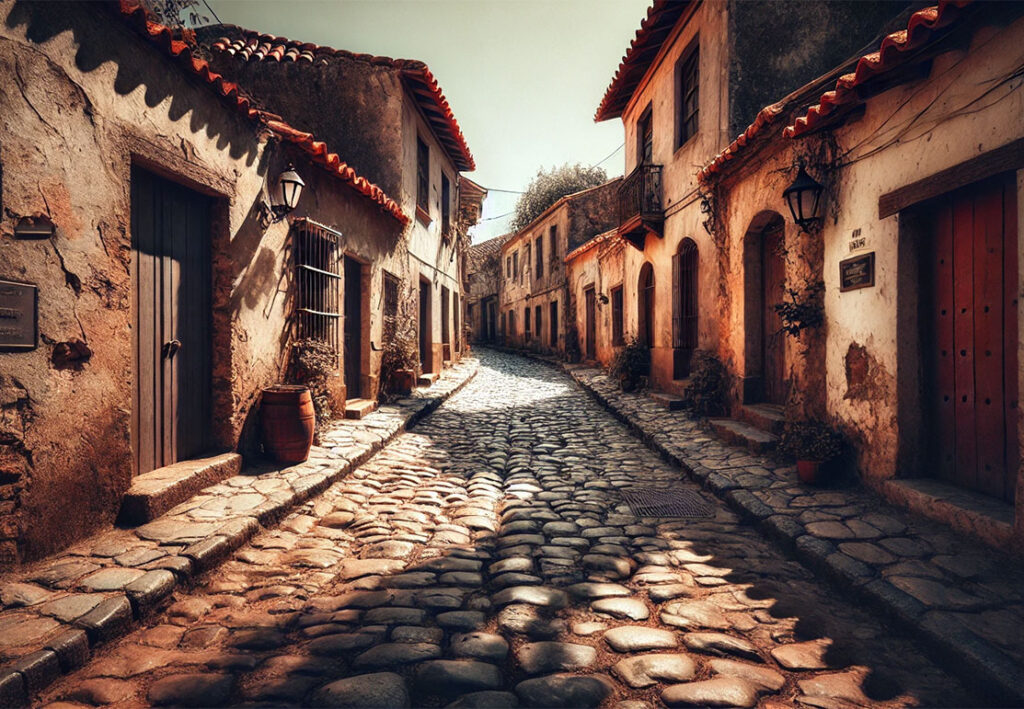
Arriving in Colonia del Sacramento, we stepped onto streets paved with centuries-old cobblestones, where Portuguese and Spanish influences intertwined in every corner. The first landmark to greet us was the Portón de Campo, the original stone gateway and drawbridge that once defended the town from invaders. Walking beneath its ancient archway, we entered Plaza Mayor, a leafy, sun-dappled square where time seemed to stand still.
The town’s architectural contrasts were striking. Portuguese-style buildings, with their thick stone walls and terracotta roofs, stood side by side with Spanish-style homes, adorned with intricate facades and wrought-iron balconies. The guide explained that these styles reflected Colonia’s turbulent past, as the town changed hands multiple times between the Spanish and Portuguese empires.
One of the most enchanting streets was Calle de los Suspiros (Street of Sighs), a narrow, atmospheric lane lined with rustic houses. Some say it was named for prisoners who sighed their last breath before execution, while others insist it was a secret meeting place for lovers. Whatever the truth, the worn stones and weathered doorways told stories of centuries past, making it a favorite spot for photographs.
Continuing our exploration, we passed the Ruins of the Convent of San Francisco, where crumbling stone walls stood as a reminder of Colonia’s tumultuous history. Rising above them was the Lighthouse of Colonia, a whitewashed beacon built in 1857, still guiding sailors along the Río de la Plata. Though we didn’t climb it, we saw visitors gazing out from the top, soaking in panoramic views of the town and the distant Argentinian coastline.
Another highlight was the Basilica del Santísimo Sacramento, one of Uruguay’s oldest churches, originally built in 1695 by the Portuguese. Though it had undergone several reconstructions, it retained an elegant simplicity, its thick whitewashed walls and high wooden beams exuding a sense of peace.
④ Mesón de la Plaza – Lunch in Colonia
Location: Mesón de la Plaza, Vasconcellos 153, Colonia del Sacramento, Uruguay
Time Spent: 1 hour
After a morning steeped in history, we made our way to Mesón de la Plaza, a cozy family-run restaurant set within the old town. The inviting aroma of grilled meat and freshly baked bread filled the air as we settled in for a well-deserved meal.
The menu featured Uruguayan specialties—tender asado (grilled beef), fresh river fish, and a vegetarian ravioli option in a delicate tomato sauce. The meal was paired with Tannat wine, a rich, full-bodied red unique to Uruguay.
For dessert, we indulged in flan drizzled with caramel, fresh strawberries with cream, or ice cream, each dish a sweet ending to a flavorful meal. Conversation flowed easily as we reflected on the morning’s discoveries and the town’s quiet, undisturbed charm.
⑤ Artisan Shops & Promenade
Location: Colonia Waterfront & Artisan Quarter
Time Spent: Approximately 30 minutes
With a little free time before our departure, we decided to explore further, following the directions our guide had given us toward a pier that was said to offer a view of the Río de la Plata. As we walked, the streets grew quieter, and instead of an open waterfront, we arrived at an abandoned building, its walls covered in graffiti and its roof long gone, exposing it to the elements. Beyond it, the waterfront was cordoned off with a chain-link fence, blocking access to the shoreline.
Since we were not able to access the waterfront, we headed back, and on our way, we came across a striking antique car, its polished exterior contrasting beautifully with the old stone buildings nearby. It was an elegant reminder of Colonia’s blend of preserved history and timeless charm.
The scent of grilled meats from street vendors drifted through the air, adding to the warmth and energy of the town. It was a fitting farewell, capturing the essence of Colonia del Sacramento—where history, culture, and everyday life intertwined in the most unexpected ways.
☑ Who Is This Tour Best For?
- History Lovers: Portuguese fortifications, Spanish houses, and colonial contrasts.
- Architecture Enthusiasts: Streets, convent ruins, and centuries-old churches.
- Photographers: Cobblestones, Street of Sighs, lighthouse, and waterfront views.
- Food Lovers: Asado, Tannat wine, and local desserts.
- Cultural Explorers: Stories of conflict, settlement, and daily Uruguayan life.
⊞ Tour Summary
- Tour Name: Colonia del Sacramento
- Offered By: Princess Cruises (via local operators)
- Total Duration: 5 hours (approx.)
- Main Stops: Plaza de Toros, Colonia Sign, Barrio Histórico, Mesón de la Plaza (lunch), Artisan Shops & Promenade
- Drive-By Highlights: Río de la Plata, Uruguayan countryside, vineyards, dairy farms

▣ Activity Summary
- Walking Distance: ~4,000–5,000 steps
- Terrain: Uneven cobblestones, gravel, and plazas; moderate walking required
- Accessibility: Moderate; some uneven streets and slopes
- Meals Included: Lunch at Mesón de la Plaza (choice of beef, fish, or vegetarian; dessert; paired with Tannat wine)
Excursion Disclaimer: Descriptions of shore excursions on OceansAfoot reflect individual travel experiences and are not official representations of the cruise lines or tour providers mentioned. All information is based on personal participation, publicly available facts, or traveler observation.
© OceansAfoot