✘ Kemi, Finland • June 24, 2026
⌖ Across the Finland-Sweden Border in Tornio and Haparanda
Tour Route: Kemi → Haparanda Church → Haparanda Railway Station → Tornio Church → Tornio Waterfront → Rajalla / Victoria Square → Kemi
From the port at Kemi, our afternoon excursion headed west toward Tornio and its Swedish neighbor, Haparanda. The two cities sit together at the Finland-Sweden border, connected by roads, rail and daily life while operating in different countries, currencies and time zones.
Our guide explained that we would visit Haparanda first before returning to Tornio. The Torne River forms part of the international boundary, although she noted that people living along it tend to regard the river more as a shared waterway than as a dividing line.
As we approached the border, Tornio appeared across the river before the coach turned toward Haparanda. The transition into Sweden was understated. The guide announced that we would soon be in Sweden, but there was no passport control or formal border stop.
① Haparanda Church
⚲ Haparanda, Sweden
⧗ ~15 minutes
Our first stop in Sweden was Haparanda Church, whose dark exterior looks more like a modern civic or industrial building than a traditional Scandinavian church.
The present church was inaugurated in 1967 after its 1825 predecessor burned in 1963. Architect Bengt Larsson called the design Rent Hus, or “Pure House,” emphasizing simplicity, purity and function. A steel frame supports the building beneath its dark copper-clad exterior.
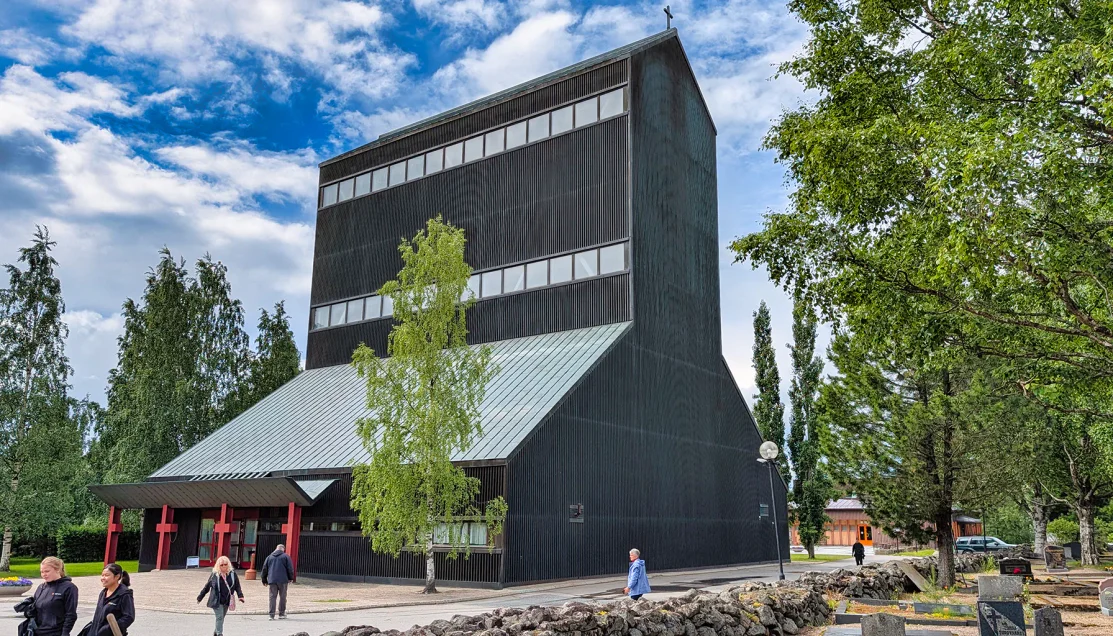
The dark, copper-clad exterior of Haparanda Church reflects architect Bengt Larsson’s modern Rent Hus, or “Pure House,” design.
That dark exterior makes the transition inside especially noticeable. The sanctuary is broad, bright and restrained, with pale surfaces, light wood furnishings and a level, open floor plan. Light entering through the raised central roof structure gives the interior a dramatically brighter character than the exterior suggests.
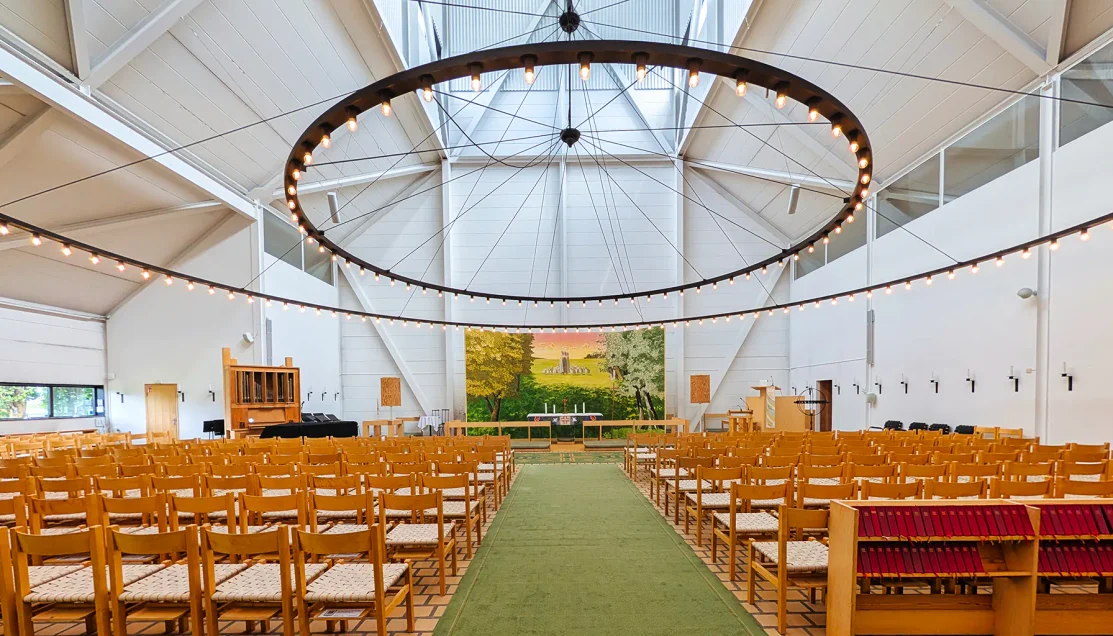
The bright sanctuary centers on a broad green-carpeted aisle beneath a circular lighting fixture suspended from the high, angular ceiling.
One of the church’s most distinctive features is its principal organ, built by Grönlunds Orgelbyggeri and inaugurated in 1972. Rather than keeping all of its pipes within the vertical case, ranks of copper pipes project horizontally into the sanctuary, giving the instrument an immediately recognizable profile.
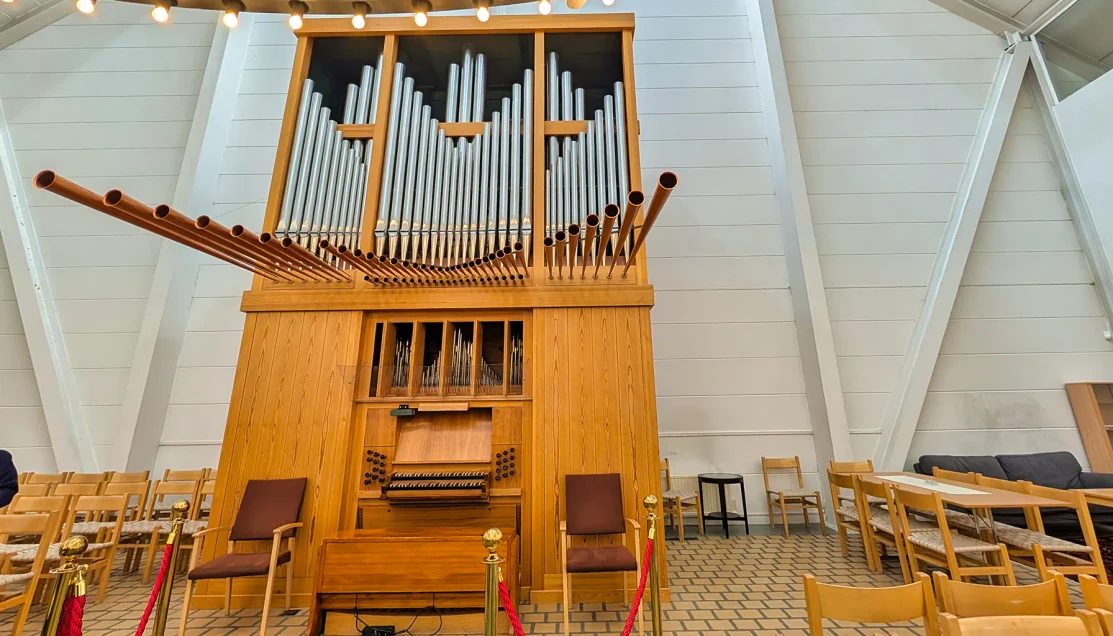
The unusual horizontal pipes extend into the sanctuary, making the 1972 organ a distinctive visual feature as well as a musical instrument.
Outside, we continued through the surrounding cemetery. Many of the family plots were edged in stone and filled with pale sand carefully raked into neat patterns, giving the grounds a distinctly maintained appearance.
Nearby, three bells hung from a freestanding steel structure on the site of Haparanda’s former church, which was destroyed by fire in 1963. Each bell carried a biblical inscription, including a Finnish passage from Psalm 95 calling worshippers to bow before the Lord.
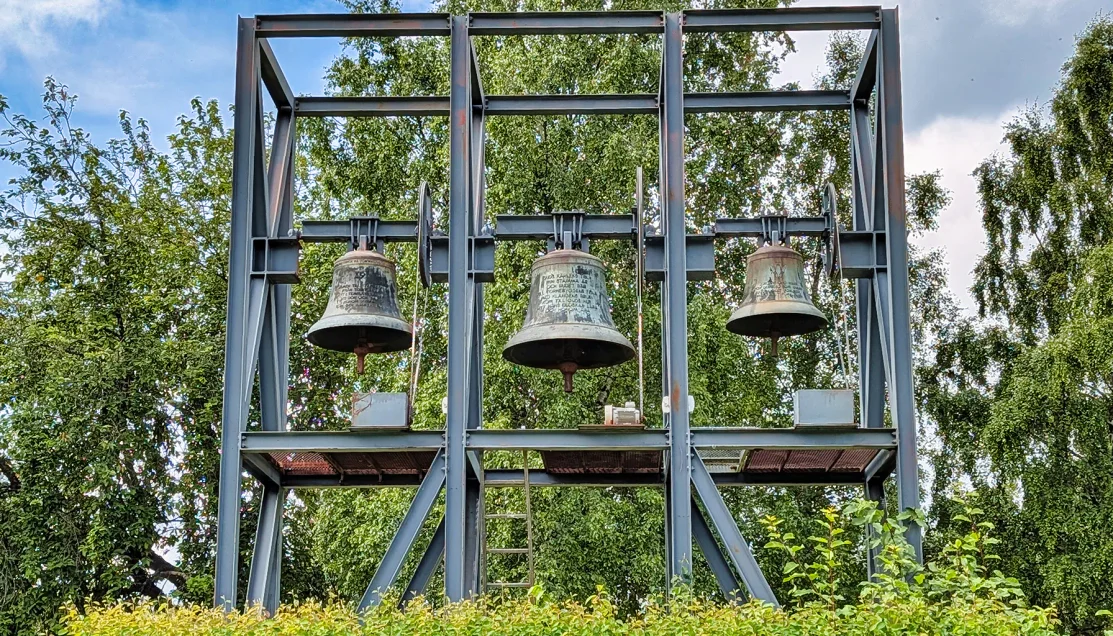
The freestanding bells stand where Haparanda’s 1825 church once stood before it was destroyed by fire in 1963.
Leaving the church, we continued through Haparanda. From the coach, the guide pointed out several local landmarks, including the town hotel, water tower and prison, before we reached the railway station.
② Haparanda Railway Station
⚲ Haparanda, Sweden
⧗ ~15 minutes
Our next stop was Haparanda Railway Station, an unexpectedly monumental building for a town of Haparanda’s size. Its scale begins to make sense through the unusual transportation history of this international border.
The brick station was completed in 1919 and designed by architect Folke Zettervall. That same year, a permanent railway bridge opened across the border to Tornio. Because Sweden and Finland used different track gauges, the bridge carried Swedish and Finnish/Russian-gauge rails together, allowing the two railway systems to meet at the frontier.
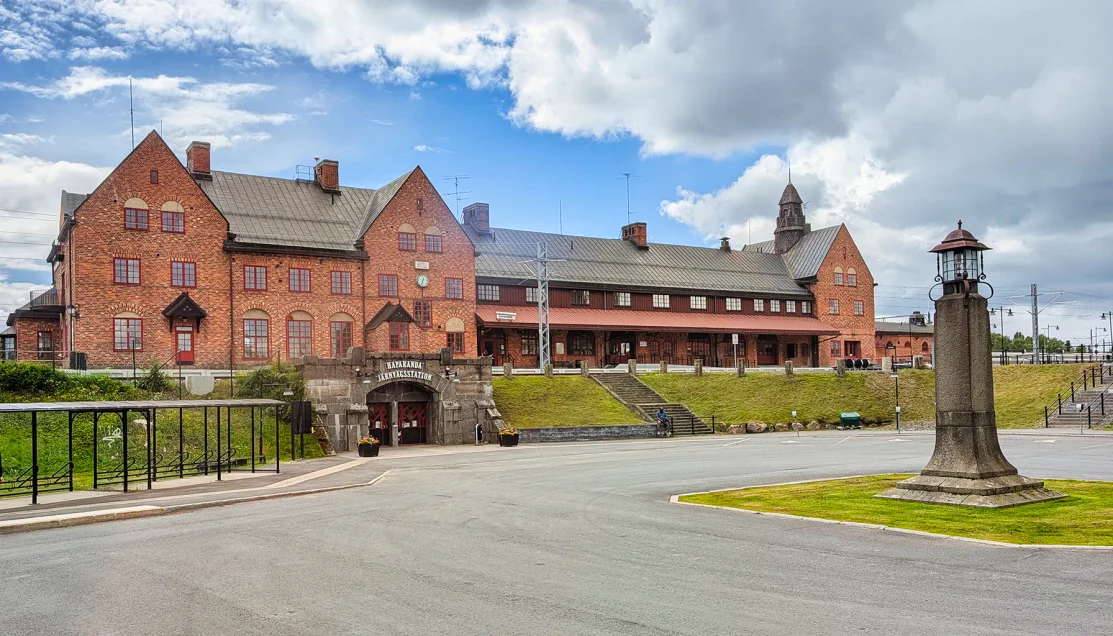
Completed in 1919, the unusually large brick station was built for a border crossing expected to handle traffic between the Swedish and Finnish railway systems.
Our guide asked whether the group wanted to see inside, as we entered through the stone Haparanda Järnvägsstation entrance. A broad staircase descended between blue-green tiled walls into the main hall, where the high ceiling and large windows reinforced the scale of a station built for considerably more than local traffic.
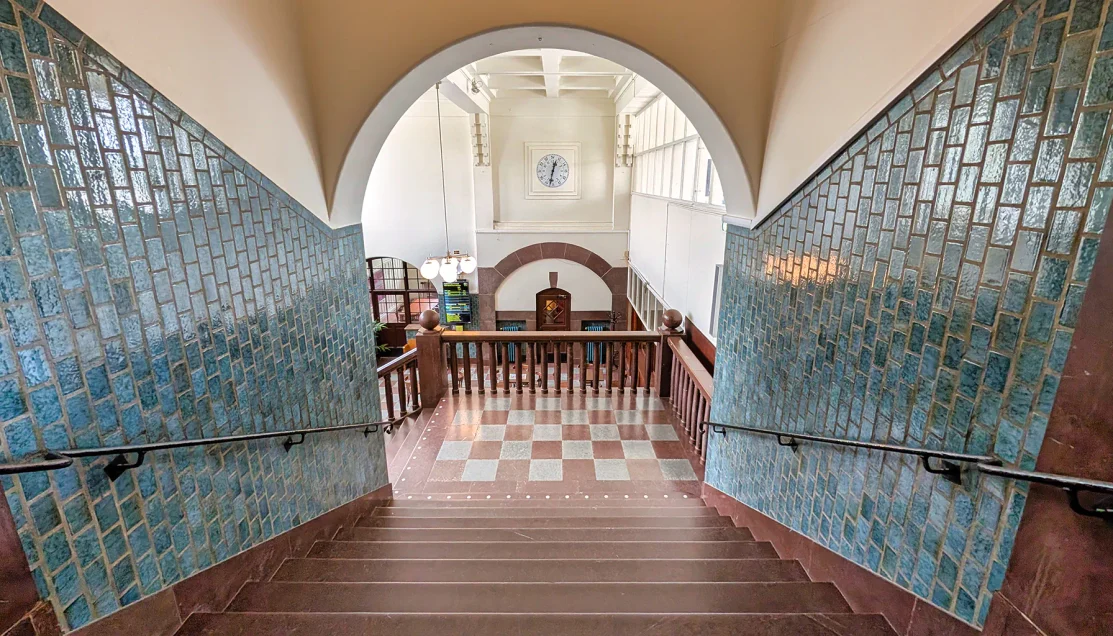
Blue-green tiled walls frame the broad staircase descending into the station’s high-ceilinged main hall.
From there, we moved through former passenger areas where long wooden benches remained along the walls and railway-related displays had been installed. Luggage, photographs and interpretive pieces recalled the period when travelers and goods moved through Haparanda on their way between Scandinavia, Finland and points farther east.
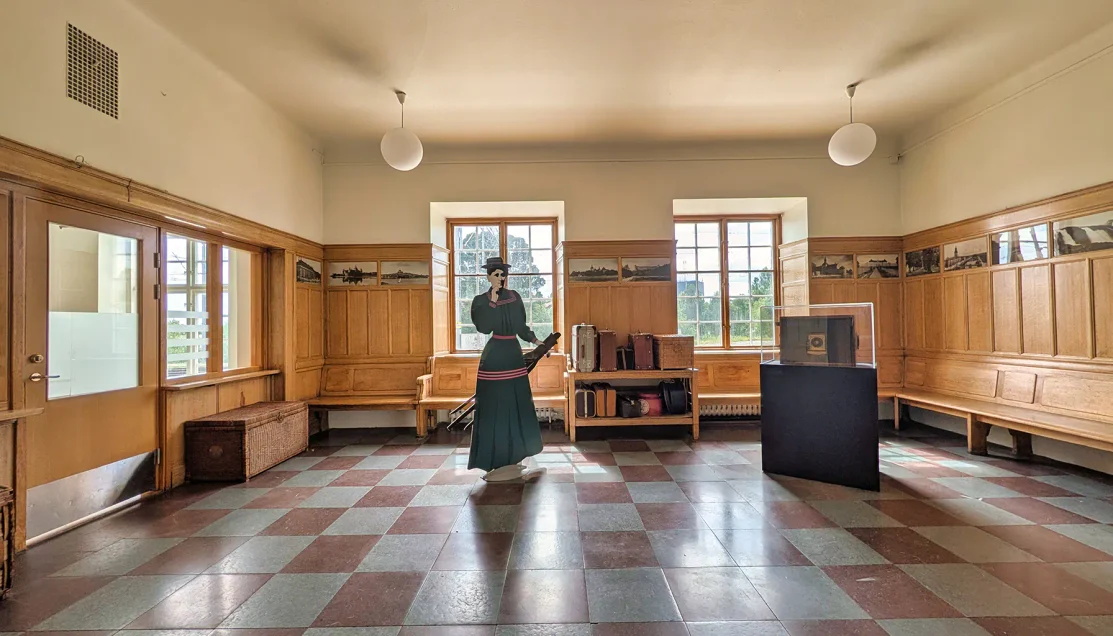
Wooden benches and railway displays recall the station’s former role as a transfer point for passengers traveling through the Swedish-Finnish border region.
Historic railway maps inside helped put that role into geographic context. One annotated General Staff map showed Tornio and Haparanda together near the head of the Gulf of Bothnia, with rail lines extending through northern Sweden and Finland. The map made it easier to see why this border crossing became an important connection between the two railway networks.
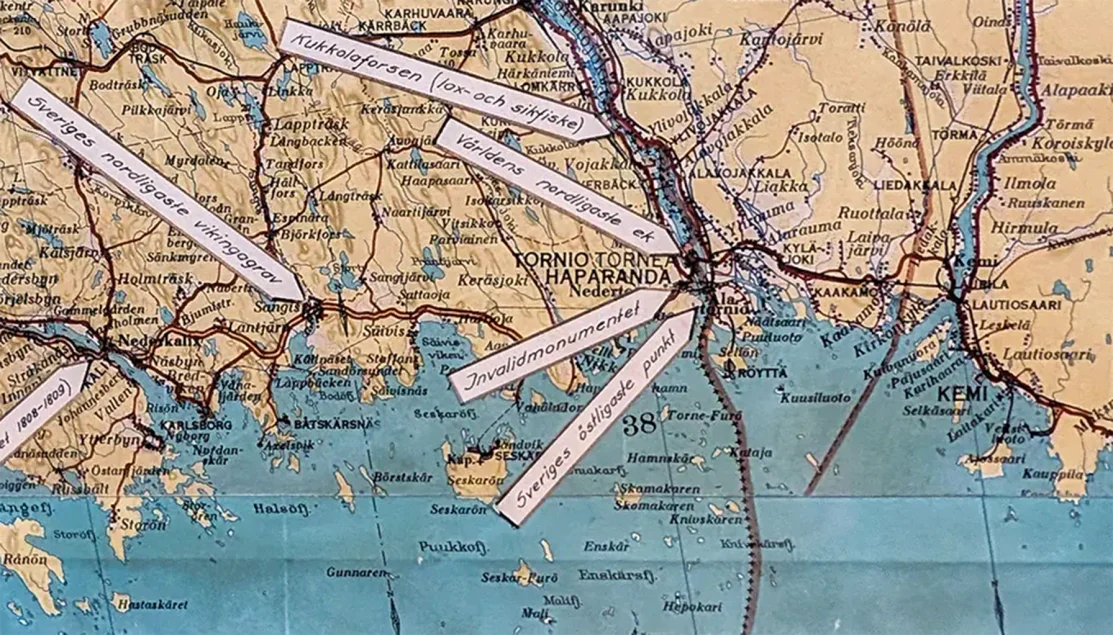
An annotated section of Sweden’s historic General Staff Map displayed inside Haparanda station shows the Tornio-Haparanda border region and surrounding rail network.
The station’s importance was especially pronounced during the First World War, when Haparanda became a major transfer point between western Europe and Finland and Russia. International mail and goods moved through the border crossing, along with prisoner-of-war exchanges.
Our guide also noted one of the station’s better-known historical associations: Vladimir Lenin passed through Haparanda in 1917 while returning toward Russia.
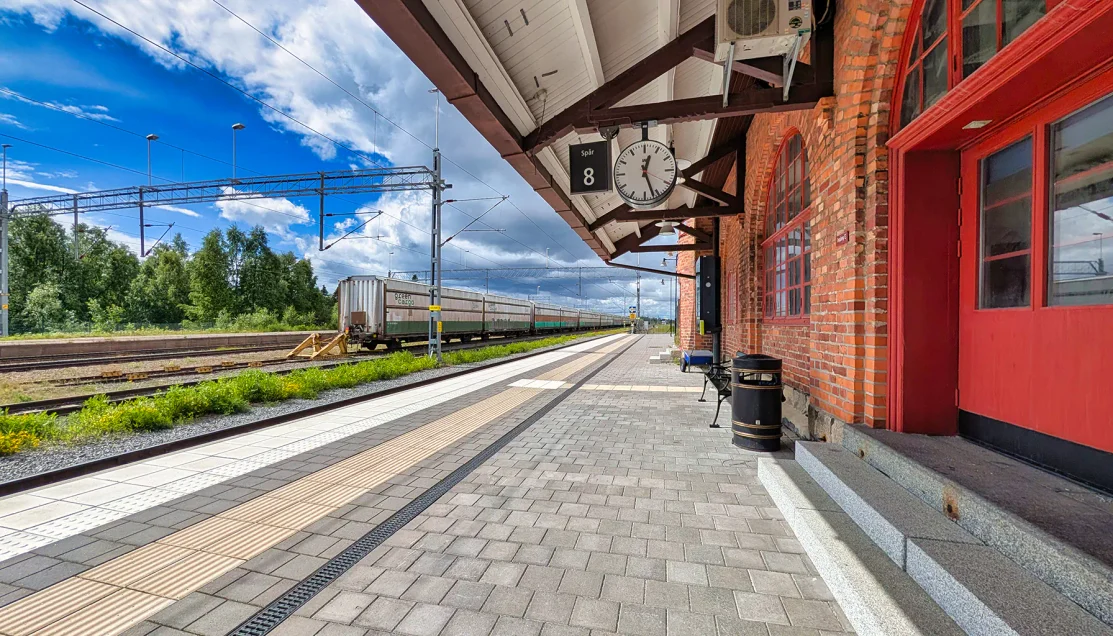
The station’s tracks and platform remain beside the 1919 terminal, where Swedish and Finnish railway systems historically met at the international border.
After leaving the station, we began working our way back toward Finland. Along the river, the guide pointed toward the railway bridge and introduced another part of the region’s history: the Tornio River valley had once played an important role in geodetic surveying, using precise measurements to help scientists determine the shape of the Earth. We would encounter that story again shortly after visiting Tornio Church.
The international border itself remained surprisingly unobtrusive. After crossing back into Finland, it took us a moment to realize that we had already changed countries. That subtle transition was one of the more unusual aspects of traveling through the Tornio-Haparanda border region.
③ Tornio Church
⚲ Tornio, Finland
⧗ ~15 minutes
The architectural contrast between the two cities became especially clear at Tornio Church. Built in 1686, the wooden church stands beside a separate bell tower dating from 1686, its steep shingled roofs and narrow spires rising above the surrounding cemetery.
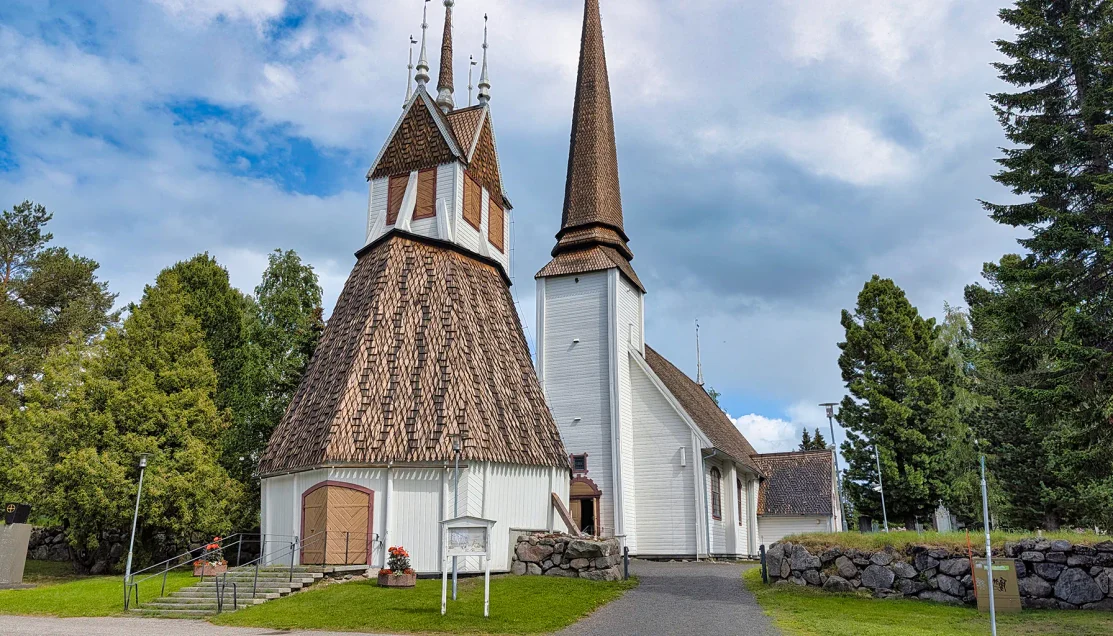
The 1686 wooden church stands beside its separate bell tower, both crowned by steep shingled roofs and slender spires.
Inside, the relatively plain white-painted walls give way to a remarkably elaborate Baroque interior. Painted wooden vaults extend above the chancel, while carved and painted ornament appears throughout the church. Even the enclosed pews contribute to the decoration, with individually numbered doors painted with framed tree motifs along the center aisle.
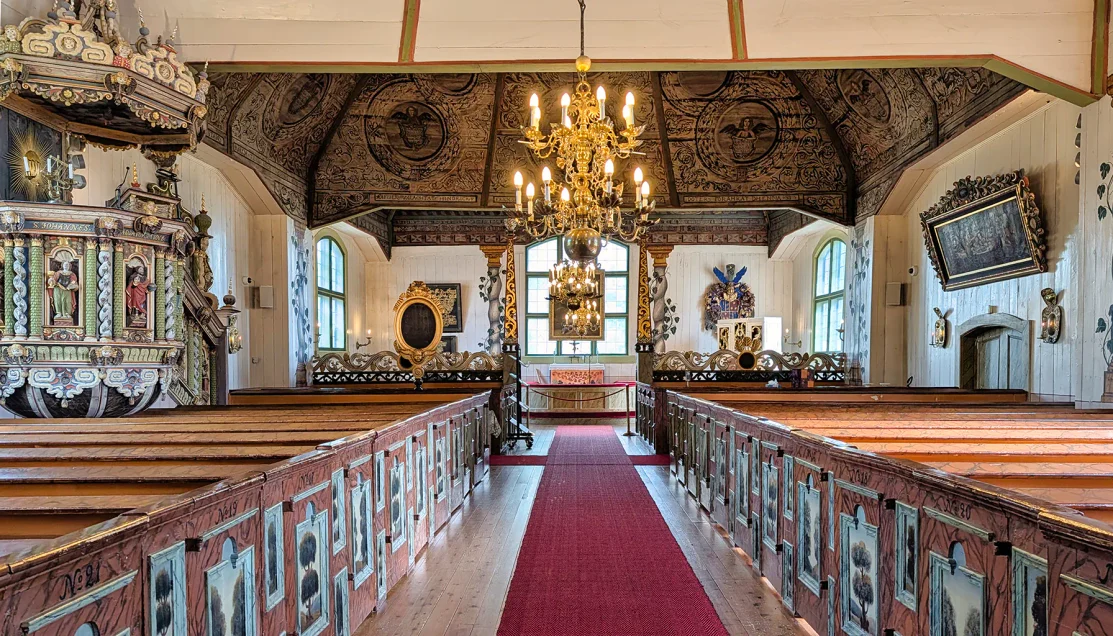
Numbered pew doors painted with framed tree motifs line the center aisle beneath the church’s decorated wooden vault.
The pulpit is among the church’s most elaborate features, richly carved and painted with figures, twisted columns, ornamental scrollwork and a decorated sounding board overhead. Against the simple white plank walls, its dense Baroque decoration becomes especially prominent.
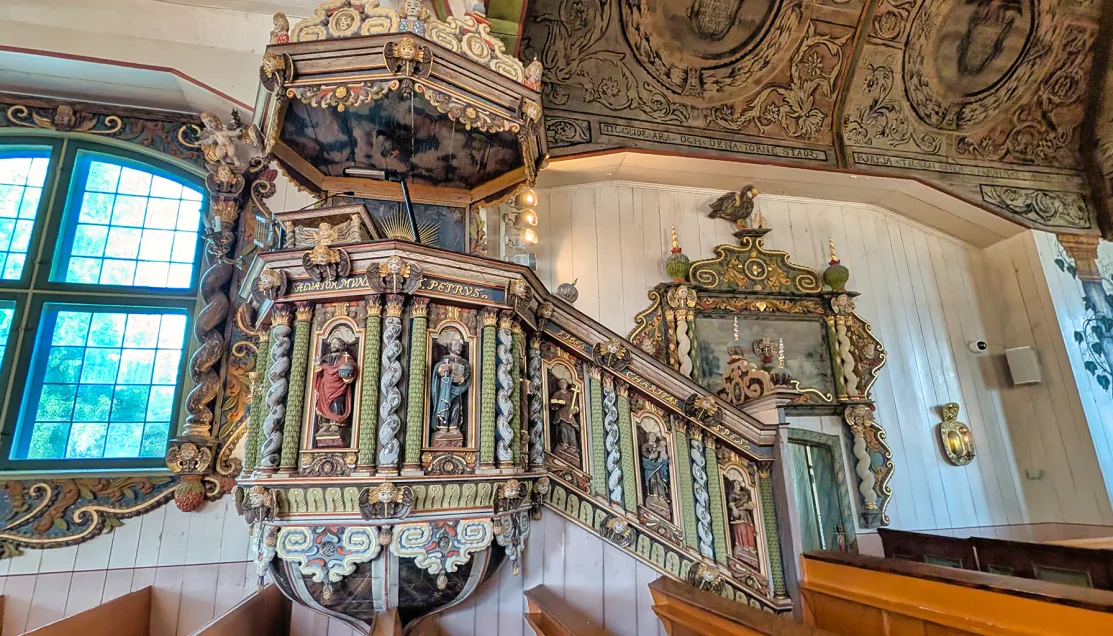
Carved figures, twisted columns, painted ornament and an elaborate sounding board make the pulpit one of the church’s most richly decorated features.
Above the chancel, the dark wooden vault is divided into painted panels filled with biblical scenes and decorative imagery, forming one of the most visually distinctive parts of the interior.
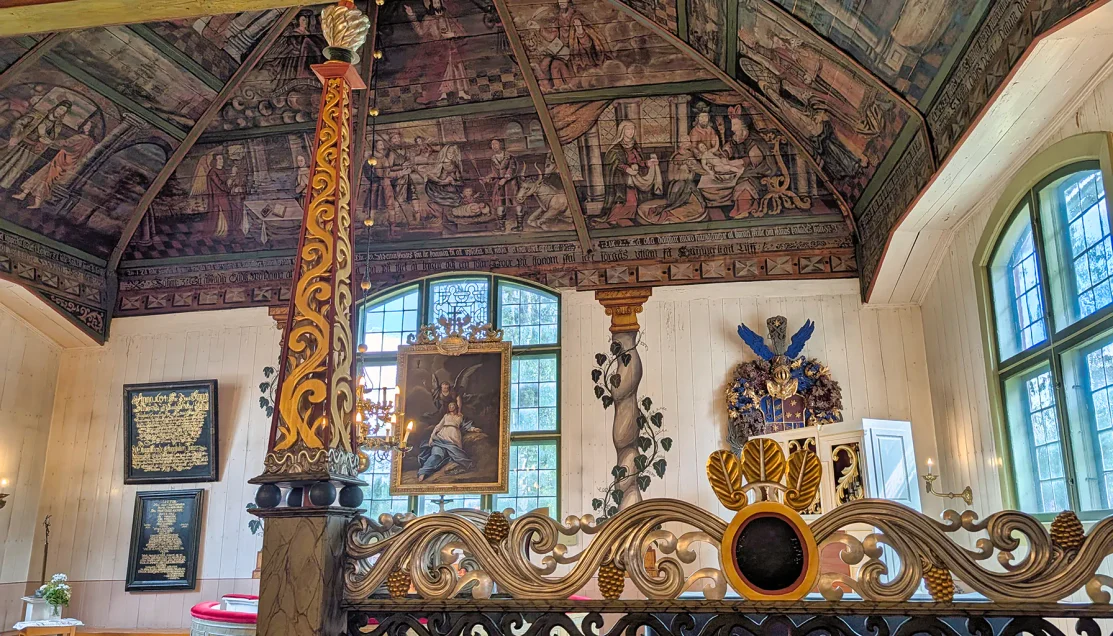
Biblical scenes fill the dark wooden ceiling panels above the chancel, contrasting with the church’s white-painted plank walls.
After leaving the church, there was time to walk independently through the surrounding cemetery and toward nearby Pohjan Stadion. The stadium has an unusual connection to the 1952 Helsinki Olympic Games: after the Olympic flame crossed from Sweden into Finland at Tornio, a ceremony was held here before the flame continued south toward Helsinki.
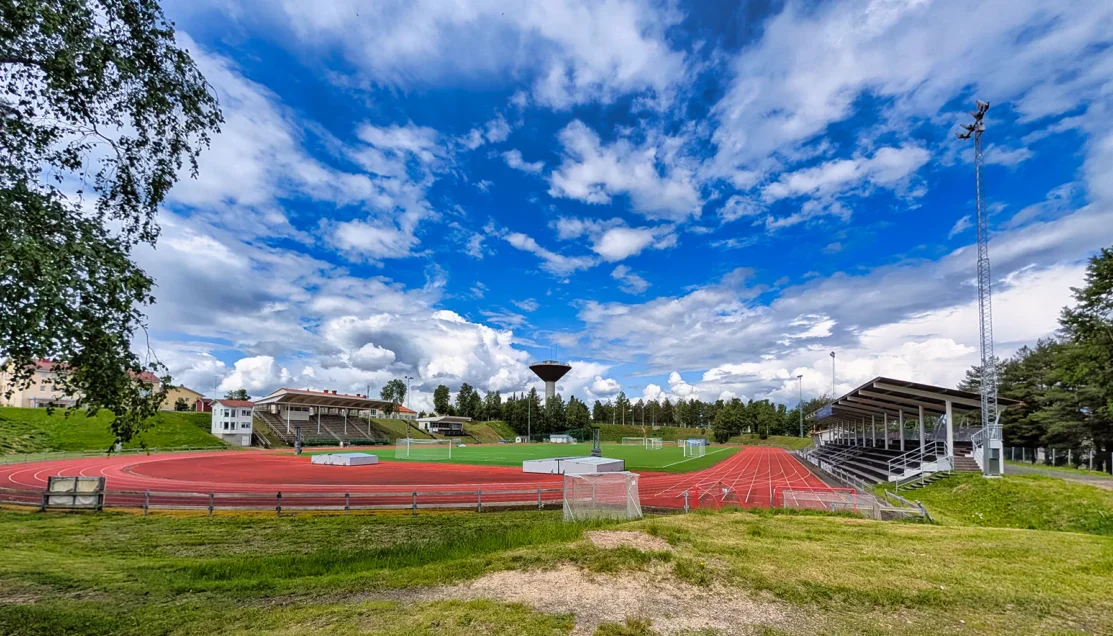
The stadium formed part of Tornio’s role in the journey of the Olympic flame after it crossed from Sweden into Finland for the 1952 Helsinki Games.
Near the stadium, we came across the monument that brought the guide’s earlier discussion of geodetic surveying into focus. In 1736–1737, members of the French Academy of Sciences carried out measurements in the Tornio River valley as part of an expedition to determine the shape of the Earth. Their work helped confirm that the Earth is slightly flattened at the poles rather than perfectly spherical, giving this seemingly remote stretch of the Tornio River an important place in the history of scientific measurement.
Walking back through the cemetery brought us once more alongside the church, its tall spire rising above the active burial ground.
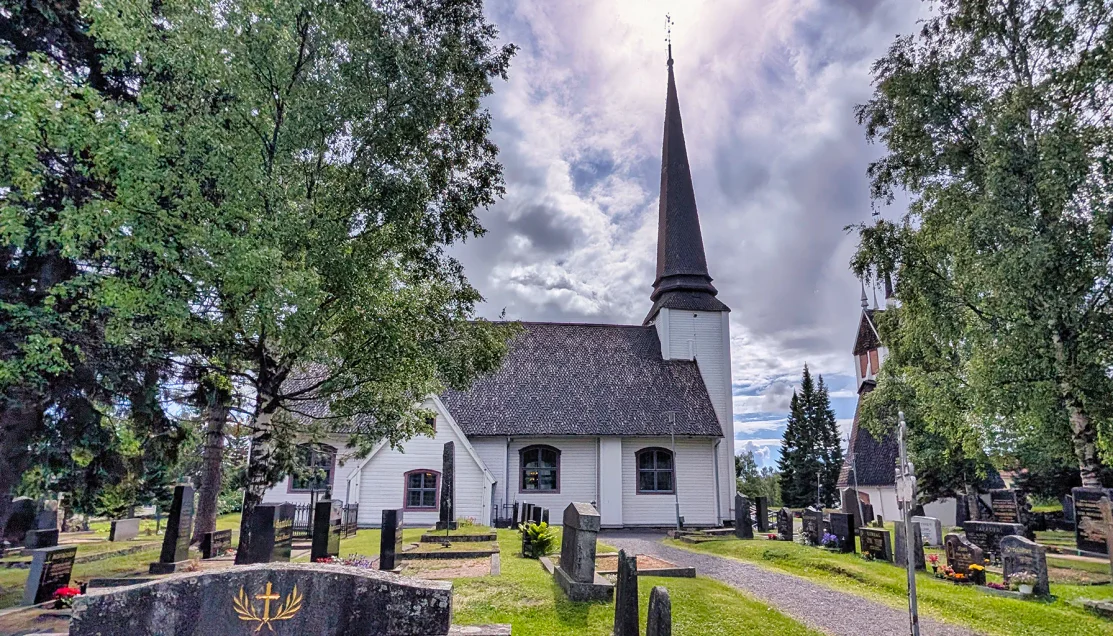
The church’s tall shingled spire rises above the surrounding cemetery, which remains an active burial ground.
With the group back aboard the coach, we continued through central Tornio toward the waterfront.
④ Tornio Waterfront and Kojamo
⚲ Tornio, Finland
⧗ ~15 minutes
The next stop placed us beside the Tornio River at Nordberg’s Mölja, where the focal point was a giant stainless-steel salmon.
Kojamo, created by Tornio-born artists Teija and Pekka Isorättyä, was commissioned for the city’s 400th anniversary in 2021. Approximately 15 meters long and 3.5 meters high, the sculpture is constructed from stainless-steel pipe, creating an open interior large enough to walk through.
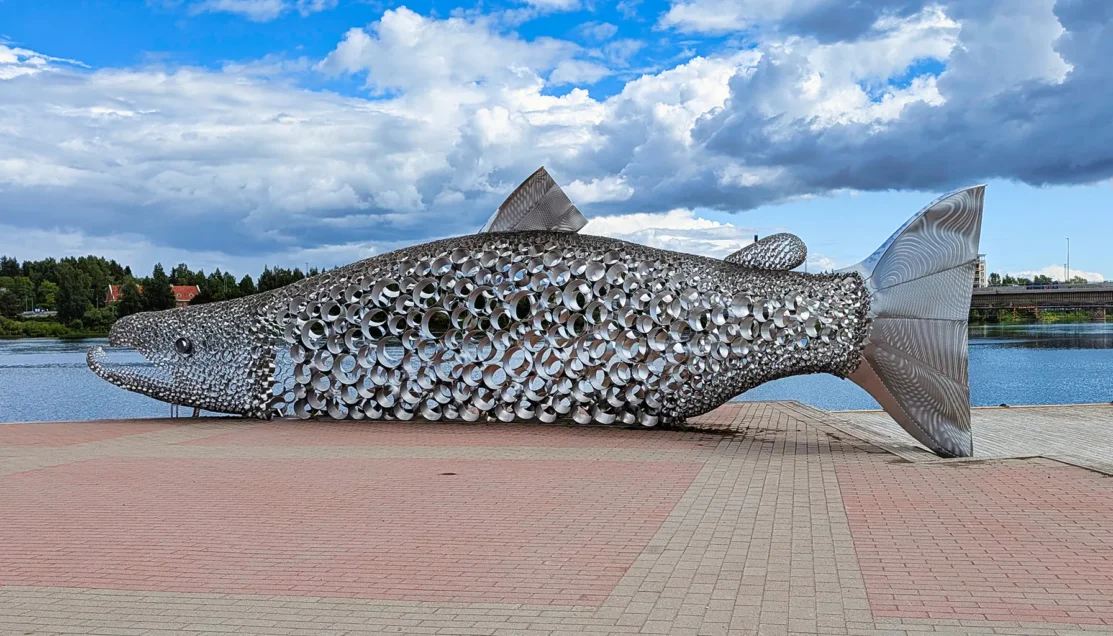
Created for Tornio’s 400th anniversary in 2021, the stainless-steel salmon joins two enduring parts of the city’s identity: steel and the salmon of the Tornio River.
Those materials and subject were deliberately tied to Tornio. Steel reflects the city’s modern industrial identity, while salmon has long been associated with the Tornio River. The artists also placed the idea of freedom in this international border region at the heart of the work.
We walked around Kojamo and along the waterfront. Nearby stood Broken Lantern, a 2013 work by the same artists incorporating figures and imagery drawn from Tornio’s local culture.
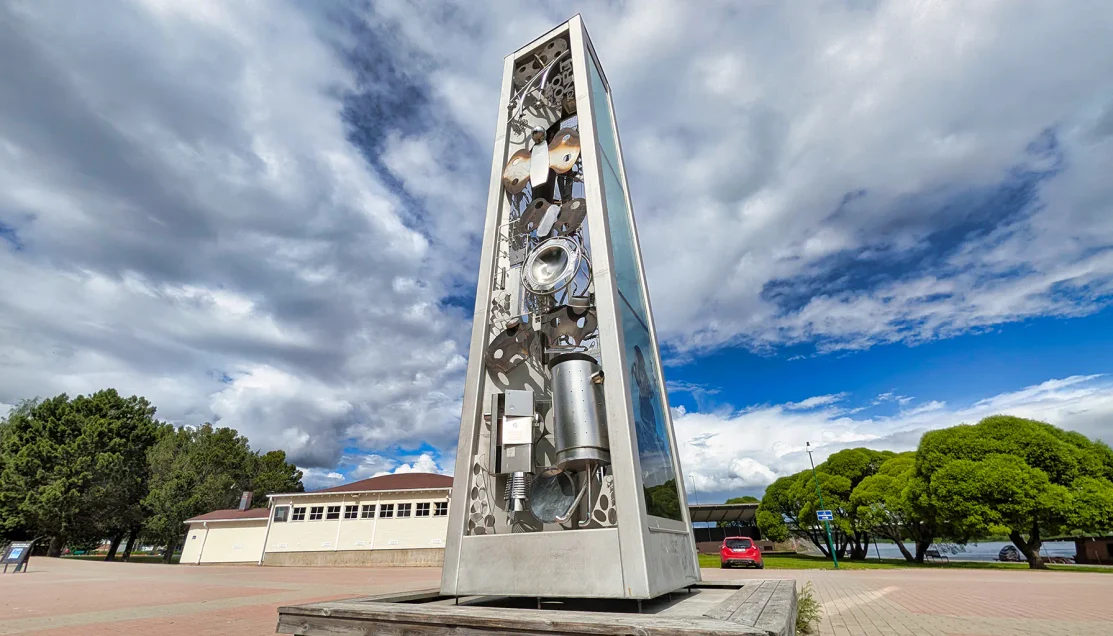
Teija and Pekka Isorättyä’s 2013 sculpture incorporates figures and imagery drawn from Tornio’s local culture.
From the waterfront, the international railway bridge could be seen in the distance. Fishermen were positioned along the river, and a floating sauna raft was moored beside the shore.
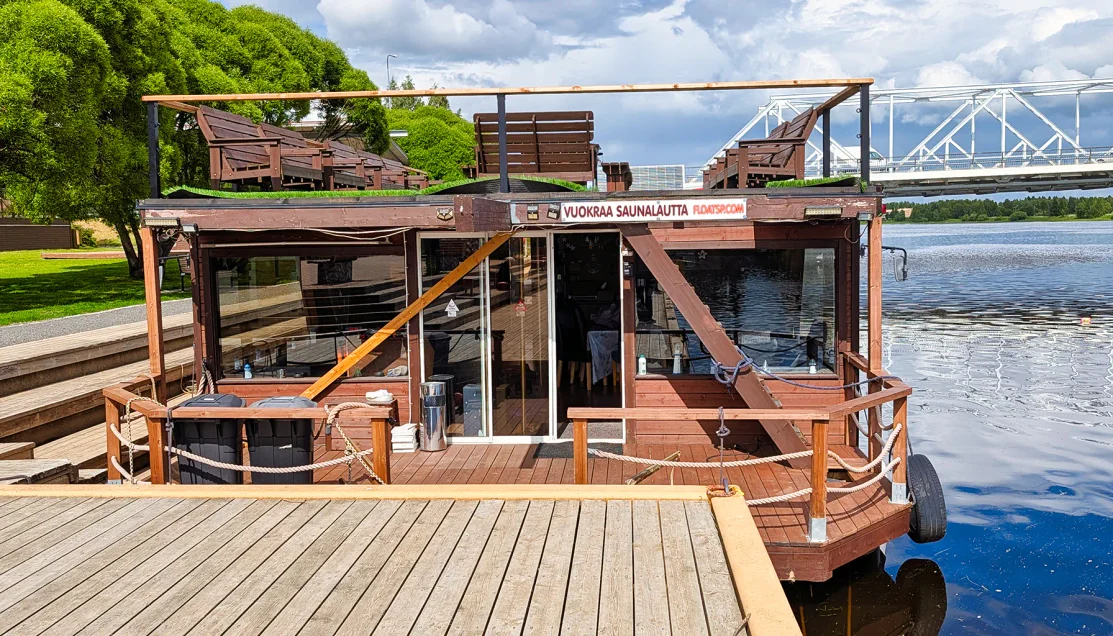
Moored along the Tornio River, the sauna raft brings Finland’s deeply rooted sauna tradition directly onto the waterfront.
The setting also reinforced how little visual drama accompanies the international boundary here. Sweden remained close across the water, but the river felt more like a shared landscape between the two communities than the edge of one country.
From the waterfront, the coach continued toward the border for the final free-time stop.
⑤ Rajalla På Gränsen and Victoria Square
⚲ Tornio-Haparanda, Finland / Sweden
⧗ ~20 minutes
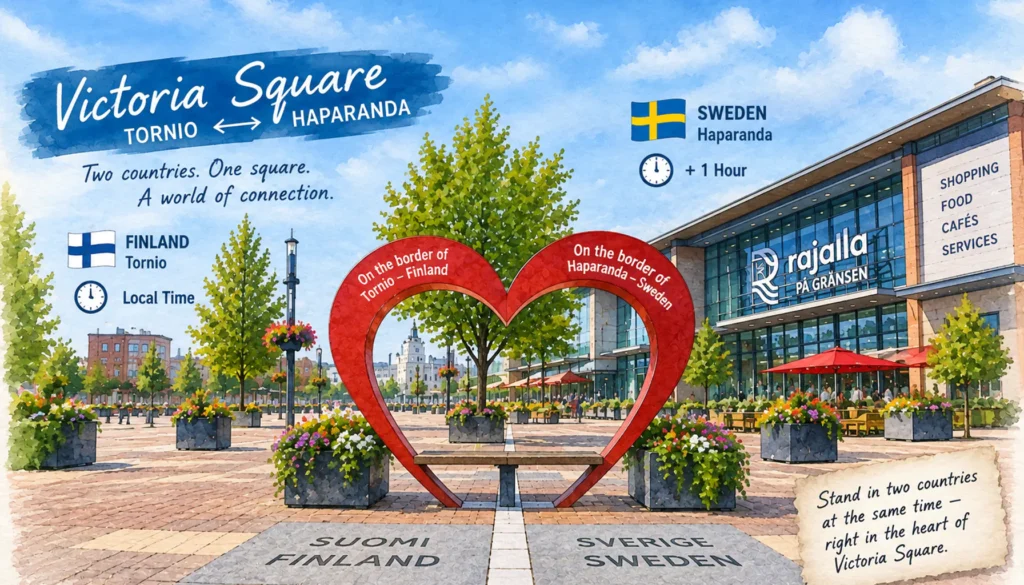
The final stop brought us to Rajalla På Gränsen, a shopping center immediately beside the Finland-Sweden boundary. Although the stop provided a short period of free time, its more unusual feature was just outside: Victoria Square, a public space shared by the neighboring cities of Tornio and Haparanda.
As we approached, our guide explained that the international boundary runs directly through the square. Visitors can cross between Finland and Sweden simply by walking across the plaza, and a border marker provides the popular opportunity to stand with one foot in each country.
The crossing comes with another unusual distinction. Finland and Sweden are in different time zones, with Finland one hour ahead, so walking across Victoria Square means changing both countries and local time within the space of a few steps.
Victoria Square was completed in 2011 as a shared public space between Tornio and Haparanda and was inaugurated by Sweden’s Crown Princess Victoria. Here, the close relationship between the two border cities becomes particularly tangible: an international boundary runs through an ordinary public square rather than being separated by checkpoints or other formal border infrastructure.
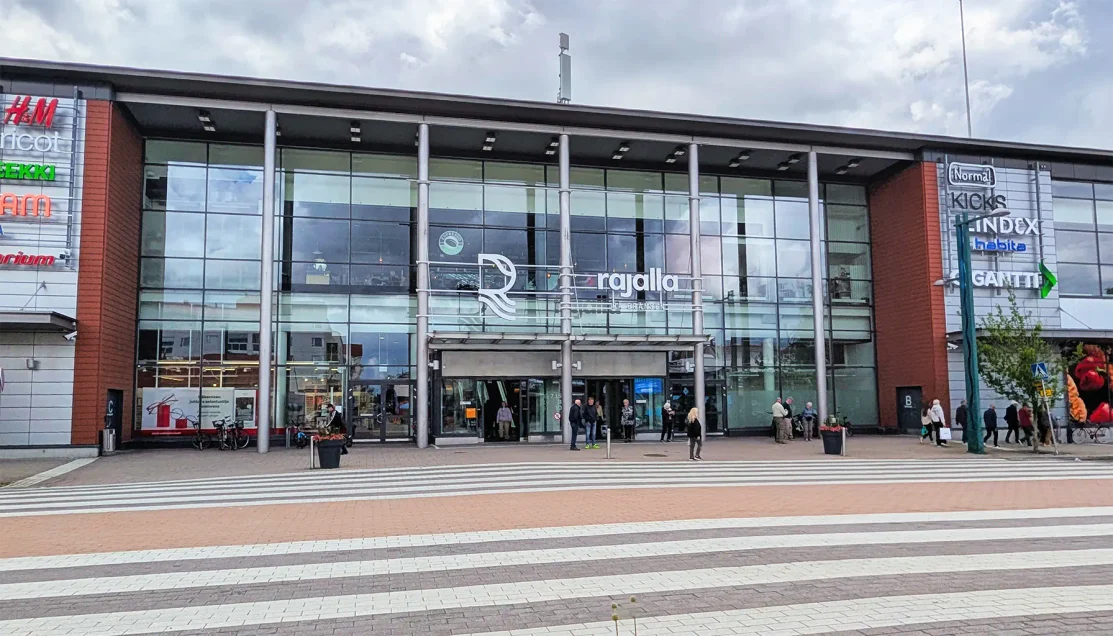
The shopping center stands immediately beside the Finland-Sweden border, with Victoria Square and the marked international boundary just outside.
I misunderstood where the guide was leading the group and went directly into Rajalla, unintentionally missing the short walk to the marked border. By the time I realized what had happened, I had spent the stop inside the shopping center rather than standing with the group in Victoria Square. It was an easy mistake to make because the square and shopping center are immediately beside one another, but one worth knowing about if crossing the border on foot is part of what you hope to experience.
Return to Kemi
After leaving Rajalla, we settled back into the coach for the drive to Kemi, with the guide continuing to point out parts of the city and surrounding Sea Lapland landscape along the way. We reached the ship well in advance of dinner, bringing the afternoon excursion through Tornio and Haparanda to a close.
☑ Who Is This Tour Best For?
- Travelers interested in border communities: Tornio and Haparanda provide an unusual look at two cities whose everyday life crosses an international boundary.
- Architecture and church-history travelers: Haparanda’s unconventional 1967 church and Tornio’s 1686 wooden church provide a direct contrast between modern and historic northern church design.
- Transportation-history travelers: Haparanda Railway Station and the cross-border rail system add substantial historical interest beyond the two churches.
- Travelers who prefer variety over long site visits: The excursion moves through several short stops rather than spending an extended period at any one attraction.
- Travelers interested in unusual cross-border experiences: The excursion crosses between Finland and Sweden without a formal border stop, while Victoria Square offers the opportunity to cross the international boundary on foot and change time zones within a few steps.
⊞ Tour Summary
- Tour Name: Two Cities – Two Countries
- Port: Kemi, Finland
- Total Duration: Approximately 3½ hours
- Primary Focus: Tornio-Haparanda border culture, architecture, transportation history and local history
- Main Stops: Haparanda Church, Haparanda Railway Station, Tornio Church, Tornio Waterfront and Kojamo, and Rajalla / Victoria Square
- Countries Visited: Finland and Sweden
- Meal Included: No
▣ Activity Summary
- Walking: Light to moderate walking divided among several short stops.
- Terrain: Mostly level paved surfaces, with church grounds, cemetery paths, indoor floors and waterfront walkways.
- Free Time: Approximately 20 minutes at the Rajalla / Victoria Square area.
- Border Experience: The excursion travels between Finland and Sweden, with Victoria Square providing the clearest opportunity to see the marked international boundary and stand with one foot in each country.

Related Northern Europe Travel: Explore more Northern European cruise ports and shore excursions in our complete regional guide.
→ Northern Europe Cruises & Shore Excursions Guide
© OceansAfoot