✘ Sundsvall, Sweden • June 26, 2026
Walking in the Footsteps of St. Olav
Tour Route: Sundsvall → Vattjom countryside → St. Olav Trail hike → Svartbäcken → Selånger Pilgrim Center & Historic Site → Sundsvall
Our time in Sundsvall took us beyond the city for a short walk along S:t Olavsleden. The full pilgrimage route stretches about 580 kilometers across Sweden and Norway, beginning at Selånger near Sundsvall and ending in Trondheim. Walking the entire route typically takes about a month.
The route takes its name from Olav Haraldsson, the Norwegian king later known as St. Olav. During the roughly 35-minute drive from Insignia into the countryside west of Sundsvall, our guide began telling the story behind the trail. According to tradition, Olav returned from exile in 1030 and came ashore at Selånger before traveling west toward Norway in an attempt to regain his throne. He was killed at the Battle of Stiklestad on July 29 of that year.
Stories of miracles associated with Olav and his grave soon followed, and in 1031 he was declared a saint. His shrine at Nidaros, now Trondheim, quickly became a destination for pilgrims and eventually one of the most important pilgrimage sites in medieval Scandinavia.
The walk ahead would cover about two kilometers. Rather than following this section in the traditional pilgrimage direction toward Trondheim, we would walk it in reverse because that worked better for the bus pickup.
① St. Olav Trail Hike
⚲ Vattjom countryside, Sweden
⧗ ~1 hour
The bus dropped us beside a recently harvested section of forest, with fields and wooded hills visible beyond the open ground. We started along a broad gravel road before the route gradually narrowed as we moved farther into the woods.
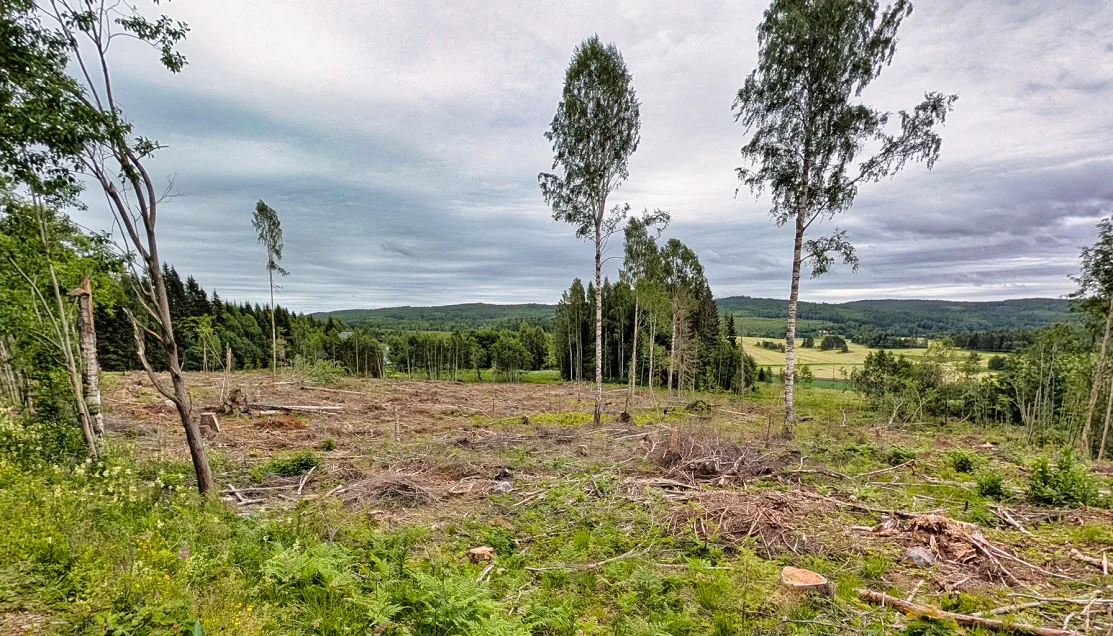
The forests of Västernorrland are part of Sweden’s active timber landscape, where harvesting, thinning and regeneration continually reshape sections of the countryside.
Our guide had deliberately chosen this section because much of S:t Olavsleden in the area follows paved roads. Here, we could walk through a more natural setting, although the logging activity made it clear that these were working forests rather than untouched wilderness.
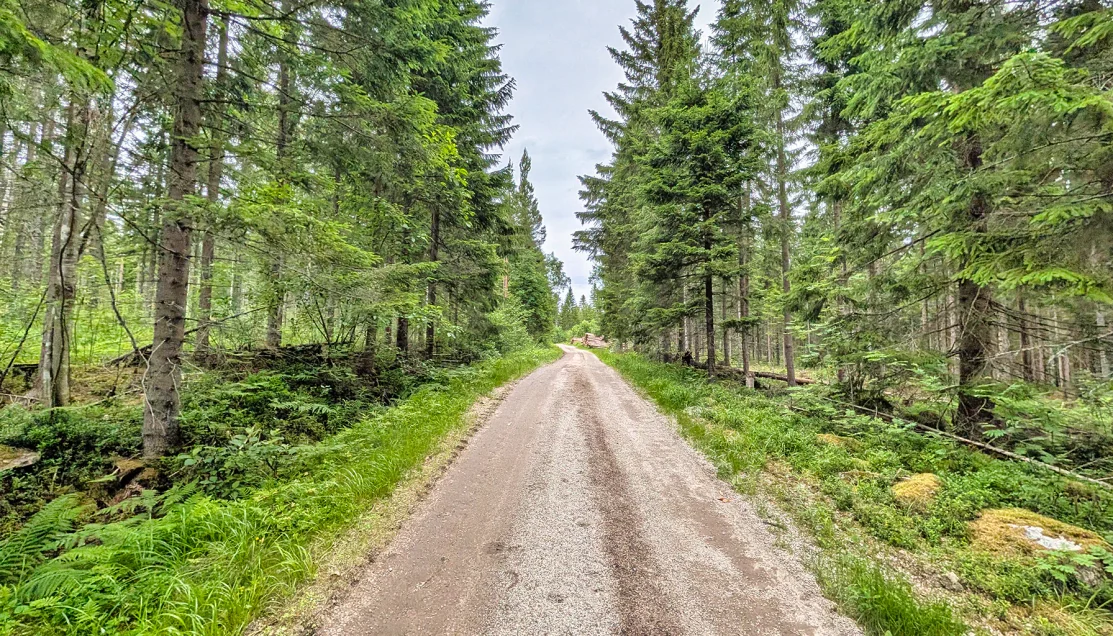
The route is marked at regular intervals with the distinctive St. Olav cross, helping pilgrims follow the trail from Selånger to Trondheim.
Stacks of cut timber soon made the forestry around us impossible to miss. I noticed red numbers painted on the ends of some of the logs and asked what they meant. The numbers identified the landowner, allowing the timber to be traced back to where it had come from.
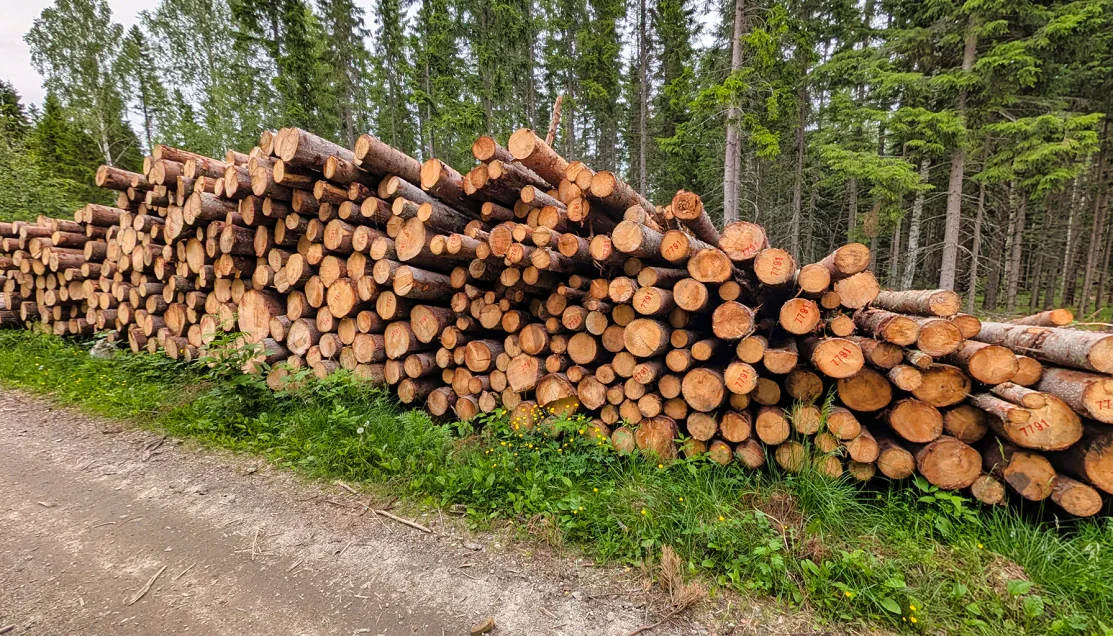
Numbers stamped on Swedish roadside timber stacks link the wood to its transport and measurement records, allowing each load to be identified as it moves from the forest to the mill.
That discussion led naturally to Allemansrätten, Sweden’s right of public access. It gives people considerable freedom to walk through the countryside, including privately owned land, as long as they respect the people who live there and do not damage the landscape.
The forest also offered plenty of smaller things to notice. Purple orchids were growing beside the trail, and we learned that wild orchids are protected in Sweden. The flowers we stopped to photograph were heath spotted-orchids (Dactylorhiza maculata), their pale pink flowers patterned with darker purple markings.
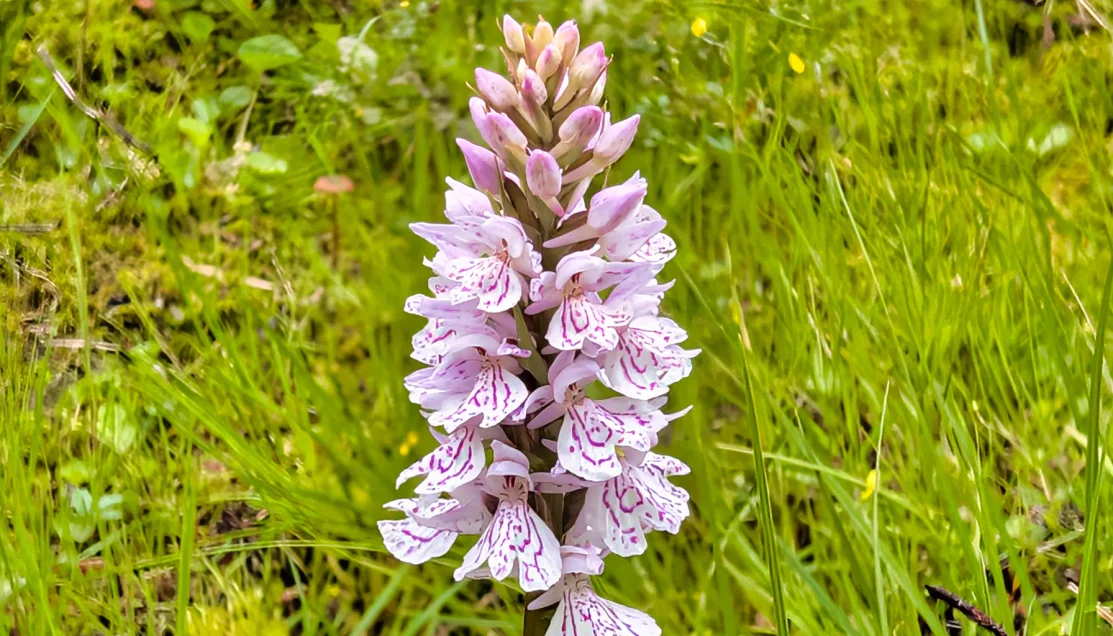
Known in Sweden as Jungfru Marie nycklar, the heath spotted-orchid flowers during June and July and is found across much of the country.
Cattle were once released into these forests during the summer, when farmers used the surrounding woodland as pasture while keeping fields closer to their farms available for crops and hay. As farming practices changed, forest grazing largely disappeared. Without the cattle, formerly grazed areas became denser, reducing the open, sunlit conditions that had supported a different mix of wildflowers and other plants.
Farther along, our guide stopped to show us twinflower (Linnaea borealis), a tiny woodland flower closely associated with Swedish botanist Carl Linnaeus. Twinflower was a favorite of Linnaeus, and he even had the plant carved into his walking stick. It would have been easy to walk past without even noticing because of its tiny stature.
The walk was also noticeably more comfortable than our Hike in Kvarken Nature excursion in Vaasa, where mosquitoes had become overwhelming along the heavily wooded Bodvattnet Runt Nature Trail. I mentioned that experience to our guide, remembering how they had swarmed around the people walking ahead of us. There were mosquitoes here too, but the forest was generally more open and the insects were barely noticeable by comparison.
Signs and markers occasionally broke up the woodland, showing how this section connected with other local walking and riding routes.
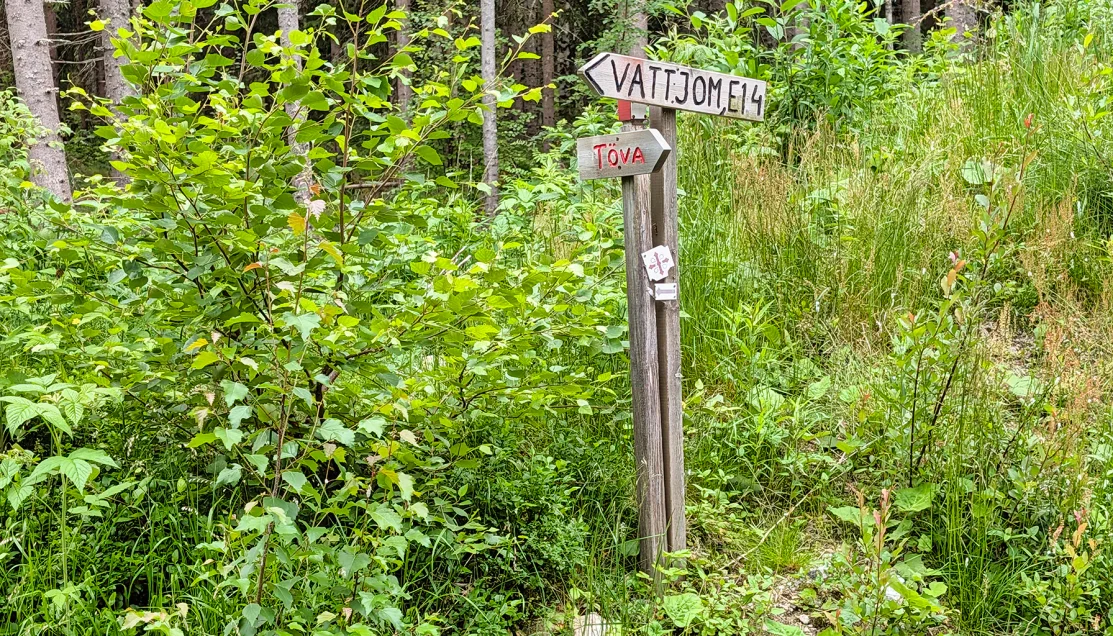
Local directional signs for Vattjom and Töva appeared alongside the S:t Olavsleden marker, reflecting the network of routes that crossed this section of the forest.
Near the end of the walk, our guide gathered everyone into a circle. She had qualified as a pilgrimage leader only a few weeks earlier and jokingly told us that we would be her guinea pigs for a short exercise about the meaning of pilgrimage.
She led us through seven ideas: freedom, simplicity, silence, letting go of worries, slowness and being grounded, spirituality, and sharing. Each was accompanied by a simple movement. When she reached slowness, she talked about taking enough time to think about what you are doing and your place in the world. When she reached spirituality, she broadened the idea beyond any particular religion. The exercise ended with everyone joining hands for sharing.
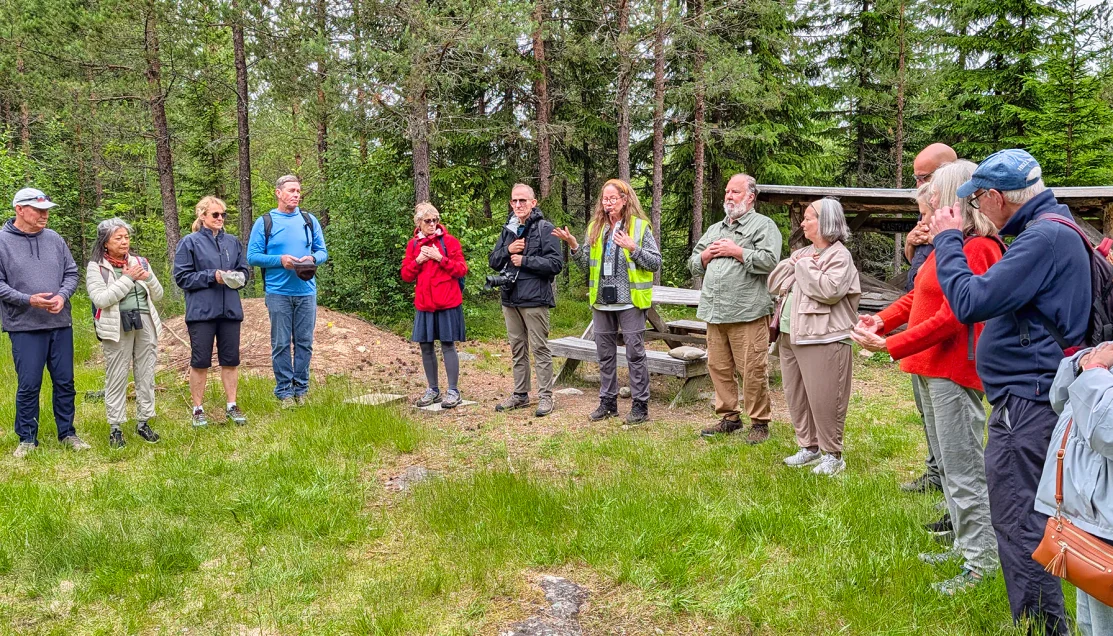
Pilgrimage along S:t Olavsleden was revived after centuries of decline, with the restored route officially reopening in 2013.
Until then, most of the guide’s interpretation had focused on the forest, its plants and the landscape around us. The circle exercise shifted the conversation toward why people still choose to walk pilgrimage routes today.
As we continued through the Swedish countryside, I found myself thinking back to Vikings: Valhalla, which we had watched several years earlier on Netflix. Olaf Haraldsson had been an important character in the series, and now we were walking through a landscape associated with Olav Haraldsson, the historical figure behind that character.
That unexpected connection made the walk feel like more than just a hike.
Shortly afterward, we crossed a small wooden footbridge over Svartbäcken. Nearby, a large sign identified Gusturleden, a riding and hiking trail through the surrounding historic landscape. The bus was waiting not far beyond.
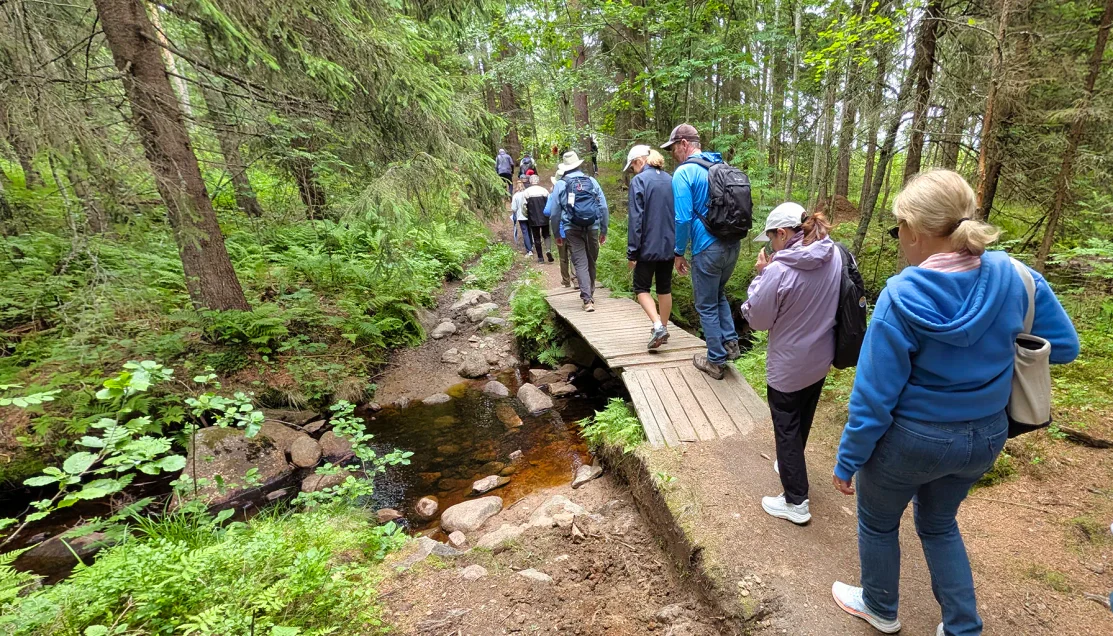
S:t Olavsleden can be traveled on foot, by bicycle or on horseback, with alternate routes provided in some sections for cyclists and riders.
By then we had been walking for about an hour and had recorded roughly 2,300 steps.
② Selånger Pilgrim Center & Historic Site
⚲ Selånger, Sweden
⧗ ~45 minutes
After rejoining the bus, our guide pointed out a house where the owner has taken it upon himself to offer coffee to passing pilgrims. Outside, he displays an extensive collection of national flags representing the many countries from which people have come, all part of his effort to make those on the pilgrimage feel welcome.
We continued by bus for about 15 to 20 minutes before arriving at Selånger Pilgrim Center, near the traditional starting point of S:t Olavsleden. A light rain had begun, so we headed inside for a traditional Swedish fika, a relaxed coffee or tea break usually accompanied by something sweet. I had tea and cake before spending more time looking around the center and the surrounding historic site.
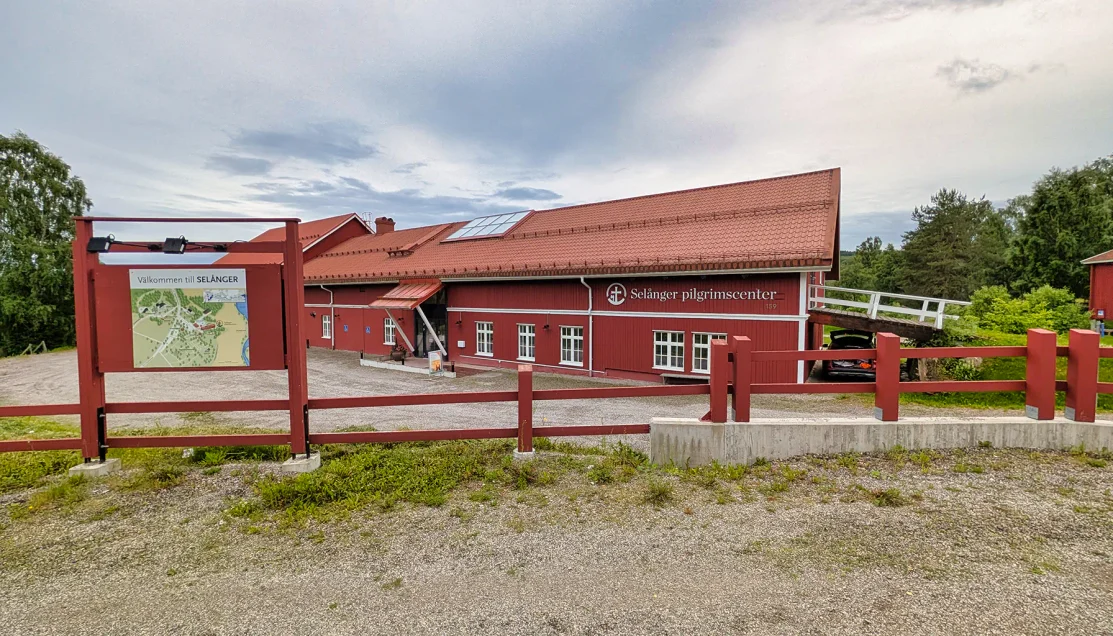
The center was created by converting an old barn into a place for pilgrims to gather, learn about the route and prepare for their journey.
Near the Pilgrim Center was a small wooden boat and play area designed to represent S:t Olofs hamn, St. Olav’s Harbor. When I asked about it, a staff member at the center explained that this was where Olav Haraldsson was traditionally believed to have come ashore in 1030, the same arrival our guide had described earlier on the bus.
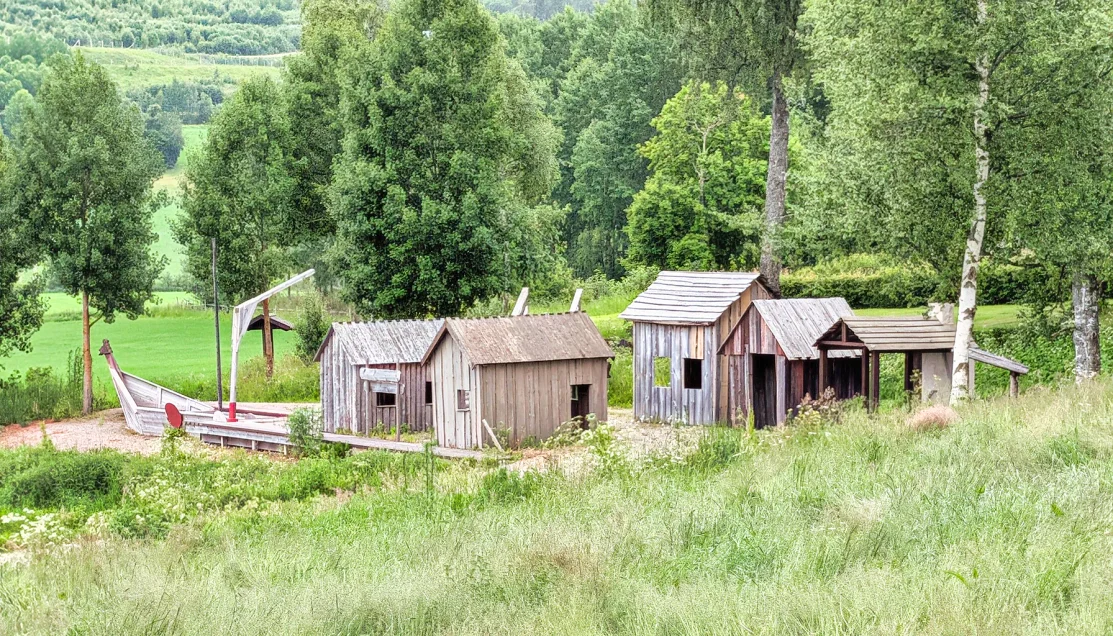
Selånger’s medieval harbor once connected this inland valley with the sea and served as an important trading link between Medelpad and Norway.
Looking across the landscape today, it is difficult to imagine ships arriving here. Centuries of land uplift, which continues at about eight millimeters per year, have gradually moved the shoreline eastward, leaving the former harbor well inland.
In medieval times, Selånger was more than a pilgrimage departure point; its harbor, market and church helped make the settlement a regional center for trade and administration.
We walked over to the nearby cemetery and the remains of the medieval church at Selånger. The ruins stand near the modern starting point of S:t Olavsleden, while the later Selånger Church could be seen higher on the hill behind us.
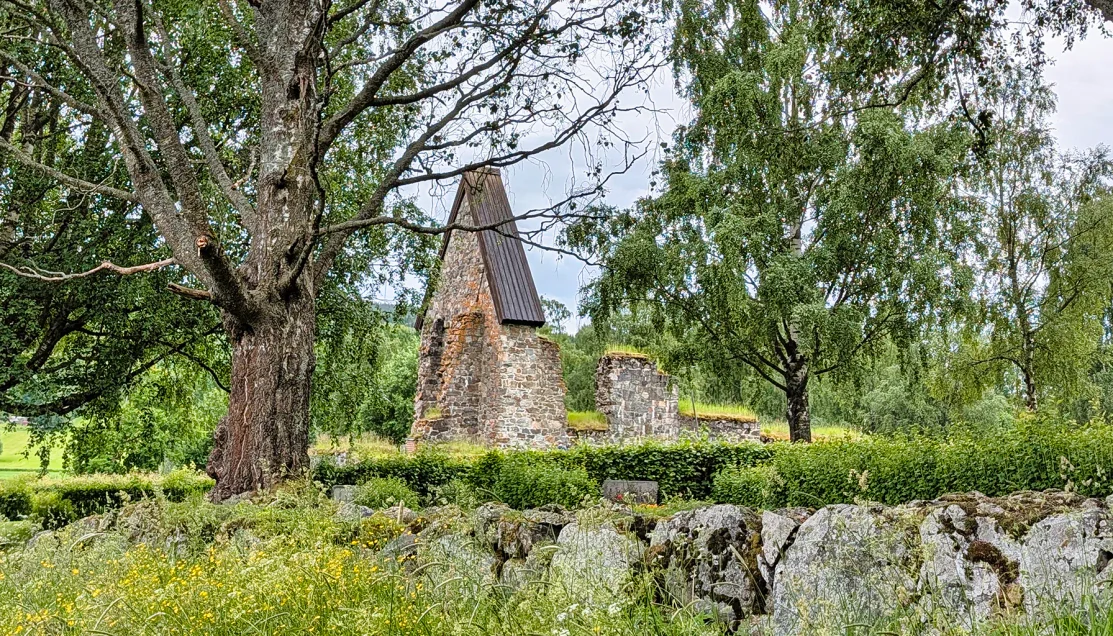
The stone church whose ruins survive at Selånger dates to the late 12th century, while the present Selånger Church on the nearby hill was completed in 1781.
Interpretive signs around the historic site traced S:t Olavsleden west from Selånger across Sweden and Norway to Trondheim, placing the short section we had walked within the much larger pilgrimage route. Seeing the route laid out made me curious to get a better look at the entire journey.
Back inside the Pilgrim Center, I asked one of the staff members if she had a handout showing the complete route. She explained that larger maps were available for those planning to walk it and showed me an English-language booklet titled In the Footsteps of Saint Olav: A Historical Journey in the Footsteps of Scandinavia’s Most Popular Saint. The booklet was free, so I took a copy with me.
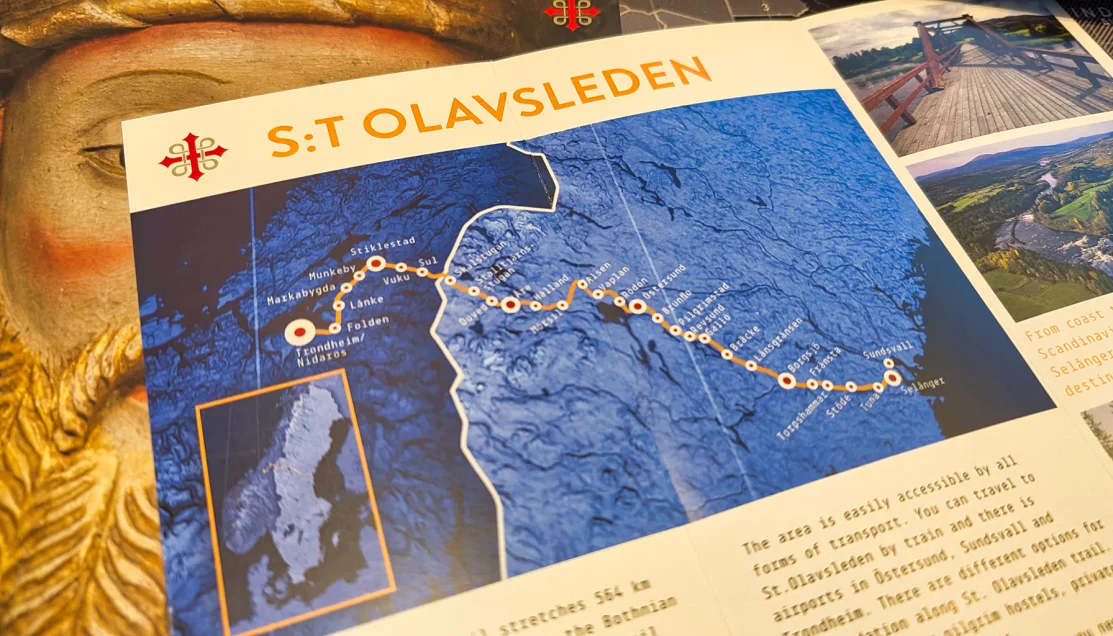
Route information from the Selånger Pilgrim Center shows S:t Olavsleden crossing the Scandinavian Peninsula from Sweden’s Baltic coast to Trondheim on Norway’s Atlantic side.
From there, we returned by bus to Insignia in Sundsvall, bringing our short introduction to S:t Olavsleden to an end.
☑ Who Is This Tour Best For?
- History-focused travelers: The excursion connects a short countryside walk with the story of Olav Haraldsson, medieval pilgrimage and the historic starting point at Selånger.
- Travelers who enjoy guided nature walks: The forest portion combines an easy-paced walk with information about forestry, wildflowers, Allemansrätten and the surrounding landscape.
- Visitors interested in pilgrimage traditions: The route, pilgrimage exercise and visit to Selånger provide context for both the medieval and modern use of S:t Olavsleden.
- Travelers comfortable walking on unpaved terrain: The walking portion uses gravel roads and forest tracks rather than a fully paved sightseeing route.
⊞ Tour Summary
- Tour Name: Hike St. Olav Trail
- Port: Sundsvall, Sweden
- Ship: Oceania Insignia
- Date: June 26, 2026
- Scheduled Duration: 3 hours
- Primary Focus: St. Olav pilgrimage history, guided forest walking and the historic pilgrimage site at Selånger
- Main Stops: Guided forest walk in the Vattjom area; Selånger Pilgrim Center & Historic Site
- Refreshment Included: Swedish fika with tea or coffee and a sweet
▣ Activity Summary
- Guided Walk: About 1 hour; roughly 2 kilometers and 2,300 steps on our visit
- Terrain: Gravel forest roads, narrower forest tracks and a small wooden footbridge
- Pacing: Comfortable, with frequent pauses for guide interpretation and photographs
- Weather Exposure: Primarily outdoors during the walking portion; weather-appropriate clothing and comfortable walking shoes are advisable
- Mobility: The excursion involves sustained walking on unpaved terrain and is not designed for wheelchair users

Related Northern Europe Travel: Explore more Northern European cruise ports and shore excursions in our complete regional guide.
Northern Europe Cruises & Shore Excursions Guide
© OceansAfoot