✘ Aomori, Japan • April 13, 2024
⌖ From Castle Gardens to Cherry Blossoms and Temple Silence
Tour Route: Aomori Cruise Terminal → Hirosaki → Tsugaru-han Neputa Village → Hirosaki Park Hotel → Zenringai → Return to Pier
As dawn broke over the northern shores of Honshu, our group of forty travelers gathered beside the Norwegian Jewel, greeted warmly by our guide, Saho. Departing around 7:30 a.m., we set out on an eight-hour exploration that promised a blend of history, artistry, and spiritual calm.
⟳ Journey to Hirosaki: A Cultural Gem Amidst Blossoms
⚲ Aomori Cruise Terminal, 3 Chome Honcho, Aomori 030-0802, Japan
⧗ 50-minute coach ride
As we made our way towards Hirosaki, the landscape revealed vast expanses of rice paddies and apple orchards, showcasing the rich agricultural heritage of the region. The conclusion of the Shogun and Samurai era in 1868 marked a pivotal shift, ushering in modern farming techniques that now characterize the area’s landscape. Additionally, Hirosaki is celebrated for its stunning cherry blossom festival, highlighted by the breathtaking beauty of its 2,600 cherry trees.
① A Stroll Through Tsugaru-han Neputa Village
⚲ Tsugaru-han Neputa Village, 61 Kamenoko-cho, Hirosaki-shi, Aomori 036-8332, Japan
⧗ 6-minute walk to Hirosaki Castle Park
Upon arriving at the car park in the Tsugaru-han Neputa Village, our group made its way through the village, soaking in the local ambiance as we headed towards the historic Hirosaki Castle and its expansive park. We entered through the Eastern gate just after 11am and were presented with a map outlining six distinct enclosures within the park. For our tour, we concentrated solely on exploring the Northern enclosure. As we strolled through its grounds, our guide recounted tales of its construction by the Tsugaru clan in the early 17th century, a crucial era that significantly influenced the region’s history.
② Exploring Hirosaki Castle
⚲ Hirosaki Castle, 1 Shimoshiroganecho, Hirosaki, Aomori 036-8356, Japan
⧗ 1 hour inside and park visit
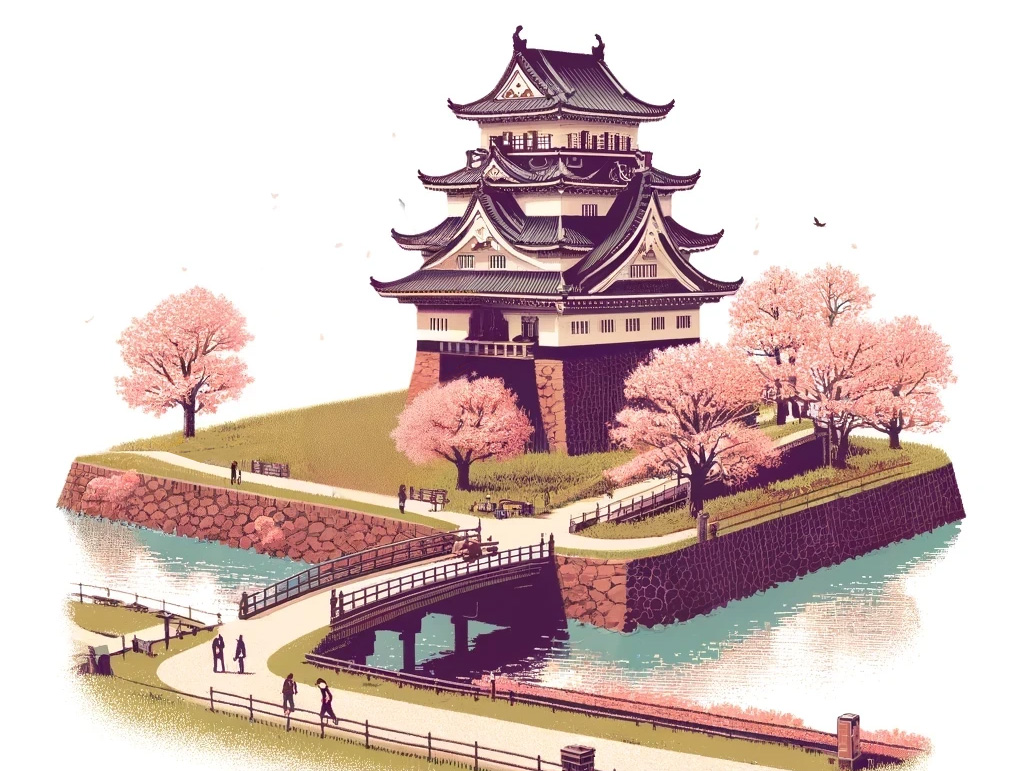
As we passed the Inner East Gate, the formidable stone walls of Hirosaki Castle emerged into view. The castle, a symbol of feudal power and architectural mastery, stood majestically on a slight elevation, framed by its sloped stone base and surrounded by deep, fortified moats. Contrary to my initial expectations of a traditional European-style castle, Hirosaki Castle was a unique blend of military stronghold and cultural monument, reflecting the nuanced history of the region. We initially took photographs of the castle’s moat and defensive wall before crossing the Gejo-Bashi footbridge and proceeding uphill towards the Hirosaki Castle Tower viewing platform.
Delving into the Castle’s Past
Constructed in the early 17th century by Lord Tsugaru, the castle’s strategic location atop sloped walls and surrounded by deep moats was essential for its defense. This positioning also provides a spectacular backdrop during the cherry blossom season, an aesthetic likely not considered by Lord Tsugaru when designing the fortification.
Free Time at the Castle
Given 30 minutes of free time, we took the opportunity to delve into the castle itself, exploring its three quaint and compact floors. This exploration took about 20 minutes, allowing us some additional moments to wander the nearby areas. From our elevated position, we admired the serene Lotus Pond and the West Moat, the tranquility of the water reflecting the castle’s storied past.
Our visit continued as we descended the opposite slope, crossing The Takaoka-Bashi footbridge over the moat to reach the Butokuden Rest House. Here, amidst the backdrop of historical architecture and natural beauty, we browsed an array of Japanese handicrafts and other trinkets.
③ Cultural Immersion at Tsugaru-han Neputa Village
⚲ Tsugaru-han Neputa Village, 61 Kamenoko-cho, Hirosaki-shi, Aomori 036-8332, Japan
⧗ 1-hour indoor visit
Following our exploration of Hirosaki Castle, we exited the park through the East Gates then retraced our steps back to the Tsugaru-han Neputa Village, a cultural hub that becomes especially animated during the vibrant Nebuta summer festival. Renowned for its elaborate floats and parades, the village captures the spirit of the region with its lively celebrations.
Inside the Nebuta Float Museum
From there, our group made its way to the museum of floats, a highlight for many. Inside, we were enveloped by the vibrant history of Aomori’s festivals. Each float and lantern on display was a testament to the local craftsmanship and tradition, with stories that echoed through the ages. Our guide explained how these artistic creations played a role in festival ceremonies that have been celebrated for centuries, serving both religious purposes and community bonding.
A Serenade of Shamisen
A particularly enchanting experience was the live 15-minute performance on the shamisen, a traditional Japanese three-string instrument. Set against the museum’s backdrop, a local musician masterfully plucked the strings, filling the air with unique and expressive sounds. This performance beautifully highlighted Aomori’s musical heritage, deepening our appreciation for the region’s rich artistic traditions.
Handicrafts and Local Crafts
After enjoying the parade floats and the shamisen performance, we descended the back stairs to an area where local craftspeople were actively engaged in creating traditional handicrafts. Here, artisans skillfully crafted chopsticks, small wooden boxes, wooden tops, and children’s toys. Witnessing the creation of these items provided a unique insight into the skill and precision involved in traditional Japanese craft making.
A Moment of Tranquility: The Koi Pond
Exiting the museum, we encountered a quaint Koi Pond set within a beautifully landscaped Japanese Garden. We took a brief walk around its perimeter, capturing the serene beauty with our cameras. This tranquil moment allowed us to reflect on the vibrant cultural tapestry of Aomori, rounding off our visit with a peaceful connection to nature.
④ Lunch at Hirosaki Park Hotel
⚲ 126 Dotemachi, Hirosaki, Aomori
⧗ 1-hour lunch and free time
Midday brought a welcome pause as we enjoyed a buffet lunch at the Hirosaki Park Hotel. The spread included local specialties that showcased the flavors of Aomori. Our guide pointed out ingredients sourced from the surrounding farms and waters, explaining their significance in both historical and contemporary local cuisine.
The lunch buffet included:
- Grilled Salmon & Potato: A classic pairing, perfectly cooked to highlight the freshness of the local catch.
- Chirashi Sushi: A colorful assortment of sashimi and vegetables scattered over sushi rice, capturing the essence of Japanese flavors.
- Vegetable Curry and Rice: A comforting dish with a gentle spice blend tailored to enhance the natural sweetness of the vegetables.
- Chicken Stew in Tomago: A hearty and savory stew with a delicate egg-based sauce.
- Potato Casserole: A creamy, comforting dish that brought a touch of homestyle cooking.
- Fish Soup: A clear, flavorful broth enriched with local fish, providing a soothing taste experience.
- Spiced Bread Cake: A sweet ending with subtle spices that added an aromatic touch to the meal.
Exploring Hirosaki on Foot
Following our delightful lunch, many of us took the opportunity to explore the town of Hirosaki. We embarked on a 20-minute stroll around the town, immersing ourselves in the local atmosphere and soaking in its unique cultural nuances.
⑤ A Spiritual Visit to Zenringai
⚲ Chōshō-ji Temple, 63 Dōyamachi, Hirosaki, Aomori 036-8196, Japan
⧗ 20-minute outside visit
The final leg of our tour was perhaps the most serene. We transitioned from culinary delights to spiritual insights as we made our way to Zenringai where we visited several Zen Buddhist temples, each with its own unique story of devotion and history. These temples, relocated to their current site centuries ago for strategic reasons, provided a tranquil contrast to the morning’s festivities. As we moved quietly from one temple to the next, the guide detailed the architectural styles and religious symbolism found within their walls.
The tranquil atmosphere of Zenringai stood in stark contrast to the morning’s lively celebrations. Opting to briefly separate from the group, I swiftly wandered down and then up the street, camera in hand, capturing as much of the area’s character as time would allow. Each temple, unique in its architecture and history, served as a profound reminder of the region’s lasting spirit and rich cultural heritage.
⟲ Return to Pier: Reflections on Aomori
⚲ Aomori Cruise Terminal, 3 Chome Honcho, Aomori 030-0802, Japan
⧗ 1-hour return by coach
As our enriching journey through Aomori concluded, our coach returned us to the pier where our ship awaited, marking the late afternoon with a gentle farewell to the region. Reflecting on the day’s experiences, each moment—from the intricate parade floats at Tsugaru Nebuta Village to the wonderfully prepared local dishes and the serene ambiance of Zen Buddhist temples—deepened our appreciation for Aomori’s rich cultural tapestry.
☑ Who Is This Tour Best For?
- History Lovers: Edo-era castle grounds and samurai heritage.
- Cultural Travelers: Immersive look at Japan’s festival crafts and music.
- Nature Seekers: Cherry blossoms and tranquil gardens in Hirosaki.
- Photographers: Vivid seasonal color and architectural contrast.
- Spiritual Explorers: Peaceful temple district at Zenringai.
⊞ Tour Summary
- Tour Name: Best of Aomori
- Cruise Line/Ship: Norwegian Cruise Line — Norwegian Jewel
- Cruise Port: Aomori, Japan
- Total Duration: 8 hours
- Main Stops: Hirosaki, Tsugaru-han Neputa Village, Hirosaki Castle, Hirosaki Park Hotel, Zenringai
- Drive-By Highlights: Rice paddies, apple orchards, Mt. Iwaki views

▣ Activity Summary
- Walking Distance: 6,000 steps (3 mi / 4.8 km)
- Terrain: Paved paths, castle ramps, temple steps
- Accessibility: Moderate — uneven stone surfaces at castle grounds
- Meals Included: Buffet lunch at Hirosaki Park Hotel
Excursion Disclaimer: Descriptions of shore excursions on OceansAfoot reflect individual travel experiences and are not official representations of the cruise lines or tour providers mentioned. All information is based on personal participation, publicly available facts, or traveler observation.
© OceansAfoot