St. Petersburg, Russia • July 4, 2010
About This Experience
This full-day tour of St. Petersburg offered panoramic sightseeing aboard a double-decker bus, with stops at Church of the Savior on Spilled Blood and the Hermitage Museum, plus rare free time to explore independently. Designed for cruise guests without a Russian visa, the outing involved light walking and museum entry.
🏰 Through Gold Domes and Gilded Halls
St. Petersburg, Russia, is a city steeped in grandeur, history, and artistic brilliance. Arriving in this magnificent port aboard a Norwegian Cruise Line voyage, we were eager to explore its treasures. But as U.S. citizens, we faced the usual challenge of Russian entry requirements—needing a visa or joining a licensed group tour. Fortunately, Norwegian’s City by Double Decker excursion offered a seamless solution: panoramic sightseeing with hop-off access, plus the rare gift of independent exploration in a country known for its strict border controls.
We boarded our double-decker bus beneath a bright northern sky and made our way to the upper deck, headphones on and cameras ready. With narration available in multiple languages, the guided commentary began as the bus gently pulled into the streets of St. Petersburg. The city unfolded like a historical novel—beginning with the bustle of Vosstaniya Square, and soon revealing the poetic arc of the Palace Bridge over the Neva River and the photogenic sprawl of the Spit of Vasilievsky Island.
⛪ Drive-By Highlight: Kazan Cathedral
📍 Location: 2 Kazanskaya Square, St. Petersburg, Russia
⏳ Time Spent: Drive-by
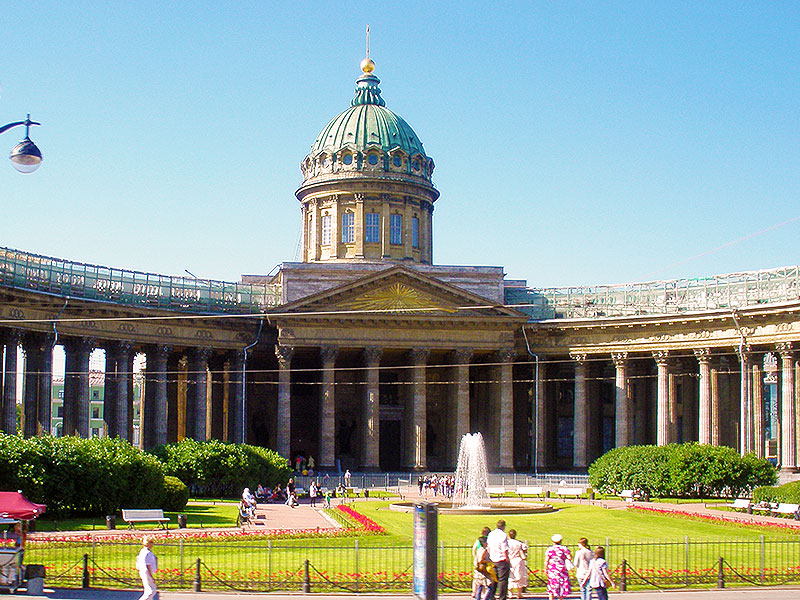
One of the first landmarks to come into view was Kazan Cathedral, an architectural masterpiece whose vast colonnade and central dome drew immediate comparisons to St. Peter’s Basilica in Rome. With its sweeping semicircular colonnade, this early 19th-century landmark symbolized both Russian Orthodoxy and military triumph—especially over Napoleon. Its stately grandeur marked a visual transition into the city’s most historic district.
🏛️ Drive-By Highlight: Military Historical Museum of Artillery
📍 Location: 7 Aleksandrovsky Park, St. Petersburg, Russia
⏳ Time Spent: Drive-by
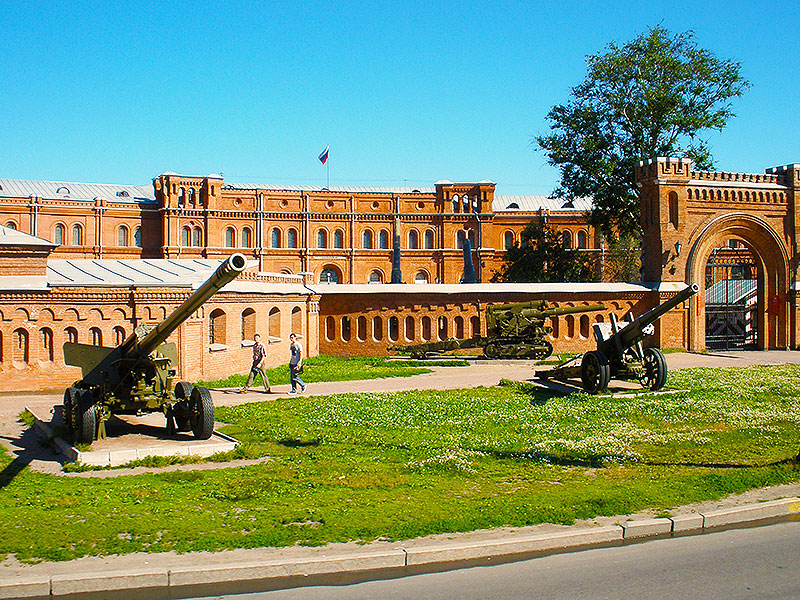
Continuing along our route, we passed the Military Historical Museum of Artillery, Engineer, and Signal Corps, a fortress-like red-brick complex with an extensive collection of Russian military artifacts. Founded in 1703, it housed an array of historical weaponry, including Peter the Great’s original cannons and relics from various wars. As we rode past, we caught glimpses of tanks and artillery pieces on display outside, hinting at the museum’s vast collection.
🐎 Stop 1: Monument to Nicholas I
📍 Location: St. Isaac’s Square, St. Petersburg, Russia
⏳ Time Spent: 10 minutes
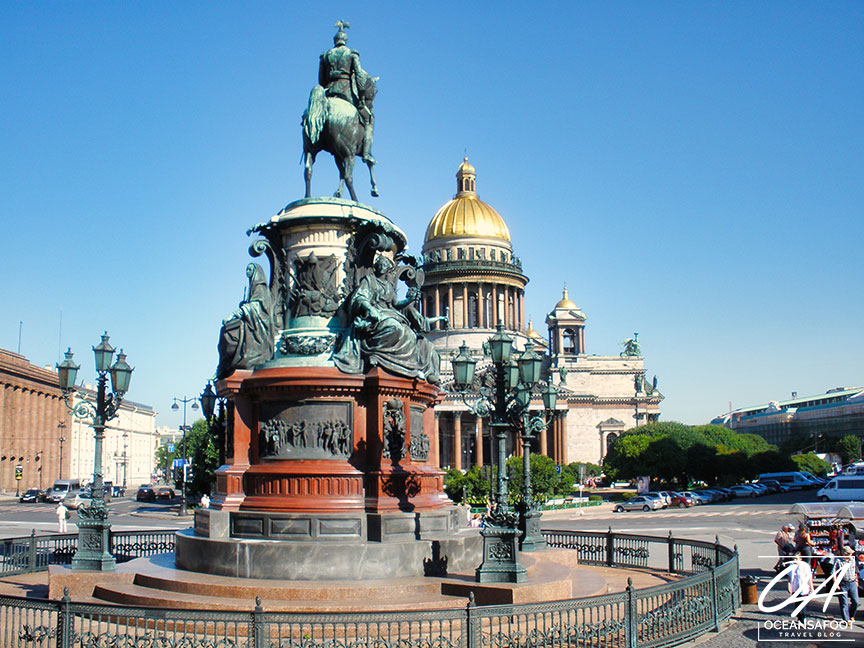
📌 Design Marvel: The statue was the first equestrian monument in Europe balanced solely on the horse’s two rear hooves.
Our first official stop was at the Monument to Nicholas I, an imposing equestrian statue situated in St. Isaac’s Square. What set this monument apart was its innovative engineering—crafted in 1859, it was Europe’s first equestrian statue to balance solely on the horse’s rear hooves. This technical feat, combined with the statue’s striking bronze detailing, made it a popular photo stop for visitors. Behind it loomed the grand St. Isaac’s Cathedral, its golden dome glistening in the midday light.
⛪ Stop 2: Church of the Savior on Spilled Blood
📍 Location: 2b Naberezhnaya Kanala Griboyedova, St. Petersburg, Russia
⏳ Time Spent: 15 minutes
📌 Historical Note: Built on the site of Emperor Alexander II’s assassination in 1881, the church memorializes one of Russia’s most transformative rulers.
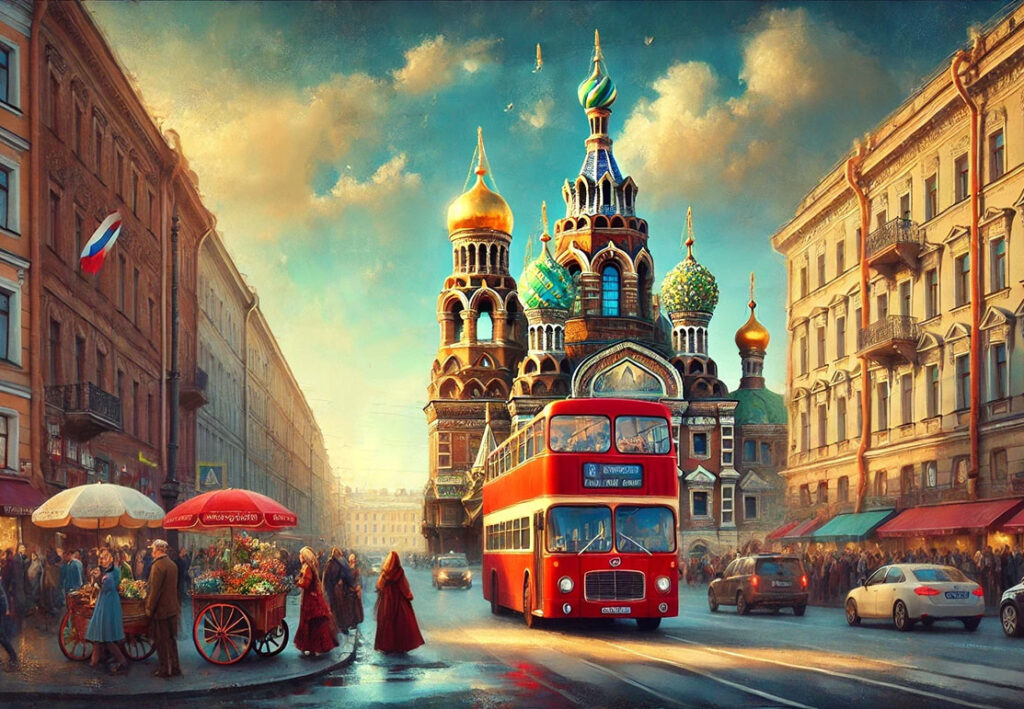
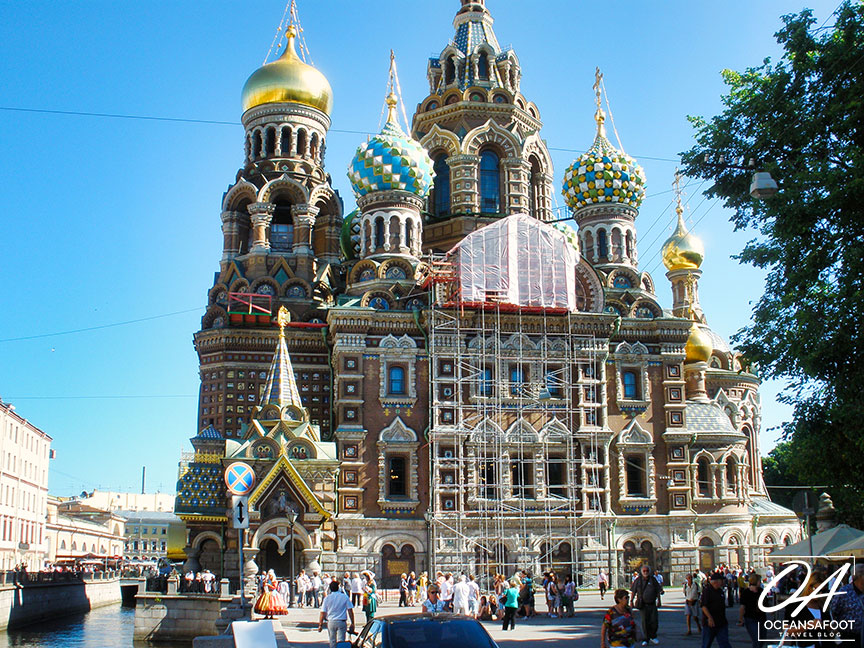
The most breathtaking stop of our journey was in front of the Church of Our Savior on Spilled Blood, one of the most iconic landmarks in all of Russia. This dazzling church, built on the site where Emperor Alexander II was assassinated in 1881, was a masterpiece of Russian Revival architecture. Its multicolored onion domes, intricate mosaics, and fairytale-like exterior were reminiscent of St. Basil’s Cathedral in Moscow.
💙 Favorite Moment:
We stood awestruck by the church’s exterior beauty. Taking our guide’s advice not to go inside remains our one regret—a mistake we corrected years later on a return visit.
🖼️ Stop 3: Onegin Art Galereya – the Meeting Point
📍 Location: Italiyanskaya Street, 11, St. Petersburg, Russia
⏳ Time Spent: 2 hours
📌 Free Time Insight: Independent exploration is uncommon on Russian excursions—this opportunity to wander freely is extremely rare.
After photographing the exterior of the Church of Our Savior on Spilled Blood, our guide led us on foot to Onegin Art Galereya, a renowned local art gallery and shop. Upon arrival, the guide informed us that we had three hours of free time to explore the surrounding area—a rare opportunity on Russian cruise excursions. The prospect of venturing into St. Petersburg independently was both exhilarating and slightly daunting, given our unfamiliarity with the locale and the language barrier.
🧭 Nevsky Prospekt Avenue Search
We made our way toward Nevsky Prospect, the city’s grand boulevard, where elegant facades housed shops, restaurants, and historic landmarks. Our primary objective was simple—lunch.
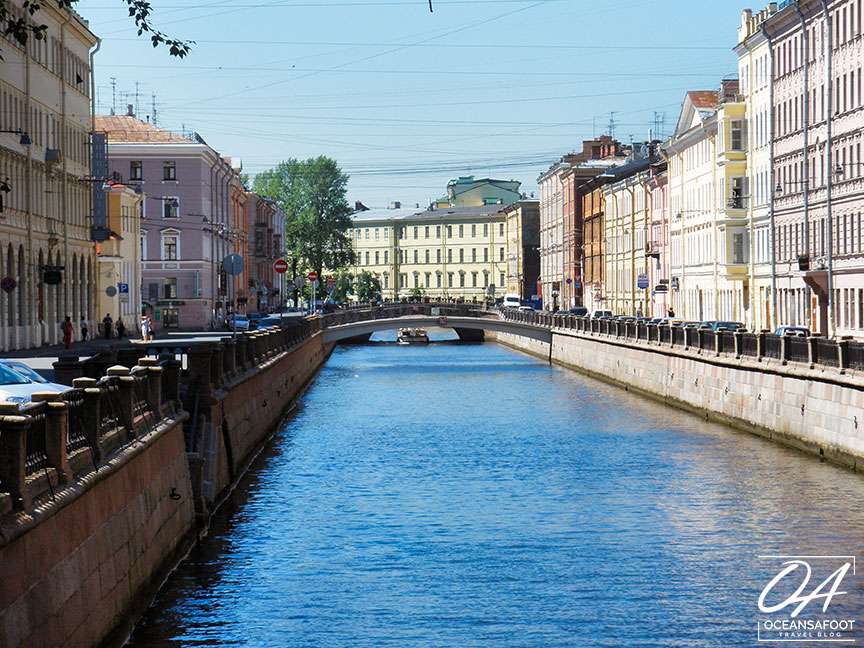
Navigating the bustling streets, we quickly realized that English-speaking locals were few and far between. Finding a restaurant was easy, but understanding the menus proved far more difficult. As we searched for a particular dining spot, we stopped to ask a young woman selling Hop-On Hop-Off bus tickets for directions. With an apologetic smile, she admitted that translating Russian street names and directions into English was too complicated, but she kindly pointed us toward a restaurant that she assured us had great food.
🍽️ Stop 4: Tea Spoon – Lunch Experience
📍 Location: 44 Nevsky Avenue, St. Petersburg, Russia
⏳ Time Spent: 45 minutes
🎭 Cultural Tip: Ordering food in Russia can be tricky if you don’t speak the language. Many restaurants do not have English menus. Find a tour vendor—they almost always speak English.
Trusting her suggestion, we followed the path she indicated and soon arrived at чайная ложка (Tea Spoon), a casual eatery known for its traditional Russian Blini. Ordering, however, was another adventure—after a brief search behind the counter, the employees produced a Russian-to-English menu, and shortly after, they found a staff member who spoke English. With their help, we ordered a savory, chicken-filled Blini and a thin Russian pancake that turned out to be delicious.
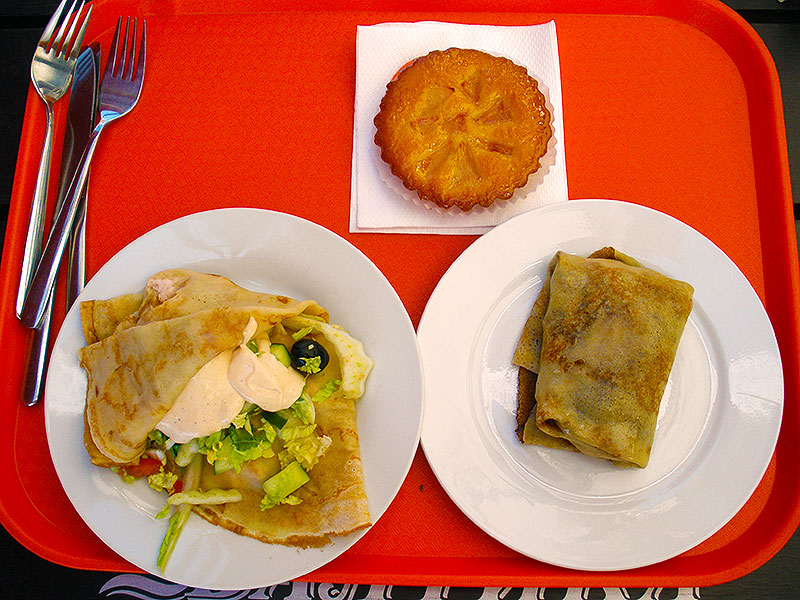
🏞️ Walking Exploration: Side Streets and Art Students
📍 Route: Church of the Savior on Spilled Blood → Kazan Cathedral → State University of Economics
⏳ Time Spent: Approximately 1 hour
After finishing our meal, we leisurely strolled through the winding streets and hidden alleyways of St. Petersburg, tracing a path from the Church of Our Savior on Spilled Blood toward the State University of Economics. The city’s grand architecture continued to captivate us, but what truly stood out was the unexpected presence of artwork displayed along the sidewalks.
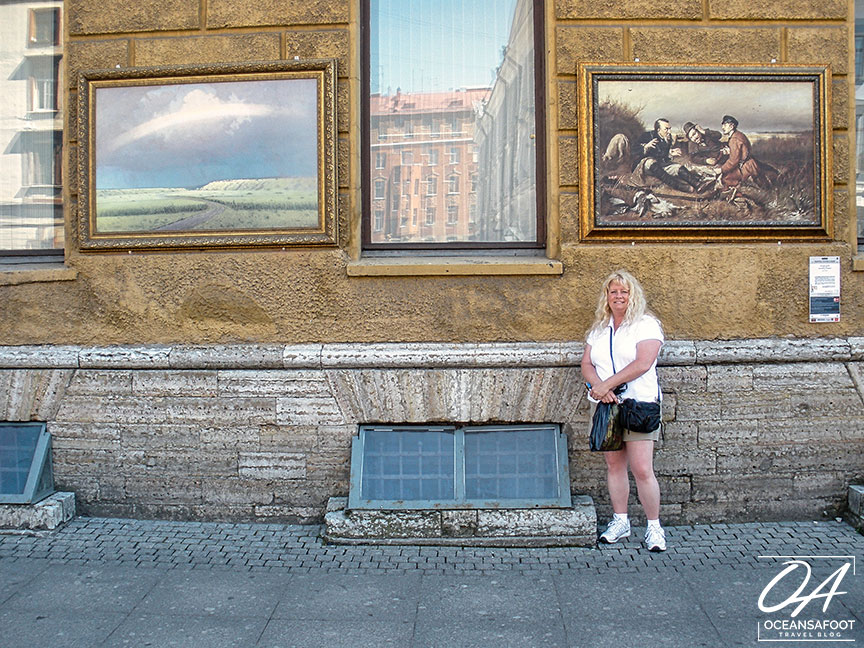
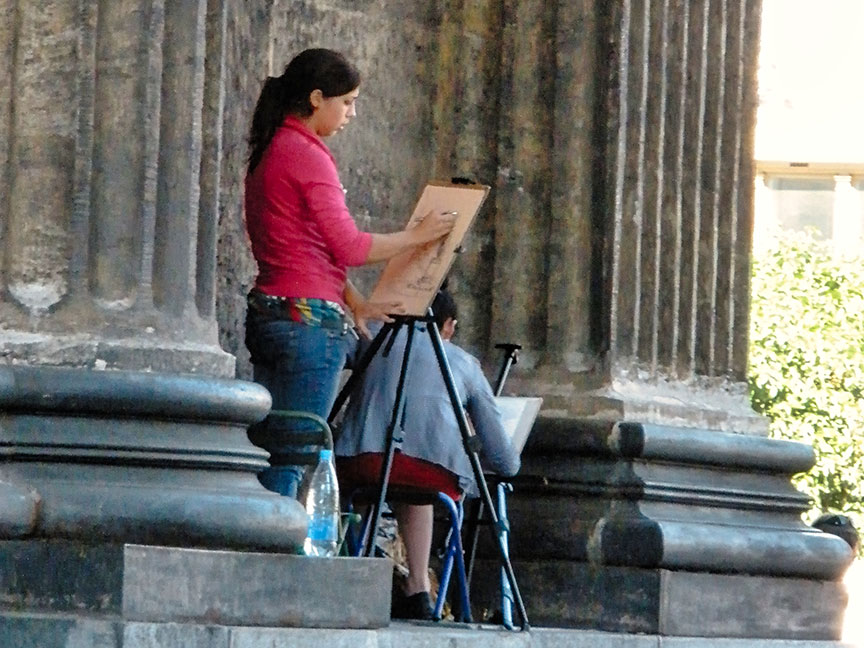
We admired students painting beneath the colonnade of Kazan Cathedral, artists displaying canvases outside the State Russian Museum, and the stately beauty of the city’s canals.
🚻 The Public Restroom Experience
📍 Location: Nevsky Prospect
⏳ Time Spent: 10 minutes
One of the more unexpected cultural experiences of the day came when we used a public street-side restroom. Unlike typical restrooms, this one required a payment of 10 kopeks, which we handed to a stern yet efficient attendant stationed at a small window between two stalls. The facilities were, to put it lightly, basic—and in my case, completely lacking toilet paper.
Faced with this predicament, I noticed a small service window inside the stall and, with a mix of hesitation, gave it a knock. Almost immediately, the same attendant from outside slid it open and wordlessly handed over a fresh roll, as if this was a completely routine exchange. It was an oddly charming glimpse into everyday Russian life, and one of those moments that I won’t soon forget.
🛍️ Stop 5: Onegin Art Galereya – Shopping
📍 Location: Italiyanskaya Street, 11, St. Petersburg, Russia
⏳ Time Spent: 30 minutes
🛍️ Shopping Opportunity: Browse Matryoshka dolls featuring political icons, folk legends, and fairy tales—many include printed story translations upon request.
Back at Onegin Art Galereya, we took our time browsing the extensive collection of Matryoshka nesting dolls, each intricately painted and steeped in Russian culture. Some sets featured historical and political figures, while others depicted beloved fairytales and folklore. After selecting a particularly striking fairytale-themed set, the helpful clerk went the extra mile, thoughtfully printing out the accompanying story behind our chosen design. This small but personalized gesture added an extra layer of meaning to our souvenir, making it a permanent memory of our journey.
After regrouping at Onegin Art Galereya, we boarded the double-decker bus, eager for our next destination—The Hermitage Museum, one of the most renowned museums in the world, housed within the Winter Palace, the former residence of Russia’s tsars.
🖼️ Stop 6: The Hermitage Museum – The Grand Finale
📍 Location: Palace Embankment 2, St. Petersburg, Russia
⏳ Time Spent: 2 hours
📸 Photography Pass: Required for indoor photos; flash photography prohibited.
As we neared the entrance, we were met with a formidable sight—a massive queue snaking far beyond the palace gates. The midday heat bore down on us, and with little shade in sight, we slowly inched forward, our excitement battling against the discomfort of the sweltering wait. An hour passed, and the oppressive warmth made the anticipation even more grueling.
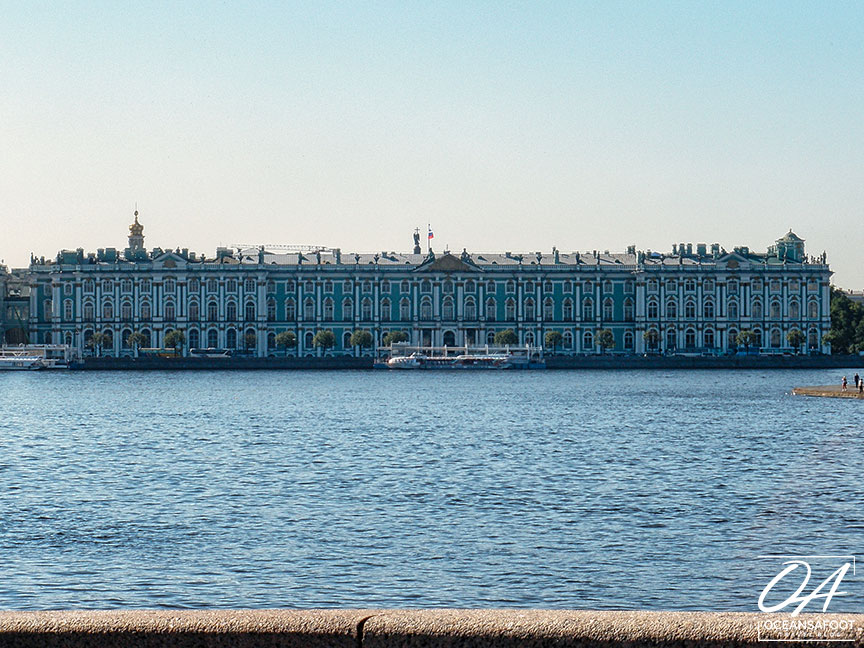
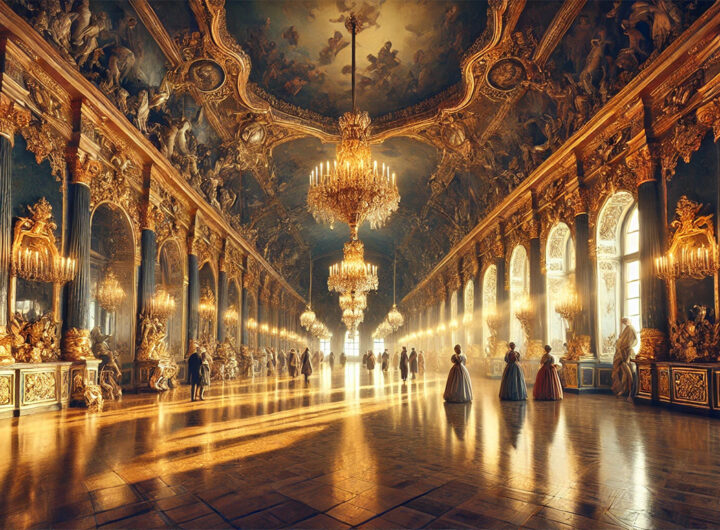
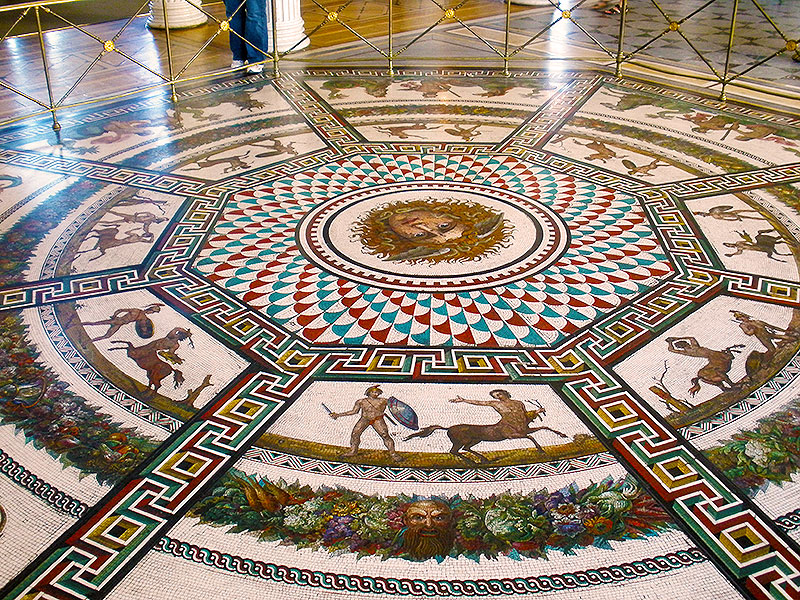
We began in the State Rooms of the Winter Palace—immense, echoing spaces adorned with gilded stucco, crystal chandeliers, and polished parquet floors. Though the museum lacked air conditioning, tall windows flung open to the breeze allowed pockets of fresh air to drift in, softening the summer heat. It hardly mattered however as the atmosphere was so steeped in history, so saturated with art and drama, that time and temperature seemed to vanish.
Nicholas Hall – Imperial Grandeur on a Monumental Scale
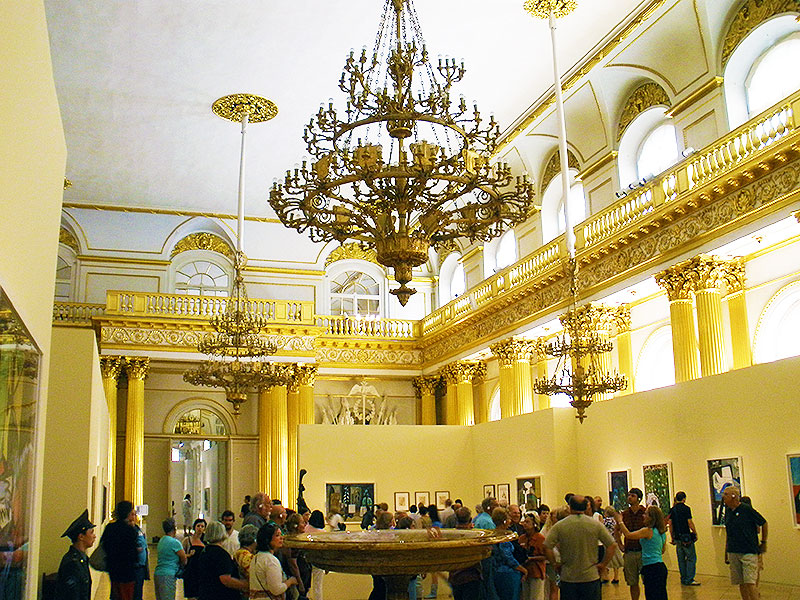
One of our first stops was Nicholas Hall, with its immense chandeliers and commanding gold pillars. At the center stood a massive decorative bowl carved from a single piece of jasper, drawing a crowd as large as some of the paintings.
The Raphael Loggias – A Corridor of Renaissance Splendor
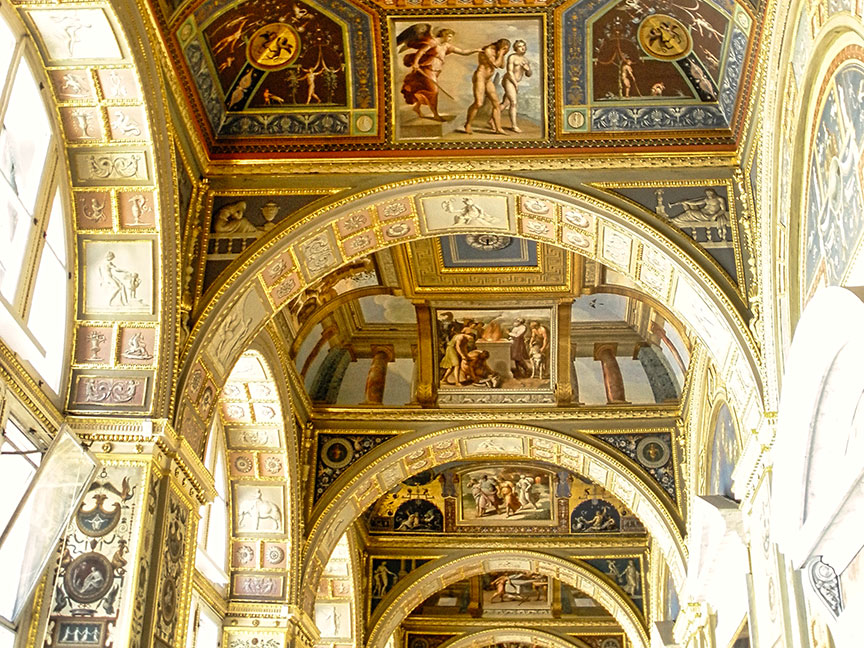
Inspired by the loggias of the Vatican and designed to replicate Raphael’s original frescoes, this long, narrow corridor was ablaze with color and precision. Every inch of its arched ceiling was painted with biblical scenes, mythological figures, and Renaissance ornamentation.
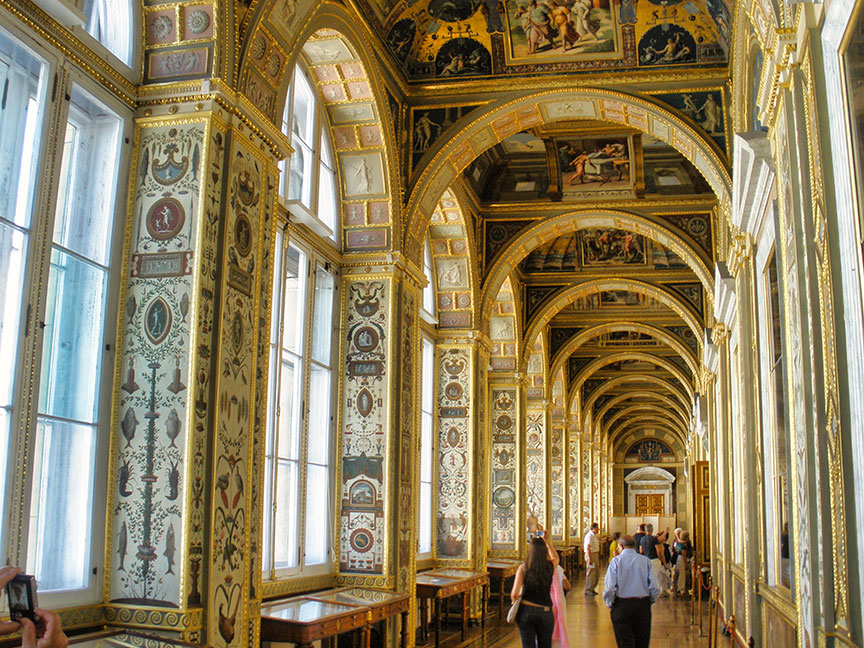
We paused mid-gallery, heads tilted back, mesmerized by the detail. Looking up in the Raphael Loggias was like stepping into a spiritual kaleidoscope—gold leaf catching the light, blues and reds dancing above us. The corridor stretched on, a hallway made not just to pass through, but to marvel at.
The Small Throne Room – Power Embodied
Yet nothing quite matched the awe we felt entering the Small Throne Room, also known as the Peter the Great Memorial Hall. Here, beneath a richly coffered ceiling and glittering chandeliers, stood the symbolic heart of Russian autocracy: the imperial throne, elevated on a scarlet dais and flanked by golden eagles. The red velvet backdrop, embroidered with the Romanov double-headed crest, exuded a regal solemnity that demanded reverence. This was a monument to a dynasty, an era, and a vision of Russia that once ruled the world stage.
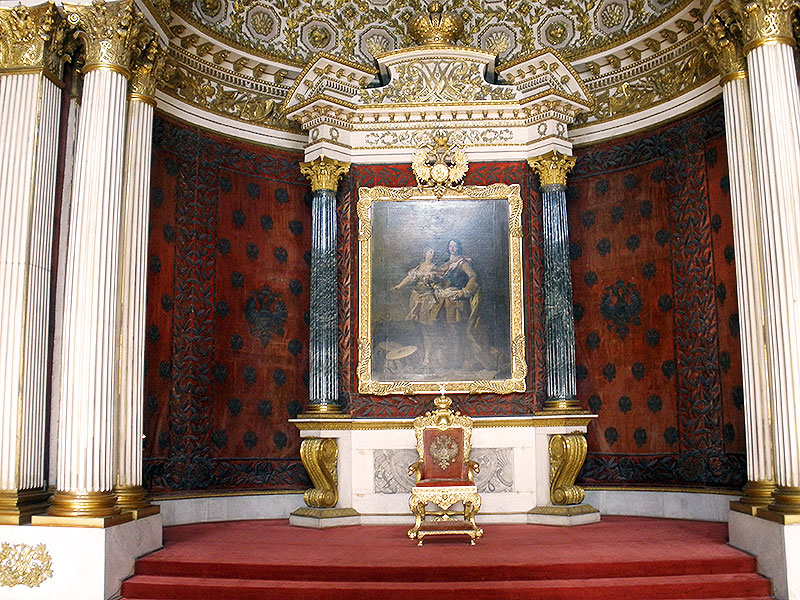
Towering above us, the soaring ceilings were adorned with majestic chandeliers and intricate frescoes, each detail exuding an almost divine magnificence, as if designed for rulers who saw themselves as chosen by the heavens.
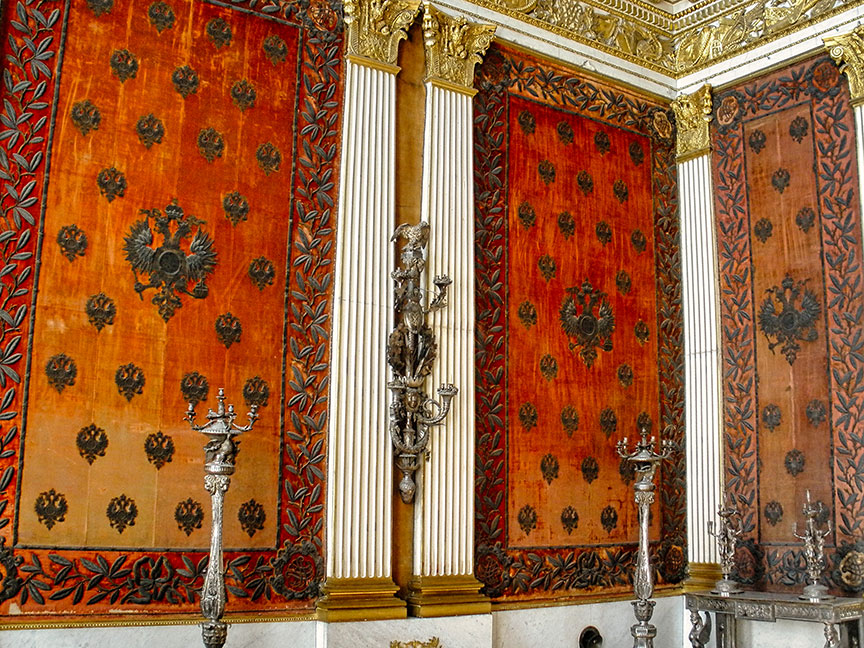
Masterpieces of the Hermitage Collection
The museum’s art collection was equally captivating. We paused in reverence before Leonardo da Vinci’s Madonna and Child, watching as light from the windows played delicately across the canvas. Its soft serenity stood in stark contrast to the emotional intensity of nearby works by Rembrandt, whose deep shadows and expressive faces seemed to glow from within. Rubens and Van Dyck followed, their compositions overflowing with color, movement, and drama.
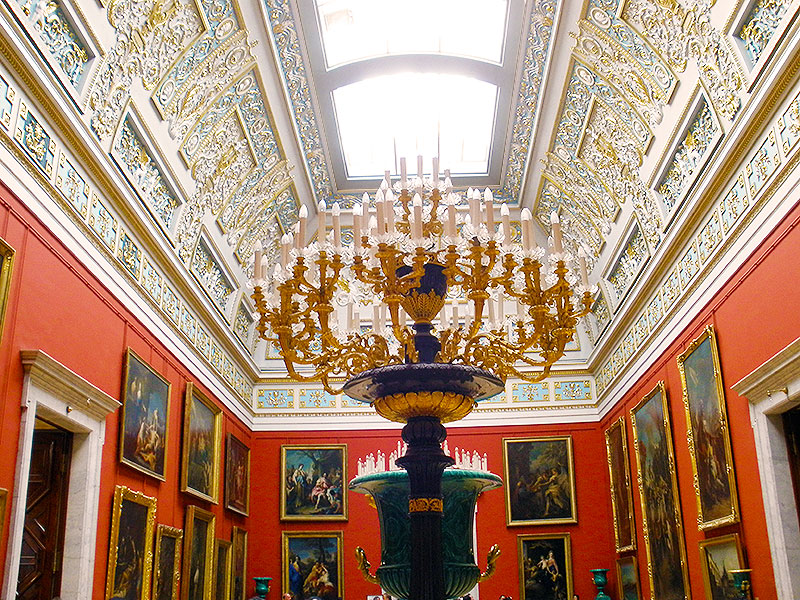
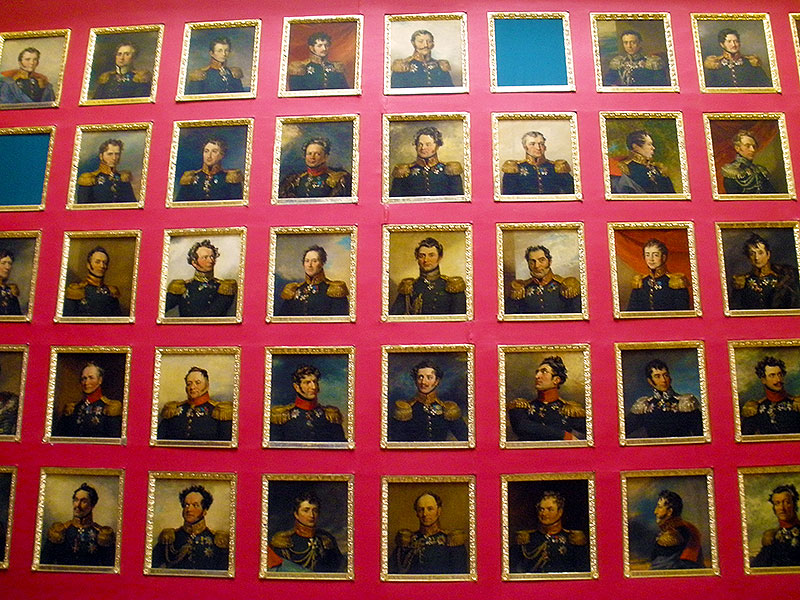
The Military Gallery of 1812 left a particular impression. Lined with row upon row of regal portraits—each one honoring a general who fought against Napoleon—it felt as though we were walking among an army of silent commanders. Their proud gazes seemed to follow us down the corridor.
As our group moved from gallery to gallery, the museum’s “babas”—elderly women acting as silent, watchful custodians—sat like stone guardians in the corners of each room. Their eyes missed nothing. A step too close to a rope or a photo taken with flash earned an immediate, stern correction. And yet, their presence only added to the authenticity of the experience.
✅ Who Is This Tour Best For?
✅ History enthusiasts eager to explore Russian imperial grandeur
✅ Cultural travelers looking for immersive local experiences
✅ Visitors who enjoy a balance of guided touring and free exploration
📰 Tour Summary
🔖 Tour Name: The City by Double Decker
🚢 Offered By: Norwegian Cruise Line
⏳ Total Duration: Approximately 7.5 hours
⛔ Main Stops: Nicholas I Monument, Church of the Savior on Spilled Blood, Onegin Art Galereya, Hermitage Museum
🚍 Drive-By Highlights: Vosstaniya Square, Palace Bridge, Spit of Vasilievsky Island, Peter and Paul Fortress, Cruiser Aurora, Trinity Bridge, Kazan Cathedral, Artillery Museum

Excursion & Photography Notice: All descriptions and photographs on OceansAfoot reflect individual travel experiences and are shared for documentary and informational purposes. Content is based on personal participation, public settings, and traveler observation, and does not represent official positions of cruise lines, tour operators, or featured institutions.
Related Baltic Travel: Explore more Baltic cruise ports and shore excursions in our complete regional guide.
→ Baltic Cruises & Shore Excursions Guide
© OceansAfoot